Autoimmune Disease and HRV: Using Heart Rate Variability to Track Flares and Recovery
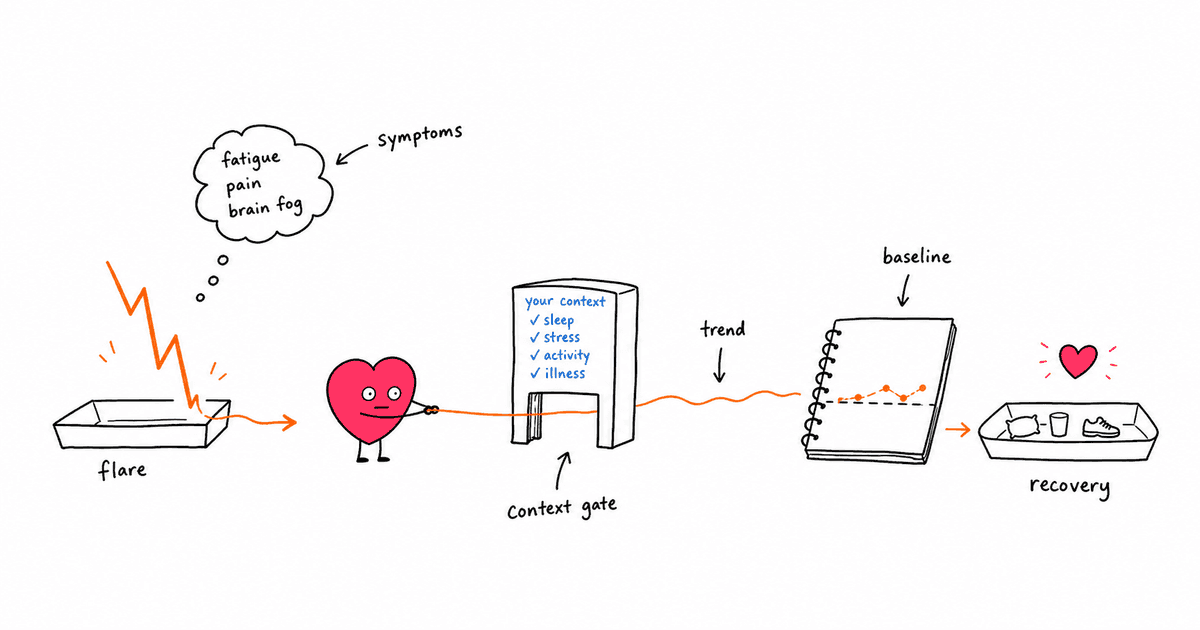
Trying to decode today's HRV number? Use the free interpreter first, then build a practical recovery plan. Interpret your HRV
Autoimmune diseases affect an estimated 50 million Americans, and prevalence is rising. Conditions like rheumatoid arthritis, lupus, multiple sclerosis, and Hashimoto's thyroiditis share a common thread: the immune system attacks the body's own tissues, driving chronic inflammation and autonomic nervous system dysfunction.
That autonomic dysfunction shows up directly in heart rate variability. And emerging research suggests that HRV tracking may become one of the most practical tools for managing autoimmune conditions day to day.
What Happens to HRV in Autoimmune Disease
In autoimmune diseases, chronic inflammation disrupts the balance between the sympathetic and parasympathetic branches of the autonomic nervous system, consistently lowering HRV. This reduction reflects impaired vagal tone and increased sympathetic dominance, both hallmarks of active autoimmune conditions.
The connection runs through the vagus nerve, which acts as a bidirectional communication highway between the brain and the immune system. In healthy individuals, the vagus nerve helps regulate inflammation through what researchers call the cholinergic anti-inflammatory pathway. When this system is compromised by autoimmune activity, vagal tone drops and HRV follows.
A 2025 cross-sectional study published in the Mediterranean Journal of Rheumatology found that patients with rheumatoid arthritis who had higher disease activity scores showed significantly lower HRV parameters compared to those in remission. The correlation held even after controlling for age, medications, and other cardiovascular risk factors.
How Different Autoimmune Conditions Affect HRV
While the general pattern of reduced HRV applies across autoimmune diseases, specific conditions show distinct autonomic signatures.
Rheumatoid Arthritis (RA)
RA is one of the most studied autoimmune conditions in HRV research. Studies consistently show reduced time-domain measures (SDNN, RMSSD) and an elevated LF/HF ratio, indicating sympathetic dominance. A 2024 meta-analysis confirmed significantly reduced HRV parameters in RA patients compared to healthy controls, with the degree of reduction correlating to disease activity and inflammatory marker levels like CRP and ESR.
Systemic Lupus Erythematosus (SLE)
A systematic review of HRV in lupus patients found reduced parasympathetic activity across multiple studies. Researchers noted that HRV abnormalities often appeared before clinical symptoms worsened, suggesting potential value as an early warning system. The OASIS study, a decentralized digital health trial, is currently using wearable-derived HRV data alongside patient surveys to map lupus disease activity in real time.
Multiple Sclerosis (MS)
MS patients frequently show autonomic dysfunction that correlates with disease progression and lesion burden. Both relapsing-remitting and progressive forms demonstrate lower HRV, with reductions most pronounced during active relapse periods. The autonomic disruption in MS appears to involve both central (brain stem lesions) and peripheral mechanisms.
Hashimoto's Thyroiditis
Thyroid autoimmunity affects heart rate regulation directly. Even in the subclinical stages, before thyroid hormone levels become abnormal, studies have documented reduced HRV in patients with elevated thyroid antibodies. This makes HRV a potentially sensitive early marker for autonomic disruption in thyroid autoimmune disease.
The relationship is dose-dependent: higher thyroid antibody levels tend to correlate with greater HRV suppression. For patients managing Hashimoto's, tracking HRV alongside thyroid labs may provide a more complete picture of how well medication is controlling not just hormone levels but overall autonomic function.
Inflammatory Bowel Disease (IBD)
Both Crohn's disease and ulcerative colitis show strong associations with reduced vagal tone. The connection between gut health and HRV is well established, and IBD research has demonstrated that HRV drops during active flares and recovers during remission, closely mirroring mucosal inflammation levels measured by calprotectin and endoscopy findings.
Why HRV Drops During Autoimmune Flares
Several interconnected mechanisms explain the relationship between autoimmune activity and reduced HRV.
Chronic Inflammation
Pro-inflammatory cytokines like TNF-alpha, IL-6, and IL-1beta directly affect cardiac autonomic neurons and the vagus nerve itself. Elevated inflammatory markers consistently correlate with lower HRV across autoimmune conditions. The relationship is bidirectional: inflammation reduces vagal tone, and reduced vagal tone allows inflammation to escalate unchecked.
Sympathetic Overdrive
Autoimmune disease activates the hypothalamic-pituitary-adrenal (HPA) axis, pushing the nervous system toward sustained sympathetic activation. This "fight or flight" dominance shows up as elevated resting heart rate, reduced RMSSD, and a shifted LF/HF ratio. Over time, this pattern increases cardiovascular risk, which is already elevated in most autoimmune conditions.
Pain and Fatigue
A 2025 systematic review published in MDPI found that decreased HRV is consistently associated with increased fatigue across multiple medical populations, including autoimmune patients. Chronic pain, a feature of many autoimmune conditions, independently suppresses parasympathetic activity and further reduces HRV.
Medication Effects
Some autoimmune treatments affect HRV directly. Corticosteroids can reduce HRV through sympathetic activation, while certain biologic therapies (particularly TNF inhibitors) have been shown to improve HRV as they reduce systemic inflammation. Tracking HRV during medication changes can provide useful feedback about treatment response.
Using HRV to Predict and Monitor Autoimmune Flares
One of the most exciting developments in autoimmune research is the possibility of using wearable HRV data to predict flares before symptoms fully emerge.
The Flare Prediction Window
A 2025 preprint study tracked rheumatoid arthritis patients wearing Apple Watches, Fitbit devices, and Oura Rings. The researchers found that circadian HRV patterns differentiated inflammatory and symptomatic flares from remission periods. Critically, physiological metrics shifted up to four weeks before flare development, opening a meaningful intervention window.
This aligns with what many autoimmune patients describe anecdotally: subtle shifts in energy, sleep quality, and "feeling off" days before a full flare. HRV appears to capture these early physiological changes objectively.
The practical implication is significant. A four-week warning window gives patients and clinicians time to adjust medications, reduce activity, prioritize rest, or schedule earlier follow-up appointments. For conditions where early intervention can prevent severe flares, this kind of lead time is genuinely valuable.
What to Track
For autoimmune disease monitoring, focus on these HRV patterns:
- Baseline RMSSD trends: Track your 7-day and 30-day averages. A sustained decline of 10-15% from your personal baseline may signal increasing disease activity. If you're new to these metrics, our guide to understanding HRV numbers explains what each measure means
- Morning HRV readings: Overnight and waking HRV measurements are most reliable for detecting autonomic shifts
- Day-to-day variability: Paradoxically, some consistency in low readings may be more concerning than occasional dips. A pattern of persistently suppressed HRV over several days warrants attention
- Recovery patterns: After a known stressor (exercise, poor sleep), track how quickly your HRV bounces back. Slower recovery times can indicate mounting inflammation
Setting Up a Personal Tracking System
A practical approach for autoimmune patients:
- Establish a baseline during a period of relative stability (ideally 2-4 weeks of consistent measurement)
- Track daily symptoms alongside HRV using a simple journal or app. Note pain levels, fatigue, joint stiffness, and any other condition-specific symptoms
- Note medication changes and their timing relative to HRV shifts
- Flag sustained drops below your personal baseline for discussion with your rheumatologist or specialist
- Look for patterns over 3-6 months. Many patients find their HRV follows predictable cycles that correlate with their flare patterns
Best Wearables for Autoimmune HRV Tracking
Consistent, long-term monitoring matters more than any single reading. Choose a device that fits your lifestyle and that you will actually wear every day. For a full breakdown of available options, see our best HRV monitors of 2026 guide or our detailed HRV monitor comparison.
The Oura Ring 4 is particularly well-suited for autoimmune tracking because it measures HRV continuously during sleep without requiring any action. Its readiness score integrates HRV with temperature, respiratory rate, and sleep quality, all of which shift during autoimmune flares. The ring form factor also works well for patients with joint issues who may find wrist-based devices uncomfortable.
The Apple Watch Series 11 offers HRV measurement alongside a broader health ecosystem. It was one of the devices used in the 2025 RA flare prediction study. Its health data can be shared directly with healthcare providers through the Health app.
For athletes managing autoimmune conditions who need both training metrics and health monitoring, the Garmin Forerunner 265 provides detailed HRV status tracking alongside training load analysis. The WHOOP also works well for this population, with its recovery score serving as a practical daily check-in on autonomic status.
Lifestyle Strategies That Improve HRV in Autoimmune Disease
Beyond monitoring, several evidence-based approaches can help improve autonomic function in autoimmune patients.
Vagus Nerve Stimulation
Both clinical vagus nerve stimulation devices and non-invasive techniques like slow breathing exercises have shown promise in autoimmune populations. HRV biofeedback training can also help patients learn to consciously shift their autonomic balance. A daily practice of 5-10 minutes of slow, diaphragmatic breathing at approximately 6 breaths per minute can measurably improve vagal tone over weeks to months.
Anti-Inflammatory Nutrition
Dietary patterns that reduce systemic inflammation, such as Mediterranean-style eating, support better autonomic function. Omega-3 fatty acids are particularly relevant for autoimmune patients, as they directly counter pro-inflammatory cytokines that suppress HRV. Fermented foods can also support gut health and reduce inflammation. Focus on fatty fish, leafy greens, and colorful vegetables while minimizing processed foods and added sugars. For a broader look at how diet affects autonomic function, see our guide on nutrition and HRV.
Strategic Movement
Exercise is one of the strongest HRV boosters, but autoimmune patients need to calibrate intensity carefully. Zone 2 training and walking are generally well-tolerated and effective at improving parasympathetic tone without triggering flares. Gentle options like yoga, tai chi, and swimming are also excellent choices for autoimmune patients. Use your daily HRV reading to guide intensity: on low HRV days, opt for gentle movement rather than pushing through a hard workout. This approach also helps prevent overtraining.
A practical framework: if your morning HRV is within 10% of your baseline, proceed with your normal training plan. If it is 10-20% below baseline, reduce intensity and duration. If it is more than 20% below your baseline for two or more consecutive days, switch to restorative activities like gentle stretching or a slow walk until readings recover.
Sleep Optimization
Sleep quality is fundamental for immune regulation and autonomic recovery. Autoimmune patients often experience disrupted sleep, which compounds HRV suppression. Sleep deprivation can trigger or worsen flares, and conditions like sleep apnea are more common in autoimmune populations. Prioritize consistent sleep timing, manage pain proactively before bed, and create an environment conducive to deep, uninterrupted rest.
Stress Management
Psychological stress amplifies autoimmune activity through HPA axis activation. Regular meditation practice, nature exposure, and social connection all support parasympathetic recovery. Even brief daily practices can shift the autonomic balance toward better vagal tone over time.
The Bigger Picture: HRV as a Clinical Tool
Researchers are increasingly recognizing HRV as a clinical biomarker for autoimmune disease management, not just a wellness metric. A 2026 systematic review in Diagnostics examined the clinical evidence for wearable-derived HRV in detecting systemic inflammation, finding promising results across multiple conditions.
The vision is straightforward: rather than relying solely on blood tests and symptom questionnaires performed at occasional clinic visits, continuous HRV monitoring could provide a real-time window into disease activity. This is especially valuable because autoimmune conditions fluctuate between flares and remission, and the timing of lab draws often misses these dynamics.
Several clinical trials are now incorporating wearable HRV data into autoimmune disease management protocols. The OASIS lupus study and the RA flare prediction research represent early steps toward integrating passive physiological monitoring into standard autoimmune care.
Sharing HRV Data with Your Healthcare Team
One of the strongest applications of wearable HRV data is bringing it into clinical conversations. Instead of relying on recall during appointments ("I think I had a flare around mid-January"), you can show objective trends that correlate with symptom changes.
Before your appointment, export or screenshot your HRV trend data covering the period since your last visit. Highlight any sustained dips and note what was happening at those times, whether medication changes, illness, major stress, or a confirmed flare. This gives your specialist a richer picture of disease activity between visits and can support more informed treatment decisions.
Many rheumatologists and immunologists are increasingly open to reviewing patient-collected biometric data, especially when presented as trends rather than single-point readings.
Important Caveats
HRV is a valuable data point for autoimmune patients, but it comes with limitations worth noting.
- HRV is not diagnostic. A low HRV reading does not confirm a flare, and a normal reading does not rule one out. Many factors beyond autoimmune activity affect HRV, including sleep, stress, exercise, alcohol, and medication changes
- Individual variation is significant. What constitutes "low" HRV varies dramatically between people, and HRV changes naturally with age. Always compare to your own baseline rather than population averages
- Medication effects complicate interpretation. Beta-blockers raise HRV, corticosteroids lower it, and biologics may change it over time. Work with your healthcare team to understand how your specific medications affect your readings
- This is not a substitute for medical care. HRV tracking works best as a complement to, not a replacement for, regular clinical monitoring with your specialist team
Frequently Asked Questions
Can HRV replace blood tests for monitoring autoimmune disease?
No. HRV provides complementary information about autonomic function and inflammatory load, but it cannot replace specific blood markers like CRP, ESR, or disease-specific antibodies. Think of HRV as a daily check-in that fills the gaps between lab visits, giving you continuous insight into how your body is responding.
How long does it take for HRV to improve after starting autoimmune treatment?
This varies significantly by condition and treatment type. Some patients see HRV improvements within weeks of starting biologic therapies that reduce inflammation. Others on slower-acting medications may not see measurable HRV changes for 2-3 months. Tracking trends over at least 8-12 weeks provides the most meaningful picture.
Is low HRV dangerous for autoimmune patients?
Chronically reduced HRV is associated with increased cardiovascular risk, which is already elevated in many autoimmune conditions. While a single low reading is not cause for alarm, persistently suppressed HRV over weeks or months is worth discussing with your doctor. Improving HRV through lifestyle modifications may help reduce that cardiovascular risk.
Which HRV metric matters most for autoimmune tracking?
RMSSD is generally the most useful metric for day-to-day autoimmune monitoring because it reflects parasympathetic (vagal) activity most directly. If your wearable reports a "readiness" or "recovery" score, that typically incorporates RMSSD alongside other factors and can serve as a practical daily summary.
Need a quick read on your HRV number first?
Enter your HRV value, age range, device, and recovery context for a plain-English interpretation before you decide what to do next.
Interpret Your HRV NumberBuild the 30-day plan