How Alcohol Affects Your HRV: What the Science Says
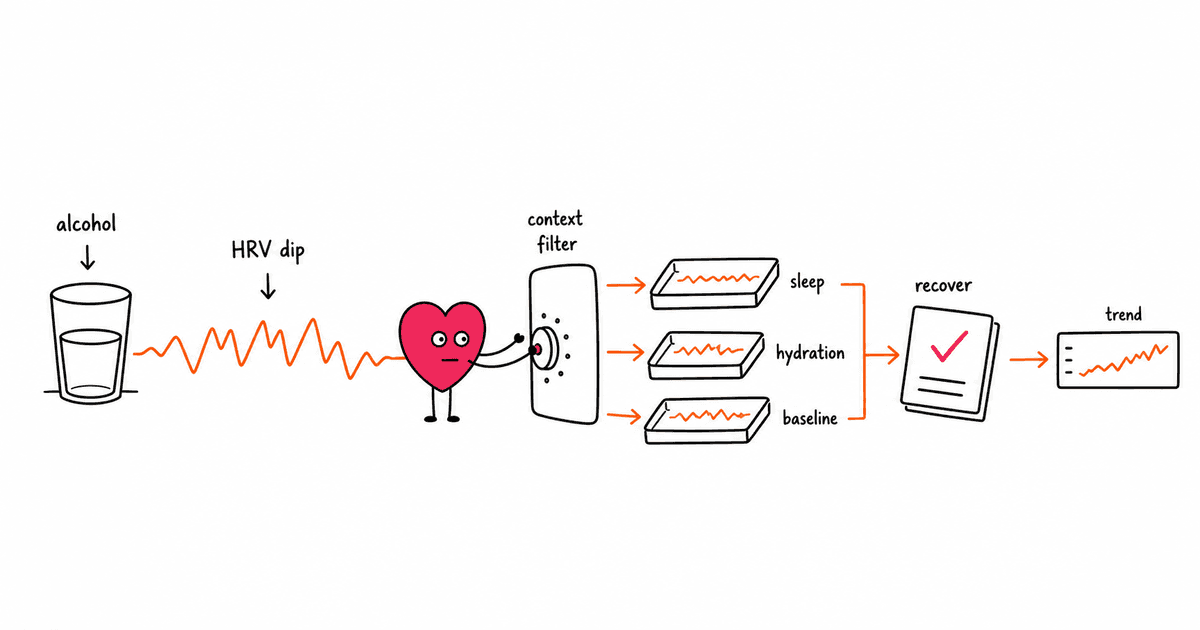
Trying to decode today's HRV number? Use the free interpreter first, then build a practical recovery plan. Interpret your HRV
Does Alcohol Affect HRV?
Yes, alcohol significantly lowers HRV by shifting your autonomic nervous system away from parasympathetic ("rest and digest") toward sympathetic ("fight or flight") activity. Even moderate drinking (2+ drinks) causes measurable HRV reductions that can last 24-72 hours depending on consumption. The effect comes from increased heart rate, reduced vagal tone, disrupted sleep, and inflammatory responses.
If you track your HRV with a Whoop, Oura Ring, or another wearable, you've probably noticed something frustrating: even moderate drinking can send your HRV plummeting. That glass of wine with dinner or those weekend beers show up clearly in your data the next morning.
But why does this happen? Is it really that bad? And how long does it take to bounce back?
Let's dig into what the research actually says about alcohol and heart rate variability.
The Basics: What Happens When You Drink
When alcohol enters your bloodstream, it triggers a cascade of physiological changes. Your blood vessels dilate, your heart rate increases, and your autonomic nervous system shifts away from its calm, parasympathetic ("rest and digest") state toward a more sympathetic ("fight or flight") mode.
This matters because HRV is essentially a window into your autonomic nervous system. Higher HRV generally indicates your parasympathetic nervous system is active and your body is in a recovered, adaptable state. Lower HRV suggests your body is under stress.
Alcohol disrupts this balance in several ways:
-
Increased heart rate: Studies show alcohol consumption is directly associated with elevated resting heart rate. Higher heart rate leaves less room for the beat-to-beat variation that defines HRV.
-
Reduced vagal tone: The vagus nerve, which controls your parasympathetic response, becomes less active when you drink. This reduces the calming influence on your heart.
-
Sleep disruption: Even though alcohol might help you fall asleep faster, it severely compromises sleep quality, particularly REM sleep. Poor sleep directly translates to lower morning HRV.
-
Dehydration and inflammation: Alcohol is a diuretic and triggers inflammatory responses, both of which stress your cardiovascular system. See our guide on hydration and HRV for more on this connection.
What the Research Shows
A comprehensive review published in Pharmacology Biochemistry and Behavior analyzed multiple studies on alcohol and HRV. The findings were consistent: acute alcohol consumption reduces resting HRV in healthy subjects.
The effect isn't subtle. Research from the University of Queensland found that men who consumed more alcohol had lower HRV across multiple measures, including SDNN (overall variability), rMSSD (parasympathetic activity), and total power. The relationship held even after controlling for factors like body mass index.
What's particularly interesting is the dose-response relationship. A study in the American Journal of Physiology found that one standard drink had minimal effect on heart rate or sympathetic nerve activity. However, two or more drinks caused measurable increases in both. In other words, there may be a threshold below which the impact is minimal, but once you cross it, the effects compound quickly.
How Long Does Recovery Take?
This is the question everyone wants answered, and the data from wearable users provides some real-world insight.
For most people, here's the general timeline:
- 1-2 drinks: HRV typically returns to baseline within 24 hours
- 3-4 drinks: Expect 24-48 hours of suppressed HRV
- Heavy drinking (5+ drinks): Recovery can take 3-5 days or longer
These timelines vary significantly based on individual factors including:
- Age (older individuals tend to recover more slowly)
- Fitness level (more fit individuals often bounce back faster)
- Sleep quality post-drinking
- Hydration status
- Regular drinking habits
Chronic heavy drinkers often show persistently lower HRV compared to non-drinkers, even when measured sober. Combined with poor nutrition and disrupted gut health that often accompany heavy drinking, the autonomic impact compounds. Alcohol also impairs blood sugar regulation, creating further metabolic stress that suppresses HRV. However, research shows this can improve with sustained abstinence.
The Good News About Abstinence
If you're concerned about alcohol's impact on your HRV, here's encouraging news: the effects are largely reversible.
A study tracking individuals recovering from alcohol use disorder found that HRV improved progressively with time since last drink. The longer someone stayed abstinent, the more their parasympathetic function recovered.
This aligns with what many people discover during Dry January or other periods of abstinence. After a week or two without alcohol, morning HRV readings often reach new personal highs.
Practical Takeaways
Based on the research, here are some evidence-based strategies if you want to minimize alcohol's impact on your HRV:
If You Choose to Drink
- Stick to 1-2 drinks maximum to stay below the threshold where effects compound
- Stop drinking at least 3-4 hours before bed to minimize sleep disruption
- Stay hydrated, alternating alcoholic drinks with water
- Avoid drinking on consecutive days to give your body time to recover
- Don't rely on "hair of the dog", which just delays and extends the recovery period
For Recovery
- Prioritize sleep quality the night after drinking, even if you need to sleep longer
- Stay well-hydrated the following day
- Light movement (walking, gentle stretching) can support recovery
- Avoid intense training when your HRV is suppressed, as your body is already stressed and at higher risk of overtraining
For Optimization
- Consider periodic breaks from alcohol (like Dry January) to see your true HRV baseline
- Track your individual response since everyone metabolizes alcohol differently
- Notice patterns in your data, such as which types of drinks or drinking situations affect you most
Using Your HRV Data Wisely
One of the benefits of tracking HRV is getting objective feedback on how your lifestyle choices affect your body. Alcohol is one of the clearest examples of this.
If you're using a device like the Whoop or Oura Ring, you can see exactly how last night's drinks affected your recovery score. This data can be powerful for making informed decisions without relying on willpower alone.
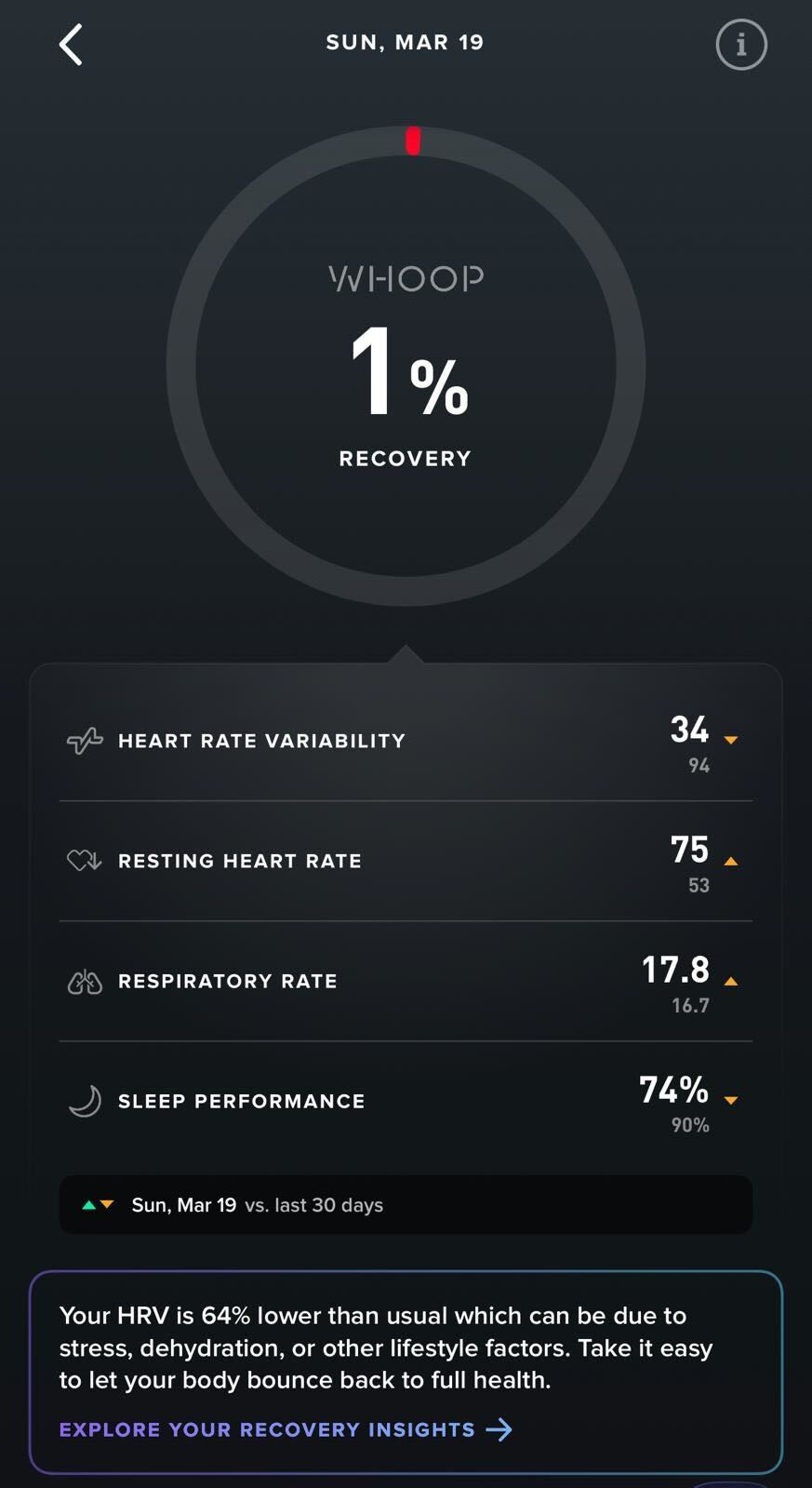
Real-world example: A Whoop user's recovery data after drinking. HRV dropped 64% from their usual baseline of 94 to just 34, resulting in a 1% recovery score. The elevated resting heart rate (75 vs usual 53) and reduced sleep performance (74% vs usual 90%) complete the picture of how alcohol affects multiple health metrics simultaneously.
Some people find that seeing the numbers motivates them to moderate more than any health warning ever could. There's something concrete about watching your HRV drop from 65 to 35 after a night of heavy drinking that abstract advice about "liver health" can't match.
The Bottom Line
Alcohol does affect your HRV, and the effect is dose-dependent. Light drinking may have minimal impact for some people, while moderate to heavy consumption consistently suppresses HRV and delays recovery.
The good news is that these effects are temporary and reversible. If you're looking to optimize your HRV, moderating alcohol intake is one of the most reliable ways to see improvement, often within just a few days.
Your wearable data doesn't lie. Pay attention to what it's telling you, and make choices that align with your health goals.
Related Reading
- How to Improve Your HRV
- HRV and Sleep: The Complete Guide
- Understanding HRV and Stress
- Caffeine and HRV: What the Research Says
- Smoking, Nicotine, and HRV
- What is HRV? A Complete Introduction
Need a quick read on your HRV number first?
Enter your HRV value, age range, device, and recovery context for a plain-English interpretation before you decide what to do next.
Interpret Your HRV NumberBuild the 30-day plan