Hydration and HRV: How Water Intake Affects Heart Rate Variability
Trying to decode today's HRV number? Use the free interpreter first, then build a practical recovery plan. Interpret your HRV
You track your HRV, monitor your sleep, and optimize your training. But there's one factor that might be quietly sabotaging your readings every day: hydration. Research shows that even mild dehydration can significantly impact your heart rate variability, affecting both your measurements and actual recovery. Understanding this connection can help you interpret your data more accurately and make simple changes that boost your HRV.
How Dehydration Affects HRV
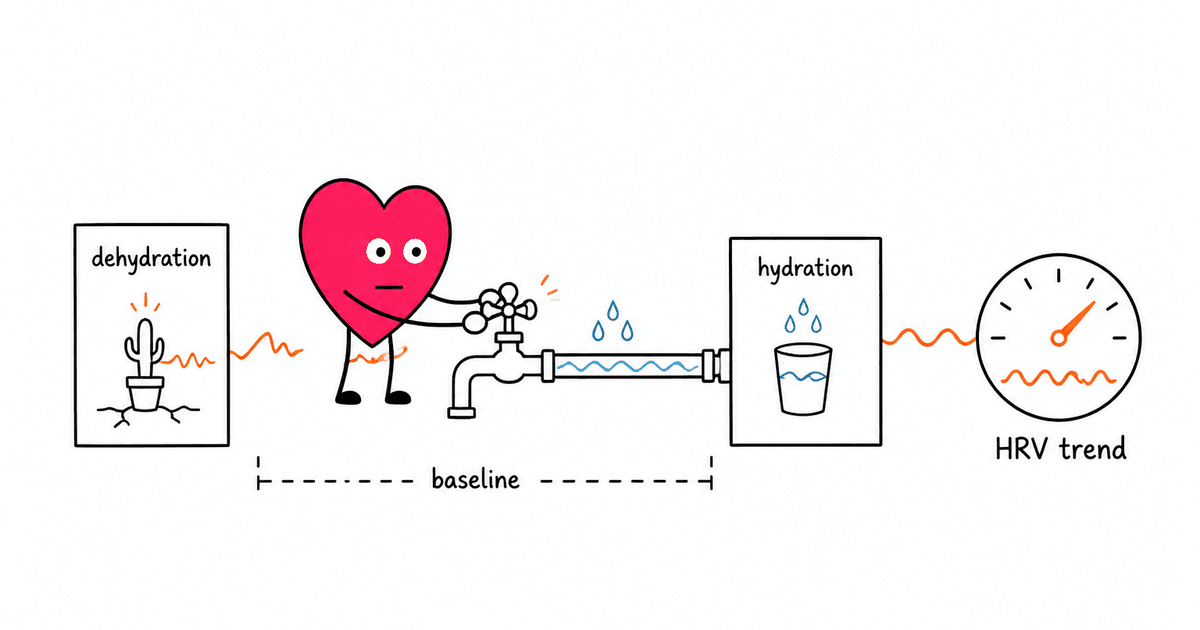
Dehydration reduces HRV by triggering cardiovascular strain and shifting your autonomic nervous system toward sympathetic dominance. When you lose fluid, your blood volume decreases, forcing your heart to work harder to maintain circulation. This compensatory response suppresses the parasympathetic activity that drives higher HRV.
The Cardiovascular Cascade
When you're dehydrated, several things happen in your body:
- Reduced blood volume: Less fluid means less blood, which decreases cardiac output
- Increased heart rate: Your heart compensates by beating faster to maintain blood pressure
- Sympathetic activation: Your nervous system shifts into a mild stress response
- Reduced HRV: The combination of elevated heart rate and sympathetic dominance lowers your HRV
Research published in Scientific Reports found that participants who lost just 0.6% of their body mass through mild dehydration showed higher heart rates and lower HRV compared to when they were properly hydrated. These changes correlated with decreased mood and cognitive performance.
What the Research Shows
Multiple studies have documented the hydration-HRV connection:
- A study on athletes found that dehydration led to a significant reduction in HRV metrics, particularly RMSSD, during the first hour after exercise
- Research on military personnel showed that a 2.2% loss in body mass correlated with changes in the LF:HF ratio, indicating autonomic imbalance
- Studies on fighter pilots found a relationship between percent dehydration and RMSSD changes following physical exertion
The good news: proper rehydration can restore HRV. Research shows that replacing at least 60% of lost fluids sufficiently rehydrates and restores HRV within 24 hours following exercise.
How Much Does Hydration Really Matter?
You might wonder whether mild dehydration makes a meaningful difference. The answer depends on your goals.
For Daily HRV Tracking
If you're using HRV to monitor recovery and readiness, hydration status can create "noise" in your data. A low morning HRV reading might reflect:
- Actual incomplete recovery
- Poor sleep quality
- Stress
- Recent blood donation (which acutely reduces blood volume)
- Or simply dehydration from overnight fluid loss
Without controlling for hydration, you may misinterpret your readings and make suboptimal training decisions.
For Athletes and Active Individuals
The impact is more pronounced during and after exercise:
- Dehydration of 2-3% body mass is common during intense training
- This level of fluid loss measurably suppresses HRV recovery
- Impaired HRV recovery may indicate reduced readiness for subsequent training
A study on supramaximal intensity exercise found that recovery and readiness were impaired when athletes remained in a dehydrated state, though these impairments resolved 2-3 hours after rehydrating.
For Overall Health
Beyond HRV measurements, the autonomic changes associated with dehydration have broader implications:
- Mood disturbances (increased anxiety, reduced energy)
- Cognitive performance decline
- Reduced stress resilience
- Impaired thermoregulation
Signs Your HRV Might Be Affected by Hydration
Look for these patterns that suggest hydration may be influencing your readings:
- Consistently low morning HRV despite good sleep: You may be waking up dehydrated
- Elevated resting heart rate: Often accompanies dehydration-related HRV drops
- Slow HRV recovery after workouts: May indicate inadequate rehydration
- Unexplained day-to-day HRV variability: Hydration fluctuations could be the cause
How to Optimize Hydration for Better HRV
General Hydration Guidelines
While individual needs vary based on body size, activity level, climate, and diet, these guidelines provide a starting point:
- Daily intake: Aim for approximately 30-35 ml per kilogram of body weight (about 0.5 oz per pound)
- Pre-exercise: Drink 500-600 ml (17-20 oz) 2-3 hours before training
- During exercise: Consume 150-350 ml (5-12 oz) every 15-20 minutes during prolonged activity
- Post-exercise: Replace 150% of fluid lost (weigh yourself before and after to estimate loss)
Timing Matters
When you drink matters almost as much as how much:
- Morning: Rehydrate after overnight fluid loss before taking HRV measurements
- Pre-workout: Start exercise well-hydrated for optimal performance and recovery
- Post-workout: Begin rehydrating immediately to restore HRV faster
- Evening: Moderate intake to avoid disrupting sleep with bathroom trips
Beyond Water: Electrolytes and HRV
Water alone isn't always enough, especially for active individuals. For a deep dive into how specific minerals affect your autonomic nervous system, see our guide on electrolytes and HRV. Like your broader diet and nutrition, electrolytes play crucial roles in:
- Maintaining fluid balance
- Supporting nerve function
- Enabling muscle contractions
- Regulating blood pressure
If your hydration questions started after adding creatine, track dose, timing, training load, sleep, and fluid intake together. Loading phases and harder workouts can make recovery scores noisier even when creatine is not directly lowering HRV.
When you sweat, you lose sodium, potassium, magnesium, and other electrolytes. Replacing these helps maintain proper hydration status and may support HRV recovery.
Consider adding electrolytes when:
- Exercising for more than 60 minutes
- Training in hot or humid conditions
- Sweating heavily
- Following a low-sodium diet
Practical Tips for HRV Tracking
To get more accurate HRV readings and reduce hydration-related variability:
Morning Routine
- Drink a glass of water upon waking
- Wait 5-10 minutes before taking your HRV measurement
- Use the bathroom first to avoid discomfort affecting readings
- Take measurements in the same position consistently
Post-Workout Protocol
- Weigh yourself before and after training to estimate fluid loss
- Calculate replacement needs (1.5x the weight lost)
- Spread rehydration over 2-4 hours rather than drinking all at once
- Include electrolytes if session was longer than 60 minutes
Track Hydration Alongside HRV
Many HRV apps allow you to log factors that affect your readings. Consider tracking:
- Water intake
- Caffeine consumption (which can affect both hydration and HRV directly)
- Alcohol intake (significant dehydrating effects)
- Urine color (a simple hydration indicator)
Best Devices for Tracking HRV and Recovery
These devices excel at HRV monitoring and can help you correlate hydration with your readings:
-
Oura Ring: Provides overnight HRV tracking and readiness scores that may reflect hydration status
-
Whoop: Offers detailed recovery metrics and allows logging of behaviors including hydration
-
Garmin Forerunner 265: Tracks HRV status and provides body battery that responds to recovery factors
-
Apple Watch: Logs overnight HRV and can sync with apps that track water intake
Special Considerations
Hot Weather Training
Heat stress compounds the effects of dehydration on HRV. Studies show that the combination of exercise, heat, and dehydration causes greater HRV suppression than any factor alone. During hot weather:
- Increase fluid intake proactively
- Monitor for signs of dehydration (thirst, dark urine, headache)
- Allow extra recovery time after hot weather training
Cold Exposure
Cold exposure, like saunas, can cause fluid loss through sweating. Even cold showers and ice baths may shift fluid distribution. Stay hydrated when incorporating cold exposure into your routine.
Altitude
Higher altitudes increase fluid loss through respiration and often suppress thirst signals. If you're training or traveling at altitude, increase your hydration efforts and expect some HRV disruption during acclimatization.
The Bottom Line
Hydration is a foundational factor that affects your HRV readings and actual recovery. Even mild dehydration can:
- Lower your HRV
- Elevate your resting heart rate
- Shift your autonomic balance toward stress
- Impair mood and cognitive function
The solution is straightforward: prioritize consistent hydration, especially around sleep and exercise. By controlling this variable, you'll get more accurate HRV data and likely improve your actual recovery and performance.
Start by drinking water first thing in the morning before your HRV measurement, tracking your intake for a few days to establish patterns, and rehydrating deliberately after training. These simple habits can eliminate hydration as a confounding factor and may give your HRV a meaningful boost.
Frequently Asked Questions
How quickly does dehydration affect HRV?
Research shows that HRV changes can occur with as little as 0.6-1% body mass loss. This can happen within a few hours without drinking, especially if you're active or in a warm environment.
Should I drink water before my morning HRV reading?
Yes, drinking a glass of water upon waking and waiting 5-10 minutes before measuring can help ensure you're not measuring dehydration-induced HRV suppression.
Can overhydration affect HRV?
While less common than dehydration, excessive water intake without adequate electrolytes can cause hyponatremia, which also stresses the body. Drink to thirst and don't force excessive amounts.
How long does it take for HRV to recover after rehydration?
Studies show that HRV can recover within 2-3 hours after mild dehydration if you rehydrate adequately. For more significant fluid deficits, full recovery may take up to 24 hours.
Does caffeine dehydrate you and lower HRV?
Caffeine has a mild diuretic effect, but moderate consumption (up to 400mg/day) doesn't cause significant dehydration in habitual drinkers. Caffeine does affect HRV directly through sympathetic activation, separate from any hydration effects.
Need a quick read on your HRV number first?
Enter your HRV value, age range, device, and recovery context for a plain-English interpretation before you decide what to do next.
Interpret Your HRV NumberBuild the 30-day plan