Cold Exposure and HRV: What Ice Baths Do to Your Nervous System
Trying to decode today's HRV number? Use the free interpreter first, then build a practical recovery plan. Interpret your HRV
Does Cold Exposure Improve HRV?
Yes, cold exposure improves HRV by activating the parasympathetic nervous system through the mammalian dive reflex and vagal nerve stimulation. Research shows that cold water immersion increases RMSSD, high-frequency power, and RR intervals, all markers of improved parasympathetic activity. Regular practice (2-4 times per week) leads to lasting improvements in autonomic function and recovery.
Cold plunges have exploded in popularity, with everyone from elite athletes to wellness influencers swearing by their benefits. But beyond the hype, there's a growing body of research showing that cold exposure has measurable effects on your autonomic nervous system, and your HRV data can prove it.
If you've ever wondered whether that uncomfortable ice bath is actually doing something, your HRV data has the answer.
How Cold Exposure Affects Your Nervous System
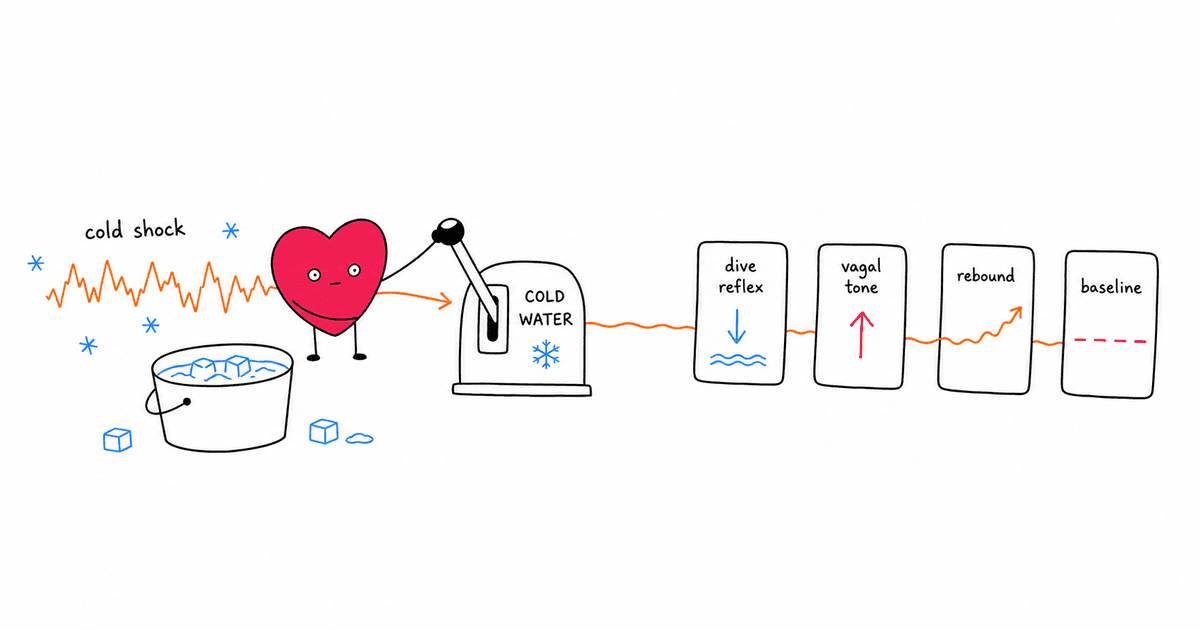
When you immerse yourself in cold water, your body initiates a powerful stress response. Your heart rate spikes, blood pressure increases, and stress hormones surge. This is the sympathetic "fight or flight" response kicking in.
But here's where it gets interesting: after the initial shock, something shifts. Your parasympathetic nervous system, the "rest and digest" branch, begins to activate. This is where the HRV benefits come from.
A 2024 systematic review and meta-analysis published in Cryobiology analyzed multiple studies on cold exposure and found significant increases in key HRV metrics:
- RMSSD increased (a primary marker of parasympathetic activity)
- RR intervals increased (indicating slower, more relaxed heart rhythm)
- High-frequency (HF) power increased (another parasympathetic marker)
- Low-frequency (LF) power decreased (suggesting reduced sympathetic activity)
The researchers concluded that cold exposure "enhanced parasympathetic activity and reduced sympathetic nervous activity."
The Science Behind the Benefits
The Dive Reflex
When cold water contacts your face, it triggers the mammalian dive reflex, an ancient survival mechanism that immediately activates vagal tone. This is why even brief facial immersion in cold water can shift your nervous system toward parasympathetic dominance.
Vagal Nerve Stimulation
The vagus nerve, which runs from your brainstem through your neck and into your organs, is responsible for parasympathetic control of your heart. Cold exposure is one of the most reliable ways to stimulate vagal activity, which directly increases HRV. Other effective approaches include biofeedback training and meditation.
Research from the American Journal of Physiology found that water immersion itself triggers parasympathetic heart control and creates a "cardioprotective environment" compared to non-water recovery.
Post-Exercise Recovery
For athletes, the timing of cold exposure matters. A study on highly trained swimmers found that five minutes of cold water immersion after training reduced the usual exercise-induced decrease in parasympathetic activity. The swimmers also reported improved sleep quality.
A 2025 systematic review on post-exercise cold water immersion confirmed these findings, concluding that CWI "may have a positive acute effect on parasympathetic reactivation as measured by HRV."
What the Data Shows: Acute vs. Long-Term Effects
During Cold Exposure
In the moment, cold exposure creates stress. Your HRV will likely drop as your sympathetic system activates. This is normal and expected.
Immediately After
Within minutes of exiting cold water, most people experience a parasympathetic rebound. Heart rate drops, and HRV begins to rise. This is often accompanied by the euphoric feeling cold plungers describe.
Hours Later
The parasympathetic benefits can persist for hours. Many people notice improved HRV readings the morning after an evening cold plunge, especially when tracked with devices like Whoop or Oura Ring.
Over Weeks and Months
With consistent practice, cold exposure appears to improve baseline vagal tone. Regular cold plungers often see their average HRV trending upward over time, suggesting improved autonomic flexibility.
How to Use Cold Exposure for HRV Benefits
Based on the research, here are evidence-based guidelines:
Temperature
- 50-59°F (10-15°C): Effective for most benefits with manageable discomfort
- Below 50°F (10°C): More intense stimulus, potentially greater vagal activation
- Ice baths (32-40°F / 0-4°C): Maximum stimulus, but requires careful progression
The 2024 meta-analysis found benefits across various temperatures, but colder generally produced stronger parasympathetic responses.
Duration
- Beginners: Start with 30 seconds to 2 minutes
- Intermediate: 2-5 minutes is the sweet spot in most studies
- Advanced: Some protocols extend to 10-15 minutes, but diminishing returns may apply
Research on swimmers used 5-minute protocols effectively. Going longer isn't necessarily better.
Frequency
- For recovery: Post-workout cold exposure 3-4 times per week
- For baseline HRV improvement: Daily brief exposures (even cold showers) show benefits
- Rest days matter: Like exercise, your body adapts during recovery
Timing
- Post-workout: Can accelerate parasympathetic reactivation and reduce delayed onset muscle soreness
- Morning: May help set autonomic tone for the day
- Evening: Some find it improves sleep quality and overnight HRV (though too close to bedtime may be stimulating for some)
Note on muscle adaptation: Some research suggests that cold exposure immediately after strength training may blunt hypertrophy gains. If building muscle is a priority, consider separating cold exposure from resistance training by several hours. Zone 2 cardio days may be a better fit for cold exposure, and monitor for signs of overtraining.
Tracking Your Cold Exposure Response
One of the best uses of HRV tracking is measuring your individual response to cold exposure. Here's how to do it:
Establish Your Baseline
Track your morning HRV for at least a week before introducing cold exposure. This gives you a personal baseline to compare against. Not sure what your numbers mean? Our guide to understanding HRV numbers explains the key metrics.
Track Consistently
Use the same device at the same time each day. Morning readings before getting out of bed (with Oura) or a consistent morning routine (with Whoop) work best.
Note Your Protocol
Record the temperature, duration, and timing of each cold exposure. Over time, you'll identify what works best for your body.
Look for Patterns
After 2-4 weeks of consistent cold exposure, compare your average HRV to your pre-cold baseline. Most people see improvement, but individual responses vary.
Cautions and Contraindications
Cold exposure isn't for everyone. Consult a healthcare provider before starting if you have:
- Cardiovascular conditions: The initial stress response can be significant
- Raynaud's disease: Cold can trigger painful episodes
- Cold urticaria: Allergic reaction to cold temperatures
- Pregnancy: Limited research on safety
Even healthy individuals should progress gradually. The goal is controlled stress that your body can adapt to, not overwhelming shock.
Cold Showers vs. Full Immersion
Don't have access to a cold plunge? Research suggests cold showers can provide some benefits, though full immersion appears more effective for HRV improvement.
A 2018 study found that regular cold showers (ending showers with 30-90 seconds of cold water) reduced sick days and improved self-reported energy. While this study didn't directly measure HRV, the autonomic benefits likely contribute.
For maximum HRV benefits, full immersion at least to chest level appears optimal. The greater surface area exposure creates a stronger autonomic stimulus.
The Bottom Line
Cold exposure is one of the most reliable ways to stimulate your parasympathetic nervous system and improve HRV. The research consistently shows:
- Acute parasympathetic activation following cold water immersion
- Improved post-exercise recovery with proper timing
- Long-term improvements in vagal tone with consistent practice
Your HRV data provides objective feedback on how your body responds. Start conservatively, track your numbers, and let the data guide your protocol.
The discomfort is temporary. The autonomic benefits can last much longer.
Related Reading
- Sauna and HRV: The Other Side of Temperature Therapy
- Red Light Therapy and HRV: Can Photobiomodulation Improve Heart Rate Variability?
- Grounding (Earthing) and HRV: Can Walking Barefoot Improve Heart Rate Variability?
- 5 Breathing Exercises to Improve Your HRV
- HRV and Stress: Understanding the Connection
- How to Improve Your HRV: Evidence-Based Strategies
- HRV for Athletes: Optimizing Performance
Need a quick read on your HRV number first?
Enter your HRV value, age range, device, and recovery context for a plain-English interpretation before you decide what to do next.
Interpret Your HRV NumberBuild the 30-day plan