How Meditation Improves Heart Rate Variability: The Science and Practice
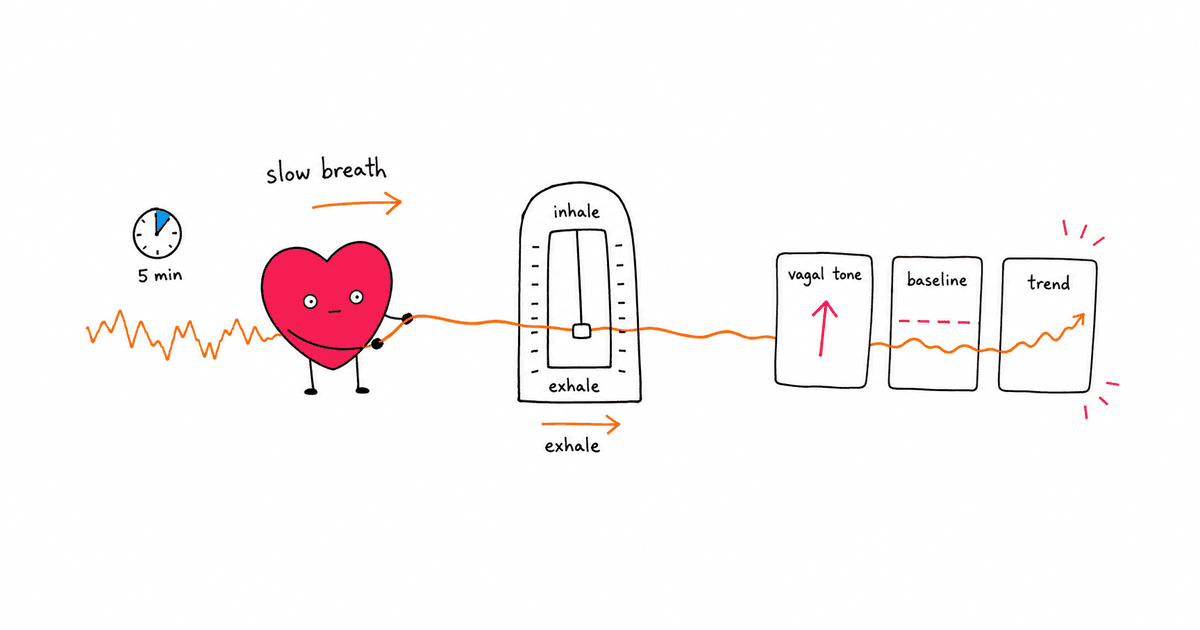
If you're looking to improve your heart rate variability, meditation might be one of the most powerful tools at your disposal. Unlike supplements or gadgets that promise quick fixes, mindfulness practice works by fundamentally shifting how your nervous system operates.
What the Research Says About Meditation and HRV
Meditation increases HRV by activating the parasympathetic nervous system and strengthening vagal tone. Multiple studies show that consistent practice, even for just 5 to 10 minutes daily, produces measurable improvements in both acute HRV readings and long-term baseline levels.
A landmark 2020 study published in PLOS One examined a 10-day online mindfulness intervention and found significant results. Participants who meditated showed increased HRV not only during their practice sessions but also in overnight measurements. Both daytime and nighttime HRV improved over the course of the program.
The mechanism is straightforward: meditation activates the vagus nerve, which is the primary pathway of your parasympathetic (rest and digest) nervous system. This vagal connection is central to polyvagal theory, which explains how our nervous system regulates social engagement and stress responses. When you meditate, you're essentially training your body to shift away from sympathetic (fight or flight) dominance. This shift shows up clearly in HRV metrics, particularly in the high-frequency (HF) component that reflects vagal activity.
Harvard Health reports that even brief meditation sessions can make a difference. One study found that people who did just five minutes of meditation daily for 10 days had better HRV compared to non-meditators.
How Different Meditation Styles Affect HRV
Not all meditation practices produce the same physiological effects. Understanding the differences can help you choose the approach that best fits your goals.
Mindfulness Meditation
Mindfulness, which involves non-judgmental awareness of the present moment, consistently shows positive effects on HRV. Research from the Frontiers in Physiology journal demonstrated that mindful breathing meditation produces immediate HRV improvements that can be measured in real time.
The key is the combination of focused attention and relaxed breathing. As you maintain awareness without trying to control anything, your nervous system naturally shifts toward parasympathetic dominance.
Loving-Kindness Meditation
Loving-kindness (metta) meditation, which involves directing feelings of compassion toward yourself and others, has been shown to increase HRV through emotional regulation pathways. This practice may be particularly effective for people whose low HRV is related to chronic stress, anxiety, or rumination.
Transcendental Meditation
Research on Transcendental Meditation (TM) shows significant HRV improvements, though the effects may take longer to manifest compared to breath-focused practices. A 2019 study in Scientific Reports found that mental contemplative training improved voluntary control over HRV. If you find silent meditation challenging, mantra-based approaches overlap with singing, humming, and chanting practices that stimulate the vagus nerve through vocalization.
HRV Biofeedback Training
HRV biofeedback combines meditation with real-time physiological feedback. You breathe at a specific pace (usually around 6 breaths per minute) while watching your HRV respond. A 2025 systematic review in Applied Psychophysiology and Biofeedback found that remote HRV biofeedback interventions effectively reduced depression, stress, and anxiety while improving HRV metrics.
The Science: Why Breathing Matters
The connection between meditation and HRV largely comes down to how you breathe. Here's what happens physiologically:
-
Respiratory sinus arrhythmia (RSA): Your heart rate naturally speeds up slightly when you inhale and slows down when you exhale. This variability is healthy and indicates good vagal tone.
-
Slow breathing amplifies RSA: When you breathe slowly (around 6 breaths per minute), you maximize this natural rhythm. This is why many meditation practices emphasize slow, deep breathing.
-
Extended exhales boost parasympathetic activity: Research shows that making your exhales longer than your inhales shifts your nervous system further toward parasympathetic dominance. A common ratio is 4 seconds in, 6 seconds out.
-
Nose breathing matters: Breathing through your nose (rather than your mouth) engages the diaphragm more effectively and may enhance the HRV benefits of meditation.
A Practical Protocol for Improving HRV Through Meditation
Based on the research, here's an evidence-based approach to using meditation for HRV improvement:
Week 1 to 2: Build the Foundation
Start with just 5 minutes of breath-focused meditation daily. Find a comfortable seated position and follow these steps:
- Close your eyes and take a few natural breaths
- Begin breathing in for 4 counts and out for 6 counts
- Focus your attention on the sensation of breathing
- When your mind wanders, gently return to the breath
- Continue for 5 minutes
The goal at this stage is consistency, not duration. Meditate at the same time each day, ideally in the morning before checking your phone or email.
Week 3 to 4: Extend and Deepen
Increase your sessions to 10 minutes. You can also add a body scan component:
- After a few minutes of breath awareness, systematically relax each body part
- Start at your feet and move upward to your head
- Notice any areas of tension and breathe into them
- Return to breath awareness for the final few minutes
Week 5 and Beyond: Diversify Your Practice
Once you've established a foundation, experiment with different techniques:
- Try loving-kindness meditation 2 to 3 times per week
- Add a short afternoon or evening session
- Explore guided meditations for variety, or try movement-based practices like yoga or tai chi which combine meditation with gentle exercise
- Consider HRV biofeedback training if you want real-time feedback
How to Track Your Progress
To see how meditation affects your HRV, you need to track your metrics consistently. Here are some guidelines:
Morning Measurements
Take your HRV reading at the same time each morning, before coffee or significant activity. This gives you a standardized baseline that reflects your overnight recovery. Most HRV apps and devices support morning readings.
During Meditation Sessions
Some people like to track HRV during meditation to see real-time improvements. If you do this, use a chest strap like the Garmin HRM-600 or Polar H10 for accuracy. Wrist-based devices can be affected by hand movements during meditation.
Weekly Trends
Don't obsess over daily fluctuations. Look at your 7-day rolling average to identify meaningful trends. After 2 to 4 weeks of consistent meditation, most people see a 5 to 15% improvement in their baseline HRV.
What Results to Expect
Research suggests the following timeline for meditation's effects on HRV:
Immediate (during practice): You should see HRV increase during meditation sessions, especially during slow breathing. This is the acute effect.
Short-term (1 to 2 weeks): You may notice improved sleep quality, reduced subjective stress, and slightly higher morning HRV readings.
Medium-term (1 to 3 months): With consistent practice, your baseline HRV should show measurable improvement. Studies typically show a 10 to 20% increase in RMSSD or SDNN metrics.
Long-term (6+ months): Advanced meditators show higher resting HRV, better stress reactivity (HRV drops less during stress), and faster recovery after stressors.
Keep in mind that HRV is affected by many factors, including sleep, alcohol, exercise, and illness. Meditation is one piece of the puzzle, not a magic solution.
Combining Meditation with Other HRV Interventions
Meditation works synergistically with other HRV-boosting practices:
- Sleep optimization: Good sleep is the foundation of healthy HRV. See our guide on HRV and sleep for details.
- Breathing exercises: Dedicated breathwork sessions (separate from meditation) can further improve HRV. Check out our breathing exercises guide.
- Cold exposure: Brief cold showers or ice baths activate the vagus nerve through the dive reflex. Learn more in our cold exposure and HRV guide.
- Reducing alcohol: Even moderate drinking lowers HRV for 24 to 72 hours. See our alcohol and HRV article.
For people with ADHD, guided breathing exercises or walking meditation may be more accessible starting points than seated practices, while still delivering parasympathetic benefits.
Getting Started: The Minimum Effective Dose
If you're new to meditation and want to improve your HRV, here's the simplest approach:
- Download a meditation app (Headspace, Calm, and Insight Timer all work well)
- Commit to 5 minutes every morning for 2 weeks
- Focus on slow breathing with extended exhales
- Track your morning HRV with your wearable device
- Look for improvement in your 7-day average after 10 to 14 days
The research is clear: meditation improves HRV. The only question is whether you'll stick with it long enough to see the benefits. Start small, be consistent, and let the data guide your practice. Given the strong link between HRV and longevity, a daily meditation habit may be one of the best investments in your long-term health. For more strategies, see our complete guide on how to improve your HRV.
Frequently Asked Questions
How long does it take for meditation to improve HRV?
Most people see acute improvements during meditation sessions immediately. Lasting baseline improvements typically appear after 10 to 14 days of consistent practice, with more significant changes over 1 to 3 months.
What type of meditation is best for HRV?
Breath-focused mindfulness meditation with slow breathing (around 6 breaths per minute) consistently shows the strongest HRV effects. Extended exhales (breathing out longer than you breathe in) are particularly effective.
Can meditation increase HRV overnight?
Yes. Research shows that meditation practice improves overnight HRV measurements, not just HRV during the meditation itself. This suggests genuine improvements in parasympathetic function.
Do I need an HRV monitor to benefit from meditation?
No. The health benefits of meditation exist whether or not you track your HRV. However, tracking can provide motivation and help you optimize your practice.
How does meditation compare to other HRV interventions?
Meditation is one of the most researched and effective ways to improve HRV. It works well alongside other interventions like sleep optimization, regular exercise, and reduced alcohol intake. For an immersive environment that amplifies meditation's parasympathetic effects, consider float tanks.
Need a quick read on your HRV number first?
Enter your HRV value, age range, device, and recovery context for a plain-English interpretation before you decide what to do next.
Interpret Your HRV NumberBuild the 30-day plan