ADHD and HRV: What Heart Rate Variability Reveals About Attention and Regulation
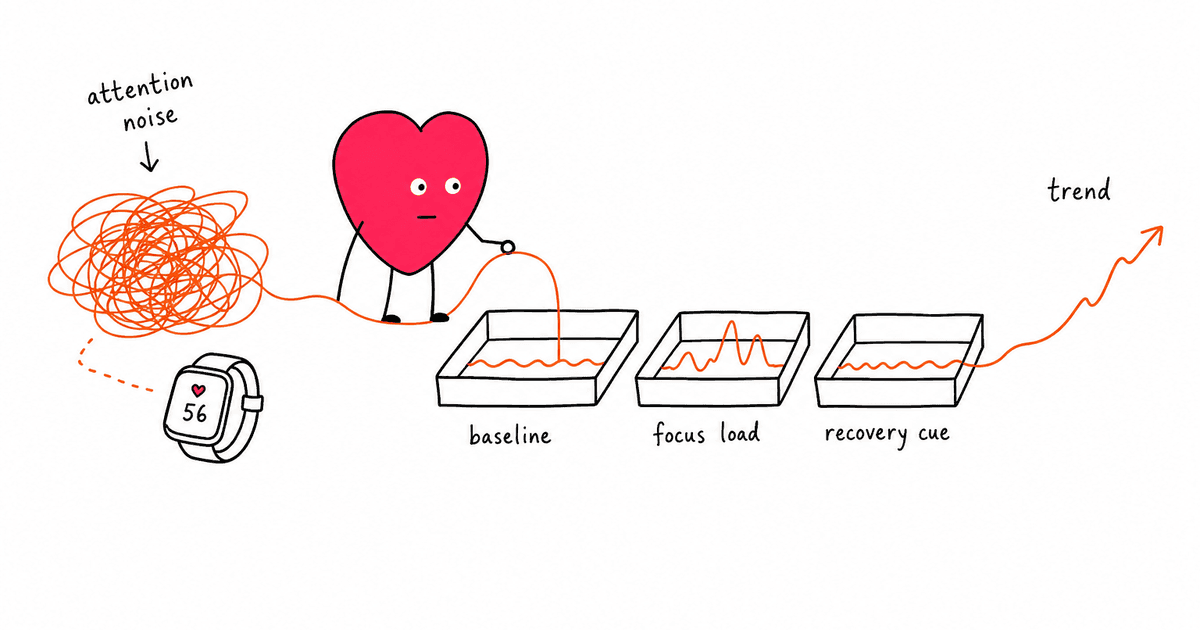
Trying to decode today's HRV number? Use the free interpreter first, then build a practical recovery plan. Interpret your HRV
Attention-deficit/hyperactivity disorder (ADHD) affects an estimated 5-7% of children and 2-5% of adults worldwide. While most people associate ADHD with difficulty focusing or sitting still, there is a growing body of research connecting ADHD to measurable changes in autonomic nervous system function, specifically lower heart rate variability.
This connection has significant implications. If ADHD is partly an autonomic regulation issue, then HRV tracking could become a valuable tool for monitoring symptoms, evaluating treatments, and guiding lifestyle interventions. For a related neurodevelopmental lens, see our guide to autism and HRV, where sensory load, social stress, anxiety, and recovery often shape the HRV picture.
What Is the Link Between ADHD and HRV?
ADHD is associated with reduced heart rate variability, reflecting impaired autonomic nervous system regulation. Multiple studies have found that both children and adults with ADHD show lower overall HRV and a shift toward sympathetic dominance compared to neurotypical controls.
A 2019 systematic review and meta-analysis published in Neuroscience & Biobehavioral Reviews examined the relationship between ADHD and task-related HRV across multiple studies. The findings confirmed that ADHD is associated with autonomic nervous system dysregulation, though the specific patterns vary depending on the type of task and measurement conditions.
This makes sense when you consider the neurobiology. The prefrontal cortex, which plays a central role in attention, impulse control, and emotional regulation, is consistently shown to be hypofunctional in ADHD. This same brain region is also responsible for higher-order autonomic control, meaning it helps regulate the balance between your sympathetic ("fight or flight") and parasympathetic ("rest and digest") nervous systems.
How ADHD Affects Autonomic Nervous System Function
The autonomic nervous system (ANS) operates in two branches: the sympathetic branch that accelerates heart rate and the parasympathetic branch (primarily the vagus nerve) that slows it down. Healthy autonomic function requires flexible, dynamic balance between these two systems.
In ADHD, this balance appears disrupted in several ways:
Reduced Parasympathetic Activity
The most consistent finding across studies is lower vagal tone in people with ADHD. A pilot study published in the Korean Journal of Pediatrics found that children with ADHD showed significantly reduced high-frequency (HF) power, the standard marker of parasympathetic activity, compared to age-matched controls.
This reduction in vagal tone connects directly to ADHD symptoms. The polyvagal theory, proposed by Stephen Porges, describes how the "smart vagus" nerve modulates sympathetic responses to support social engagement, emotional regulation, and sustained attention. When vagal function is impaired, these capacities suffer.
Sympathetic Dominance
Along with reduced parasympathetic activity, research shows an elevated LF/HF ratio in ADHD, indicating a relative shift toward sympathetic nervous system dominance. The same pilot study found a significantly higher LF/HF ratio in the ADHD group (p < 0.01), suggesting these children were operating in a more stressed, activated state even at rest.
Lower Overall HRV
Time-domain measures like SDNN (standard deviation of normal-to-normal intervals) and RMSSD (root mean square of successive differences) are also reduced in ADHD. These measures reflect the heart's overall ability to adapt to changing demands, and lower values suggest reduced flexibility in autonomic regulation.
The Prefrontal Cortex Connection
Understanding why HRV is lower in ADHD requires looking at the brain. The prefrontal cortex serves as a central hub for both executive function and autonomic regulation.
In ADHD, neuroimaging studies consistently show reduced prefrontal cortex activity. The dorsal and lateral regions (attention and motor control) and the ventral and medial regions (emotional regulation) are both affected. Critically, the medial prefrontal cortex and insular cortex also play vital roles in higher-order autonomic control.
This means the same brain dysfunction that causes attention difficulties, impulsivity, and emotional dysregulation in ADHD may also drive the autonomic imbalance that shows up as reduced HRV. The two are not separate problems but rather different manifestations of the same underlying neurobiology.
Neurotransmitter Dysregulation and HRV
ADHD involves dysregulation of two key neurotransmitters: dopamine and norepinephrine. Both play important roles in autonomic function.
Norepinephrine is particularly relevant because it serves as the primary postganglionic sympathetic neurotransmitter. It is also responsible for communication between components of the central autonomic network. When norepinephrine regulation is disrupted, as it is in ADHD, autonomic function is directly affected.
This explains why stimulant medications, which increase dopamine and norepinephrine availability, can actually improve some aspects of autonomic function in ADHD rather than simply increasing sympathetic activation.
What the Research Shows in Children
Most HRV-ADHD research has focused on children, where the findings are particularly striking (for general pediatric HRV norms, see our guide on HRV in children):
- Reduced SDNN, RMSSD, and pNN50: Time-domain parameters are consistently lower in ADHD children, indicating reduced overall HRV and parasympathetic function
- Lower total power: The overall variability of heart rate across all frequency bands is reduced
- Reduced HF power: Parasympathetic (vagal) activity is specifically diminished
- Elevated LF/HF ratio: The balance shifts toward sympathetic dominance
- 77% diagnostic accuracy: One study found that HRV parameters could distinguish ADHD from neurotypical children with an AUC of 0.77, suggesting potential as a biomarker
A 2016 study in the Canadian Journal of Physiology and Pharmacology used symbolic dynamics analysis of HRV and found it to be a promising tool for investigating cardiac sympathovagal control in ADHD, potentially offering more sensitive detection than traditional HRV metrics.
ADHD and HRV in Adults
While research in adults is less extensive, similar patterns emerge. Adults with ADHD show:
- Lower resting HRV compared to controls
- Reduced vagal tone during cognitive tasks
- Greater sympathetic reactivity to stress
A 2025 study published in Psychophysiology examining habitual worry, cognitive control, and HRV in adults with ADHD found that while HRV did not directly correlate with ADHD symptom severity, it was positively associated with the ability to focus on breathing and negatively associated with intrusive thoughts during worry tasks. This suggests HRV reflects the prefrontal cortex's capacity for emotional regulation and thought inhibition, both core challenges in ADHD.
How ADHD Medication Affects HRV
One of the most practical questions is whether ADHD medication improves autonomic function. The answer is nuanced.
Methylphenidate (Ritalin, Concerta)
A 12-week prospective study found that methylphenidate treatment in children with ADHD led to decreases in HF power and RMSSD, suggesting a shift in parasympathetic activity. However, the researchers noted this may reflect a normalization of what was previously parasympathetic overcompensation in some ADHD subtypes.
Research compiled by ADxS.org notes that methylphenidate improves HRV in persons with ADHD, though it typically does not reach the levels seen in non-affected individuals. This suggests medication addresses part of the autonomic dysfunction but not all of it.
Stimulants vs. Non-Stimulants
Different medication classes may have different effects on autonomic function. Stimulant medications tend to increase sympathetic activity (higher heart rate, slightly elevated blood pressure), while non-stimulant options like atomoxetine (a selective norepinephrine reuptake inhibitor) may have different autonomic profiles. If you are tracking HRV while on ADHD medication, these differences matter for interpreting your data.
Using HRV to Track ADHD Symptoms
If ADHD affects autonomic function, tracking HRV could provide useful insights for managing the condition. Here is how to approach it:
Establishing Your Baseline
Before drawing conclusions, collect at least 2-4 weeks of consistent HRV data. Morning measurements taken immediately after waking provide the most reliable baseline. Wearables like the Oura Ring or Whoop that measure HRV during sleep can give particularly consistent readings.
What to Watch For
- Trending HRV increases may indicate that lifestyle interventions or medication adjustments are improving autonomic regulation
- Drops in HRV could signal increased stress, poor sleep, or periods when ADHD symptoms are likely to be more pronounced
- HRV response to medication timing can help you understand how your treatment affects autonomic function throughout the day
Limitations
HRV alone cannot diagnose ADHD, and day-to-day fluctuations are normal. Many factors affect HRV, including sleep quality, exercise, alcohol, and caffeine. Use HRV as one data point alongside other symptom tracking, not as a standalone measure.
HRV Biofeedback Training for ADHD
HRV biofeedback is emerging as a promising complementary approach for ADHD management. This technique involves using real-time HRV data to train yourself to increase parasympathetic activity through controlled breathing and relaxation.
How It Works
During HRV biofeedback sessions, you breathe at a specific pace (typically around 6 breaths per minute) while monitoring your heart rate variability in real time. This resonance frequency breathing maximizes HRV and strengthens the baroreflex, the body's primary blood pressure regulation mechanism.
Evidence for ADHD
Several small studies suggest HRV biofeedback may improve attention, reduce impulsivity, and enhance emotional regulation in people with ADHD. The proposed mechanism is straightforward: by training the autonomic nervous system toward better parasympathetic-sympathetic balance, you address one of the underlying physiological patterns associated with ADHD symptoms.
While the evidence is still preliminary and larger controlled trials are needed, the approach is low-risk and can complement other treatments.
Lifestyle Strategies That May Help Both ADHD and HRV
Many lifestyle interventions that improve HRV also benefit ADHD symptoms. This overlap is likely not coincidental, as both respond to improvements in autonomic regulation.
Exercise
Regular physical activity is one of the most evidence-backed interventions for both ADHD symptoms and HRV. Aerobic exercise increases parasympathetic tone, improves prefrontal cortex function, and boosts dopamine and norepinephrine levels. Even a single bout of moderate exercise can temporarily improve attention and reduce hyperactivity in ADHD.
For HRV-optimized exercise with ADHD, consider walking, swimming, or strength training.
Sleep Optimization
Sleep deprivation devastates both HRV and ADHD symptoms. Many people with ADHD struggle with sleep onset and quality, creating a vicious cycle. Prioritizing consistent sleep timing, limiting screen time before bed, and maintaining a cool, dark bedroom can help break this cycle.
Meditation and Breathing
Meditation and breathing exercises directly target the parasympathetic nervous system. For people with ADHD who find traditional seated meditation difficult, guided breathing exercises or walking meditation may be more accessible starting points.
Nutrition
Adequate intake of omega-3 fatty acids and magnesium supports both autonomic function and neurological health. Both are commonly deficient in people with ADHD, and supplementation has shown modest benefits in research.
Tracking HRV with the Right Device
Consistent HRV tracking requires a reliable wearable. For ADHD management, overnight measurement is often most practical because it removes the need to remember a manual morning reading.
The Oura Ring measures HRV continuously during sleep and presents trends in an accessible format. The Whoop provides detailed HRV analytics with a recovery score that can help guide daily decisions. For those who prefer a watch, the Apple Watch or Garmin provide solid overnight HRV tracking alongside other useful health metrics.
For a deeper comparison, see our guide to the best HRV monitors.
Key Takeaways
ADHD is not just an attention problem. It involves measurable autonomic nervous system dysregulation that shows up as reduced heart rate variability. The same prefrontal cortex dysfunction that causes inattention and impulsivity also disrupts the body's ability to maintain flexible parasympathetic-sympathetic balance.
This connection opens practical doors. HRV tracking can provide an objective window into how well your autonomic nervous system is functioning on any given day. Lifestyle interventions that improve HRV, such as exercise, sleep optimization, breathing techniques, and proper nutrition, also tend to help with ADHD symptoms. And emerging approaches like HRV biofeedback offer a direct way to train better autonomic regulation.
If you have ADHD and are curious about your autonomic health, start with consistent HRV tracking and look for patterns. The data may reveal connections between your daily habits, treatment effectiveness, and symptom severity that subjective self-assessment alone would miss.
Frequently Asked Questions
Does ADHD cause low HRV?
ADHD is associated with lower HRV, but the relationship is complex. Both ADHD symptoms and reduced HRV appear to stem from common underlying factors, particularly prefrontal cortex dysfunction and neurotransmitter dysregulation. So ADHD does not directly "cause" low HRV, but the two share the same neurobiological roots.
Can HRV be used to diagnose ADHD?
Not as a standalone diagnostic tool. While research has found that HRV metrics can distinguish ADHD from neurotypical individuals with up to 77% accuracy, this is not sufficient for clinical diagnosis. HRV is influenced by many factors, and ADHD diagnosis requires comprehensive behavioral and cognitive assessment. HRV is better suited as a monitoring tool than a diagnostic one.
Does ADHD medication improve HRV?
Research shows mixed results. Methylphenidate appears to improve some HRV parameters in people with ADHD, though levels typically do not reach those of non-affected individuals. The effects vary by medication type, dosage, and individual response. If you are tracking HRV while adjusting medication, share the data with your prescriber for more informed treatment decisions.
What HRV range is normal for someone with ADHD?
There is no ADHD-specific "normal" HRV range. Normal HRV varies significantly based on age, fitness level, and individual factors. Instead of targeting a specific number, focus on your personal trends over time. Consistent improvements in your own baseline are more meaningful than comparing to population averages.
Is HRV biofeedback effective for ADHD?
Early research is promising but still limited. Small studies suggest HRV biofeedback can improve attention, reduce impulsivity, and enhance emotional regulation in ADHD. It works by training the autonomic nervous system toward better balance. While larger controlled trials are needed, HRV biofeedback is low-risk and can complement medication and behavioral therapies.
Need a quick read on your HRV number first?
Enter your HRV value, age range, device, and recovery context for a plain-English interpretation before you decide what to do next.
Interpret Your HRV NumberBuild the 30-day plan