Swimming and HRV: Why Water-Based Exercise Is Uniquely Good for Heart Rate Variability
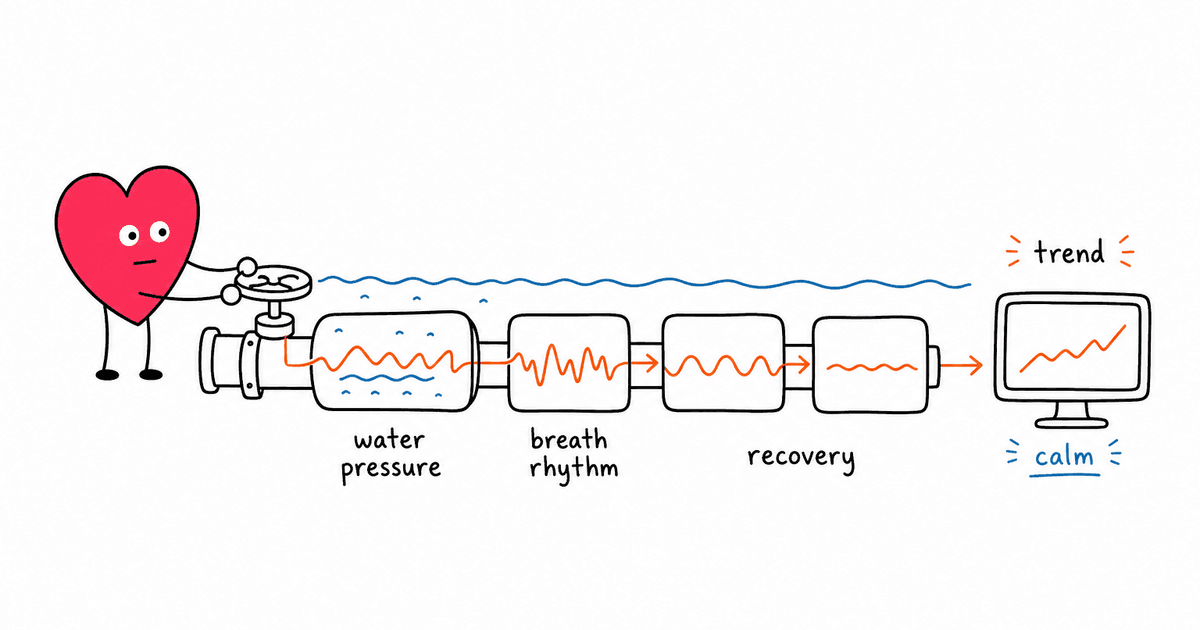
Most exercise improves HRV over time. But swimming does something no land-based workout can replicate. The moment your face contacts water, a primal reflex kicks in that immediately activates the parasympathetic nervous system, slows your heart rate, and shifts autonomic balance in a direction that directly supports higher HRV.
Combined with rhythmic breathing, horizontal body positioning, and the hydrostatic pressure of water, swimming offers a uniquely powerful package for autonomic health. Here's what the research reveals.
Does Swimming Improve HRV?
Yes, swimming improves HRV through multiple unique mechanisms including the mammalian dive reflex, hydrostatic pressure on the body, rhythmic breathing patterns, and the cardiovascular adaptations common to all endurance exercise. Research published in Sports Medicine confirms that competitive swimmers show elevated parasympathetic HRV indices compared to both sedentary individuals and athletes in some land-based sports.
What makes swimming stand apart is that several of these mechanisms are exclusive to water-based exercise. You can't trigger the dive reflex on a treadmill.
The Mammalian Dive Reflex: Swimming's Hidden Advantage
The mammalian dive reflex is an involuntary physiological response that occurs when cold water contacts the face, particularly the forehead and area around the nose. It's one of the most powerful parasympathetic triggers in the human body.
What Happens During the Dive Reflex
When your face hits the water, three things happen almost instantly:
- Bradycardia: Heart rate drops, sometimes significantly. A 2025 study in the European Journal of Cardiovascular Medicine found heart rate decreased to 57 to 65 bpm during facial immersion in cold water, with greater effects in participants aged 30 to 40
- Peripheral vasoconstriction: Blood vessels in the extremities constrict, redirecting blood to vital organs
- Vagal activation: The trigeminal nerve sends signals through the vagus nerve, directly increasing parasympathetic tone
This reflex evolved to conserve oxygen during underwater submersion, and it's present in all mammals. For swimmers, it means every lap that involves face immersion triggers a parasympathetic response that land-based athletes simply don't get.
Temperature Matters
The dive reflex is strongest in colder water. Pool temperatures of 77 to 82 degrees Fahrenheit (25 to 28 degrees Celsius) provide a moderate trigger. Open water swimming in colder temperatures amplifies the effect, overlapping with the benefits of cold exposure.
Even warm pool swimming triggers the reflex to some degree, though the parasympathetic response is less pronounced.
How the Horizontal Position Changes Everything
When you run, cycle, or lift weights, gravity pulls blood toward your lower extremities. Your heart has to work harder to pump blood uphill to your brain. Swimming eliminates this challenge entirely.
In the horizontal position, your heart doesn't fight gravity. Blood distributes more evenly across the body, and venous return to the heart increases. Research published in PMC found that this is one reason swimmers consistently record lower maximum heart rates (10 to 13 beats per minute lower) compared to runners at equivalent effort levels.
This reduced cardiovascular strain means your heart operates more efficiently during swimming, and the recovery period afterward may favor parasympathetic reactivation, the exact state that produces higher HRV readings.
Rhythmic Breathing and Vagal Tone
Swimming forces you to control your breathing in a way no other exercise demands. You can't breathe whenever you want; you must synchronize inhalation with your stroke cycle and exhale steadily underwater.
This structured breathing pattern shares similarities with breathing exercises that are specifically designed to improve HRV, and it reinforces why respiratory rate matters for recovery data. The slow, controlled exhalation phase activates the vagus nerve, while the rhythmic nature of the pattern promotes coherent heart rate oscillations.
Bilateral breathing (alternating sides every three strokes) further enforces a slow, rhythmic breathing cadence that approaches the 6-breaths-per-minute rate used in HRV biofeedback training.
Hydrostatic Pressure: A Full-Body Compression Effect
Water exerts pressure on every square inch of submerged skin. At chest depth, this hydrostatic pressure shifts approximately 700 milliliters of blood from the extremities toward the central circulation. The result is increased stroke volume (more blood pumped per heartbeat) and reduced heart rate at a given workload.
This effect is functionally similar to wearing compression garments, but it covers the entire body simultaneously. The increased central blood volume stimulates baroreceptors in the heart and major blood vessels, which trigger a reflexive increase in parasympathetic activity.
For people who struggle with exercises that spike heart rate too aggressively, the hydrostatic pressure of water provides a built-in buffering mechanism.
Swimming vs. Other Exercise for HRV
All regular exercise improves HRV over time. But swimming offers specific advantages worth understanding:
| Factor | Swimming | Running | Cycling | Strength Training |
|---|---|---|---|---|
| Dive reflex activation | Yes | No | No | No |
| Horizontal body position | Yes | No | Partial | No |
| Hydrostatic pressure | Yes | No | No | No |
| Rhythmic forced breathing | Yes | No | No | No |
| Joint impact | Near zero | High | Low | Moderate |
| Accessible for seniors | Excellent | Limited | Good | Limited |
| Zone 2 training friendly | Yes | Yes | Yes | No |
A systematic review in Sports Medicine that analyzed 14 studies on HRV in swimmers found that swimmers generally displayed favorable parasympathetic profiles. The combination of cardiovascular endurance training with the unique water-based mechanisms creates a particularly strong stimulus for autonomic health.
That said, walking, yoga, and strength training all have their own HRV benefits. The best exercise for your HRV is ultimately the one you'll do consistently.
How to Optimize Your Swimming for HRV
Swim at a Moderate Intensity
For HRV improvement, steady-state swimming in zone 2 (conversational pace) is more effective than sprint intervals. Aim to swim at a pace where you can maintain controlled breathing for 20 to 45 minutes. This duration provides enough stimulus for cardiovascular adaptation without tipping into sympathetic overdrive.
Practice Bilateral Breathing
Breathing every three strokes (alternating sides) forces a slower breathing rate and promotes balanced vagal stimulation. If bilateral breathing is too challenging at first, start with breathing every two strokes and gradually extend to three.
Include Open Water Sessions
If you have access to safe open water, outdoor swimming adds benefits beyond pool training. The colder water temperatures amplify the dive reflex, and nature exposure independently supports parasympathetic activity. Start with supervised sessions if you're new to open water.
Cool Down in the Water
Spending 5 to 10 minutes doing easy backstroke or gentle floating after your main set allows your nervous system to transition smoothly from sympathetic to parasympathetic dominance. This mirrors the recovery protocols that research associates with faster HRV rebound.
Track Your HRV Before and After
Measure your morning HRV on swim days versus rest days. Over several weeks, you should see a pattern of elevated HRV on mornings following swim sessions, particularly if you're swimming at moderate intensity.
Swimming for Specific Populations
Seniors
Swimming is one of the most accessible forms of exercise for older adults. Water buoyancy reduces body weight by up to 90%, eliminating joint stress. For seniors whose land-based exercise options may be limited by arthritis, balance concerns, or injury risk, aquatic exercise provides cardiovascular and autonomic benefits without the drawbacks.
Warm water pool therapy (88 to 92 degrees Fahrenheit) relaxes tight muscles, reduces pain from inflamed joints, and still provides resistance for building strength. Even water walking in a pool delivers meaningful cardiovascular benefit.
Athletes Using HRV for Training Guidance
Competitive swimmers often use HRV to monitor training load and recovery. A 2020 study on adolescent swimmers found that daily resting HRV fluctuations provided practical value for training decisions, with suppressed HRV signaling the need for reduced volume.
Research from 2025 showed that successful competitive swimmers displayed higher parasympathetic dominance during early taper phases, followed by a controlled shift toward sympathetic activity leading into competition. This pattern can guide periodization for serious swimmers.
People Recovering from Injury
Water's buoyancy makes swimming and aquatic exercise ideal for maintaining fitness during injury recovery. You can sustain cardiovascular conditioning (and HRV benefits) even when land-based exercise is impossible. Many physical therapists use pool-based rehabilitation precisely because it allows exercise intensity without mechanical stress.
People with Anxiety or Chronic Stress
The combination of rhythmic breathing, water immersion, and the meditative quality of lap swimming makes it particularly effective for stress and anxiety reduction. The forced breathing pattern prevents the shallow, rapid breathing common in anxious states, while the sensory experience of water immersion provides a natural form of mindfulness.
Cold Water Swimming and HRV
Open water swimming in cold temperatures (below 60 degrees Fahrenheit / 15 degrees Celsius) combines the benefits of swimming with the documented effects of cold exposure on HRV. The cold amplifies the dive reflex, triggers more pronounced vagal activation, and stimulates norepinephrine release that supports long-term autonomic resilience.
However, cold water swimming carries real risks including cold water shock and hypothermia. Always swim with others, acclimatize gradually over weeks, and never swim alone in cold open water.
Common Questions About Swimming and HRV Tracking
Can Wearables Measure HRV While Swimming?
Most wrist-based wearables can track heart rate during swimming, but accuracy decreases compared to chest straps due to water flow disrupting the optical sensor. For reliable in-water HRV data, a chest strap heart rate monitor is the better option.
For most people, tracking resting HRV the morning after swim sessions provides a clearer picture than trying to measure HRV during the swim itself.
How Often Should You Swim for HRV Benefits?
Two to four swimming sessions per week provides sufficient stimulus for HRV improvement. Consistency matters more than volume. A 2014 review in Sports Medicine found that sustained training over weeks produced more meaningful HRV adaptations than any single session.
Allow at least one rest day between hard swim sessions. Use HRV tracking to confirm that your body is recovering between sessions.
The Bottom Line
Swimming stands apart from other forms of exercise in its ability to support HRV. The mammalian dive reflex, horizontal body position, hydrostatic pressure, and forced rhythmic breathing create a combination of parasympathetic triggers that no land-based workout can match.
Whether you're a competitive swimmer, a senior looking for joint-friendly exercise, or someone seeking a new approach to autonomic health, the pool (or open water) offers measurable benefits for heart rate variability. Start with moderate-intensity sessions two to three times per week and let your HRV data tell the story.
Frequently Asked Questions
Is swimming better than running for HRV?
Swimming offers unique parasympathetic triggers (dive reflex, hydrostatic pressure) that running doesn't provide. However, both activities improve HRV through cardiovascular adaptation. The best choice depends on your preferences, physical limitations, and consistency.
Does pool temperature affect HRV benefits?
Yes. Cooler water temperatures (below 78 degrees Fahrenheit) trigger a stronger dive reflex and greater parasympathetic activation. Standard competitive pool temperatures (77 to 82 degrees Fahrenheit) still provide meaningful effects. Very warm therapy pools prioritize relaxation over dive reflex stimulation.
How long does it take for swimming to improve HRV?
Most research shows measurable HRV improvements after 4 to 8 weeks of consistent training (2 to 4 sessions per week). Individual responses vary based on baseline fitness, age, and training intensity. Track your morning HRV trends weekly rather than daily for the clearest picture.
Can you get the dive reflex benefit without swimming laps?
Yes. Simply immersing your face in cold water activates the dive reflex. Water walking, aqua aerobics, and even splashing cold water on your face trigger parasympathetic activation. However, lap swimming combines the dive reflex with cardiovascular training for the most complete HRV benefit.
Should I use a waterproof HRV monitor while swimming?
For in-water heart rate data, a waterproof chest strap provides the most accurate readings. Wrist-based optical sensors lose accuracy in water. For HRV specifically, morning resting measurements (taken out of the water) give a more reliable assessment of how swimming affects your autonomic health over time.
Need a quick read on your HRV number first?
Enter your HRV value, age range, device, and recovery context for a plain-English interpretation before you decide what to do next.
Interpret Your HRV NumberBuild the 30-day plan