HRV for Seniors: Understanding Age-Related Changes and How to Improve
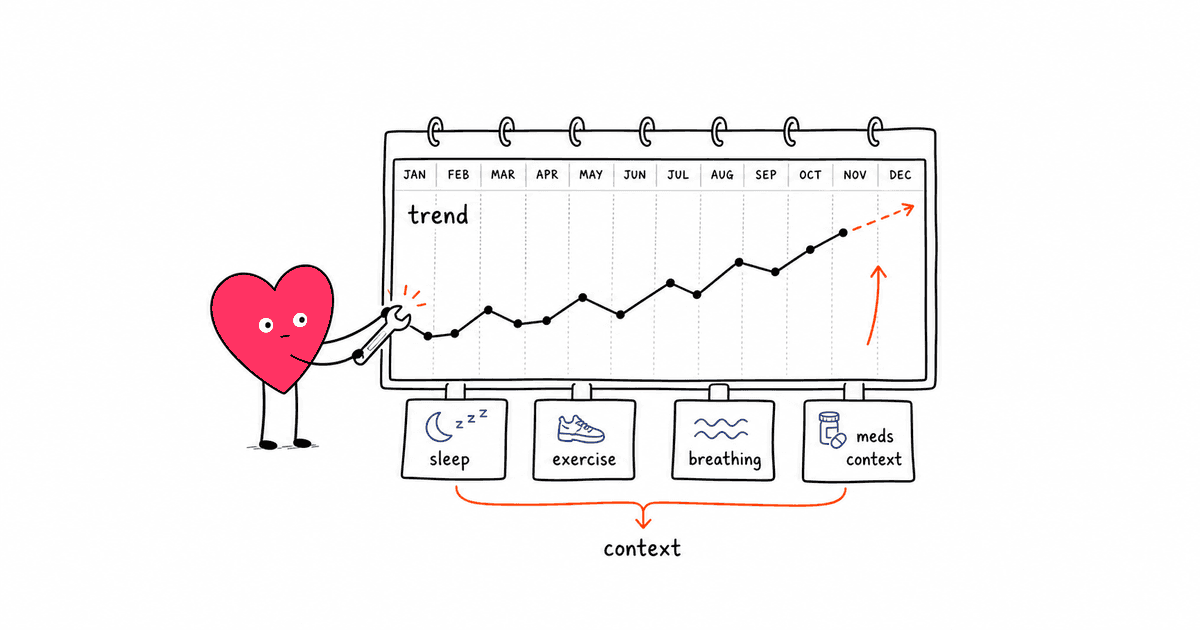
Trying to decode today's HRV number? Use the free interpreter first, then build a practical recovery plan. Interpret your HRV
Heart rate variability naturally declines as we age. This isn't a character flaw or a sign of failure. It's a biological reality that affects everyone. But here's what makes HRV tracking valuable for older adults: the rate of decline varies enormously between individuals, and research shows that lifestyle factors can significantly slow or even partially reverse age-related changes.
If you're new to HRV, start with our guide on what HRV is and why it matters. This guide focuses specifically on HRV in adults 60 and older, covering what to expect, what the research shows, and practical strategies for maintaining autonomic health.
How HRV Changes With Age
HRV declines progressively throughout adulthood, with the steepest drops typically occurring between ages 30-60 and continuing more gradually afterward. By age 70, average HRV values are roughly 30-50% lower than at age 30, though individual variation is substantial.
A landmark study tracking over 900 healthy adults across nine decades found consistent patterns:
- SDNN (overall variability) decreases steadily with age
- RMSSD (parasympathetic marker) shows similar decline
- The rate of decline varies significantly between individuals
- Gender differences exist: women often show different patterns than men, particularly around menopause
What's Driving the Decline?
Several age-related changes contribute to lower HRV:
Autonomic nervous system changes: Both the parasympathetic (rest and digest) and sympathetic (fight or flight) branches become less responsive. The vagus nerve, which drives high-frequency HRV, shows reduced signaling efficiency.
Cardiovascular stiffening: Arteries and the heart itself become less flexible with age. This affects how quickly the cardiovascular system can respond to changing demands.
Chronic low-grade inflammation: "Inflammaging" refers to the subtle, persistent inflammation that accompanies aging. This systemic inflammation disrupts autonomic signaling.
Reduced baroreceptor sensitivity: The sensors that detect blood pressure changes and trigger compensatory heart rate adjustments become less responsive.
Accumulated health conditions: Hypertension, diabetes, cardiovascular disease, and recovery after events like stroke can independently lower or complicate HRV.
What's Normal for Your Age?
Comparing your HRV to younger populations is misleading. For a broader look at how HRV shifts across all life stages, see our guide on HRV by age. Here are approximate ranges for older age groups, based on overnight RMSSD measurements (a common metric used by wearables):
| Age Range | Typical RMSSD (ms) | Notes |
|---|---|---|
| 60-64 | 25-45 | Higher end with excellent fitness |
| 65-69 | 20-40 | Decline continues gradually |
| 70-74 | 18-35 | Individual variation increases |
| 75-79 | 15-30 | Fitness and health status matter more |
| 80+ | 12-28 | Very wide individual variation |
Important caveats:
- These are rough estimates. Individual variation is enormous.
- Your personal trend matters more than absolute numbers.
- Higher isn't always better in older adults (see below).
- Different devices and measurement conditions produce different values.
A Note on Very High HRV in Older Adults
In younger populations, higher HRV is generally better. In older adults, this relationship becomes more complex.
Research shows that unusually high HRV in seniors can sometimes indicate rhythm irregularities rather than superior autonomic function. Atrial fibrillation and frequent premature beats can artificially inflate HRV measures. For more on the cardiovascular implications, see our article on HRV and heart disease. If your HRV suddenly increases significantly without obvious cause (like starting an exercise program), it's worth discussing with your doctor.
The goal isn't to maximize HRV but to maintain stable, healthy autonomic function appropriate for your age.
Why HRV Matters More as You Age
Tracking HRV becomes increasingly valuable with age because:
Mortality Prediction
The Framingham Heart Study found that reduced HRV in older adults independently predicted all-cause mortality over 4-year follow-up. Lower HRV was associated with increased risk even after accounting for other cardiovascular risk factors.
This doesn't mean low HRV causes early death. It reflects that HRV serves as an integrative marker of overall physiological health.
Frailty Detection
Research published in the journal Frontiers in Aging Neuroscience found that HRV correlates with frailty status in older adults. Those classified as frail or pre-frail showed lower HRV compared to robust peers, particularly during physical activity.
HRV may help identify early autonomic decline before clinical frailty becomes apparent.
Recovery Monitoring
Older adults typically need longer recovery times from stress, illness, and exercise. HRV provides objective feedback about recovery status, helping you avoid overexertion while maintaining appropriate activity levels.
Cognitive Connection
Multiple studies link HRV to cognitive function in older adults. A 2020 Frontiers review concluded that HRV "mainly relates to cognitive executive functions in older age." Maintaining autonomic health may support brain health as well.
That context becomes especially important when cognitive changes, Parkinson's symptoms, or dementia risk enter the picture. For condition-specific guidance, see our guides to dementia and HRV and Parkinson's disease and HRV.
Proven Strategies to Improve HRV in Older Adults
The encouraging news: research demonstrates that older adults can improve HRV through lifestyle interventions. The autonomic nervous system retains plasticity throughout life.
1. Aerobic Exercise
A meta-analysis of 12 studies involving adults over 60 found that aerobic exercise training positively affects HRV indices. The key findings:
- Moderate-intensity aerobic exercise (walking, swimming, cycling) produced measurable HRV improvements
- Effects were seen with programs lasting 8-12 weeks
- Consistency mattered more than intensity
- Benefits occurred even with modest exercise volumes
Practical approach:
- Aim for 150+ minutes weekly of moderate activity
- Walking is excellent and accessible
- Zone 2 training (conversational pace) is particularly effective
- Start where you are and progress gradually
For older adults who enjoy social sports, pickleball can also fit well, but it usually carries more recovery cost than walking and deserves the same pacing and warm-up care as any other workout.
If you're new to exercise or have health conditions, consult your doctor before starting a program.
Isometric exercises like wall sits and handgrip training are another excellent option for older adults. Research shows they are particularly effective at lowering blood pressure and improving autonomic function, and they require no equipment, minimal joint stress, and just 15-20 minutes per session.
2. Breathing Exercises
Slow, paced breathing directly activates the parasympathetic nervous system. This is one of the most immediately effective interventions for HRV, regardless of age.
Research shows that breathing at approximately 6 breaths per minute (5 seconds in, 5 seconds out) maximizes respiratory sinus arrhythmia, the natural increase in heart rate with inhalation and decrease with exhalation.
Getting started:
- Practice for 5-10 minutes daily
- Use a breathing app with visual pacing
- Extend exhalation slightly longer than inhalation
- Our guide on breathing exercises for HRV covers techniques in detail
3. Sleep Optimization
Quality sleep is foundational for HRV recovery, and sleep architecture changes with age. Many older adults experience:
- More fragmented sleep
- Reduced deep sleep stages
- Earlier wake times
- More frequent nighttime awakenings
Improving sleep quality often produces noticeable HRV improvements.
Sleep strategies for seniors:
- Maintain consistent sleep and wake times
- Limit fluids 2-3 hours before bed
- Keep the bedroom cool and dark
- Manage pain that disrupts sleep
- Discuss sleep apnea screening with your doctor if you snore or wake unrefreshed
For more depth, see our guide on HRV and sleep.
4. Stress Management
Chronic stress accelerates autonomic aging. Interventions that reduce stress consistently improve HRV across age groups.
Evidence-based approaches:
- Meditation (even 10 minutes daily helps)
- Yoga or tai chi (combines movement with stress reduction)
- Social connection (loneliness is a significant stressor)
- Time in nature
- Engaging hobbies
The specific technique matters less than consistent practice. Choose approaches you'll actually do.
5. Anti-Inflammatory Nutrition
Diet influences HRV through effects on inflammation and gut health. Research supports:
- Mediterranean-style eating patterns
- Adequate omega-3 fatty acids (fatty fish, fish oil)
- Minimizing ultra-processed foods
- Colorful vegetables and fruits (polyphenols)
- Adequate hydration
Small, sustainable dietary improvements compound over time. Our guide on nutrition and HRV covers this in detail.
6. Medication Review
Many common medications in older adults can affect HRV:
- Beta-blockers (lower heart rate, may affect HRV metrics)
- Anticholinergic medications (can reduce parasympathetic activity)
- Some antidepressants
- Certain cardiac medications
Don't stop any medications without medical guidance, but periodic medication reviews with your doctor can identify opportunities to reduce medications that aren't essential.
Tracking HRV as an Older Adult
Choosing a Device
Several wearables work well for seniors:
Oura Ring: Non-intrusive ring form factor, excellent overnight tracking, no screen to navigate. Good choice if you don't want something on your wrist.
Whoop: Continuous monitoring with strain and recovery scores. Better for active seniors who want workout guidance.
Apple Watch: Familiar interface, health app integration, fall detection (valuable safety feature). Requires daily charging.
Garmin watches: Long battery life, robust fitness tracking, body battery feature. Good for outdoor activities.
Best Practices for Seniors
-
Measure consistently: Same time, same conditions (ideally overnight or first thing in the morning)
-
Focus on trends: Day-to-day variation is normal. Look at weekly and monthly patterns. Our guide on understanding HRV numbers explains what the key metrics mean.
-
Account for health events: Illness, poor sleep nights, and medication changes affect readings. Note these in your device's journal feature.
-
Don't obsess over numbers: HRV is one data point among many. It should inform, not cause anxiety.
-
Share with healthcare providers: HRV trends can be valuable information for your doctor, especially if you notice significant changes.
When to Be Concerned
Contact your healthcare provider if you notice:
- Sudden, sustained drop in HRV without obvious cause
- HRV changes accompanied by symptoms (fatigue, chest discomfort, shortness of breath)
- Irregular heart rhythm notifications from your device
- Sudden unexplained increase in HRV (possible rhythm issue)
HRV tracking isn't a substitute for medical care, but it can provide early warning signs worth investigating.
The Longevity Connection
Research on centenarians and "super-agers" reveals interesting patterns. A study published in Frontiers in Physiology examining exceptionally long-lived individuals found that many maintained relatively preserved HRV compared to their chronological age.
This aligns with the broader understanding of HRV as a marker of physiological resilience. Those who age successfully tend to maintain better autonomic function.
Does improving HRV extend lifespan? We can't say definitively, but the interventions that improve HRV (exercise, stress management, quality sleep, good nutrition) are the same ones associated with healthy aging more broadly.
For more on this topic, see our guide on HRV and longevity.
The Bottom Line
HRV decline with age is natural, but the rate and extent vary enormously between individuals. Research shows that older adults retain the capacity to improve their autonomic function through exercise, breathing practices, sleep optimization, stress management, and nutrition.
The goal isn't to achieve the HRV of a 30-year-old. It's to maintain the best possible autonomic health for your individual situation, support recovery from daily stressors, and gain objective insight into your body's resilience.
Start with the fundamentals: regular moderate exercise, quality sleep, and stress management. Track your HRV consistently to observe how your body responds. Discuss significant changes with your healthcare provider.
Aging is inevitable. How well you age is, within limits, still within your influence.
For more ways to improve your HRV, explore our guides on breathing exercises, meditation, and cold exposure (approach with caution if you have cardiovascular conditions).
Need a quick read on your HRV number first?
Enter your HRV value, age range, device, and recovery context for a plain-English interpretation before you decide what to do next.
Interpret Your HRV NumberBuild the 30-day plan