Zone 2 Training and HRV: Build Your Aerobic Base While Boosting Recovery
Trying to decode today's HRV number? Use the free interpreter first, then build a practical recovery plan. Interpret your HRV
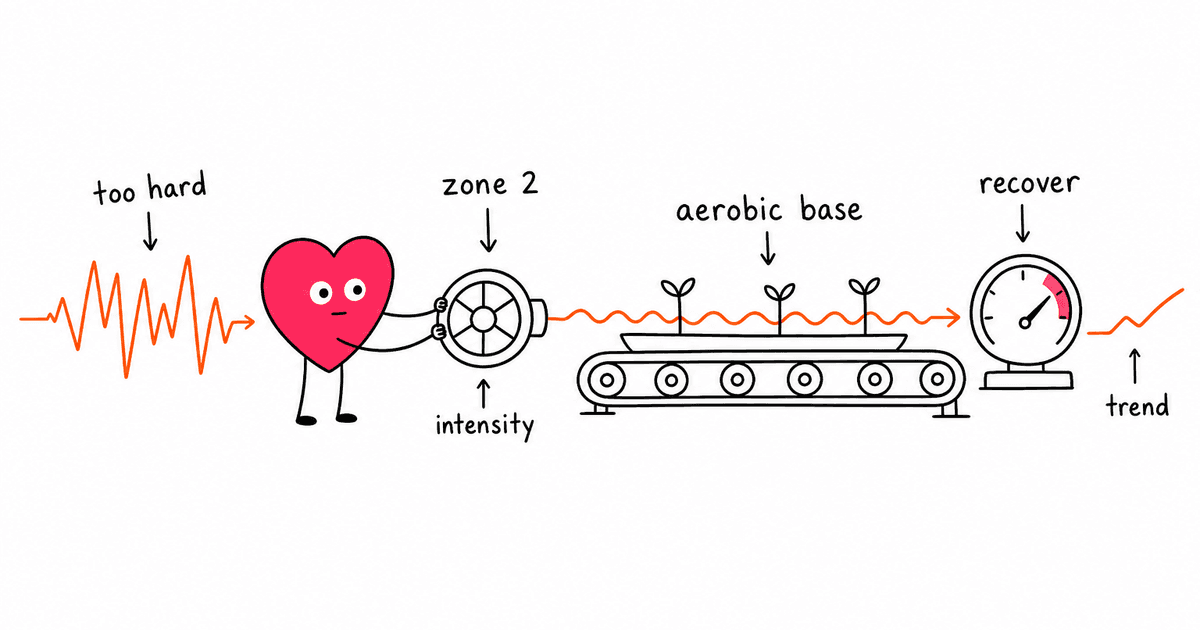
Zone 2 training has become one of the most discussed topics in fitness and longevity circles. Athletes like marathon champions and Tour de France cyclists have long known its value, but now research confirms what they've practiced for decades: training at moderate intensity improves not just endurance, but also heart rate variability (HRV). If you want to build sustainable fitness while supporting your recovery, Zone 2 deserves a central place in your training.
What Is Zone 2 Training?
Zone 2 is a moderate-intensity exercise level where you can hold a conversation while training, typically 60-70% of your maximum heart rate. At this intensity, your body primarily burns fat for fuel and your aerobic system does most of the work. It feels comfortable, perhaps deceptively easy, but the physiological adaptations are profound.
Finding Your Zone 2
The simplest way to identify your Zone 2 uses the Karvonen formula, which accounts for your resting heart rate:
Zone 2 lower limit = ((Max HR - Resting HR) × 0.60) + Resting HR
Zone 2 upper limit = ((Max HR - Resting HR) × 0.70) + Resting HR
For example, if your max heart rate is 185 and your resting heart rate is 55:
- Lower limit: ((185 - 55) × 0.60) + 55 = 133 bpm
- Upper limit: ((185 - 55) × 0.70) + 55 = 146 bpm
The Talk Test
If you don't know your exact heart rate zones, use the talk test: you should be able to speak in complete sentences without gasping. If you're breathing too hard to talk comfortably, slow down. If you can sing, speed up slightly.
How Zone 2 Training Improves HRV
Zone 2 exercise creates a cascade of adaptations that directly benefit your heart rate variability.
Parasympathetic Enhancement
Regular Zone 2 training increases parasympathetic (rest and digest) activity in your autonomic nervous system. Research shows that this type of aerobic exercise:
- Decreases sympathetic nervous system activation
- Increases vagal tone (parasympathetic activity)
- Results in higher HRV over time
This is the opposite of what happens with chronic high-intensity training, which can suppress HRV by keeping you in a sympathetic-dominant state.
Cardiovascular Adaptations
Zone 2 training strengthens your cardiovascular system in ways that directly support higher HRV:
- Lower resting heart rate: As your heart becomes more efficient, it pumps more blood per beat, allowing it to beat less frequently at rest
- Improved stroke volume: Your heart's chambers adapt to hold and pump more blood
- Enhanced blood vessel function: Better endothelial function supports cardiovascular health
These adaptations create the physiological foundation for higher HRV.
Mitochondrial Benefits
Zone 2 is uniquely effective at building mitochondrial density and function. Your mitochondria are the energy powerhouses of your cells, and Zone 2 trains them to:
- Use fat more efficiently as fuel
- Produce energy with less metabolic stress
- Clear lactate more effectively
Better mitochondrial function means your body handles all types of stress more efficiently, which supports recovery and HRV.
The Research on Zone 2 and HRV
Studies consistently show that aerobic base training improves HRV:
- One case study of a year of consistent Zone 2 cardio showed a 10-point improvement in HRV alongside better resting heart rate
- Research on endurance athletes shows that those who spend more time in lower training zones have higher baseline HRV
- Studies comparing training intensities find that low-intensity work (Zone 1 and 2) produces minimal stress on the system, even at high volumes
This is why elite endurance athletes often spend 80% or more of their training time in Zone 2.
Zone 2 vs. High-Intensity Training for HRV
Both Zone 2 and high-intensity interval training (HIIT) have their place, but they affect HRV very differently.
High-Intensity Training
- Creates acute stress that temporarily suppresses HRV
- Requires significant recovery time
- Can lead to overtraining if done too frequently
- Most effective in small doses (1-2 sessions per week)
Zone 2 Training
- Creates minimal acute stress on the system
- Supports rather than hinders recovery
- Can be done frequently without accumulating fatigue
- Builds the aerobic base that supports all other training
The key insight: Zone 2 allows you to accumulate training volume without the recovery cost of high-intensity work. This makes it ideal for improving both fitness and HRV simultaneously.
How to Implement Zone 2 Training
Starting Out
If you're new to Zone 2, you might be surprised how slow it feels. Many people find they need to walk or jog very slowly to stay in the zone. This is normal and will improve as your aerobic base develops.
Start with:
- 2-3 sessions per week
- 30-45 minutes per session
- Activities like walking, easy cycling, swimming, or light jogging
Building Volume
As your fitness improves, gradually increase:
- Session duration (up to 60-90 minutes)
- Weekly frequency (3-4+ sessions)
- Consistency over weeks and months
The magic of Zone 2 is that it's sustainable. You can do it frequently without needing days off to recover.
Zone 2 Activities
Almost any cardio activity can work for Zone 2 training:
- Walking: Perfect for beginners or recovery days, and light rucking can work too if the load stays low enough that you can still talk comfortably
- Jogging/Running: Slower than you think for most people
- Cycling: Indoor or outdoor, easy resistance
- Swimming: Relaxed, continuous laps
- Rowing: Steady, moderate pace
- Jump rope: Only if you can keep the effort relaxed and conversational. Most beginners should treat rope work as intervals, not Zone 2.
- Elliptical: Good for those with joint concerns
The best activity is one you'll actually do consistently.
Tracking Zone 2 and HRV Together
Monitoring both your training zones and HRV creates a powerful feedback loop.
What to Track
- During training: Heart rate to ensure you're in Zone 2
- Daily: Morning HRV to assess recovery and adaptation
- Weekly: HRV trends and resting heart rate changes
- Monthly: Pace/power at Zone 2 heart rate (fitness improvement)
Signs of Progress
As your Zone 2 training takes effect, you should see:
- Higher baseline HRV: Your average HRV increases over weeks and months
- Lower resting heart rate: Often drops 5-10+ bpm with consistent training
- Faster pace at same heart rate: You can run, cycle, or swim faster while staying in Zone 2, one reason VO2 max and HRV often rise together even though they measure different things
- Better HRV recovery: Your HRV bounces back faster after hard efforts, and your heart rate recovery time improves
- Less heart rate drift: Your heart rate stays more stable during long sessions
Best Devices for Zone Training and HRV
These devices help you track both training zones and HRV effectively:
-
Garmin Forerunner 265: Excellent heart rate zone guidance during workouts plus HRV status tracking
-
Whoop: Tracks strain by heart rate zones and provides detailed HRV-based recovery metrics
-
Polar Vantage V3: Known for accurate optical HR and comprehensive training load analysis
-
Oura Ring: Excellent for daily HRV tracking, though less ideal for real-time workout monitoring
-
Garmin HRM-600: Chest strap for maximum accuracy during Zone 2 training sessions
For the most accurate training data, consider using a chest strap during workouts and a wrist-based device for daily HRV monitoring.
Common Zone 2 Mistakes
Going Too Fast
The most common mistake is training too hard. Zone 2 should feel easy. If you're breathing heavily or unable to talk, slow down. Your ego might resist, but your cardiovascular system will thank you.
Not Giving It Time
Zone 2 adaptations take months, not weeks. Expect to spend 8-12 weeks of consistent training before seeing significant HRV improvements. This is building a foundation, not a quick fix.
Neglecting Other Zones
While Zone 2 should make up the majority of your training, don't completely eliminate higher intensity work. A polarized approach (80% low intensity, 20% high intensity) often works best for both fitness and HRV.
Inconsistent Training
Sporadic Zone 2 sessions won't build your aerobic base. Consistency matters more than occasional long sessions. Three 45-minute sessions per week beats one 2-hour session.
Zone 2 for Different Goals
For Endurance Athletes
Zone 2 forms the foundation of your training pyramid. Most elite endurance athletes spend 75-80% of their training time here. This builds the aerobic engine that powers all your harder efforts.
For Recreational Exercisers
Zone 2 makes exercise sustainable and enjoyable. It's low stress, low injury risk, and delivers significant health benefits. Even 150 minutes per week (just over 20 minutes per day) creates meaningful adaptations.
For Longevity and Health
Research increasingly links Zone 2 training to metabolic health and longevity. It improves:
- Insulin sensitivity
- Mitochondrial function
- Cardiovascular health
- Stress resilience
Combined with its HRV benefits, Zone 2 may be one of the best investments in long-term health.
For Recovery
Counterintuitively, easy Zone 2 activity can support recovery better than complete rest. Light movement increases blood flow, which helps clear metabolic waste and deliver nutrients to recovering tissues. Active recovery in Zone 2 often improves HRV faster than doing nothing.
Combining Zone 2 with Other HRV Strategies
Zone 2 training works synergistically with other HRV-boosting practices:
- Quality sleep: Provides the recovery time needed for training adaptations
- Breathing exercises: Enhance parasympathetic activity between workouts
- Meditation: Complements the stress-reducing effects of aerobic exercise
- Proper nutrition: Supports energy needs and recovery
- Adequate hydration: Maintains cardiovascular efficiency
- Strength training: Complements aerobic base with resistance work
Think of Zone 2 as one pillar of a comprehensive approach to autonomic health. For the full picture, see our guide on how to improve your HRV.
Getting Started: A Simple Plan
If you're new to Zone 2 training, here's a 4-week starter plan:
Week 1-2: Baseline
- 3 sessions of 20-30 minutes
- Walk, easy jog, or cycle
- Focus on staying in Zone 2 (use the talk test)
- Track morning HRV daily
Week 3-4: Building
- 3-4 sessions of 30-40 minutes
- Continue tracking heart rate and HRV
- Note any improvements in how easy the sessions feel
Beyond
- Gradually increase to 45-60 minute sessions
- Add a 4th weekly session if desired
- After 8-12 weeks, compare HRV trends to baseline
The Bottom Line
Zone 2 training is one of the most effective ways to improve your HRV while building sustainable fitness. It works by:
- Enhancing parasympathetic nervous system activity
- Strengthening your cardiovascular system
- Building mitochondrial density and function
- Creating adaptations without excessive stress
The approach requires patience. Zone 2 feels slow, and results take months rather than weeks. But the payoff is substantial: better HRV, lower resting heart rate, improved endurance, and a foundation for long-term health.
Start with just 2-3 sessions per week, keep the intensity low enough to hold a conversation, and track your progress with HRV monitoring. In a few months, you'll likely see meaningful improvements in both your fitness and your recovery metrics.
Frequently Asked Questions
How often should I do Zone 2 training?
For most people, 3-4 sessions per week of 45-60 minutes provides significant benefits. Elite endurance athletes often do more, but this frequency works well for general health and HRV improvement.
Will Zone 2 training alone improve my HRV?
Zone 2 is highly effective for HRV improvement, but results are enhanced when combined with quality sleep, stress management, and proper nutrition. It's one piece of the puzzle.
How long until I see HRV improvements from Zone 2?
Most people notice changes in 8-12 weeks of consistent training. Initial improvements often show up as lower resting heart rate, with HRV increases following.
Can I do Zone 2 every day?
Yes, Zone 2 is sustainable enough for daily training. However, most people see excellent results with 3-5 sessions per week while leaving time for other activities and recovery.
What if I can't stay in Zone 2 while jogging?
Walk instead. Many people, especially those new to structured training, need to walk or alternate walking and jogging to stay in Zone 2. This is completely normal and will improve as your fitness develops.
Is Zone 2 the same as fat-burning zone?
There's significant overlap. Zone 2 is the intensity where your body primarily uses fat for fuel, which is why it's often called the fat-burning zone. However, the primary goal isn't weight loss; it's building aerobic capacity and cardiovascular health.
Need a quick read on your HRV number first?
Enter your HRV value, age range, device, and recovery context for a plain-English interpretation before you decide what to do next.
Interpret Your HRV NumberBuild the 30-day plan