Omega-3 Fatty Acids and HRV: What the Research Actually Shows
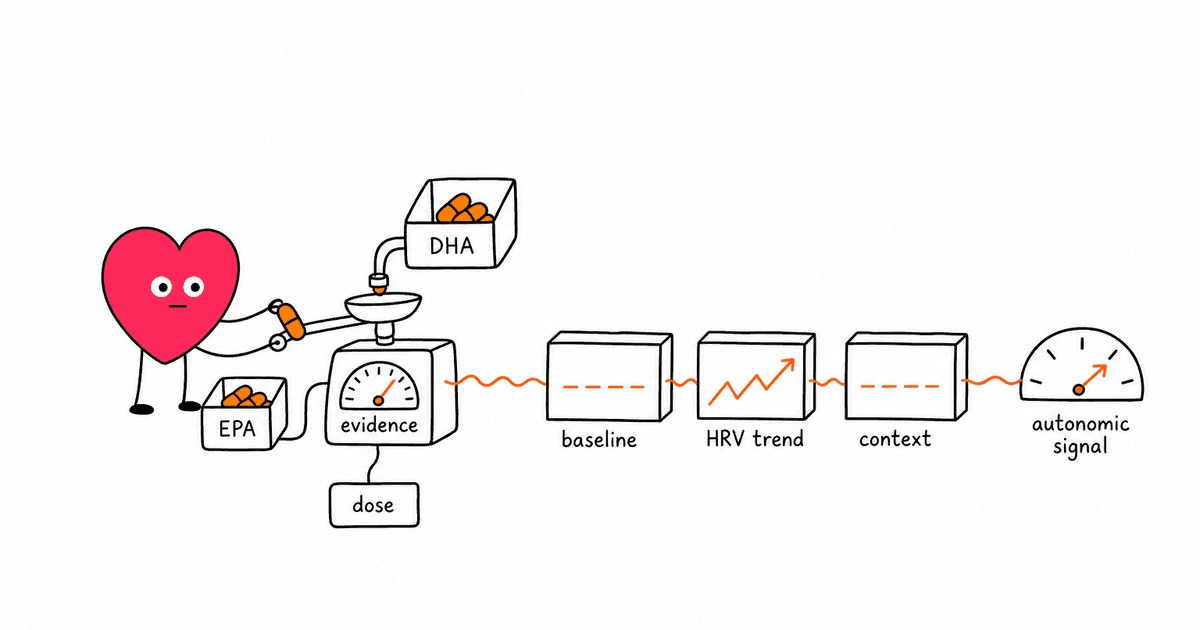
Omega-3 fatty acids have earned a reputation as one of the most evidence-backed nutrients for cardiovascular health. But beyond the well-known benefits for cholesterol and inflammation, researchers have been investigating a more nuanced question: can omega-3s improve heart rate variability?
If you're new to HRV, start with our guide on what HRV is and why it matters. In this article, we'll examine the research connecting omega-3 fatty acids to autonomic nervous system function and HRV.
How Omega-3s Affect HRV
Omega-3 fatty acids, particularly EPA and DHA, support higher HRV through multiple mechanisms: reducing systemic inflammation, modifying cell membrane fluidity, and directly influencing vagal tone. Research suggests these effects can translate to measurable improvements in autonomic balance.
The two main omega-3s relevant to HRV are eicosapentaenoic acid (EPA) and docosahexaenoic acid (DHA). Both are found in fatty fish and marine algae, and they work through distinct but complementary pathways.
The Inflammation Connection
Chronic low-grade inflammation is one of the primary drivers of reduced HRV as we age. This "inflammaging" disrupts the autonomic nervous system and shifts the body toward sympathetic dominance.
Omega-3 fatty acids are potent anti-inflammatory agents. They compete with omega-6 fatty acids (which tend to be pro-inflammatory) in cell membranes and reduce the production of inflammatory cytokines. A 2025 review in Frontiers in Neuroscience confirmed that omega-3s act as "modulators of autonomic balance, inflammation, and cellular signaling, thereby improving HRV and potentially reducing cardiovascular risk."
Cell Membrane Effects
DHA, in particular, incorporates into cell membranes throughout the body, including cardiac tissue. This changes the physical properties of cell membranes, affecting how ion channels function and how cells respond to neural signals.
In the heart, these membrane changes can influence the electrical stability of cardiac cells and the responsiveness of the sinoatrial node (your heart's natural pacemaker) to vagal input.
Direct Vagal Effects
Some research suggests omega-3s may directly enhance vagal tone, the parasympathetic influence on the heart that's closely associated with higher HRV. The exact mechanisms are still being studied, but likely involve effects on brainstem nuclei that control autonomic output.
What Does the Research Say?
Dose-Dependent Effects
A landmark study published in the Journal of the American College of Cardiology examined how different doses of EPA and DHA affected HRV in adults with elevated triglycerides. Participants received either placebo or varying doses of omega-3s for 8 weeks.
Key findings:
- Doses of 1.8g EPA+DHA daily produced significant improvements in time-domain HRV measures
- Effects were most pronounced during acute stress tasks
- Lower doses showed less consistent results
This suggests that adequate dosing matters. The typical 300-500mg found in standard fish oil capsules may not be enough to meaningfully impact HRV.
Effects in Different Populations
In coronary artery disease patients: A study in Pharmacological Research found that omega-3 supplementation (850mg EPA+DHA daily) increased HRV in patients with existing heart disease. The researchers observed improvements in both time-domain and frequency-domain measures over 4 months.
In depression with heart disease: Research in Biological Psychiatry examined depressed patients with coronary heart disease, a population known for reduced HRV. Omega-3 supplementation (2g daily) increased the very low frequency (VLF) component of HRV, which reflects thermoregulation and hormonal influences on heart rhythm.
In overweight children: A 2025 study in Pediatric Research found that children with overweight or obesity who received 400mg EPA + 200mg DHA daily for three months showed significant improvements in RMSSD, SDNN, and pNN50, all key HRV metrics.
Protection Against Environmental Stress
One fascinating finding: omega-3s appear to protect HRV from environmental stressors. A study in the American Journal of Respiratory and Critical Care Medicine found that fish oil supplementation blunted the HRV-lowering effects of particulate matter air pollution. During the pre-supplementation phase, exposure to fine particles (PM2.5) reduced HRV by 54%. During supplementation, the same exposure only reduced HRV by 7%.
This suggests omega-3s may help maintain autonomic resilience in the face of various stressors.
EPA vs DHA: Does It Matter?
Both EPA and DHA contribute to cardiovascular benefits, but they work through somewhat different mechanisms.
EPA:
- Stronger anti-inflammatory effects
- Competes more effectively with omega-6 fatty acids
- May have more pronounced effects on mood and inflammation
DHA:
- More readily incorporates into cell membranes
- Higher concentrations in brain and cardiac tissue
- May have stronger direct effects on neural function
For HRV specifically, research hasn't definitively established whether one is superior. Most studies showing HRV benefits used combinations of both. The general recommendation is to consume both EPA and DHA rather than isolated forms.
Optimal Dosing for HRV
Based on the research, here are evidence-based dosing guidelines:
| Goal | EPA+DHA Dose | Duration |
|---|---|---|
| General cardiovascular support | 1-2g daily | Ongoing |
| HRV improvement | 1.8-2g daily | 8+ weeks |
| Therapeutic (with medical oversight) | 2-4g daily | As directed |
Important considerations:
- Effects take time to develop. Don't expect changes in days or even weeks.
- Most studies showing HRV benefits used at least 1.5g combined EPA+DHA
- Higher doses may be needed for those with low baseline omega-3 status
- Very high doses (4g+) should only be used under medical supervision
Best Sources of Omega-3s
Fatty Fish (Preferred)
The American Heart Association recommends eating fatty fish at least twice weekly. The best options:
| Fish | EPA+DHA per 3oz serving |
|---|---|
| Wild salmon | 1.5-2.0g |
| Atlantic mackerel | 1.0-1.5g |
| Sardines | 1.0-1.3g |
| Herring | 1.0-1.2g |
| Anchovies | 1.0g |
| Rainbow trout | 0.8-1.0g |
Two servings of fatty fish weekly provides roughly 3-4g of EPA+DHA, aligning well with research-supported doses for HRV benefits.
Fish Oil Supplements
If you don't eat fish regularly, supplements can fill the gap. Look for:
- Products listing EPA and DHA amounts separately
- Third-party testing for purity (look for USP, NSF, or IFOS certifications)
- Triglyceride form (better absorption than ethyl ester)
- Total EPA+DHA of at least 1g per serving
Standard fish oil capsules (1000mg total oil) typically contain only 300mg of EPA+DHA combined, so check labels carefully.
Plant-Based Options
Alpha-linolenic acid (ALA) from flaxseeds, chia seeds, and walnuts is an omega-3, but conversion to EPA and DHA in the body is very limited (typically under 10%). For those avoiding fish, algae-based DHA supplements provide a direct source, though they're generally lower in EPA.
Timeline for Results
Don't expect overnight changes. Here's a realistic timeline:
Weeks 1-4: Omega-3 levels begin building in tissues. You likely won't see HRV changes yet.
Weeks 4-8: Cell membrane composition shifts. Some individuals may notice early HRV improvements, especially during recovery periods.
Weeks 8-12: Full effects typically manifest. This is when most studies detect significant HRV changes.
Months 3+: Continued benefits with consistent intake. Stopping supplementation leads to gradual return to baseline over similar timeframes.
Track your HRV consistently during this period. Devices like the Oura Ring or Whoop make it easy to observe trends over weeks and months.
Combining Omega-3s With Other HRV Strategies
Omega-3s work best as part of a comprehensive approach to autonomic health. Consider pairing with:
- Regular exercise: Zone 2 training enhances parasympathetic tone
- Stress management: Meditation and breathing exercises complement nutritional interventions
- Quality sleep: Sleep optimization is fundamental for HRV
- Anti-inflammatory diet: Omega-3s are one piece of the larger nutrition puzzle
The effects of these interventions are likely additive. Someone combining adequate omega-3 intake with regular exercise and stress management will likely see greater HRV improvements than any single intervention alone.
If you are comparing supplement categories, separate omega-3s from performance supplements like creatine. Omega-3 research is usually about inflammation, cardiovascular context, and autonomic balance, while creatine questions often come from loading, training output, water shifts, and wearable recovery-score changes.
Who Benefits Most?
Research suggests certain groups may see the most pronounced HRV benefits from omega-3 supplementation:
- Those with low baseline omega-3 status (most Westerners eating standard diets)
- People with cardiovascular risk factors (hypertension, elevated triglycerides)
- Older adults (who tend to have lower HRV and higher inflammation)
- Those with mood disorders (depression is associated with reduced HRV and omega-3 deficiency)
- People exposed to chronic stressors (including environmental pollutants)
- People with ADHD (omega-3 deficiency is common in ADHD, and supplementation may support both autonomic function and neurological health)
If you already eat fatty fish several times weekly and have a strong anti-inflammatory diet, additional supplementation may provide diminishing returns.
Safety Considerations
Omega-3 fatty acids are generally safe, but keep these points in mind:
Potential side effects:
- Fishy aftertaste or burping (reduced with enteric-coated capsules or taking with meals)
- Mild digestive upset at high doses
- Potential blood-thinning effects at doses above 3g daily
Drug interactions:
- May enhance effects of blood-thinning medications (warfarin, aspirin)
- Discuss with your doctor if you take blood pressure medications or have bleeding disorders
Quality matters: Choose supplements tested for contaminants like mercury, PCBs, and oxidation products. Reputable brands provide third-party testing certificates.
The Bottom Line
The research connecting omega-3 fatty acids to improved HRV is substantial and growing. These essential fats support autonomic balance through anti-inflammatory effects, cell membrane modifications, and potentially direct influences on vagal tone.
For most people not regularly eating fatty fish, supplementation with 1.5-2g of combined EPA+DHA daily represents a reasonable, evidence-backed strategy for supporting HRV. Effects take 8-12 weeks to fully develop, and omega-3s work best as part of a broader approach to cardiovascular and autonomic health.
Track your HRV consistently, give the intervention adequate time, and combine with other evidence-based strategies like exercise, stress management, and quality sleep for optimal results.
For more ways to improve your HRV, explore our guides on breathing exercises and the broader role of nutrition in HRV.
Need a quick read on your HRV number first?
Enter your HRV value, age range, device, and recovery context for a plain-English interpretation before you decide what to do next.
Interpret Your HRV NumberBuild the 30-day plan