Walking and HRV: How Daily Steps Improve Heart Rate Variability
Does Walking Improve HRV?
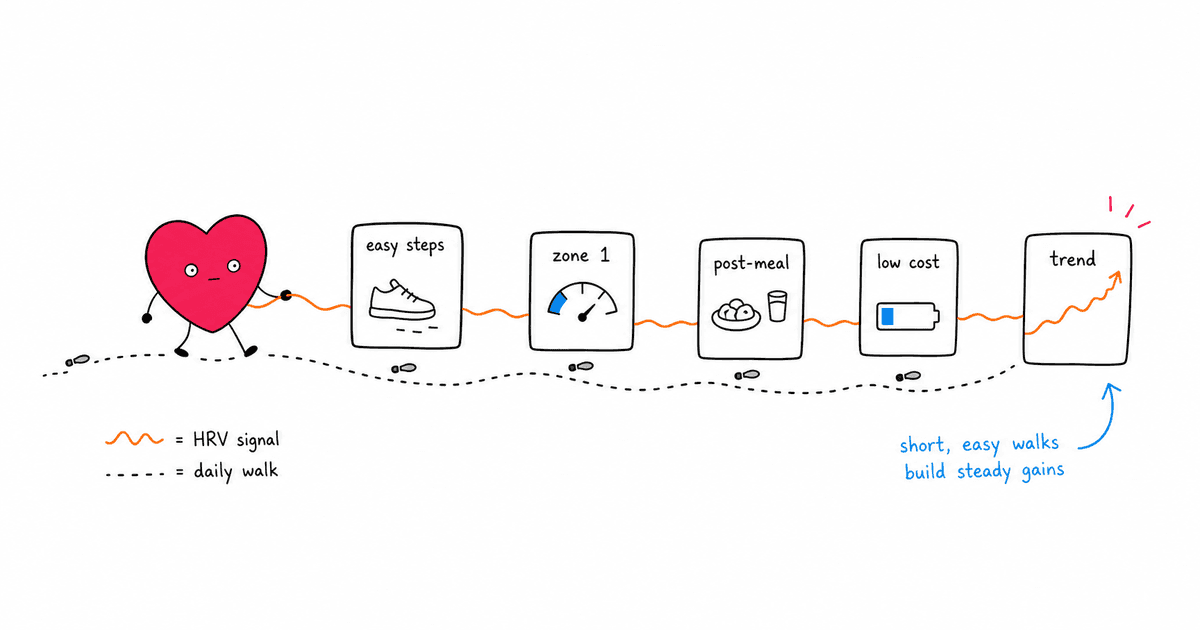
Yes, daily walking improves HRV by shifting your autonomic nervous system toward parasympathetic (rest-and-digest) dominance. Research shows that regular walking programs increase RMSSD and high-frequency HRV power within weeks, reduce sympathetic nervous system overactivity, and improve cardiovascular resilience. Walking is one of the most accessible and sustainable ways to boost your heart rate variability.
Unlike high-intensity exercise that temporarily suppresses HRV during recovery, walking provides a gentle stimulus that your body can absorb without significant autonomic stress. This makes it an ideal daily practice for improving HRV, especially if you're new to exercise, recovering from illness, or dealing with chronic stress.
Why Walking Is Uniquely Effective for HRV
Most discussions about exercise and HRV focus on intense training protocols. But research consistently shows that low-to-moderate intensity exercise like walking delivers outsized HRV benefits relative to its effort level.
Here's why walking works so well:
- Low sympathetic cost: Walking doesn't trigger the same fight-or-flight response as HIIT or heavy lifting, meaning your body can shift toward parasympathetic activity faster after a walk
- Sustainable frequency: You can walk every day without needing recovery days, creating consistent autonomic training
- Stress reduction: Walking, especially outdoors, lowers cortisol levels and reduces HPA axis activation, both of which suppress HRV
- Improved circulation: Regular walking enhances blood flow and vascular function, which supports healthy heart rhythm variability
A study published in the Journal of Occupational Health found that participants who engaged in daily walking programs showed improved mood states and a significant shift in autonomic balance toward parasympathetic predominance. The researchers noted that even moderate walking volumes produced measurable improvements in autonomic function.
How Many Steps Do You Need for HRV Benefits?
The relationship between daily steps and HRV isn't perfectly linear, but research points to clear thresholds where benefits emerge.
Step Count Guidelines
| Daily Steps | Expected HRV Impact | Best For |
|---|---|---|
| 4,000-6,000 | Modest improvement in resting HRV | Sedentary individuals starting out |
| 7,000-9,000 | Significant parasympathetic gains | General health and stress management |
| 10,000+ | Strong autonomic benefits, reduced sympathetic overactivity | Active individuals, cardiovascular health |
| 12,000-15,000 | Peak walking-related HRV gains | Those combining walking with other healthy habits |
Research on hypertensive adults found that walking 10,000 steps per day or more significantly reduced blood pressure and sympathetic nerve activity. While direct parasympathetic gains weren't statistically significant in that specific study, the reduction in sympathetic overactivity is itself beneficial for overall HRV balance.
The key takeaway: you don't need to hit 10,000 steps to see HRV improvements. Even 5,000-7,000 daily steps represent a meaningful upgrade for someone who's currently sedentary.
Walking Intensity Matters
Not all walking is created equal when it comes to HRV. The intensity of your walking determines which autonomic pathways you stimulate.
Zone 1: Easy Walking (50-60% Max Heart Rate)
This is your casual, conversational pace. It's effective for:
- Daily recovery and stress management
- Maintaining parasympathetic tone on rest days
- Post-meal walks to aid digestion and blood sugar regulation
Easy walking is especially valuable on days when your HRV is already low. If your morning HRV reading shows a dip, an easy walk is a better choice than intense exercise.
Zone 2: Brisk Walking (60-70% Max Heart Rate)
Brisk walking, where you can still talk but feel slightly out of breath, provides stronger cardiovascular stimulus:
- Greater improvements in vagal tone over time
- Enhanced aerobic capacity, which is one reason VO2 max and HRV often improve together over time
- Better long-term autonomic adaptations
A meta-analysis on exercise and autonomic function found that regular aerobic exercise lasting more than two months significantly improved baseline resting parasympathetic activity. Brisk walking falls squarely in this category.
Zone 3: Power Walking or Incline Walking (70-80% Max Heart Rate)
This pushes walking into moderate-intensity territory:
- Provides zone 2 training benefits without impact stress
- Stronger cardiovascular adaptations
- May temporarily lower HRV post-session (normal and healthy)
When to Walk for Maximum HRV Benefits
Timing your walks strategically can amplify their impact on HRV.
Morning Walks
Walking within 1-2 hours of waking helps:
- Reset your circadian rhythm, which supports healthy sleep and overnight HRV recovery
- Lower morning cortisol spikes
- Expose you to natural light, which regulates melatonin production
Post-Meal Walks
A 10-15 minute walk after meals has been shown to:
- Reduce blood sugar spikes by up to 30%
- Lower insulin resistance over time
- Support digestion without stressing the autonomic nervous system
Blood sugar stability directly influences HRV. Large glucose swings trigger sympathetic activation, while steady blood sugar supports parasympathetic function. For people with diabetes, post-meal walks are one of the most accessible interventions for both glucose control and autonomic health.
Evening Walks
Gentle evening walks (at least 2 hours before bed) can:
- Help transition your nervous system from daytime sympathetic mode to nighttime parasympathetic mode
- Reduce evening anxiety and rumination
- Improve sleep onset and sleep quality
Avoid vigorous walking too close to bedtime, as this can temporarily elevate sympathetic activity and delay sleep onset.
Walking vs. Other Exercise for HRV
How does walking compare to other forms of exercise for improving HRV?
| Exercise Type | HRV Benefit | Recovery Cost | Daily Sustainability |
|---|---|---|---|
| Walking | Moderate-High | Very Low | Excellent |
| Running | High | Moderate-High | Limited (needs rest days) |
| Cycling | High | Moderate | Good |
| Swimming | High | Moderate | Good |
| HIIT | Variable | High | Low (2-3x/week max) |
| Yoga | Moderate-High | Very Low | Excellent |
| Strength Training | Moderate | Moderate-High | Moderate |
Walking's unique advantage is its sustainability. While HIIT may produce larger acute HRV improvements in trained athletes, the consistency of daily walking often produces better long-term autonomic outcomes for the general population.
If you want more training effect than a normal walk without jumping straight to running, stair climbing or rucking can fill that middle ground, but their recovery cost is meaningfully higher than ordinary steps. Walking a course can also make golf a useful low-to-moderate movement day, especially when you manage heat, hydration, and post-round recovery.
Research on cardiac rehabilitation patients found comparable improvements in HRV between unsupervised low-intensity walking programs and more intensive supervised exercise programs. This suggests that for HRV improvement specifically, consistency matters more than intensity.
How to Track Walking's Impact on Your HRV
To see how walking affects your HRV, you need consistent tracking of both your daily steps and your heart rate variability.
Recommended Tracking Approach
- Measure morning HRV daily using a wearable like the Oura Ring 4, Whoop 5, or Apple Watch
- Track daily step count using your phone or wearable
- Log for at least 4-6 weeks before drawing conclusions
- Control other variables as much as possible (alcohol, caffeine, sleep timing)
What to Look For
After 4-6 weeks of consistent daily walking:
- Resting HRV baseline should trend upward (even small increases of 3-5 ms in RMSSD are meaningful)
- HRV variability (day-to-day swings) should decrease, indicating more stable autonomic function
- Recovery time after stressful events should shorten
- Sleep HRV should improve, particularly during deep sleep phases
A Simple Walking Protocol for Better HRV
If you're starting from a sedentary baseline, here's a progressive walking plan designed to maximize HRV benefits:
Weeks 1-2: Build the Habit
- Goal: 5,000-6,000 steps daily
- Pace: Easy, conversational
- Focus: Consistency over intensity
- Timing: One dedicated 20-minute walk plus normal daily movement
Weeks 3-4: Increase Volume
- Goal: 7,000-8,000 steps daily
- Pace: Mix of easy and brisk walking
- Focus: Add a second short walk (post-meal or evening)
- Timing: Two dedicated walks of 15-20 minutes each
Weeks 5-8: Optimize
- Goal: 8,000-10,000 steps daily
- Pace: Include 15-20 minutes of brisk walking per day
- Focus: Add incline walking or nature walks 2-3 times per week
- Timing: Morning walk for circadian benefits, post-lunch walk for blood sugar
Ongoing Maintenance
- Goal: 8,000-12,000 steps daily
- Pace: Mostly easy with 20-30 minutes of brisk walking
- Focus: Pair walking with breathing exercises for amplified HRV benefits
- Timing: Adjust based on your HRV trends
Amplifying Walking's HRV Benefits
Walking alone improves HRV, but combining it with other practices creates compounding effects:
Walk in Nature
Research on "forest bathing" shows that walking in natural environments produces greater parasympathetic activation compared to urban walking. If possible, choose green spaces, parks, or trails over sidewalks and treadmills.
Practice Nasal Breathing While Walking
Breathing through your nose during easy walks naturally slows your breathing rate, which stimulates the vagus nerve and enhances parasympathetic activity. This turns your walk into a combined breathing and movement practice.
Walk Without Your Phone
The constant stimulation of checking notifications and social media keeps your sympathetic nervous system engaged. Walking without digital distractions allows your nervous system to fully downshift.
Add Meditation Elements
Walking meditation, where you focus on the sensations of each step, combines the physical benefits of walking with the autonomic benefits of mindfulness practice.
Who Benefits Most from Walking for HRV?
Walking is universally beneficial, but certain groups see particularly large HRV improvements:
- Sedentary office workers: The transition from minimal daily movement to consistent walking produces some of the largest relative HRV gains, especially when short walks break up the long desk stretches covered in our guide to sitting all day and HRV
- People recovering from illness, injury, or surgery: Walking provides autonomic stimulus without the recovery burden of intense exercise
- Older adults: Walking is the most sustainable form of exercise for long-term autonomic health
- People with high stress levels: Walking's combination of physical movement, potential nature exposure, and mental decompression addresses multiple HRV-suppressing factors simultaneously
- Athletes on recovery days: Easy walking maintains movement without adding training stress, supporting faster HRV recovery between hard sessions
Common Mistakes That Reduce Walking's HRV Benefits
Walking Too Fast, Too Often
If every walk feels like a race, you're likely staying in a sympathetic-dominant state. Most of your walking should feel easy and relaxed.
Only Walking on Weekends
Sporadic walking doesn't create the consistent autonomic stimulus needed for HRV improvement. Daily walks, even short ones, beat occasional long hikes.
Ignoring Other Lifestyle Factors
Walking can't overcome consistently poor sleep, excessive alcohol consumption, or chronic psychological stress. It works best as part of a holistic approach to autonomic health.
Not Tracking Progress
Without measuring your HRV, you're guessing whether your walking habit is working. Invest in a quality HRV monitor and track your trends over weeks and months.
The Bottom Line
Walking is the most underrated HRV intervention available. It requires no equipment, no gym membership, no recovery days, and no special skills. The research is clear: consistent daily walking shifts your autonomic nervous system toward parasympathetic dominance, reduces sympathetic overactivity, and improves cardiovascular resilience.
Start with whatever step count feels manageable and build gradually. Aim for 7,000-10,000 daily steps with a mix of easy and brisk walking. Track your HRV trends over 4-6 weeks, and you'll likely see meaningful improvements in your baseline readings.
The best exercise for HRV is the one you do consistently. For most people, that's walking.
FAQ
How quickly does walking improve HRV?
Most people see measurable HRV improvements within 4-6 weeks of consistent daily walking (7,000+ steps). Some individuals notice changes in morning HRV readings within 2-3 weeks, particularly if transitioning from a sedentary lifestyle.
Is walking better than running for HRV?
Not necessarily better, but more sustainable. Running produces strong HRV adaptations but requires recovery days and carries injury risk. Walking can be done daily without recovery cost, which often leads to more consistent long-term HRV improvement for non-athletes.
Should I walk on days when my HRV is low?
Yes, but keep it easy. A gentle 20-30 minute walk at a conversational pace supports recovery without adding stress. Avoid brisk or power walking on low-HRV days and focus on relaxed movement instead.
Does indoor walking (treadmill) improve HRV as much as outdoor walking?
Outdoor walking, especially in nature, provides additional HRV benefits from fresh air, natural light, and reduced sensory stress. However, treadmill walking still improves HRV through the physical movement itself. If outdoor walking isn't an option, incline treadmill walking is a good alternative.
Can walking replace other exercise for HRV improvement?
Walking alone can significantly improve HRV, but combining it with other forms of exercise (strength training, yoga, dancing, or occasional higher-intensity cardio) creates the broadest autonomic benefits. Think of walking as your daily foundation, not your only tool.
Need a quick read on your HRV number first?
Enter your HRV value, age range, device, and recovery context for a plain-English interpretation before you decide what to do next.
Interpret Your HRV NumberBuild the 30-day plan