Yoga and HRV: How Yoga Improves Heart Rate Variability
Trying to decode today's HRV number? Use the free interpreter first, then build a practical recovery plan. Interpret your HRV
If you track your HRV, you may have noticed something interesting: your numbers tend to be higher on days when you feel calm, rested, and balanced. Yoga targets all three of those states, which is why it has become one of the most studied mind-body practices in HRV research. A comprehensive review of 59 studies involving over 2,300 participants found that yoga consistently shifts the autonomic nervous system toward parasympathetic dominance, the state associated with higher HRV.
But not all yoga is created equal when it comes to HRV benefits. The style you practice, the breathing techniques you use, and even the duration of your sessions all influence how your nervous system responds. This guide breaks down what the research says and how to use yoga strategically to improve your HRV.
What Is Heart Rate Variability?
Heart rate variability (HRV) is the variation in time between consecutive heartbeats, measured in milliseconds. Higher HRV reflects a flexible, resilient autonomic nervous system with strong parasympathetic (rest-and-digest) activity, while lower HRV may indicate stress, fatigue, or poor recovery.
If you are new to HRV, check out our complete beginner's guide for a full overview of how it works and why it matters.
How Yoga Affects the Autonomic Nervous System
Yoga influences HRV through several interconnected mechanisms that work together to shift your nervous system toward parasympathetic dominance.
Vagal Nerve Stimulation
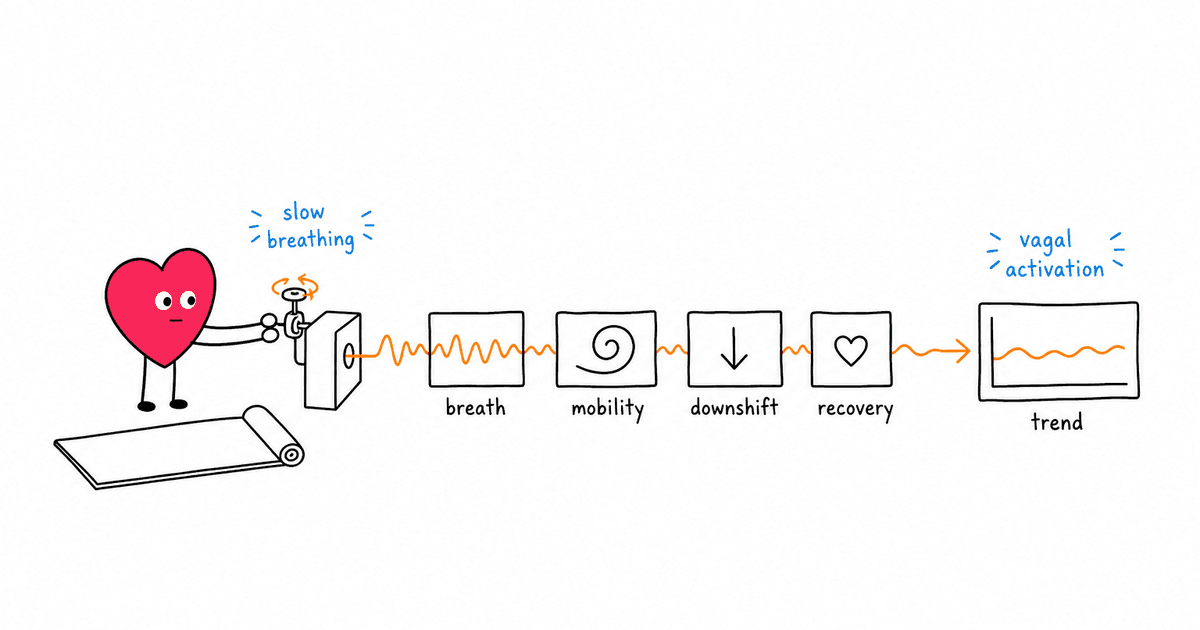
The vagus nerve is the primary highway between your brain and your body's relaxation response. Yoga activates this nerve through slow, controlled breathing (pranayama), gentle movement, and sustained postures that stimulate baroreceptors in the neck and chest. A 2016 systematic review in the International Journal of Yoga found that regular yoga practitioners showed significantly higher vagal tone at rest compared to non-practitioners.
Slow Breathing and Respiratory Sinus Arrhythmia
Many yoga styles emphasize breath control, typically slowing the respiratory rate to 5-6 breaths per minute. This slower breathing rate amplifies respiratory sinus arrhythmia (RSA), a natural phenomenon where heart rate increases during inhalation and decreases during exhalation. The wider these fluctuations, the higher your HRV. A 2024 study in Journal of Functional Morphology and Kinesiology found that yoga breathing techniques (including abdominal and complete breathing) significantly enhanced parasympathetic activity compared to baseline.
Stress Hormone Reduction
Chronic stress keeps your sympathetic nervous system in overdrive, suppressing HRV. Yoga has been shown to reduce cortisol levels, lower resting heart rate, and decrease markers of systemic inflammation. These changes create conditions for higher baseline HRV over time.
Mindfulness and Present-Moment Awareness
The meditative components of yoga, including body scanning, breath awareness, and focused attention, activate prefrontal brain regions that inhibit the amygdala's stress response. This top-down regulation supports parasympathetic activation and contributes to the HRV improvements seen with regular practice.
What the Research Says
The evidence linking yoga to improved HRV has grown substantially over the past decade. Here are some of the most relevant findings.
Comprehensive Review: 59 Studies, 2,300+ Participants
A systematic review published in the International Journal of Yoga analyzed 59 studies on yoga and HRV. The reviewed studies consistently showed that yoga practices increase vagal dominance and improve HRV metrics, both during sessions and at rest. Regular practitioners demonstrated higher baseline RMSSD and HF power (high-frequency, a marker of parasympathetic activity) compared to non-practitioners.
Hatha Yoga: 8-Week Improvement
A pilot study published in BMC Research Notes found that 8 weeks of hatha yoga practice significantly increased HRV in participants, with notable improvements in parasympathetic markers. The study concluded that even relatively short-term yoga practice can shift autonomic balance toward parasympathetic dominance.
Vinyasa Yoga: Acute Effects
A 2023 randomized crossover trial published in PLOS One measured HRV responses after a single 60-minute vinyasa yoga session compared to a seated control. Researchers found favorable changes in SDNN, RMSSD, and HF power following the yoga session, suggesting that even a single practice can temporarily boost parasympathetic activity.
Short-Term Yoga Practice
Research published in the International Journal of Yoga found that even short-term yoga interventions produced measurable HRV improvements. After the intervention period, participants showed increases in SDNN (from 33.6 to 42.1 ms), RMSSD (from 22.0 to 25.6 ms), and pNN50 (from 2.45% to 7.35%), all indicators of enhanced parasympathetic function.
Yoga for Stress and Depression
A 2025 randomized controlled trial found that yoga training improved HRV in chronically stressed individuals, with particularly strong effects when yoga included structured breathing components. Separate research has shown yoga can improve vagal function in individuals with depression, where HRV is typically suppressed.
Best Yoga Styles for HRV
Not every yoga class will affect your HRV in the same way. Here is how different styles compare.
Hatha Yoga
Hatha yoga involves holding poses for longer periods with an emphasis on alignment and breath awareness. The slow pace and sustained postures provide extended parasympathetic stimulation, making it one of the most effective styles for improving resting HRV. Research consistently shows hatha yoga increases HF power and RMSSD.
Best for: Beginners, stress reduction, building a consistent practice.
Restorative Yoga
Restorative yoga uses props to support the body in passive poses held for 5-15 minutes each. This deeply relaxing practice maximizes parasympathetic activation and can produce significant acute HRV improvements. It is particularly beneficial for individuals with high stress levels or those recovering from intense training.
Best for: Recovery days, high-stress periods, evening practice before sleep.
Yin Yoga
Similar to restorative yoga, yin yoga holds poses for extended periods (typically 3-5 minutes) but targets deeper connective tissues. The long holds combined with mindful breathing create sustained vagal stimulation. Many practitioners report noticeable improvements in their morning HRV readings after evening yin sessions.
Best for: Flexibility, deep relaxation, complementing high-intensity training.
Vinyasa Flow
Vinyasa links breath to movement in a flowing sequence that can range from gentle to vigorous. While the active nature of vinyasa provides cardiovascular benefits, the continuous breath-movement synchronization still activates parasympathetic pathways. Research shows acute HRV improvements after vinyasa sessions, though the effect may be smaller than slower-paced styles.
Best for: Those who prefer dynamic movement, combining cardio with HRV benefits.
Kundalini Yoga
Kundalini yoga emphasizes specific breathing patterns (kriyas), chanting, and meditation alongside physical postures. The heavy focus on pranayama makes it particularly effective for vagal stimulation. Studies suggest kundalini yoga can produce some of the strongest HRV improvements among yoga styles, likely due to the extended breathing exercises.
Best for: Those interested in breathwork, meditation-heavy practice.
| Yoga Style | Pace | HRV Impact | Best For |
|---|---|---|---|
| Hatha | Slow | High | Beginners, stress reduction |
| Restorative | Very slow | Very high | Recovery, high stress |
| Yin | Very slow | High | Flexibility, evening practice |
| Vinyasa | Moderate-fast | Moderate | Dynamic movement, cardio |
| Kundalini | Variable | High | Breathwork, meditation |
How to Use Yoga to Improve Your HRV
Start with 3 Sessions Per Week
Research suggests that practicing yoga at least 3 times per week for 8-12 weeks produces meaningful, lasting improvements in resting HRV. Consistency matters more than session length. A regular 30-minute practice will likely produce better results than sporadic 90-minute classes.
Prioritize Breathwork
The breathing component of yoga appears to drive much of the HRV benefit. Aim to include at least 5-10 minutes of dedicated pranayama in each session. Techniques like alternate nostril breathing (Nadi Shodhana), extended exhale breathing, and diaphragmatic breathing are particularly effective for vagal stimulation.
For more breathing techniques, see our guide on breathing exercises for HRV.
Time Your Practice Strategically
Evening yoga sessions (especially restorative or yin styles) can improve sleep quality and boost overnight HRV. Morning sessions help set a calm autonomic tone for the day. If you have to choose, evening sessions may offer the strongest HRV benefit due to their positive effect on sleep.
For more on the connection between sleep and HRV, see our guide on HRV and sleep.
Track Your Progress
Use an HRV monitor to track your morning readings and look for trends over weeks and months. You may notice improvements in RMSSD and HRV score within the first few weeks, with more substantial gains appearing after 2-3 months of consistent practice.
Check out our best HRV monitors guide for recommendations on devices that track HRV effectively, including the Oura Ring 4 for overnight HRV tracking and the Whoop 5 for continuous monitoring.
Combine with Other HRV-Boosting Practices
Yoga works best as part of a broader HRV optimization strategy. Consider combining it with:
- Meditation for additional parasympathetic activation
- Cold exposure for acute vagal stimulation
- Proper hydration and nutrition to support autonomic function
- Quality sleep habits for overnight recovery
Yoga vs. Other Mind-Body Practices for HRV
How does yoga compare to other practices that claim to improve HRV?
Yoga vs. Meditation
Both yoga and meditation improve HRV, but yoga may have an edge due to the combined effects of physical postures, breathing, and mindfulness. The physical component adds cardiovascular and flexibility benefits that meditation alone does not provide. That said, a seated meditation practice is easier to fit into a busy schedule and still delivers meaningful HRV improvements.
Yoga vs. Tai Chi
Tai Chi and yoga produce similar HRV benefits, as both combine slow movement with breath awareness. Tai Chi may be slightly more accessible for older adults due to its standing-only format, while yoga offers more variety in intensity levels and can target specific areas of flexibility and strength.
Yoga vs. Strength Training
Strength training improves HRV over time through cardiovascular adaptation, but acute sessions can temporarily suppress HRV due to sympathetic activation. Yoga generally produces immediate parasympathetic shifts. The ideal approach is to include both in your weekly routine, using yoga on recovery days.
Common Questions
How long does it take for yoga to improve HRV?
Most research shows measurable HRV improvements within 4-8 weeks of regular practice (3+ sessions per week). Some studies have found acute improvements after a single session, though lasting baseline changes require consistent practice over at least 2-3 months.
Can hot yoga improve HRV?
Hot yoga (Bikram) creates additional cardiovascular stress through heat exposure, which can temporarily lower HRV. While heat acclimation may produce long-term cardiovascular benefits similar to sauna use, traditional yoga styles in a comfortable environment are more directly beneficial for HRV.
Should I practice yoga on rest days or training days?
Both work, but rest-day yoga may offer the biggest HRV benefit because your nervous system is not competing with exercise-related sympathetic activation. Gentle restorative yoga on rest days helps accelerate recovery and supports higher HRV the following morning.
What time of day is best for yoga and HRV?
Evening sessions (especially restorative or yin yoga) tend to produce the strongest overnight HRV improvements by promoting parasympathetic dominance before sleep. Morning sessions are also beneficial for setting a calm tone for the day.
Can yoga help with HRV if I have a chronic condition?
Research has shown yoga can improve HRV in populations with depression, anxiety, chronic pain, and cardiovascular disease. However, if you have a medical condition, work with your healthcare provider to find a yoga style and intensity appropriate for your situation.
The Bottom Line
Yoga is one of the most well-studied and effective practices for improving heart rate variability. The combination of physical postures, controlled breathing, and mindfulness creates a multi-pathway approach to parasympathetic activation that few other activities can match.
The key to seeing real HRV improvements is consistency. Start with 3 sessions per week of a slower-paced style like hatha or restorative yoga, include dedicated breathwork in each session, and track your progress over at least 8 weeks. Most people who commit to a regular practice see meaningful improvements in both their HRV numbers and their overall sense of well-being.
Need a quick read on your HRV number first?
Enter your HRV value, age range, device, and recovery context for a plain-English interpretation before you decide what to do next.
Interpret Your HRV NumberBuild the 30-day plan