Does Caffeine Affect HRV? What the Research Says About Coffee and Heart Rate Variability
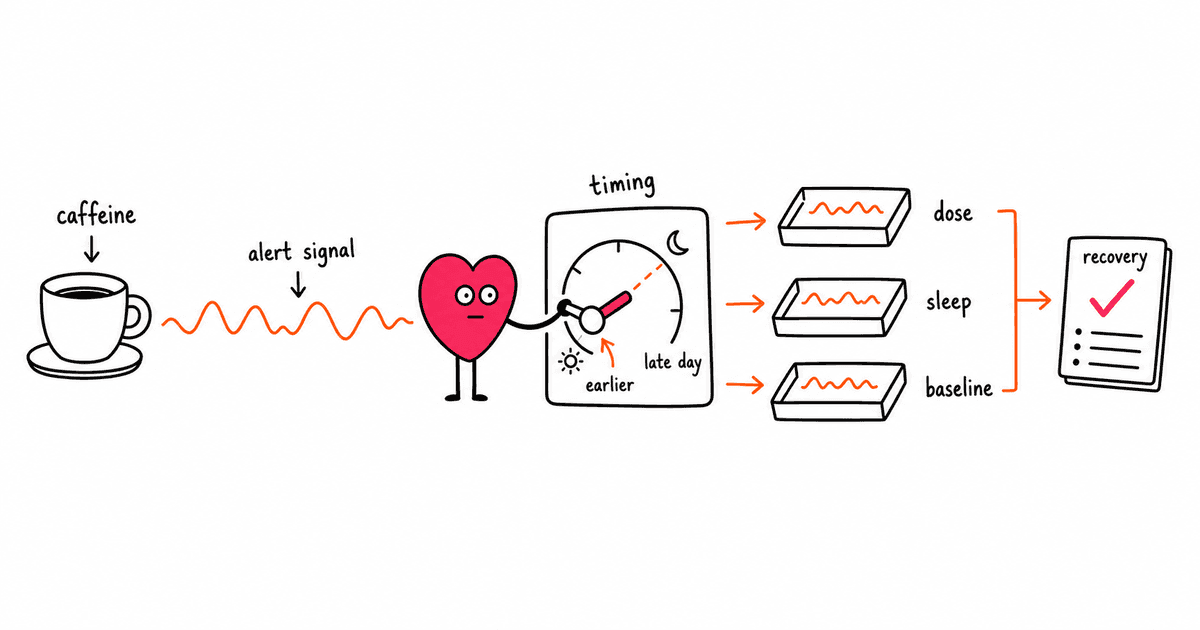
If you track your HRV, you've probably wondered whether your morning coffee is helping or hurting your readings. Caffeine affects nearly every system in your body, so its impact on heart rate variability is a natural question.
How Does Caffeine Affect HRV?
Caffeine's effect on HRV is more nuanced than most people expect. Research shows that caffeine can actually increase parasympathetic activity and HRV in many populations, contrary to what you might assume about a stimulant. However, the effects depend heavily on timing, dosage, and individual factors like habitual consumption.
A 2025 randomized controlled trial published in Research Quarterly for Exercise and Sport found that caffeine (5 mg/kg body weight) significantly increased HRV during submaximal exercise in trained cyclists. The researchers concluded that "caffeine increases the parasympathetic modulation of heart rate," meaning it enhanced vagal activity rather than suppressing it.
The Surprising Science Behind Caffeine and Your Nervous System
Caffeine works primarily by blocking adenosine receptors in your body. Adenosine normally promotes relaxation and sleepiness, so when caffeine blocks it, you feel more alert and your circadian rhythm can be disrupted if the timing is wrong. But the relationship with your autonomic nervous system is complex.
Research from the Journal of Clinical Medicine examined middle-aged adults and found that caffeine (equivalent to about two cups of coffee):
- Reduced resting heart rate
- Decreased muscle sympathetic nerve activity
- Increased high-frequency HRV power (the parasympathetic component)
This suggests caffeine may paradoxically support vagal tone in healthy adults, at least in the short term after consumption. For more ways to support vagal tone, see our guide on breathing exercises for HRV.
Why Results Vary Between Studies
Not all studies show the same effects. The variability comes down to several factors:
| Factor | Impact on Results |
|---|---|
| Habitual consumption | Regular coffee drinkers show different responses than occasional users |
| Age | Middle-aged adults show more consistent HRV increases (see HRV by age) |
| Health status | Those with heart conditions may not see benefits |
| Caffeine abstinence period | Studies requiring 72+ hours abstinence show clearer effects |
| Timing of measurement | Acute vs. chronic effects differ substantially |
Caffeine Timing: When It Matters Most for HRV
While acute caffeine consumption may not harm your HRV during the day, the timing of your last cup matters enormously for overnight HRV readings.
Research consistently shows that caffeine consumed too close to bedtime disrupts sleep architecture, which in turn suppresses overnight HRV. The effects mirror those seen in sleep deprivation research. A meta-analysis in Sleep Medicine Reviews found that caffeine taken even 6 hours before bed significantly reduced total sleep time and sleep quality.
The Caffeine Cutoff Rule
For optimal overnight HRV:
- 8-10 hours before bed is the general recommendation for your last caffeinated drink
- Standard coffee (107 mg per 250 mL) should be consumed at least 8.8 hours before bedtime
- High-caffeine pre-workouts (217+ mg) require 13+ hours of clearance time
If you go to bed at 10 PM, your last coffee should ideally be around noon, or 2 PM at the latest.
Habitual Users vs. Occasional Drinkers
Your daily coffee habit changes how caffeine affects your HRV. Regular consumers develop tolerance to many of caffeine's effects, including some autonomic changes.
A study in Psychopharmacology examined habitual caffeine users and found that the acute HRV effects were blunted compared to non-habitual users. This doesn't mean your morning coffee is hurting your HRV. It simply means your body has adapted to expect it.
Interestingly, stopping caffeine abruptly may temporarily lower your HRV due to withdrawal effects, including:
- Headaches
- Fatigue
- Mood changes
- Reduced alertness
If you're trying to assess your "true" baseline HRV without caffeine influence, researchers recommend waiting at least 72 hours after your last dose.
Practical Guidelines for Coffee and HRV
Based on current research, here's how to optimize your caffeine consumption for HRV:
Morning Coffee (Within 2-3 Hours of Waking)
Morning caffeine is generally fine for HRV. Your cortisol awakening response is naturally high, and caffeine consumed early in the day will clear your system before bed. Some research suggests it may even support parasympathetic activity during the day.
Afternoon Caffeine (After 2 PM)
This is the danger zone. Caffeine's half-life is 5-6 hours on average, meaning half of what you consume is still in your system hours later. Afternoon coffee is the most common culprit for poor overnight HRV.
Pre-Workout Caffeine
Caffeine before exercise may actually enhance HRV during submaximal efforts, according to the 2025 cycling study. For athletes monitoring their training load, this aligns with research on HRV and athletic performance. If your workout is in the morning or early afternoon, pre-workout caffeine is unlikely to harm your overnight readings.
Evening and Night
Avoid completely. Even if you "can fall asleep" after evening coffee, research shows it still disrupts sleep stages and suppresses overnight HRV, even when you don't notice.
What About Decaf?
Decaffeinated coffee contains trace amounts of caffeine (2-15 mg per cup compared to 80-100 mg in regular coffee). For most people, this small amount won't significantly impact HRV, making decaf a reasonable evening alternative if you enjoy the ritual of coffee.
Individual Variation Is Key
Perhaps the most important finding from HRV research is individual variability. Genetic differences in caffeine metabolism (specifically the CYP1A2 gene) mean some people clear caffeine twice as fast as others.
If you're a "slow metabolizer," even morning coffee might affect your evening HRV. If you're a "fast metabolizer," you may have more flexibility with timing. Either way, pairing your caffeine cutoff with relaxation practices like meditation in the afternoon can help your nervous system transition toward parasympathetic dominance before bed. If you combine fasting with your coffee routine, see how intermittent fasting affects HRV.
How to Test Your Personal Response
Use a reliable HRV monitor to test your personal caffeine response. If you're new to tracking, our beginner's guide and guide to understanding HRV numbers will help you interpret your readings:
- Track your baseline overnight HRV for 1-2 weeks with your normal caffeine habits
- Try eliminating afternoon caffeine for 1-2 weeks while tracking HRV
- Compare your morning HRV readings and sleep quality metrics
- Adjust your cutoff time based on what works for your body
The Bottom Line
No, caffeine doesn't automatically lower your HRV. Moderate morning coffee consumption appears neutral or potentially beneficial for HRV in healthy adults. The key factors are:
- Timing: Keep caffeine to the morning and early afternoon
- Sleep protection: Allow 8-10 hours before bedtime for clearance
- Consistency: Sudden changes in caffeine intake can temporarily affect HRV
- Individual response: Pay attention to your personal data
Your morning coffee ritual is probably fine. It's the 3 PM pick-me-up that's worth reconsidering if you're serious about optimizing your HRV. If you use coffee on days when you also take stimulant cold medicine, check the combined effect. Our decongestants and HRV guide covers why pseudoephedrine plus caffeine can be a recovery-score trap. Curious about other common substances? See how alcohol affects HRV for a complete picture of lifestyle factors, or explore how nutrition and hydration influence your readings.
Frequently Asked Questions
Does coffee raise or lower HRV?
Research shows mixed results depending on timing and individual factors. Acute caffeine consumption may actually increase parasympathetic HRV in healthy adults during the day. However, caffeine consumed too close to bedtime impairs sleep and lowers overnight HRV.
How long before bed should I stop drinking coffee for good HRV?
At least 8-10 hours before bedtime. For a 10 PM bedtime, your last coffee should be around noon to 2 PM. Caffeine's half-life of 5-6 hours means significant amounts remain in your system for many hours after consumption.
Will quitting caffeine improve my HRV?
Not necessarily. Abruptly stopping caffeine can temporarily lower HRV due to withdrawal effects. If you want to reduce caffeine, taper gradually over 1-2 weeks while monitoring your HRV response.
Is decaf okay for HRV?
Yes, decaf contains minimal caffeine (2-15 mg per cup) and is unlikely to significantly impact HRV for most people. It's a reasonable option if you enjoy evening coffee but want to protect your overnight readings.
Need a quick read on your HRV number first?
Enter your HRV value, age range, device, and recovery context for a plain-English interpretation before you decide what to do next.
Interpret Your HRV NumberBuild the 30-day plan