Magnesium and HRV: How This Essential Mineral Affects Heart Rate Variability
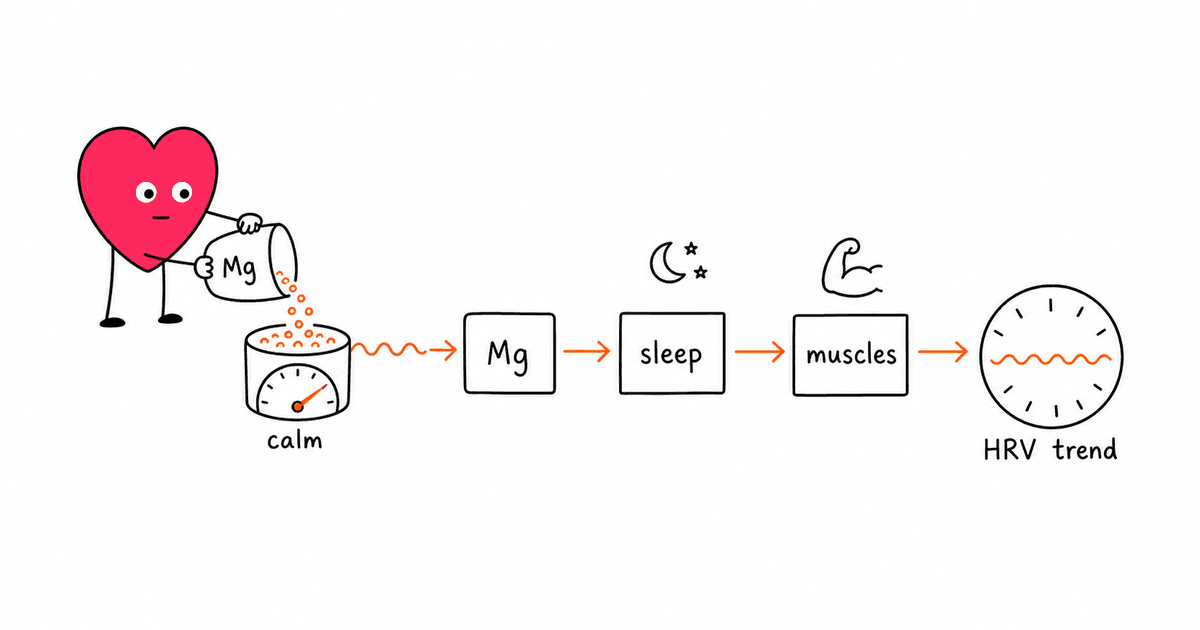
Magnesium is one of the most important minerals for heart health, yet an estimated 50% of Americans don't get enough of it. If you're tracking your heart rate variability (HRV), you might be wondering whether this common deficiency could be affecting your numbers.
The research is clear: magnesium plays a critical role in autonomic nervous system function, and deficiency is associated with reduced HRV. Let's explore how this essential mineral affects your heart rate variability and what you can do about it.
The Science: How Magnesium Affects HRV
Magnesium influences HRV through several key mechanisms:
1. Parasympathetic Support
Magnesium acts as a natural calcium antagonist in the heart, helping to regulate the electrical activity that controls your heartbeat. When magnesium levels are adequate, the parasympathetic nervous system (your "rest and digest" mode) can function optimally, leading to higher HRV. This anti-inflammatory effect also plays a role, since chronic inflammation is a known HRV suppressor.
2. Stress Response Modulation
A randomized controlled study of 100 participants found that daily magnesium supplementation combined with exercise significantly improved sympathovagal balance over 90 days. The researchers concluded that people with mental and physical stress can benefit from magnesium intake, leading to improved regulation of the sympathetic and parasympathetic nervous systems. This is particularly relevant for those dealing with anxiety, where magnesium's calming properties can complement other interventions.
3. Heart Muscle Function
In patients with heart failure, five weeks of magnesium citrate supplementation (300 mg/day) significantly increased serum magnesium levels and improved HRV parameters. This effect was stronger in the magnesium-supplemented group compared to controls.
4. Blood Sugar Regulation
Research in diabetic populations has shown that magnesium treatment can attenuate diabetes-induced reductions in HRV and improve cardiac function. Since blood sugar fluctuations can impact HRV, magnesium's role in glucose metabolism provides another pathway to better heart rate variability.
What the Research Shows
A comprehensive review published in Advances in Nutrition examined the relationship between micronutrients and HRV across multiple studies. The findings on magnesium were noteworthy:
- Deficiency correlates with lower HRV: People with inadequate magnesium status tend to show reduced heart rate variability
- Supplementation can help: Several intervention studies demonstrated improvements in HRV parameters following magnesium supplementation
- Duration matters: Most studies showing benefits used supplementation periods of 4-12 weeks
The review noted that while more research is needed, the evidence suggests magnesium deficiency may contribute to reduced HRV, and supplementation could be beneficial, particularly for those with suboptimal levels.
Signs You Might Be Low in Magnesium
Magnesium deficiency often goes undetected because standard blood tests only measure serum magnesium, which represents less than 1% of your body's total magnesium stores. Watch for these signs:
- Muscle cramps or twitches
- Poor sleep quality
- Fatigue despite adequate rest
- Increased stress sensitivity
- Headaches
- Irregular heartbeat
If you're tracking HRV and noticing consistently low numbers despite good sleep, exercise, and stress management, magnesium status is worth investigating.
Which Form of Magnesium Is Best for HRV?
Not all magnesium supplements are created equal. Different forms have varying absorption rates and effects:
Magnesium Glycinate
Often considered the gold standard for HRV optimization. The glycine component adds calming effects, and this form is well-absorbed with minimal digestive side effects. Research on magnesium bisglycinate (a related form) has shown improvements in sleep quality, which indirectly supports HRV.
Magnesium Citrate
Used in several HRV studies, including the heart failure research mentioned above. Well-absorbed and effective, though it can have a mild laxative effect at higher doses.
Magnesium Threonate
May be particularly beneficial for cognitive function as it crosses the blood-brain barrier. Limited direct HRV research, but potential benefits for stress-related HRV impacts through brain health.
Magnesium Oxide
The cheapest form but also the least well-absorbed (only about 4% bioavailability). Not recommended for HRV optimization.
Magnesium Taurate
Combines magnesium with taurine, an amino acid that also supports cardiovascular health. May have synergistic benefits for heart function.
Optimal Dosing for HRV Benefits
Based on the research, here are general guidelines:
| Population | Suggested Daily Dose | Notes |
|---|---|---|
| General wellness | 200-400 mg | From glycinate or citrate |
| High stress | 300-400 mg | Consider splitting into two doses |
| Athletes | 400-500 mg | Higher needs due to sweat losses |
| Sleep support | 200-300 mg | Take 1-2 hours before bed |
Important considerations:
- Start with a lower dose and increase gradually
- Take with food to improve absorption
- Avoid taking with calcium supplements (they compete for absorption)
- Allow 4-8 weeks to see HRV changes
Maximizing Magnesium's HRV Benefits
Supplementation works best as part of a comprehensive approach:
1. Combine with Lifestyle Factors
The 90-day study that showed HRV improvements combined magnesium supplementation with strength-endurance training. Exercise enhances magnesium's effects on autonomic balance. Pairing supplementation with meditation or breathing exercises can further support parasympathetic activation.
2. Optimize Sleep Timing
Taking magnesium in the evening can support better sleep, which is when much of your HRV recovery occurs. Poor sleep is one of the biggest HRV suppressors, and even short-term sleep deprivation can significantly lower HRV. Magnesium can help address both issues simultaneously.
3. Address Other Deficiencies
Magnesium works synergistically with other nutrients, including electrolytes. Vitamin D deficiency, for example, impairs magnesium absorption, and many people are low in both. Omega-3 fatty acids are another HRV-boosting supplement that pairs well with magnesium. Consider a comprehensive approach to mineral and nutrient status.
4. Reduce Magnesium Depleters
Certain factors increase magnesium excretion:
- High stress (stress hormones deplete magnesium)
- Alcohol consumption
- Excessive caffeine
- High-sugar diets
- Some medications (diuretics, proton pump inhibitors)
Addressing these factors while supplementing will improve results.
Food Sources of Magnesium
While supplements can be helpful, food sources provide magnesium in a bioavailable form along with complementary nutrients:
| Food | Magnesium (per serving) |
|---|---|
| Pumpkin seeds (1 oz) | 156 mg |
| Spinach (1 cup cooked) | 157 mg |
| Dark chocolate (1 oz) | 64 mg |
| Almonds (1 oz) | 80 mg |
| Avocado (1 medium) | 58 mg |
| Black beans (1 cup) | 120 mg |
| Salmon (3 oz) | 26 mg |
A diet rich in leafy greens, nuts, seeds, and whole grains provides a solid magnesium foundation that supplements can build upon. Many of these foods also support gut health, which has its own connection to autonomic function. For more on diet and HRV, see our guide on nutrition and heart rate variability.
Tracking Your Response
If you decide to try magnesium supplementation for HRV:
- Establish a baseline: Track your HRV for 1-2 weeks before starting
- Be consistent: Take your supplement at the same time daily
- Control variables: Try not to make other major lifestyle changes simultaneously
- Give it time: Allow at least 4 weeks before evaluating results
- Track sleep quality: Note any changes in sleep alongside HRV
The same one-variable rule applies if you are testing other supplements. If you start creatine, log dose, loading phase, training volume, hydration, and sleep before deciding whether the supplement itself changed your HRV.
Look for improvements in:
- Morning HRV readings
- HRV recovery after stress or exercise
- Sleep quality metrics
- Overall HRV trend over time
When to Consult a Healthcare Provider
Talk to your doctor before supplementing if you:
- Have kidney disease (kidneys regulate magnesium excretion)
- Take medications that interact with magnesium
- Have a heart condition
- Are pregnant or nursing
A healthcare provider can also order more comprehensive magnesium testing (RBC magnesium) if serum levels appear normal but you suspect deficiency.
The Bottom Line
Magnesium is a foundational mineral for cardiovascular and nervous system health. Research supports its role in autonomic function, and supplementation has been shown to improve HRV in multiple populations.
For most people tracking HRV, ensuring adequate magnesium intake through diet and potentially supplementation is a low-risk intervention that may yield meaningful improvements, particularly if you have signs of deficiency or high stress levels.
As with any supplement, individual responses vary. Track your HRV before and after to see whether magnesium makes a difference for you. For more evidence-based strategies, see our complete guide on how to improve your HRV.
Need a quick read on your HRV number first?
Enter your HRV value, age range, device, and recovery context for a plain-English interpretation before you decide what to do next.
Interpret Your HRV NumberBuild the 30-day plan