Sauna and HRV: How Heat Therapy Affects Your Nervous System
Trying to decode today's HRV number? Use the free interpreter first, then build a practical recovery plan. Interpret your HRV
Does Sauna Improve HRV?
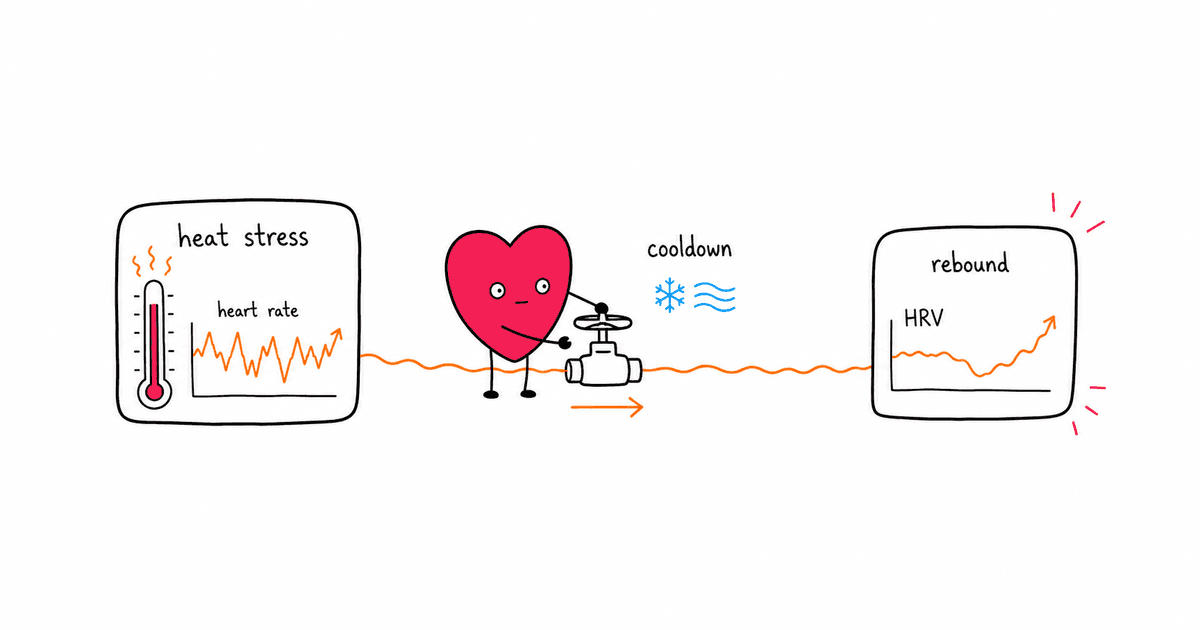
Yes, sauna bathing improves HRV by triggering a parasympathetic rebound during the recovery period after heat exposure. While your HRV drops during the sauna session itself (as your heart rate increases), the cooling-down period activates vagal tone and increases parasympathetic activity. Research shows resting heart rate decreases and HRV metrics improve after sauna use, with regular practice potentially enhancing baseline autonomic function.
Sauna bathing has been a cornerstone of Finnish culture for thousands of years, and modern research is finally catching up with what Finns have known intuitively: regular heat exposure does something profound to your body. Your HRV data can show you exactly what that is.
If you've been tracking your HRV and wondering whether to add sauna to your routine, or if you're curious whether that post-sauna relaxation has measurable benefits, the science has answers.
How Sauna Affects Your Autonomic Nervous System
When you step into a sauna, your body responds to the heat stress much like it responds to exercise. Core temperature rises, blood vessels dilate, and your heart works harder to maintain homeostasis. This is sympathetic activation, your "fight or flight" response kicking in.
A 2019 study published in Complementary Therapies in Medicine measured HRV before, during, and after sauna sessions. The findings revealed a clear pattern:
- During sauna: Heart rate increased significantly (from 68 to 100+ bpm in some cases)
- During recovery: HRV increased substantially, indicating dominant parasympathetic activity
- Resting heart rate after: Lower than pre-sauna measurements (77 bpm before vs. 68 bpm after)
The researchers concluded that "recovery from sauna bathing favorably modulates cardiac autonomic nervous system" by shifting toward parasympathetic dominance.
The Science Behind the Benefits
Thermal Stress and Adaptation
Like cold exposure, heat therapy works through hormesis, the principle that controlled stress produces beneficial adaptations. Your body learns to handle thermal challenges more efficiently, and this extends to overall autonomic regulation.
The initial stress response in the sauna (elevated heart rate, decreased HRV) is temporary. The magic happens during and after cooling down, when your parasympathetic system activates to restore balance.
Heat Shock Proteins
Sauna exposure triggers the production of heat shock proteins (HSPs), which protect cells from damage and support cardiovascular health. These proteins play a role in reducing inflammation and may contribute to the long-term autonomic benefits of regular sauna use.
Cardiovascular Conditioning
Research from Finland, where sauna bathing is deeply embedded in daily life, has revealed striking cardiovascular benefits. The famous KIHD (Kuopio Ischemic Heart Disease Risk Factor Study) followed over 2,000 middle-aged men and found that:
- Sauna users (4-7 times per week) had a 63% lower risk of sudden cardiac death compared to once-weekly users
- Frequent sauna bathers had significantly lower rates of fatal cardiovascular disease
- The cardiovascular benefits were dose-dependent, with more frequent use showing greater protection
While this study didn't directly measure HRV, the cardiovascular protection strongly suggests improved autonomic function and aligns with research on HRV and longevity.
Acute vs. Long-Term Effects on HRV
During Your Sauna Session
Expect your HRV to drop significantly. A 2018 study on trained cyclists found that during a 30-minute post-exercise sauna:
- Heart rate increased by approximately 32%
- lnRMSSD (a key parasympathetic marker) decreased by about 62%
This is normal and expected. The heat creates genuine cardiovascular stress.
Immediately After (The Recovery Window)
This is where the benefits emerge. Within 30-60 minutes of finishing your sauna session:
- Heart rate returns to baseline (often lower than pre-sauna)
- HRV increases above baseline levels
- Parasympathetic activity becomes dominant
Many sauna users report feeling deeply relaxed and calm during this window, and HRV data confirms the physiological shift.
The Morning After
Track your overnight or morning HRV after an evening sauna session. Many people notice improved readings, suggesting the parasympathetic benefits extend into sleep. Devices like Oura Ring or Whoop can capture this data automatically.
Over Weeks and Months
The research here is nuanced. A 2025 multi-arm randomized controlled trial found that 12 weeks of regular post-exercise sauna bathing did not significantly improve resting HRV compared to exercise alone. However, the acute benefits after each session were consistent.
This suggests that sauna may be most valuable for:
- Acute recovery: Accelerating parasympathetic reactivation after stress or exercise
- Regular relaxation: Providing a reliable "reset" for your nervous system
- Cardiovascular health: Benefits that may not show up as baseline HRV changes but still improve heart health
Traditional vs. Infrared Sauna: Does It Matter for HRV?
Traditional Finnish Sauna
- Temperature: 150-195°F (65-90°C)
- Humidity: 10-20% (dry) or higher with water on stones
- Heat transfer: Primarily convective (air heats you)
Traditional saunas create the most significant thermal stress and likely produce the strongest acute HRV effects.
Infrared Sauna
- Temperature: 120-150°F (49-65°C)
- Heat transfer: Radiant (infrared waves penetrate skin directly)
- Often perceived as more tolerable
Infrared saunas heat your body more gradually, which may result in a less dramatic stress response. However, they can still produce meaningful parasympathetic benefits during recovery. The lower temperatures also make them accessible for people who find traditional saunas overwhelming.
Which Is Better for HRV?
Both can improve HRV during recovery. Traditional saunas likely produce stronger acute effects due to greater thermal stress, but infrared saunas may be more sustainable for daily use. The best choice depends on your tolerance and access. If you're interested in the therapeutic use of light wavelengths beyond heat, see our guide on red light therapy and HRV.
How to Use Sauna for HRV Benefits
Based on the research, here are evidence-based guidelines:
Temperature
- Traditional sauna: 150-175°F (65-80°C) for most people
- Infrared sauna: 120-140°F (49-60°C)
- Start conservative: You can always increase over time
Duration
- Beginners: 10-15 minutes per session
- Intermediate: 15-20 minutes
- Advanced: 20-30 minutes (Finnish research often used 20-minute sessions)
Multiple shorter rounds (10-15 minutes in, cool down, repeat) is a traditional Finnish approach that may enhance the parasympathetic rebound.
Frequency
- For acute recovery: 2-4 times per week
- Finnish-style regular use: 4-7 times per week showed the greatest cardiovascular benefits in research
- Minimum effective dose: Even 1-2 sessions weekly appear beneficial
Timing
- Post-workout: Can support recovery, though see the note below about muscle adaptation
- Evening: Many find sauna 2-3 hours before bed improves sleep quality
- Morning: Can be energizing after the initial heat stress subsides
Note on training adaptation: Like cold exposure, some researchers suggest that extreme thermal stress immediately after strength training might blunt muscle hypertrophy. If building muscle is your primary goal, consider separating sauna from resistance training by a few hours.
The Cooling Period
Don't skip it. The parasympathetic benefits occur during recovery:
- Allow at least 10-15 minutes of cooling before checking HRV
- Cool gradually (room temperature first, then cold if desired)
- Hydrate thoroughly, as dehydration can negatively impact HRV
Combining Heat and Cold Therapy
Many cultures practice contrast therapy: alternating between hot (sauna) and cold (plunge, cold shower). This practice, called "contrast bathing" or the "Nordic cycle," may amplify autonomic benefits.
The pattern typically follows:
- Sauna (15-20 minutes)
- Cold exposure (1-5 minutes)
- Rest (5-10 minutes)
- Repeat 2-3 times
The dramatic temperature swings create repeated cycles of sympathetic activation followed by parasympathetic recovery, potentially training your autonomic nervous system to be more flexible and resilient. Pairing with breathing exercises during rest periods can further enhance the parasympathetic response.
Tracking Your Sauna Response
Use your HRV data to personalize your sauna practice:
Establish Your Baseline
Track morning HRV consistently for 1-2 weeks before adding regular sauna sessions. This gives you a reference point.
Monitor the Next-Day Effect
Compare your morning HRV after sauna days vs. non-sauna days. Look for patterns over several weeks.
Note Duration and Timing
Record how long you sauna, when you do it, and how you cool down. Your data will reveal what works best for your body.
Watch for Overtraining Signs
If your HRV is consistently suppressed (not just the day after a particularly intense session), you may be overdoing it. Heat stress adds to your total stress load.
Cautions and Contraindications
Sauna is safe for most healthy adults, but consult a healthcare provider if you have:
- Cardiovascular conditions: The heat creates significant cardiac demand
- Low blood pressure: Sauna can lower blood pressure further
- Pregnancy: Limited research on safety; many providers recommend avoiding
- Recent alcohol consumption: Increases dehydration and cardiac risk
- Acute illness: Wait until you've recovered
Always hydrate before, during (if possible), and after sauna sessions. Dehydration alone can significantly reduce HRV.
Sauna vs. Cold Exposure: Which Is Better for HRV?
Both heat and cold therapy improve HRV through similar mechanisms: controlled stress followed by parasympathetic rebound. The choice between them often comes down to:
- Preference: Some people love heat, others prefer cold
- Access: Saunas may be more available (gyms, health clubs) than cold plunges
- Goals: Cold may be better for acute inflammation; heat may be better for long-term cardiovascular health
- Tolerance: Cold is intense but brief; heat is gentler but sustained
Many HRV enthusiasts use both, either on different days or combined in contrast therapy.
The Bottom Line
Sauna bathing offers genuine benefits for your autonomic nervous system, primarily through the parasympathetic activation that occurs during recovery. The Finnish research on cardiovascular health is compelling, and your HRV data can help you optimize your personal protocol.
The key takeaways:
- HRV drops during sauna (this is normal and expected)
- HRV rises during recovery (the primary benefit)
- Regular practice supports cardiovascular health (Finnish research)
- Track your individual response (optimize based on your data)
Whether you prefer a traditional Finnish sauna or an infrared option, the heat-induced stress followed by recovery creates a measurable shift toward parasympathetic dominance. Your HRV data will confirm what Finns have known for generations: regular sauna bathing does something profound for your nervous system.
Related Reading
- Cold Exposure and HRV: What Ice Baths Do to Your Nervous System
- Red Light Therapy and HRV: Can Photobiomodulation Improve Heart Rate Variability?
- HRV and Stress Management: The Complete Guide
- How to Improve Your HRV: Evidence-Based Strategies
- HRV for Athletes: Optimizing Performance and Recovery
Need a quick read on your HRV number first?
Enter your HRV value, age range, device, and recovery context for a plain-English interpretation before you decide what to do next.
Interpret Your HRV NumberBuild the 30-day plan