Red Light Therapy and HRV: Can Photobiomodulation Improve Heart Rate Variability?
Trying to decode today's HRV number? Use the free interpreter first, then build a practical recovery plan. Interpret your HRV
What Is Red Light Therapy?
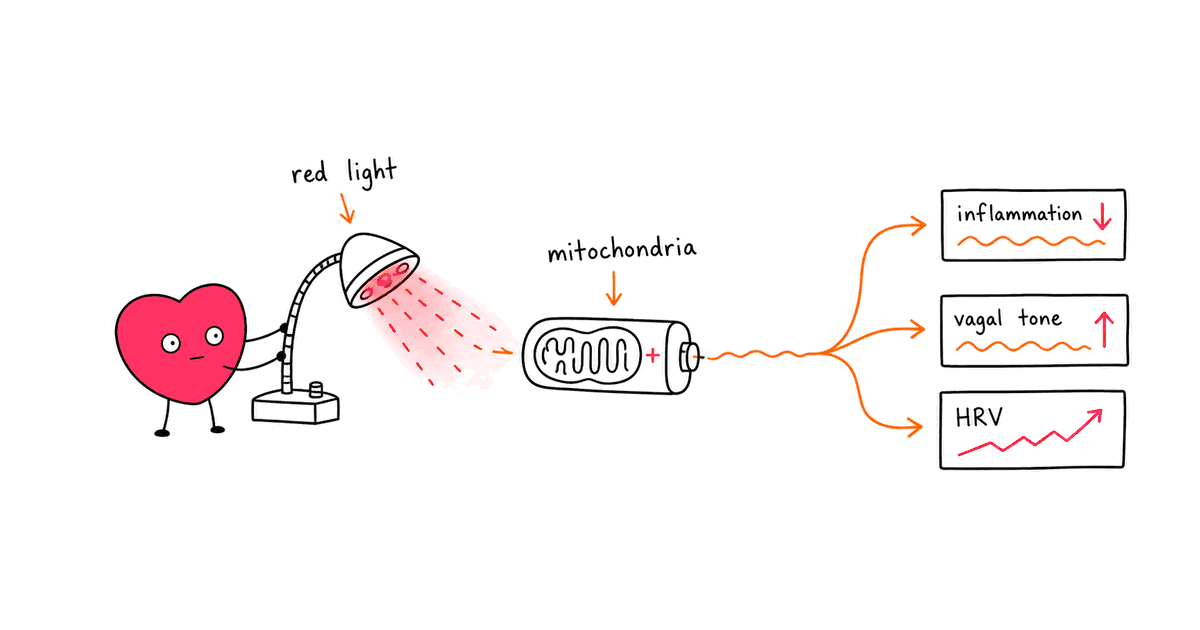
Red light therapy (RLT), also known as photobiomodulation, is a non-invasive treatment that uses red (630-660 nm) and near-infrared (810-850 nm) light wavelengths to stimulate cellular energy production and reduce inflammation. The therapy works primarily by enhancing mitochondrial function, increasing ATP output, and modulating oxidative stress at the cellular level.
Originally developed by NASA to promote wound healing in space, red light therapy has become one of the fastest-growing wellness trends. You will find RLT panels in biohacking labs, physical therapy clinics, and home setups alike. But beyond skin health and muscle recovery, emerging research suggests RLT may have a direct impact on your autonomic nervous system, and your HRV can help you measure it.
Does Red Light Therapy Improve HRV?
Yes, early research suggests red light therapy can improve HRV by enhancing parasympathetic nervous system activity. Studies show that exposure to red and near-infrared wavelengths increases RMSSD and high-frequency HRV power, both markers of vagal tone and recovery capacity. However, the evidence is still emerging, and individual responses vary based on wavelength, dosage, and application site.
The connection between light exposure and autonomic function is well established. A 2025 systematic review published in Neuroscience & Biobehavioral Reviews found that low-illuminance warm-colored light generally increases vagally-mediated HRV, while high-illuminance blue light tends to reduce it. This aligns with our understanding of how different light wavelengths interact with the nervous system.
How Photobiomodulation Affects the Autonomic Nervous System
Red light therapy influences your autonomic nervous system through several interconnected mechanisms.
Mitochondrial Function and ATP Production
The primary mechanism of photobiomodulation involves cytochrome c oxidase, a photoreceptor within your mitochondria. When red and near-infrared light hits this enzyme, it displaces nitric oxide and allows the electron transport chain to function more efficiently. The result is increased ATP production, which provides the energy your cells need for optimal function, including the cells that regulate your heart rhythm and autonomic tone.
Nitric Oxide Release
RLT triggers the release of nitric oxide, a signaling molecule that promotes vasodilation, improves blood flow, and reduces vascular resistance. Better circulation supports cardiac efficiency, which your HRV metrics reflect. Improved blood flow to the brain and vagus nerve may also enhance parasympathetic signaling.
Inflammation Reduction
Chronic inflammation is one of the most common drivers of low HRV. Research shows that photobiomodulation reduces pro-inflammatory cytokines like IL-6 and TNF-alpha while promoting anti-inflammatory responses. By reducing systemic inflammation, RLT may help restore autonomic balance and improve HRV over time.
Vagus Nerve Stimulation
Some researchers propose that applying red light therapy to the neck and upper chest area may directly stimulate the vagus nerve, the primary pathway of your parasympathetic nervous system. A 2023 study published in Sensors found that photobiomodulation at specific acupuncture points increased SDNN and enhanced parasympathetic activity (measured by HF power) in test subjects.
What the Research Says
Light Color and HRV Response
A study in PLOS ONE examined HRV responses to different colored light exposures in healthy adults with anxiety and depression symptoms. Participants were exposed to red (765 nm peak), blue (420 nm peak), and white light for 5-minute sessions. The findings revealed that different wavelengths produced distinct autonomic responses, with red light showing favorable shifts in HRV parameters.
Post-Awakening Light Exposure
Research published in Chronobiology International (2023) measured HRV in healthy males after morning exposure to red, green, and blue LED light. All three colors elevated RMSSD values compared to baseline norms, suggesting stronger parasympathetic activation. However, the spectral components showed bidirectional effects, meaning the time-domain and frequency-domain responses did not always align.
Chronic Pain and Autonomic Modulation
A 2022 study in Lasers in Medical Science found that spinal photobiomodulation in patients with chronic colonic dysfunction significantly altered autonomic balance. Laser probe stimulation increased parasympathetic activity, though the response varied based on the delivery method. This suggests that application technique matters as much as wavelength when targeting the autonomic nervous system.
How to Use Red Light Therapy for HRV
Choosing the Right Wavelengths
For autonomic and recovery benefits, focus on two wavelength ranges:
- Red light (630-660 nm): Penetrates the skin surface and is effective for reducing inflammation and supporting cellular repair
- Near-infrared (810-850 nm): Penetrates deeper into tissue, reaching muscles, joints, and potentially the vagus nerve
Many quality panels combine both wavelengths. For HRV-specific benefits, near-infrared wavelengths may be more relevant due to their deeper tissue penetration.
Recommended Protocol
Based on available research and practitioner recommendations:
- Duration: 10-20 minutes per session
- Distance: 6-12 inches from the panel (follow manufacturer guidelines)
- Frequency: 3-5 sessions per week for general wellness
- Timing: Morning sessions may complement your circadian rhythm, while evening sessions may promote parasympathetic activation before sleep
- Target areas: Chest, neck (near the vagus nerve), and upper back
Tracking Your Response with HRV
The best way to know if RLT is working for you is to track your HRV consistently. Use a wearable like the Oura Ring 4 or Whoop 5 to monitor trends over 4-8 weeks. Key metrics to watch:
- RMSSD: The most sensitive marker of parasympathetic activity
- Morning HRV trends: Look for gradual upward trends rather than day-to-day changes
- HRV during sleep: Nocturnal HRV gives the cleanest picture of your autonomic baseline
Compare your HRV data from weeks with consistent RLT use to weeks without it. A meaningful improvement would be a sustained increase in your rolling 7-day RMSSD average.
Combining Red Light Therapy with Other HRV Strategies
RLT works best as part of a broader recovery and wellness routine. Consider pairing it with:
- Breathing exercises: Slow, controlled breathing activates the vagus nerve through a complementary mechanism
- Cold exposure: Contrast therapy (alternating RLT and cold) is a popular biohacking protocol for autonomic training
- Meditation: Combining RLT with a meditation practice may amplify parasympathetic benefits
- Quality sleep: Use evening RLT sessions as part of a wind-down routine to support melatonin production and sleep onset
Potential Limitations and Considerations
The Research Is Still Early
While the mechanisms are promising, most studies on RLT and HRV are small, use varied protocols, and lack long-term follow-up. The 2025 systematic review noted that standardized research protocols are still needed to fully evaluate the therapeutic potential of light therapy on autonomic regulation.
Device Quality Varies Widely
Not all red light panels are created equal. Low-quality devices may not deliver sufficient irradiance (power density) at the correct wavelengths. Look for panels that provide third-party testing data for wavelength accuracy and power output.
Individual Response Differs
Just as with supplements and lifestyle interventions, your response to RLT will depend on your baseline health, stress levels, sleep quality, and overall autonomic function. People with very low baseline HRV may see more noticeable improvements than those who already have high parasympathetic tone.
Safety Notes
Red light therapy is generally considered safe with minimal side effects. However:
- Avoid looking directly at high-powered panels without eye protection
- Start with shorter sessions (5-10 minutes) and build up
- Consult a healthcare provider if you have photosensitivity conditions or are taking photosensitizing medications
The Bottom Line
Red light therapy shows genuine promise as a tool for improving HRV and autonomic function. The science behind photobiomodulation, enhanced mitochondrial function, nitric oxide release, inflammation reduction, and potential vagus nerve stimulation, aligns with what we know about the physiological drivers of HRV. While the research is still maturing, early evidence and the biological mechanisms support RLT as a worthwhile addition to your recovery toolkit.
The key is to approach it systematically. Track your HRV with a reliable wearable, follow a consistent protocol, and give it at least 4-8 weeks before drawing conclusions. And remember that RLT is most effective when combined with the fundamentals: quality sleep, regular exercise, proper nutrition, and effective stress management.
Frequently Asked Questions
How quickly does red light therapy affect HRV?
Some studies show acute changes in HRV within a single 10-20 minute session, particularly increases in RMSSD and HF power. However, lasting improvements in baseline HRV typically require consistent use over 4-8 weeks. Track your HRV numbers daily to identify trends.
What time of day is best for red light therapy sessions?
Morning sessions may support your circadian rhythm and provide an energizing start, while evening sessions (1-2 hours before bed) may promote parasympathetic activation and better sleep quality. Experiment with both and let your HRV data guide your decision.
Can red light therapy replace other HRV improvement strategies?
No. Red light therapy should complement, not replace, proven HRV strategies like breathing exercises, regular physical activity, and sleep optimization. Think of it as an additional tool in your autonomic health toolkit.
Is red light therapy safe for daily use?
Yes, red light therapy is generally safe for daily use at recommended durations and distances. Most research protocols use 10-20 minute sessions without adverse effects. Start conservatively and increase gradually while monitoring your HRV response.
Need a quick read on your HRV number first?
Enter your HRV value, age range, device, and recovery context for a plain-English interpretation before you decide what to do next.
Interpret Your HRV NumberBuild the 30-day plan