Vagus Nerve Stimulation and HRV: Can Electrical Devices Boost Your Autonomic Health?
Trying to decode today's HRV number? Use the free interpreter first, then build a practical recovery plan. Interpret your HRV
The vagus nerve is the longest cranial nerve in the body, running from the brainstem to the abdomen. It serves as the primary communication highway between the brain and nearly every major organ system, including the heart. When researchers measure heart rate variability, they are largely measuring the influence of this single nerve.
For decades, vagus nerve stimulation (VNS) required surgical implantation of an electrode. That changed with the development of transcutaneous vagus nerve stimulation (tVNS), a non-invasive approach that delivers mild electrical pulses through the skin. Consumer devices now make this technology available for home use, and the market has grown rapidly since 2023.
But do these devices actually improve HRV? The answer is more nuanced than most product marketing suggests.
What Is Vagus Nerve Stimulation?
Vagus nerve stimulation (VNS) is the use of electrical impulses to activate the vagus nerve, enhancing parasympathetic activity and influencing heart rate, inflammation, mood, and digestion. The technique was originally developed as a treatment for epilepsy and treatment-resistant depression, both of which received FDA approval for implanted VNS devices.
Transcutaneous VNS (tVNS) works on the same principle but delivers the electrical signal through the skin rather than through a surgically implanted electrode. Two main approaches exist:
- Auricular tVNS (taVNS): Stimulates the auricular branch of the vagus nerve at the ear, typically at the tragus or cymba conchae
- Cervical tVNS: Stimulates the vagus nerve at the neck, where it runs near the surface alongside the carotid artery
Both approaches aim to activate vagal afferent fibers, sending signals up to the brainstem's nucleus tractus solitarius (NTS), which then modulates autonomic output throughout the body.
How the Vagus Nerve Controls HRV
The vagus nerve is the primary driver of beat-to-beat heart rate variation. When vagal tone is high, the nerve releases acetylcholine at the sinoatrial node, slowing heart rate and increasing the variability between consecutive beats. This is why higher HRV generally signals better autonomic health.
Several HRV metrics directly reflect vagal activity:
| HRV Metric | What It Measures | Vagal Connection |
|---|---|---|
| RMSSD | Beat-to-beat variability | Primary vagal marker |
| HF-HRV | High-frequency power (0.15-0.4 Hz) | Respiratory-linked vagal activity |
| pNN50 | Percentage of successive intervals differing by >50ms | Parasympathetic influence |
| SDNN | Overall HRV | Mixed sympathetic and vagal |
When the vagus nerve is stimulated externally, the expectation is that these metrics should shift upward, reflecting enhanced parasympathetic tone. The reality, as the research shows, is more complex. For a deeper look at the underlying theory, see the guide on polyvagal theory and HRV.
What the Research Shows About tVNS and HRV
The scientific evidence on tVNS and HRV is growing but mixed. Understanding the nuances is important before investing in a device.
Studies Showing Positive Effects
A 2021 analysis of stimulation parameters and targets found that specific taVNS protocols, particularly bursts with 100-microsecond pulse duration at 2 mA, were effective at increasing overall HRV as measured by SDNN. The researchers concluded that HRV is suitable for defining optimal tVNS parameters for research and therapeutic use. If you need a refresher on what changes in SDNN and RMSSD actually mean, see our guide to understanding HRV numbers.
A systematic review from Cambridge University tested taVNS over seven days using wearable cardiac sensors in a double-blind, sham-controlled design. Participants receiving active stimulation showed measurable changes in autonomic function compared to the sham group.
Research from the Feinstein Institutes for Medical Research at Northwell Health has demonstrated that non-invasive VNS can improve spontaneous cardiac baroreflex sensitivity in healthy adults. A randomized placebo-controlled trial found that even a single session of cervical VNS acutely improved this marker of cardiovascular autonomic regulation.
Studies Showing Null or Paradoxical Effects
A 2025 study published in Psychophysiology found that taVNS actually decreased HRV, as measured by SDRR, RMSSD, and HF-HRV, regardless of which side of the ear was stimulated. The authors concluded that this contradicts the assumption that stimulating vagal afferents automatically increases cardiac vagal activity.
A living Bayesian meta-analysis on taVNS and vagally mediated HRV found that the overall evidence for consistent HRV improvement is modest. While some stimulation protocols show promise, others show no significant effect on RMSSD or HF-HRV.
A 2025 randomized crossover trial in healthy adults tested varying tVNS frequencies and pulse widths. The researchers found that while SDNN (overall variability) increased with certain parameter combinations, RMSSD (the primary vagal marker) did not show significant changes.
The Key Takeaway
The evidence suggests that tVNS can influence autonomic function, but the direction and magnitude of that influence depend heavily on stimulation parameters, target location, individual physiology, and session duration. The relationship between tVNS and HRV is not as simple as "stimulate the vagus nerve, raise your HRV."
Consumer tVNS Devices: What's Available
The consumer tVNS market has expanded significantly. Here are the most prominent devices and how they differ.
Cervical (Neck) Devices
Truvaga Plus stimulates the vagus nerve at the neck using the same 25 Hz frequency and 5,000 Hz carrier signal as its prescription counterpart, gammaCore, which is FDA-cleared for cluster headache treatment. In comparative testing by Innerbody Research, it produced the fastest and most noticeable effects on focus, stress, and sleep quality among all consumer devices tested. It requires a conductive gel or spray for skin contact. Pricing starts around $499.
Pulsetto is a wearable that sits on the neck like headphones, with electrodes on each side targeting both vagus nerve branches simultaneously. It operates via a companion app with preset programs for stress, sleep, and focus. It is one of the more affordable options, typically priced between $278 and $478 depending on model and promotions. An independent ranking by TPIMS (Torrey Institute) named it the top-rated consumer VNS device for 2025-2026.
Auricular (Ear) Devices
Xen by Neuvana delivers tVNS through modified earbuds that stimulate the tragus while playing music or audio content. It pairs the stimulation with sound for a more passive experience. Pricing is around $449. Some testers have reported ear canal sensitivity with prolonged use.
ZENOWELL is an auricular VNS device specifically positioned for sleep support. It targets the cymba conchae of the ear and is priced around $223-$279.
Vibration-Based Devices
Sensate takes a different approach, using infrasonic vibrations on the chest rather than electrical stimulation. While not tVNS in the traditional sense, it targets vagal pathways through mechanical stimulation paired with guided soundscapes. Research has shown improvements in state anxiety and sleep quality. Priced around $269-$349.
| Device | Type | Stimulation | Price Range | App Required |
|---|---|---|---|---|
| Truvaga Plus | Cervical | Electrical (25 Hz) | ~$499 | No |
| Pulsetto | Cervical | Electrical (variable) | ~$278-478 | Yes |
| Xen by Neuvana | Auricular | Electrical + Audio | ~$449 | Yes |
| ZENOWELL | Auricular | Electrical | ~$223-279 | Yes |
| Sensate | Chest | Infrasonic vibration | ~$269-349 | Yes |
How to Track the Effects of VNS on Your HRV
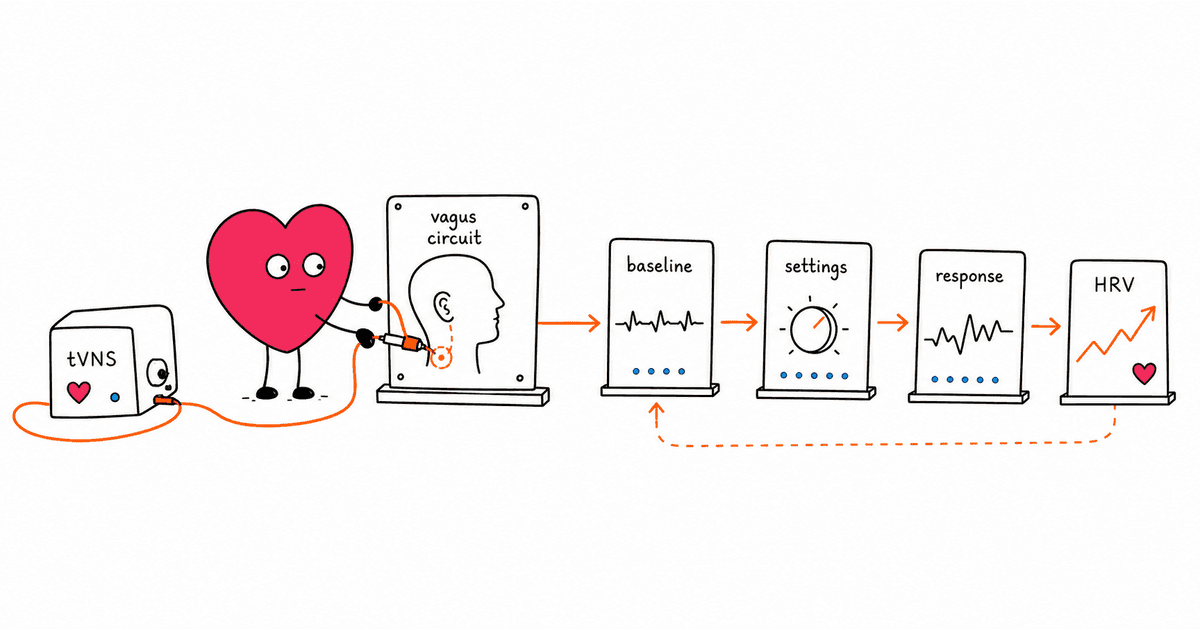
If you decide to try a tVNS device, your HRV tracker becomes an essential feedback tool. Here is a practical protocol for assessing whether the device is making a measurable difference.
Establish a Baseline
Before starting any VNS protocol, collect at least two weeks of consistent HRV data. Measure at the same time each day, ideally upon waking, using the same device and body position. Record your average RMSSD and any morning readiness score your tracker provides. Our HRV beginner's guide walks through how to standardize those measurements if you're new to tracking.
Control Your Variables
During the testing period, keep other lifestyle factors as stable as possible. Changes in sleep quality, alcohol consumption, exercise intensity, or stress levels will confound your results. The goal is to isolate the effect of the VNS device as much as possible.
Use a Structured Testing Phase
Try the device consistently for four to six weeks, following the manufacturer's recommended protocol. Continue measuring HRV daily under the same conditions. After the testing period, compare your average RMSSD, SDNN, and resting heart rate to your baseline.
What to Look For
- A sustained increase in morning RMSSD of 5-10% or more over baseline
- A decrease in resting heart rate of 2-5 bpm
- Improved subjective markers: sleep quality, stress tolerance, recovery from exercise
- Consistency of trends rather than day-to-day fluctuations
Free Vagus Nerve Stimulation Alternatives
Before investing hundreds of dollars in a tVNS device, consider that several free or low-cost techniques also stimulate the vagus nerve and have stronger evidence bases for improving HRV.
Cold Water Face Immersion
Submerging the face in cold water (10-15 degrees Celsius) triggers the mammalian dive reflex, which activates the vagus nerve and rapidly shifts the autonomic nervous system toward parasympathetic dominance. This is one of the fastest-acting vagal stimulation techniques available. For more on cold exposure and HRV, see the cold exposure guide.
Slow, Diaphragmatic Breathing
Breathing at a rate of approximately six breaths per minute (a 5-second inhale and 5-second exhale) directly stimulates the vagus nerve through the respiratory-cardiac coupling mechanism. This approach forms the basis of HRV biofeedback training and has extensive research supporting its effectiveness. If you want a practical routine, start with these breathing exercises for HRV.
Humming, Gargling, and Singing
Activities that vibrate the vocal cords mechanically stimulate the vagus nerve where it passes through the larynx. Regular singing or humming practice has been shown to increase vagal tone and HRV in multiple studies.
Meditation and Mindfulness
Regular meditation practice has been consistently shown to increase HRV over time, likely through combined effects on vagal tone, stress reduction, and improved emotional regulation.
Physical Exercise
Consistent aerobic exercise is one of the most reliable ways to improve baseline HRV. The mechanism includes enhanced vagal tone, improved baroreflex sensitivity, and reduced chronic sympathetic activation.
Who Might Benefit Most from tVNS Devices
Based on the current research, certain groups may see more benefit from tVNS than others.
People with Low Baseline HRV
A 2025 study published in Translational Psychiatry found that baseline HRV may serve as a guide for tVNS outcomes in depression. Individuals with lower baseline HRV showed greater responsiveness to stimulation, suggesting that the autonomic nervous system has more room for improvement in these individuals.
Those with Stress-Related Conditions
Research on non-invasive VNS has shown the most consistent benefits for stress-related psychiatric disorders, including anxiety and PTSD. The vagus nerve's role in the inflammatory reflex and stress response makes it a logical target for these conditions. Emerging research also explores VNS as a recovery tool for concussions and traumatic brain injuries, where restoring vagal tone may help normalize autonomic dysfunction caused by damage to brainstem circuits.
People Who Have Already Optimized Lifestyle Factors
If sleep, exercise, nutrition, breathing practices, and stress management are already dialed in and HRV remains low, tVNS may offer an additional lever. For someone who does not exercise, sleeps poorly, and has high chronic stress, a tVNS device is unlikely to overcome those fundamentals.
Safety Considerations
Consumer tVNS devices are generally considered safe for healthy adults, but several precautions apply.
Do not use tVNS if you have:
- An implanted cardiac device (pacemaker or defibrillator)
- Active cardiac arrhythmias
- A history of seizures (without medical guidance)
- Metal implants near the stimulation site
Common side effects include:
- Tingling or mild discomfort at the stimulation site
- Headache during initial sessions
- Dizziness, particularly with cervical stimulation
- Ear canal irritation with auricular devices
Most consumer devices are not FDA-cleared or FDA-approved for any medical condition. The FDA-cleared gammaCore is a prescription device. Its consumer counterpart, Truvaga, operates with similar parameters but does not carry the same regulatory status.
Always consult a healthcare provider before starting tVNS, particularly if you have any cardiovascular or neurological conditions. This article is for educational purposes and does not constitute medical advice.
The Bottom Line
Vagus nerve stimulation is a promising area of research with real scientific basis. The vagus nerve is the primary driver of HRV, and activating it through electrical stimulation can influence autonomic function. However, the evidence for consumer tVNS devices is still maturing.
The most honest assessment is this: tVNS devices may provide a modest boost to HRV and autonomic health for some individuals, but they are not a replacement for the fundamentals of sleep, exercise, stress management, and nutrition. For most people, optimizing those lifestyle factors will have a far greater impact on HRV than any device.
If you do choose to try a tVNS device, use your HRV tracker to objectively measure whether it is making a difference for you. Track consistently, control your variables, and give it at least four to six weeks before drawing conclusions.
Frequently Asked Questions
Does vagus nerve stimulation increase HRV?
It can, but the results vary. Some studies show increases in overall HRV (SDNN) with specific stimulation parameters, while others show no significant change in vagally mediated metrics like RMSSD. The effect depends on device type, stimulation settings, session duration, and individual physiology.
How long does it take for tVNS to affect HRV?
Most research protocols run for four to eight weeks before measuring outcomes. Some users report subjective improvements in stress and sleep within the first week, but measurable HRV changes typically require consistent use over several weeks.
Are vagus nerve stimulation devices safe?
Consumer tVNS devices are generally safe for healthy adults. Common side effects include tingling at the stimulation site, mild headache, and occasional dizziness. They should not be used by people with pacemakers, active arrhythmias, or seizure disorders without medical supervision.
Which vagus nerve stimulation device is best?
There is no single best device for everyone. Truvaga Plus has the closest connection to clinically tested technology through its relationship with the FDA-cleared gammaCore. Pulsetto offers a more affordable entry point. The best choice depends on budget, preferred stimulation location (neck vs. ear), and individual response.
Can I stimulate my vagus nerve without a device?
Yes. Cold water face immersion, slow diaphragmatic breathing at six breaths per minute, humming, singing, meditation, and regular exercise all stimulate the vagus nerve and have strong research support for improving HRV. These free approaches should be the foundation of any vagal health strategy.
Need a quick read on your HRV number first?
Enter your HRV value, age range, device, and recovery context for a plain-English interpretation before you decide what to do next.
Interpret Your HRV NumberBuild the 30-day plan