Singing, Humming, and HRV: How Your Voice Can Boost Vagal Tone
Trying to decode today's HRV number? Use the free interpreter first, then build a practical recovery plan. Interpret your HRV
Most people think of HRV improvement in terms of exercise, sleep, or breathing drills. But one of the most accessible and enjoyable vagus nerve stimulators is something you already do every day: using your voice. Singing, humming, and chanting create specific vibrations and breathing patterns that directly activate the parasympathetic nervous system, and the research backing this is surprisingly strong.
Here is how vocal practices affect your autonomic nervous system and practical ways to use them for better HRV.
How Vocalization Stimulates the Vagus Nerve
The vagus nerve is the primary communication highway between your brain and your body's rest-and-digest system, and vocalization directly activates it through multiple pathways. The laryngeal branches of the vagus nerve control your vocal cords, meaning every time you produce sound, you are engaging this nerve.
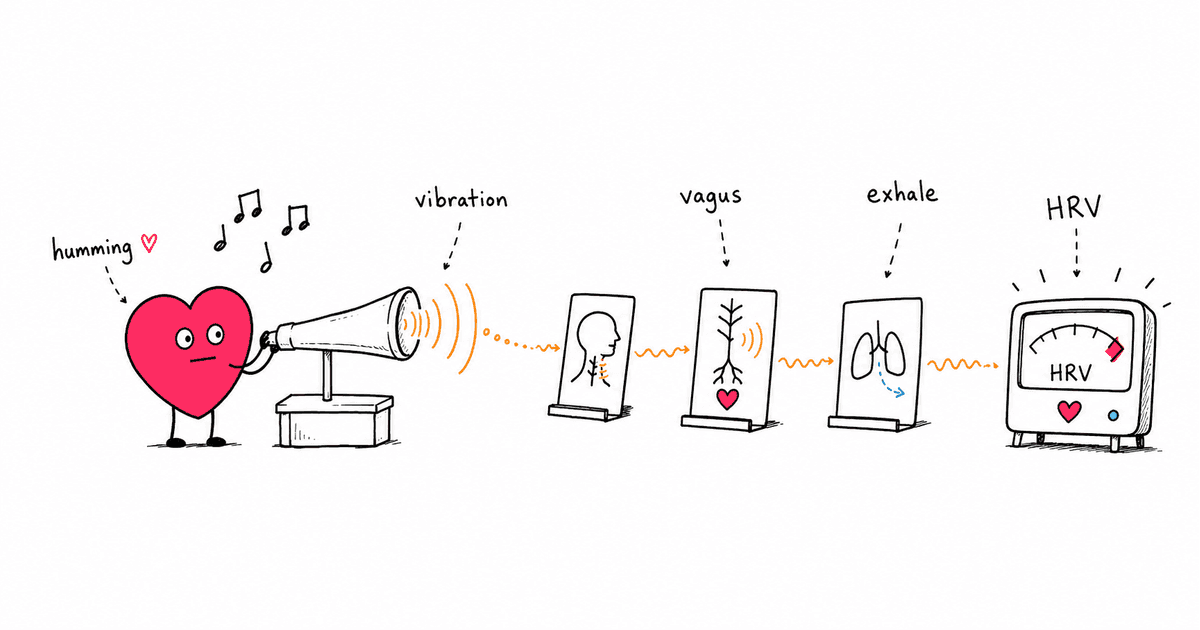
Singing, humming, and chanting stimulate the vagus nerve through three overlapping mechanisms:
- Direct laryngeal activation: The recurrent laryngeal nerve (a branch of the vagus) controls the muscles of your vocal cords. Producing sustained tones keeps this pathway active.
- Extended exhalation: Vocalizing naturally lengthens your exhale relative to your inhale, which shifts autonomic balance toward parasympathetic dominance.
- Vibration and resonance: Low-frequency vibrations from humming and chanting create mechanical stimulation in the throat and chest that further activates vagal pathways.
This is why vocal practices overlap with, but are distinct from, breathing exercises alone. The addition of sound production adds a layer of direct vagal engagement that silent breathing does not provide.
What the Research Says About Singing and HRV
A landmark 2013 study published in Frontiers in Psychology found that choir singing creates measurable changes in heart rate variability. The researchers discovered that music structure directly determines HRV patterns in singers, with unison singing causing hearts to accelerate and decelerate simultaneously across the group. Slower musical phrases produced greater HRV increases due to the slower, more controlled breathing patterns they demand.
A follow-up study in Frontiers in Physiology (2020) showed that HRV synchronizes between people who vocalize together, even among non-experts. Group singing produced coordinated autonomic responses, suggesting that the benefits extend beyond trained musicians to anyone willing to sing.
Research published in Scientific Reports examined improvised singing and toning, finding that HRV increased in all vocal conditions compared to baseline. This suggests a favorable increase in parasympathetic activity during vocalization regardless of the specific technique used.
Humming: The Simplest Vagal Stimulation Technique
If singing feels too involved, humming offers many of the same benefits with almost no effort. A Holter-based study published in the Cureus Journal of Medical Science (2023) specifically compared HRV parameters during humming (simple Bhramari pranayama) against physical activity, emotional stress, and sleep. The results were striking:
- Humming produced the lowest stress index among all activities measured
- SDNN and RMSSD values during humming were higher than during other activities
- The stress-reduction effect of humming was measurable even compared to sleep
A 2025 pilot investigation published in Physiology & Behavior confirmed that humming breathing is a viable alternative to slow-paced breathing for enhancing HRV and autonomic regulation, without requiring specialized equipment or biofeedback.
The Nitric Oxide Bonus
Beyond vagal stimulation, humming has a unique physiological benefit: it dramatically increases nasal nitric oxide (NO) production. A study by Weitzberg and Lundberg published in the American Journal of Respiratory and Critical Care Medicine (2002) found that humming increases nasal NO levels 15 to 20 times compared to quiet exhalation.
Nitric oxide is a potent vasodilator that supports cardiovascular health, immune function, and blood pressure regulation. This means humming provides a dual benefit: vagus nerve stimulation from the vocalization itself, plus enhanced nitric oxide production that supports the same cardiovascular systems HRV reflects.
Om Chanting and Autonomic Balance
Chanting "Om" (or "Aum") has been studied extensively as a specific vocal practice for autonomic regulation. A study published in the International Journal of Yoga compared the immediate effects of Om chanting on HRV between experienced and inexperienced yoga practitioners. Both groups showed increased parasympathetic activity during chanting, with experienced practitioners showing even greater high-frequency HRV power.
A 2025 randomized controlled trial found that listening to Om chanting at 528 Hz for one month reduced pulse and blood pressure while enhancing parasympathetic dominance on HRV analysis in patients with hypertension.
Research on post-COVID medical students (2025) demonstrated that a 30-day intervention combining Om chanting and Bhramari pranayama significantly improved time-domain HRV parameters including SDNN, RMSSD, and pNN50, suggesting these practices can help restore autonomic function after illness. For more on how long COVID affects HRV and recovery strategies, see our dedicated guide.
For more on the autonomic nervous system framework behind these effects, see the guide on polyvagal theory and HRV.
Group Singing vs. Solo Practice
The research suggests that singing with others may provide additional benefits beyond solo practice. The HRV synchronization studies show that group vocalization creates shared autonomic states, which overlaps with findings about social connection and HRV.
Group singing benefits include:
- HRV synchronization between participants, creating shared parasympathetic activation
- Social bonding through coordinated breathing and oxytocin release
- Reduced cortisol from the combined effects of vocalization and social engagement
- Sustained practice from the accountability and enjoyment of group settings
Solo practice still provides significant vagal stimulation through the direct laryngeal and respiratory mechanisms. The choice between group and solo practice comes down to preference and accessibility.
Five Vocal Practices to Improve HRV
1. Simple Humming (2-5 Minutes)
Sit comfortably and inhale through your nose for 4 seconds. Exhale while humming at a comfortable pitch for 8-10 seconds. Focus on feeling the vibration in your throat, sinuses, and chest. Repeat for 10-15 breath cycles.
This is the lowest-barrier entry point. You can practice it at your desk, in the car, or before bed.
2. Bhramari (Bee Breath) Pranayama (5-10 Minutes)
Close your ears gently with your thumbs and place your fingers over your eyes (Shanmukhi mudra). Inhale deeply through your nose, then exhale while making a steady, low-pitched humming sound like a bee. The combination of sensory withdrawal and prolonged humming creates a powerful parasympathetic shift.
The Holter-based study mentioned earlier used this technique to achieve stress index readings lower than sleep.
3. Extended Vowel Toning (5 Minutes)
Cycle through the vowel sounds "Ah," "Oh," "Oo," "Ee," and "Mm" on a single exhale, holding each for as long as comfortable. This engages different resonance chambers in the body and provides varied laryngeal stimulation.
4. Om / Aum Chanting (10-15 Minutes)
Inhale deeply, then chant "Aaa-Ooo-Mmm" on a single exhale, spending roughly equal time on each syllable. The "Mmm" portion creates the humming vibration that stimulates the vagus nerve most directly. Ten to fifteen minutes of repetition is the duration most commonly studied.
5. Sing Along to Music (20-30 Minutes)
Put on a favorite playlist and sing along. The controlled breathing, emotional engagement, and laryngeal activation provide vagal stimulation even without formal technique. Slower, melodic songs naturally extend your exhalation and maximize the HRV benefit.
This approach pairs well with what we know about music and HRV, combining the benefits of listening with active vocal engagement.
How to Track the Effects on Your HRV
To see whether vocal practices are improving your HRV, consistent tracking is essential. Take a baseline HRV reading at the same time each day (morning is best) for at least one week before starting a vocal practice routine. Then add 10-15 minutes of humming or chanting daily and continue tracking.
Look for changes in:
- RMSSD: The most common time-domain HRV metric, reflecting parasympathetic activity. See our guide to understanding HRV numbers for more detail.
- HF power: High-frequency HRV power, directly linked to vagal tone. HRV biofeedback training can help you learn to increase this in real time.
- Resting heart rate: Should trend downward as vagal tone improves
Most wearables like the Oura Ring 4 or Whoop provide morning HRV readings that work well for this type of self-tracking. A chest strap like the Garmin HRM-600 paired with an HRV app can give you real-time readings during your practice sessions.
Allow 2-4 weeks of consistent daily practice before expecting measurable shifts in baseline HRV. Acute effects (during and immediately after practice) should be noticeable sooner.
When to Practice for Maximum Benefit
The timing of vocal practice matters for HRV optimization:
- Morning: Humming or chanting in the morning can set a parasympathetic tone for the day. This pairs well with a morning HRV measurement routine.
- Pre-sleep: A 5-minute humming session before bed can help transition into a rest state, supporting better overnight HRV. See more on sleep and HRV.
- After stressful events: Using humming as a real-time stress intervention can help restore autonomic balance faster than simply waiting it out.
- During commutes: Singing in the car provides a low-pressure environment for vocal practice with the added benefit of improved mood.
Avoid intense vocal practice immediately before athletic performance, as the strong parasympathetic activation could temporarily reduce sympathetic readiness.
Who Benefits Most
Vocal practices for HRV improvement are particularly well-suited for:
- People who find meditation difficult: Humming and chanting provide a focal point that many find easier to sustain than silent meditation.
- Those with anxiety: The combination of extended exhalation, vibration, and vagal stimulation can help reduce anxiety symptoms.
- Older adults: Singing and humming are low-impact and accessible regardless of physical fitness level, making them a great option for seniors looking to improve HRV.
- Post-illness recovery: The 2025 post-COVID study suggests vocal practices can help restore autonomic function after illness.
- Yoga practitioners: Chanting integrates naturally with pranayama and meditation components of yoga practice.
- Anyone seeking variety: If your current HRV improvement toolkit feels stale, vocal practices offer a genuinely different approach.
Does Pitch Matter for HRV
Yes, lower-pitched sounds appear to be more effective for vagal stimulation than high-pitched ones. Research by Maniscalco et al. found that humming at approximately 130 Hz (roughly a C3 note, or the lower range of a typical male speaking voice) produced the greatest increase in nasal nitric oxide. Lower frequencies also create more pronounced chest vibrations, which may enhance the mechanical stimulation of vagal pathways.
That said, the most important factor is comfort. Straining to reach an unnaturally low pitch creates tension that works against parasympathetic activation. Hum or sing at a pitch that feels easy and resonant in your chest rather than forced.
For those who want to experiment, try humming at different pitches during a session and notice where you feel the most vibration in your chest and throat. That is likely your optimal range for vagal stimulation.
Building a Daily Vocal Practice Routine
Consistency matters more than duration. A simple framework for integrating vocal practices into your routine:
Beginner (Week 1-2):
- 2 minutes of simple humming after waking
- Focus on making the practice habitual rather than intense
Intermediate (Week 3-4):
- 5 minutes of Bhramari pranayama in the morning
- 2 minutes of humming before bed
- Begin tracking morning HRV for comparison
Established (Week 5+):
- 10-15 minutes of Om chanting or vowel toning as a dedicated practice
- Spontaneous humming during daily transitions (commute, waiting, before meals)
- Weekly review of HRV trends to assess impact
The key is treating vocal practice like any other health habit. Small, consistent doses outperform occasional long sessions. Track your results with a wearable like the Apple Watch or Garmin to stay motivated and measure progress over time.
How Singing Differs from Other Vagal Stimulation Methods
Vocal practices are far from the only way to stimulate the vagus nerve. Cold exposure, meditation, and even massage all activate parasympathetic pathways. What makes singing and humming unique is the combination of accessibility, enjoyment, and multi-pathway stimulation.
| Method | Equipment Needed | Time Required | Enjoyment Factor |
|---|---|---|---|
| Humming | None | 2-5 min | High |
| Singing | None | 10-30 min | Very high |
| Cold exposure | Cold water/ice | 2-10 min | Low for most |
| Slow breathing | None (app optional) | 5-15 min | Moderate |
| Meditation | None (app optional) | 10-20 min | Varies |
| Massage | Therapist/device | 30-60 min | High |
The enjoyment factor is worth emphasizing. Practices you enjoy are practices you sustain. Many people who struggle with formal meditation or cold plunges find that singing or humming fits more naturally into their daily life.
Limitations and Considerations
While the research is promising, a few caveats are worth noting:
- Most studies have small sample sizes (10-50 participants). Larger trials would strengthen the evidence base.
- The optimal frequency, duration, and pitch for HRV improvement are not yet standardized.
- People with vocal cord disorders, severe acid reflux, or recent throat surgery should consult a healthcare provider before starting intensive vocal practices.
- HRV improvements from vocal practices likely work best as part of a broader lifestyle approach that includes exercise, good sleep, and nutrition.
Key Takeaways
Your voice is a direct line to your vagus nerve. Whether you hum for two minutes at your desk, join a community choir, or practice Om chanting before bed, vocal practices offer a research-backed, equipment-free way to improve heart rate variability and autonomic balance.
The science is clear: singing and humming extend your exhalation, vibrate vagal pathways, boost nitric oxide production, and shift your nervous system toward rest and recovery. For a practice that costs nothing and can be done almost anywhere, the potential upside for HRV is significant.
Start with five minutes of simple humming daily and track your HRV to see the effects firsthand. Your vagus nerve will thank you.
Need a quick read on your HRV number first?
Enter your HRV value, age range, device, and recovery context for a plain-English interpretation before you decide what to do next.
Interpret Your HRV NumberBuild the 30-day plan