Stretching and HRV: How Flexibility Training Supports Your Nervous System
Trying to decode today's HRV number? Use the free interpreter first, then build a practical recovery plan. Interpret your HRV
Most people think of stretching as a way to improve flexibility or prevent injury. But emerging research reveals a deeper benefit: stretching directly influences your autonomic nervous system and can measurably improve heart rate variability (what is HRV?). Whether you practice a morning yoga flow, post-workout static stretching, or a dedicated mobility routine, the effects extend well beyond your muscles.
What Happens to Your Nervous System When You Stretch
Stretching activates the parasympathetic branch of your autonomic nervous system, the "rest and digest" side responsible for recovery, relaxation, and higher HRV. During a stretch, mechanoreceptors in your muscles and connective tissue send signals through afferent nerve fibers to the brainstem, which in turn modulates vagal output to the heart.
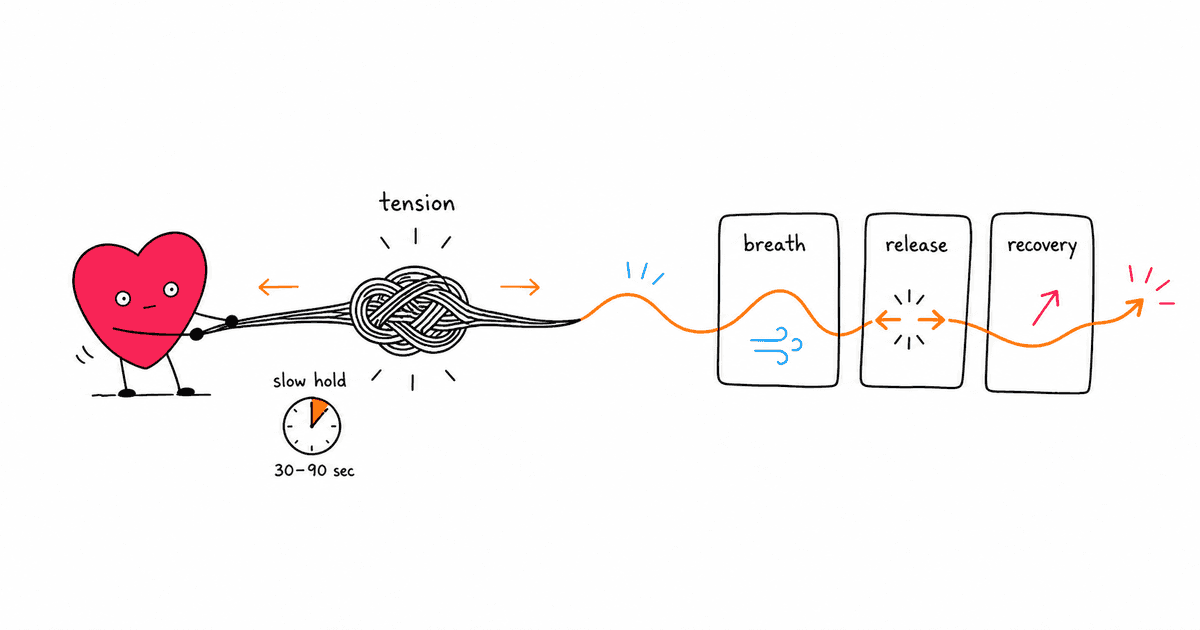
This process creates a measurable shift in autonomic balance. While your heart rate may initially rise slightly during active stretching, the post-stretch recovery period is characterized by a significant increase in parasympathetic activity, often reflected as higher RMSSD and HF power in HRV readings.
What the Research Says
A study published in the International Journal of Sports Medicine found that after a single stretching session, participants with low flexibility showed a rapid increase in parasympathetic activity during recovery. RMSSD decreased during the stretch itself but rebounded above resting levels afterward, and heart rate dropped below pre-exercise values. The researchers concluded that stretching exercises can shift the autonomic balance toward parasympathetic dominance.
A 2024 study in Frontiers in Sports and Active Living confirmed that multiple-set flexibility training sessions improve HRV and autonomic balance during post-exercise recovery, particularly in individuals with lower baseline flexibility levels. This suggests that the less flexible you are, the more you may benefit from adding a stretching routine.
Additional research examining post-exercise recovery techniques found that stretching-based cooldowns enhanced vagally mediated HRV (measured via RMSSD) more effectively than passive rest alone. A 28-day stretching protocol in athletes also showed sustained HRV improvements, indicating that consistency matters.
How Stretching Activates the Vagus Nerve
The vagus nerve is the primary conduit for parasympathetic signals to the heart. Several mechanisms explain how stretching stimulates vagal activity:
Mechanoreceptor Stimulation
When you stretch a muscle, Golgi tendon organs and muscle spindles detect the change in tension. These receptors send inhibitory signals that reduce sympathetic output and promote relaxation, a reflex that contributes to the familiar feeling of calm after a good stretch.
Diaphragmatic Engagement
Many stretching positions, especially those involving the torso and hips, naturally encourage deeper breathing. This diaphragmatic breathing directly stimulates the vagus nerve as it passes through the diaphragm, amplifying the parasympathetic response.
Fascial Release
Connective tissue (fascia) contains a dense network of sensory receptors. Sustained stretching stimulates these receptors, triggering a systemic relaxation response that influences heart rate and blood pressure regulation.
Reduced Muscle Tension
Chronic muscle tension is associated with sustained sympathetic activation and inflammation. By releasing tension through stretching, you reduce the afferent signals that keep your nervous system in a state of alertness.
Static vs. Dynamic Stretching: Different Effects on HRV
Not all stretching affects HRV the same way. The type, duration, and intensity of your stretching routine influence the autonomic response.
Static Stretching
Holding a stretch for 30 to 60 seconds activates the parasympathetic nervous system more strongly than dynamic movement. The sustained hold allows mechanoreceptors to fully engage and trigger the relaxation reflex. Research consistently shows that static stretching protocols produce the largest post-session increases in RMSSD and HF power.
Best for: Post-workout recovery, evening routines, stress reduction
Dynamic Stretching
Controlled movement through a range of motion (leg swings, arm circles, walking lunges) creates a mild sympathetic stimulus. While it doesn't produce the same immediate parasympathetic boost as static stretching, dynamic stretching prepares the body for activity and supports autonomic flexibility over time.
Best for: Pre-workout warmups, morning activation
PNF Stretching
Proprioceptive neuromuscular facilitation involves alternating between contraction and relaxation of the target muscle. This approach produces a strong autonomic response due to the repeated cycling between sympathetic (contraction) and parasympathetic (release) activation. Some studies suggest PNF stretching may improve autonomic flexibility more than static stretching alone.
Best for: Targeted flexibility gains, advanced practitioners
How Long Should You Stretch for HRV Benefits
Research suggests a minimum threshold for meaningful HRV effects:
| Duration | Expected HRV Effect |
|---|---|
| 5 minutes | Mild parasympathetic boost |
| 10 minutes | Measurable increase in RMSSD during recovery |
| 15-20 minutes | Significant shift toward parasympathetic dominance |
| 30+ minutes | Sustained HRV improvement, similar to yoga session |
The key finding across studies: 10 minutes appears to be the minimum effective dose for a measurable post-stretch increase in vagal tone. Sessions of 15 to 20 minutes produce more robust effects and are more practical for most people.
Consistency also matters. A 28-day stretching protocol showed cumulative HRV improvements that exceeded the effects of individual sessions, suggesting that regular practice remodels autonomic baseline over time.
A Stretching Routine Designed for HRV
This 15-minute routine targets the muscle groups most associated with nervous system activation. Hold each stretch for 45 to 60 seconds per side, breathing slowly through your nose.
1. Neck and Upper Trapezius Release
Gently tilt your head to one side, bringing your ear toward your shoulder. This area carries significant tension from desk work and stress, and releasing it reduces sympathetic drive.
2. Cat-Cow Spinal Mobilization
Alternate between arching and rounding your spine on all fours. This movement stimulates the vagus nerve through gentle compression and release of the diaphragm and abdominal organs.
3. Hip Flexor Stretch (Low Lunge)
Tight hip flexors are linked to chronic sympathetic activation, especially in people who sit for extended periods. A deep lunge stretch releases this tension and signals safety to the nervous system.
4. Seated Forward Fold
Folding forward with a rounded spine compresses the abdomen, which stimulates the vagus nerve. This position also naturally slows breathing, further enhancing the parasympathetic response.
5. Supine Figure-Four (Pigeon Stretch)
Targeting the piriformis and deep hip rotators, this stretch releases tension in the pelvis, an area densely innervated by the autonomic nervous system.
6. Supine Spinal Twist
Lying on your back with knees dropped to one side, this twist compresses and then releases the abdominal organs, stimulating vagal activity. It also stretches the thoracolumbar fascia, which contains abundant mechanoreceptors.
7. Legs Up the Wall
Finish with 2 to 3 minutes in this restorative position. Elevating the legs promotes venous return, reduces heart rate, and creates an ideal environment for parasympathetic activation.
When to Stretch for Maximum HRV Impact
Timing your stretching routine can amplify its effects on HRV:
Morning: A gentle 10-minute routine can set your autonomic tone for the day. Focus on dynamic movements transitioning to light static stretches. This helps shift from the sympathetic dominance that naturally occurs upon waking.
Post-workout: This is the most research-supported window. Stretching after exercise accelerates the return to parasympathetic dominance and may improve next-day HRV readings. A 2024 review found that post-exercise stretching enhanced vagal reactivation compared to passive rest.
Before bed: A 15-minute static stretching routine 30 to 60 minutes before sleep can improve both HRV and sleep quality. The parasympathetic activation from stretching supports the autonomic shift needed for restorative sleep.
Stretching vs. Other HRV-Boosting Practices
How does stretching compare to other methods for improving HRV?
| Practice | HRV Improvement | Time Required | Difficulty |
|---|---|---|---|
| Stretching | Moderate | 10-20 min | Low |
| Meditation | Moderate-High | 10-20 min | Low-Medium |
| Breathing exercises | High | 5-15 min | Low |
| Cold exposure | High | 2-10 min | High |
| Yoga | High | 30-60 min | Medium |
| Walking | Moderate | 20-40 min | Low |
| Tai chi | Moderate-High | 20-40 min | Low-Medium |
| Pilates | Moderate | 30-60 min | Medium |
| Massage | Moderate-High | 30-90 min | Low (passive) |
Stretching occupies a unique middle ground: it's more accessible than cold exposure, requires less training than meditation, and takes less time than yoga while still delivering meaningful HRV benefits. For people who find meditation difficult or cold exposure uncomfortable, stretching offers a gentler entry point.
The ideal approach combines stretching with other practices. For example, pairing slow breathing exercises with your stretching routine amplifies the parasympathetic effect beyond what either practice achieves alone.
Tracking Your Stretching and HRV Progress
To see how stretching affects your personal HRV, consistent tracking is essential. Wearables like the Oura Ring and Whoop measure overnight RMSSD and can reveal patterns tied to your stretching habits.
How to run your own experiment:
- Measure your baseline morning HRV for one week without stretching
- Add a 15-minute evening stretching routine for the next two weeks
- Compare your average morning HRV across both periods
- Look for trends in RMSSD, resting heart rate, and sleep quality
Many users report noticeable improvements within 7 to 14 days of consistent practice. The changes are often most dramatic in people with lower baseline flexibility and those who carry significant tension from desk work or stress.
Devices like the Garmin Forerunner 265 and Apple Watch also provide HRV data that can complement your tracking, though dedicated HRV devices tend to offer more granular overnight readings.
Who Benefits Most from Stretching for HRV
While stretching improves HRV across populations, certain groups tend to see the most significant effects:
Desk workers and sedentary individuals: Prolonged sitting creates chronic tension in the hip flexors, shoulders, and neck, all of which contribute to sustained sympathetic activation. Regular stretching counteracts this pattern.
People recovering from intense exercise: Post-workout stretching accelerates parasympathetic reactivation and may improve recovery markers by the next morning, helping to prevent overtraining. Athletes who stretch consistently often show more stable HRV baselines.
Individuals with high stress levels: If your HRV is suppressed by chronic stress, stretching provides a low-barrier intervention that doesn't require intense willpower or discomfort. The physical release of tension translates directly to autonomic relief.
Older adults: Flexibility naturally decreases with age, and so does HRV. Research on HRV in seniors suggests that gentle stretching routines can help maintain vagal tone and autonomic resilience as the body ages.
Common Mistakes That Reduce the HRV Benefits of Stretching
Stretching Too Aggressively
Pushing into pain activates the sympathetic nervous system, the opposite of what you want for HRV. Stay within a comfortable range where you feel tension but not sharp discomfort.
Holding Your Breath
Breath-holding during stretches triggers a sympathetic response. Maintain slow, rhythmic nasal breathing throughout, ideally at a rate of 5 to 6 breaths per minute to maximize vagal stimulation.
Rushing Through It
Quick, bouncy stretches (ballistic stretching) don't activate the parasympathetic system. Hold each position long enough for the mechanoreceptors to engage, typically at least 30 seconds.
Stretching Only After Intense Exercise
While post-workout stretching is valuable, standalone stretching sessions on rest days (between strength training or cardio sessions) may produce even greater HRV improvements because your nervous system isn't already in a recovery state.
The Bottom Line
Stretching is one of the most accessible and underappreciated tools for improving HRV. By activating mechanoreceptors, stimulating the vagus nerve, and shifting autonomic balance toward parasympathetic dominance, a consistent stretching practice can meaningfully enhance your nervous system resilience.
Start with 10 to 15 minutes of static stretching after workouts or before bed, focus on slow breathing, and track your HRV to see the changes for yourself. For most people, the improvements show up within one to two weeks of daily practice.
Frequently Asked Questions
Does stretching immediately improve HRV?
During the stretch itself, HRV metrics like RMSSD may temporarily decrease due to mild sympathetic activation. However, in the recovery period immediately after stretching, parasympathetic activity typically rebounds above pre-stretch levels. The most significant HRV improvements come from consistent daily practice over two or more weeks.
Is yoga better than stretching for HRV?
Yoga combines stretching with breathwork and mindfulness, which amplifies the HRV benefits. However, standalone stretching still produces meaningful improvements. If time is limited, a focused 15-minute stretching routine can deliver a strong parasympathetic boost without requiring a full yoga session.
Can stretching help with HRV and stress?
Yes. Stretching reduces muscle tension, activates the vagus nerve, and promotes parasympathetic dominance, all of which help the body shift out of a chronic stress response. Many people find stretching more accessible than meditation for stress relief because it provides a physical focus point.
How often should I stretch to improve HRV?
Research suggests daily stretching produces the best results, with a minimum of 10 to 15 minutes per session. Even 3 to 4 sessions per week can produce noticeable improvements. Consistency over weeks matters more than the length of any single session.
Need a quick read on your HRV number first?
Enter your HRV value, age range, device, and recovery context for a plain-English interpretation before you decide what to do next.
Interpret Your HRV NumberBuild the 30-day plan