Sleep Apnea and HRV: How Obstructive Sleep Apnea Disrupts Autonomic Balance
Trying to decode today's HRV number? Use the free interpreter first, then build a practical recovery plan. Interpret your HRV
What Is Sleep Apnea and Why Does It Affect HRV?
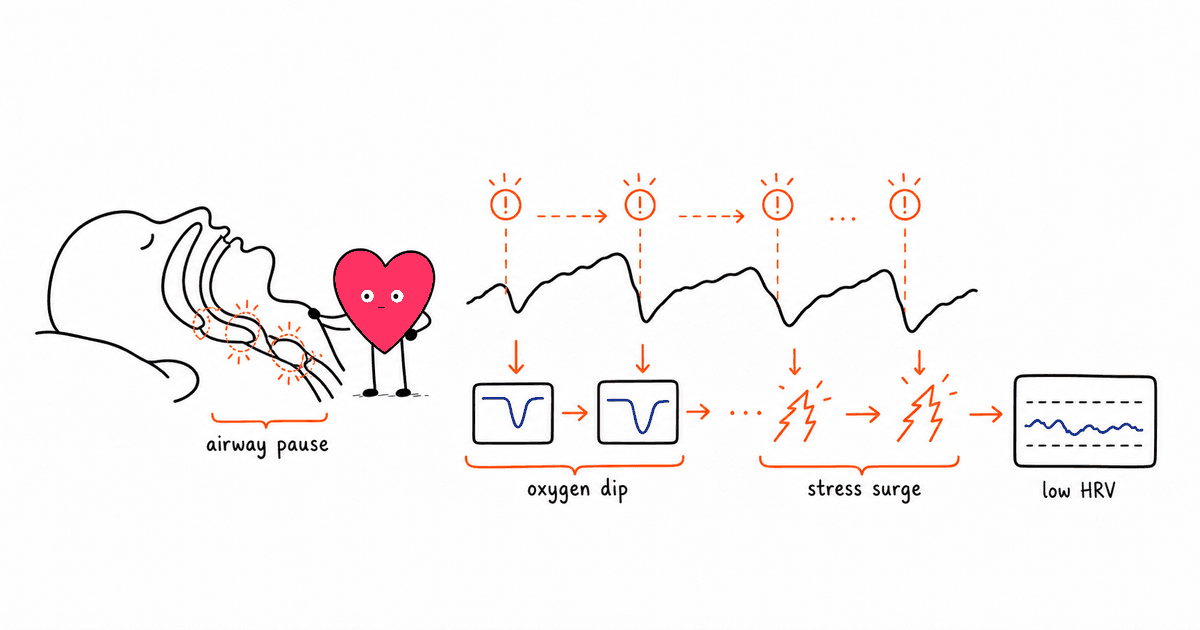
Sleep apnea is a condition in which breathing repeatedly stops and restarts during sleep, triggering a cascade of sympathetic nervous system activations that significantly suppress heart rate variability. Each breathing pause, called an apnea event, forces the body into a fight-or-flight response that disrupts the parasympathetic recovery your nervous system depends on during sleep.
An estimated 936 million adults worldwide have obstructive sleep apnea (OSA), and up to 80% of moderate-to-severe cases remain undiagnosed. A 2025 study published in Respiratory Medicine estimated that 32.4% of U.S. adults aged 20 and older have OSA, making it one of the most common yet overlooked conditions affecting cardiovascular and autonomic health.
If you track your HRV with a wearable device and notice consistently low nighttime readings despite good sleep habits, undiagnosed sleep apnea may be a contributing factor worth investigating.
Types of Sleep Apnea
Not all sleep apnea is the same. Each type disrupts breathing differently, but all of them affect autonomic function and HRV.
Obstructive Sleep Apnea (OSA)
OSA is the most common form, accounting for roughly 84% of cases. It occurs when the muscles in the throat relax during sleep, causing the airway to narrow or close completely. Risk factors include excess weight, a narrow airway, older age, and male sex.
Central Sleep Apnea (CSA)
CSA occurs when the brain fails to send proper signals to the muscles that control breathing. It is less common than OSA and is often associated with heart failure, stroke, or opioid use. The autonomic impact is similar, though the mechanism differs.
Complex Sleep Apnea Syndrome
Also called treatment-emergent central sleep apnea, this occurs when someone has both obstructive and central sleep apnea. It is sometimes discovered when CPAP therapy resolves the obstructive events but central events persist or emerge.
The Autonomic Cascade: What Happens During an Apnea Event
Understanding how a single apnea event disrupts your nervous system helps explain why cumulative nighttime episodes are so damaging to HRV.
Step 1: Airway Obstruction
The soft tissue in the throat collapses, blocking airflow. Blood oxygen levels begin to drop while carbon dioxide rises.
Step 2: Chemoreceptor Activation
Peripheral chemoreceptors in the carotid body detect the change in blood gases. They send urgent signals to the brainstem, triggering an arousal response.
Step 3: Sympathetic Surge
The sympathetic nervous system activates. Heart rate increases, blood vessels constrict, and blood pressure spikes. This is the opposite of the parasympathetic dominance that characterizes healthy sleep.
Step 4: Micro-Arousal and Airway Reopening
The brain partially wakes the sleeper, muscle tone returns to the airway, and breathing resumes, often with a loud gasp or snort. The sleeper typically does not fully wake up and has no memory of the event.
Step 5: Recovery and Repetition
Parasympathetic activity briefly returns as breathing normalizes. But in moderate-to-severe OSA, this cycle repeats 15 to 60+ times per hour, preventing sustained parasympathetic recovery.
How Sleep Apnea Affects HRV Metrics
Research consistently shows that OSA patients have disrupted HRV patterns across multiple measurement domains.
Time Domain Changes
Studies show that OSA reduces RMSSD (a key parasympathetic marker) during sleep. A 2024 study in Sleep analyzing HRV in OSA patients with daytime sleepiness found significantly lower RMSSD values during sleep compared to healthy controls, reflecting reduced vagal tone.
Frequency Domain Shifts
OSA increases the LF/HF ratio, indicating a shift from parasympathetic to sympathetic dominance. Research published in Frontiers in Neurology (2025) confirmed that apnea epochs show large decreases in high-frequency (HF) power, the component most associated with parasympathetic activity, alongside increases in very low frequency (VLF) and LF/HF ratio.
Reduced Complexity
Non-linear HRV measures like Sample Entropy (SampEn) decrease during apnea events. Lower entropy reflects a less adaptable cardiovascular system operating under repetitive stress rather than the flexible, complex regulation seen in healthy sleep.
Daytime Carryover
The autonomic disruption does not end when you wake up. OSA patients often show reduced daytime HRV as well, reflecting chronic sympathetic overactivation that persists around the clock. This may explain the well-documented connection between untreated OSA and elevated blood pressure, cardiovascular disease, and cognitive impairment.
Severity Matters: AHI and HRV Impact
The Apnea-Hypopnea Index (AHI) measures how many apnea or hypopnea events occur per hour of sleep. The relationship between AHI and HRV impact is roughly dose-dependent.
| Severity | AHI (events/hour) | Typical HRV Impact |
|---|---|---|
| Normal | Less than 5 | Minimal |
| Mild | 5 to 14 | Modest RMSSD reduction |
| Moderate | 15 to 29 | Noticeable HRV suppression, elevated LF/HF |
| Severe | 30 or more | Significant autonomic dysfunction |
Research from a 2024 study in the Journal of Clinical Medicine found that patients with severe OSA (AHI greater than 30) showed the most pronounced HRV changes during CPAP titration, suggesting that the autonomic burden scales with disease severity.
Sleep Apnea, HRV, and Cardiovascular Risk
The HRV suppression caused by OSA is not just a number on your wearable. It reflects real cardiovascular strain with long-term consequences.
Hypertension
OSA is one of the most common identifiable causes of resistant hypertension. The repeated sympathetic surges cause sustained increases in vascular resistance and blood pressure, even during waking hours. Reduced HRV is a recognized independent risk factor for developing hypertension.
Heart Disease
A 2023 meta-analysis in Sleep Medicine Reviews found that untreated OSA is associated with a 1.7-fold increased risk of major adverse cardiovascular events. The mechanism involves chronic sympathetic overactivation, systemic inflammation, oxidative stress, and endothelial dysfunction, all reflected in suppressed HRV.
Atrial Fibrillation
OSA patients have a 2 to 4 times higher risk of atrial fibrillation compared to the general population. The dramatic autonomic swings during apnea events, alternating between extreme sympathetic activation and brief parasympathetic rebounds, create the electrical instability that promotes arrhythmias.
How CPAP Treatment Affects HRV
Continuous positive airway pressure (CPAP) is the gold standard treatment for moderate-to-severe OSA. Research on its effects on HRV shows promising but nuanced results.
Acute Effects
A 2023 study in the Journal of Clinical Medicine demonstrated that HRV parameters significantly changed during CPAP titration in a single night. The study observed restoration of both sympathetic and parasympathetic balance, suggesting that eliminating apnea events allows the autonomic nervous system to function more normally almost immediately.
Short-Term Improvements
Research from a 2024 observational study found that patients with severe OSA (AHI greater than 30) showed the most pronounced HRV shifts after initiating CPAP therapy. The response appeared to depend on baseline severity, with more severely affected patients showing greater autonomic recovery.
Long-Term Recovery
A meta-analysis examining CPAP effects on HRV found that consistent CPAP use over weeks to months was associated with improved parasympathetic markers. However, the degree of recovery varies. Some patients show near-normal HRV restoration, while others retain some autonomic impairment, possibly due to pre-existing cardiovascular damage or incomplete treatment adherence.
The Compliance Factor
CPAP only works when used consistently. Research suggests a minimum of 4 hours per night is needed for cardiovascular benefit, though more is better. Many patients struggle with adherence, which directly affects whether HRV improvements materialize.
Wearable Devices as Early Warning Systems
Consumer wearables cannot diagnose sleep apnea, but they can flag patterns that warrant clinical evaluation.
HRV Pattern Recognition
If your nighttime HRV is consistently lower than expected for your age and fitness level, or if you see unusual variability in your overnight readings with repeated dips and partial recoveries, these patterns may suggest breathing disturbances during sleep.
SpO2 Tracking
Many modern wearables track blood oxygen during sleep. Repeated SpO2 drops below 90% are a hallmark of OSA. When combined with HRV data, SpO2 trends can provide a more complete picture of nighttime autonomic disruption.
Devices That Track Both Metrics
Several wearables now offer combined HRV and SpO2 monitoring that can help identify sleep-disordered breathing patterns:
- Oura Ring 4: Tracks overnight HRV, SpO2, and breathing regularity. Its sleep staging algorithms can detect periods of disrupted autonomic function.
- Apple Watch Series 11: Offers FDA-cleared sleep apnea detection using breathing disturbance data alongside blood oxygen trends.
- Whoop 5: Provides detailed overnight HRV analysis with respiratory rate tracking that may flag irregular breathing patterns.
- Garmin Forerunner 265: Tracks SpO2 and HRV during sleep, with Body Battery metrics that reflect overnight recovery quality.
For a complete comparison of these and other devices, see our guide to the best HRV monitors of 2026.
When to See a Doctor
Wearable data showing consistently low nighttime HRV, frequent SpO2 dips, or poor recovery scores should prompt a conversation with a healthcare provider. A clinical polysomnography (sleep study) remains the definitive diagnostic tool for sleep apnea.
Beyond CPAP: Lifestyle Factors That Help
While CPAP is the primary treatment for moderate-to-severe OSA, several lifestyle modifications can complement therapy and support HRV recovery.
Weight Management
Excess weight, particularly around the neck and upper airway, is the strongest modifiable risk factor for OSA. A 10% reduction in body weight can decrease AHI by 26% in mild OSA cases. Weight loss also independently improves HRV through reduced systemic inflammation and sympathetic activity.
Sleep Position
Sleeping on your back increases the likelihood of airway obstruction. Side sleeping can reduce AHI by 50% or more in some patients with positional OSA. Many wearables can now track sleep position, making it easier to identify and modify this factor.
Alcohol Avoidance
Alcohol relaxes the muscles in the upper airway, worsening obstruction. Even moderate drinking in the evening can increase apnea severity and further suppress HRV. Avoiding alcohol within 3 to 4 hours of bedtime can make a meaningful difference.
Breathing Exercises
Myofunctional therapy and specific breathing exercises can strengthen the muscles around the upper airway. Research suggests that oropharyngeal exercises practiced daily for 3 months can reduce AHI by approximately 50% in mild-to-moderate OSA cases.
Exercise
Regular physical activity improves both OSA severity and HRV independently. A 2024 systematic review found that aerobic exercise reduced AHI by an average of 32% even without weight loss, likely through improved upper airway muscle tone and reduced fluid retention in the neck. Even low-intensity activities like daily walking can contribute to improved autonomic balance.
HRV Monitoring During OSA Treatment
If you have been diagnosed with sleep apnea and started treatment, HRV tracking can serve as a useful secondary marker of progress.
What to Look For
After starting CPAP or another treatment:
- Gradual increase in overnight RMSSD
- Lower resting heart rate during sleep
- More stable overnight HRV patterns with fewer dramatic dips
- Improved morning HRV readings
- Better recovery scores on your wearable
Realistic Expectations
HRV improvements may take weeks to become consistent. The autonomic nervous system needs time to recover from chronic sympathetic overactivation. Early improvements in daytime alertness and energy often precede measurable HRV changes.
Tracking Tips
- Compare week-over-week trends rather than individual nights
- Ensure consistent wearable placement for reliable readings
- Track CPAP compliance alongside HRV data to identify correlations
- Note other variables like caffeine, exercise, and stress that affect HRV independently
Risk Factors: Could You Have Undiagnosed Sleep Apnea?
Given that the majority of OSA cases go undiagnosed, it is worth considering whether this condition could be affecting your HRV.
Common Signs
- Loud, chronic snoring
- Witnessed breathing pauses during sleep
- Gasping or choking during the night
- Excessive daytime sleepiness despite adequate time in bed (see napping and HRV for related strategies)
- Morning headaches
- Difficulty concentrating or memory problems
- Irritability or mood changes
Risk Factors
- BMI over 30
- Neck circumference greater than 17 inches (men) or 16 inches (women)
- Age over 50
- Male sex (though risk in women increases after menopause)
- Family history of sleep apnea
- Nasal congestion or structural abnormalities
The STOP-BANG Questionnaire
Healthcare providers often use the STOP-BANG screening tool. If you score 3 or more, clinical evaluation is recommended:
- Snoring loudly
- Tiredness during the day
- Observed apneas
- Pressure (high blood pressure)
- BMI over 35
- Age over 50
- Neck circumference over 40 cm
- Gender male
Frequently Asked Questions
Can HRV data from a wearable tell me if I have sleep apnea?
No. Wearable HRV data can suggest patterns consistent with sleep-disordered breathing, such as consistently low nighttime values or unusual overnight fluctuations, but it cannot diagnose sleep apnea. Only a clinical sleep study can provide a definitive diagnosis.
How quickly does HRV improve after starting CPAP?
Some autonomic improvements can be measured within the first night of CPAP use. However, consistent and sustained HRV improvement typically develops over weeks to months of regular CPAP use, with 4 or more hours per night being the minimum threshold for cardiovascular benefit.
Does mild sleep apnea affect HRV?
Yes, though the effect is smaller than moderate or severe cases. Even mild OSA (AHI 5 to 14) can reduce nighttime RMSSD and shift autonomic balance toward sympathetic dominance. Addressing mild OSA through lifestyle changes like weight management, positional therapy, and breathing exercises can help restore normal HRV patterns.
Is sleep apnea reversible?
In some cases, yes. Weight loss, positional therapy, and oral appliances can resolve mild-to-moderate OSA in certain patients. Severe OSA typically requires ongoing treatment with CPAP or surgical intervention. However, the autonomic damage, as reflected in suppressed HRV, can often be partially or fully reversed with effective treatment. For a complete overview of strategies, see our guide on how to improve your HRV.
Can children have sleep apnea that affects their HRV?
Yes. Pediatric OSA, often caused by enlarged tonsils or adenoids, affects an estimated 1 to 5% of children. Research shows it suppresses HRV in children just as it does in adults, and treatment (often tonsillectomy) can restore normal autonomic function.
Need a quick read on your HRV number first?
Enter your HRV value, age range, device, and recovery context for a plain-English interpretation before you decide what to do next.
Interpret Your HRV NumberBuild the 30-day plan