Napping and HRV: How Power Naps Affect Your Heart Rate Variability
Trying to decode today's HRV number? Use the free interpreter first, then build a practical recovery plan. Interpret your HRV
You slept seven hours last night, but by 2 PM you're dragging. You consider a nap but wonder: will it actually help recovery, or just leave you groggy? If you wear an HRV tracker, you might be surprised at what a well-timed nap can do for your autonomic nervous system.
Research shows that napping shifts your nervous system toward parasympathetic dominance, the same restorative state your body enters during nighttime sleep. But the benefits depend heavily on when you nap, how long you sleep, and your overall sleep habits.
Does Napping Improve HRV?
Yes, napping can improve HRV by shifting the autonomic nervous system toward parasympathetic (vagal) dominance. A study published in Sleep Medicine found that during daytime naps, healthy adults showed increased HF power and RMSSD, both markers of vagal activity. This shift mirrors the cardiac autonomic profile seen during nighttime sleep, though on a smaller scale.
Research on elite athletes published in Sleep Medicine Reviews (2024) found similar results: daytime naps produced measurable increases in parasympathetic activity, with HRV metrics improving during and after the nap period.
The key takeaway is that naps aren't just about fighting drowsiness. They provide a genuine window of autonomic recovery that your HRV tracker can detect. If you're new to HRV tracking, our beginner's guide covers the fundamentals.
What Happens to Your Nervous System During a Nap
When you fall asleep, your body undergoes a predictable autonomic shift. Understanding this process helps explain why nap length matters so much.
The First 5-10 Minutes
As you transition from wakefulness to light sleep (Stage N1), heart rate begins to slow and HRV starts to rise. Sympathetic nervous system activity decreases while parasympathetic activity gradually increases. Most people won't see dramatic HRV changes in this early window.
10-20 Minutes (The Sweet Spot)
During Stage N2 sleep, your body enters a state of reduced cardiovascular output and enhanced vagal tone. RMSSD and HF power increase noticeably. Blood pressure drops, breathing becomes more rhythmic, and the body begins consolidating memories and clearing metabolic waste. This is the power nap zone.
30-60 Minutes (Deep Sleep Territory)
Naps longer than 30 minutes often enter Stage N3 (slow-wave sleep). While this stage offers the deepest parasympathetic activation and highest HRV, waking from it produces sleep inertia, that groggy, disoriented feeling that can last 15-30 minutes after waking. The HRV benefit is real, but the post-nap fog can offset it.
90 Minutes (Full Sleep Cycle)
A 90-minute nap completes a full sleep cycle, moving through all stages and ending in lighter sleep. This avoids sleep inertia while providing the full range of autonomic recovery. However, naps this long may interfere with nighttime sleep for some people.
The Ideal Nap Length for HRV Recovery
Based on the research, here's how different nap durations stack up for HRV benefits:
| Nap Duration | HRV Benefit | Sleep Inertia Risk | Best For |
|---|---|---|---|
| 10-20 min | Moderate | Very low | Alertness boost, mild HRV recovery |
| 20-30 min | Good | Low | Balanced recovery without grogginess |
| 30-60 min | High | Moderate to high | Deep recovery (if you can tolerate grogginess) |
| 90 min | High | Low | Full-cycle recovery, athletes, sleep debt |
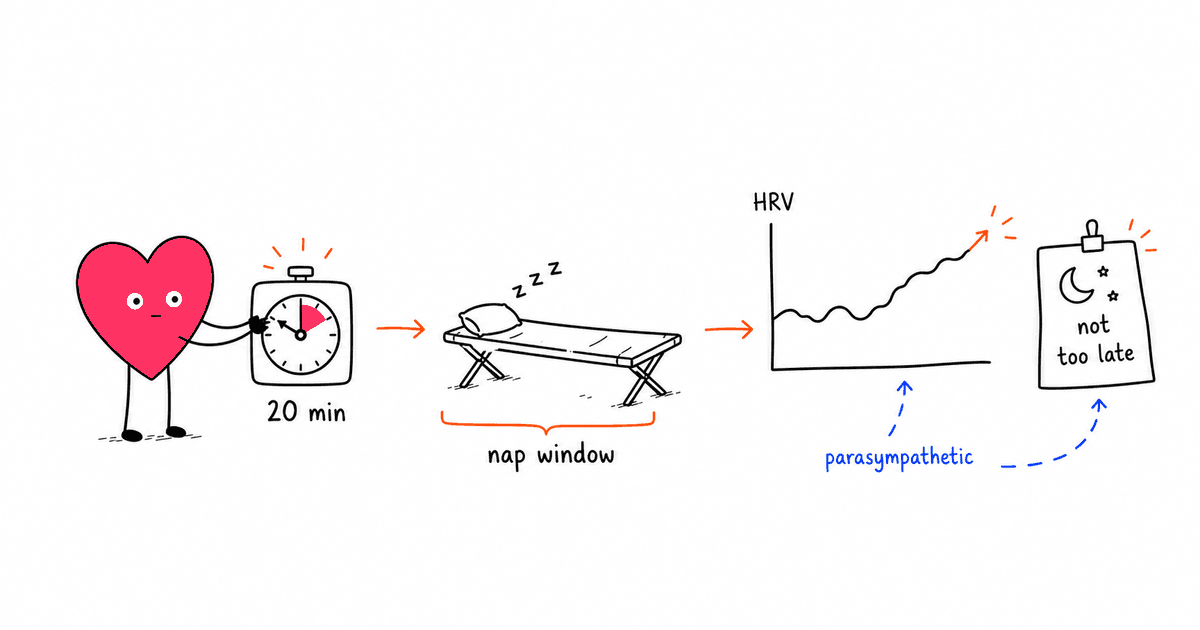
For most people, a 20-minute nap offers the best balance of HRV improvement and practical usability. You get meaningful parasympathetic activation without the cognitive penalty of waking from deep sleep.
When to Nap for Maximum HRV Benefit
Timing matters as much as duration. Your circadian rhythm creates a natural dip in alertness between 1:00 PM and 3:00 PM, making this the ideal window for napping.
The Early Afternoon Window
The post-lunch dip in alertness isn't just about food. It's driven by your circadian clock, which creates a natural trough in core body temperature and arousal during early afternoon. Napping during this window aligns with your body's existing rhythm and produces the smoothest transitions into and out of sleep.
Avoid Napping After 3 PM
Late afternoon naps can interfere with nighttime sleep onset, which ultimately hurts your overnight HRV more than the nap helped. If you're tracking HRV with a wearable, you may notice that late naps lead to lower overnight RMSSD and reduced deep sleep percentages.
Morning Naps Are Different
Naps taken in the morning (before noon) tend to contain more REM sleep due to circadian timing. While REM sleep serves important functions for memory and emotional processing, it's associated with more sympathetic nervous system activity compared to the deep, parasympathetic-dominant sleep that drives HRV improvement.
Napping, HRV, and Athletic Recovery
Athletes have long used naps as a recovery tool, and HRV data supports this practice. A 2024 study in Sleep Medicine Reviews examining napping in elite athletes found that post-training naps enhanced parasympathetic reactivation, helping athletes recover faster between sessions. Combining a short nap with meditation or breathing exercises post-workout can further enhance this recovery window.
Post-Exercise Napping
After a hard workout, your sympathetic nervous system is elevated and HRV is suppressed. A 20-30 minute nap can accelerate the return to parasympathetic dominance. If you track HRV with a device like the Whoop 5 or Oura Ring 4, you may notice that post-exercise naps correlate with better next-day recovery scores.
Strategic Napping for Training Blocks
During periods of heavy training, regular napping can help maintain HRV baselines that would otherwise decline from accumulated fatigue. Some coaches prescribe 20-30 minute naps as part of structured recovery protocols, especially during multi-day competition events.
For a deeper look at how training load affects HRV, see our guide on HRV and overtraining.
What Your Wearable Shows During Naps
Not all HRV trackers handle naps equally. Here's what to expect from popular devices.
Oura Ring 4
The Oura Ring 4 detects daytime naps and includes them in your daily activity data. It tracks heart rate, HRV, and skin temperature during naps, though nap data isn't weighted as heavily as nighttime sleep in your Readiness Score. You can view nap-specific HRV data in the app's sleep section.
Whoop 5
The Whoop 5 automatically detects naps and factors them into your Recovery score. Whoop's strain coach may recommend naps on high-strain days, and the app provides detailed HRV data from nap periods. This makes Whoop particularly useful for athletes who nap strategically.
Apple Watch
The Apple Watch tracks sleep periods including naps through the Sleep app. While it records HRV data during naps, the integration into overall health metrics is less detailed than dedicated recovery trackers.
Garmin
Garmin watches detect naps and log them as sleep periods. The Body Battery feature may show a recharge during naps, reflecting the parasympathetic recovery that HRV data captures.
When Napping Hurts HRV
Napping isn't universally beneficial. In some situations, it can actually impair your HRV by disrupting nighttime sleep quality.
Napping as a Band-Aid for Poor Sleep
If you're regularly napping because you're not sleeping enough at night, the nap may help short-term HRV but mask a bigger problem. Chronic sleep deprivation reduces baseline HRV significantly, and can contribute to burnout. A study in Sleep found that restricting sleep to 5 hours per night for just five consecutive nights decreased vagal activity and increased sympathetic output. Naps can't fully compensate for this. For more on this topic, see sleep deprivation and HRV.
Long or Late Naps
Naps longer than 60 minutes or taken after 3 PM frequently reduce total nighttime sleep or delay sleep onset. Since the majority of HRV recovery happens during deep sleep at night, anything that compromises nocturnal sleep quality will likely result in a net HRV decrease.
Insomnia and Napping
People with insomnia or shift workers adjusting their sleep schedules are generally advised to be cautious about napping, as it reduces sleep pressure (the homeostatic drive to sleep). Lower sleep pressure at bedtime leads to difficulty falling asleep, lighter sleep, and ultimately worse overnight HRV.
How to Nap for Better HRV: A Practical Guide
Follow these evidence-based tips to maximize the HRV benefits of napping.
Set a 20-25 Minute Alarm
Account for the 5-10 minutes it takes to fall asleep by setting your alarm for 25 minutes. Using a calming breathing exercise like 4-7-8 breathing can help you drift off faster. This targets a 15-20 minute sleep period, enough for Stage N2 recovery without entering deep sleep.
Nap Between 1 PM and 3 PM
Align with your circadian dip for the fastest sleep onset and smoothest wake-up. If your schedule doesn't allow this, any time before 3 PM is acceptable.
Create a Dark, Cool Environment
Darkness triggers melatonin production, and cool temperatures (around 65-68°F / 18-20°C) support the thermoregulatory processes that facilitate sleep onset. Use an eye mask if you can't darken the room. Minimizing noise pollution is equally important for nap quality.
Use Caffeine Strategically
The "coffee nap" technique involves drinking coffee immediately before a 20-minute nap. Caffeine takes about 20-30 minutes to kick in, so you wake up with both the parasympathetic benefit of the nap and the alertness boost from caffeine. For more on how caffeine interacts with HRV, see our post on caffeine and HRV.
Track Your Results
Use your HRV wearable to compare recovery scores on nap days versus non-nap days. Over a few weeks, you'll have personalized data on whether napping genuinely improves your autonomic recovery or if it's interfering with nighttime sleep.
Napping and HRV at Different Life Stages
The relationship between napping and HRV changes across the lifespan.
Young Adults (18-35)
This age group tends to benefit most from strategic napping, especially athletes and shift workers. HRV responses to naps are typically robust, with clear parasympathetic increases during sleep.
Middle Age (35-55)
Napping benefits remain strong, but the risk of naps interfering with nighttime sleep increases. People in this age group should be more careful about nap timing and duration, particularly if they have any sleep difficulties.
Older Adults (55+)
Daytime sleepiness increases with age, but frequent or long naps in older adults are associated with lower overall HRV in some studies. This may reflect underlying health conditions rather than napping itself. Short, intentional naps (under 30 minutes) remain beneficial for most seniors. For age-related HRV patterns, see HRV by age.
Key Takeaways
Napping is a simple, free, and effective tool for boosting HRV and supporting autonomic recovery. The research consistently shows that short daytime naps shift the nervous system toward parasympathetic dominance, the same restorative state that drives overnight recovery.
For best results: keep naps to 20-25 minutes, schedule them between 1-3 PM, and track your HRV data to confirm the benefits. If naps are disrupting your nighttime sleep, they're doing more harm than good. Used wisely, though, a daily power nap can be one of the simplest additions to your recovery toolkit.
Frequently Asked Questions
Will a 10-minute nap improve my HRV?
Even a 10-minute nap can produce a small parasympathetic shift, though the effect is more pronounced with 15-20 minutes of actual sleep. If time is limited, a short nap is still better than none for autonomic recovery.
Should I nap on rest days or training days?
Both can benefit from napping, but the HRV impact may be more noticeable on training days when your sympathetic nervous system is elevated from exercise. Post-workout naps can accelerate the return to parasympathetic dominance and improve next-day recovery scores.
Can napping replace lost sleep?
Napping can partially offset the HRV decline from mild sleep loss but cannot fully replace a night of quality sleep. Deep sleep stages during nighttime sleep provide autonomic recovery that short naps can't replicate. Focus on consistent nighttime sleep as the foundation, with naps as a supplement.
My HRV tracker doesn't detect my naps. What should I do?
Some trackers require naps to last at least 15-20 minutes for detection. If your device misses naps, try wearing it snugly and lying still. You can also manually log naps in some apps. The HRV benefit still occurs whether or not your tracker captures it.
Need a quick read on your HRV number first?
Enter your HRV value, age range, device, and recovery context for a plain-English interpretation before you decide what to do next.
Interpret Your HRV NumberBuild the 30-day plan