Blood Oxygen (SpO2) and HRV: How They Connect and What Your Wearable Is Telling You
Trying to decode today's HRV number? Use the free interpreter first, then build a practical recovery plan. Interpret your HRV
What Is Blood Oxygen Saturation (SpO2)?
Blood oxygen saturation (SpO2) measures the percentage of hemoglobin molecules in your blood that are carrying oxygen, typically expressed as a value between 0% and 100%. Healthy individuals at sea level generally maintain SpO2 readings between 95% and 100%. Readings below 90% are considered clinically low and may indicate a condition called hypoxemia, which requires medical evaluation.
Most modern wearables, including the Apple Watch, Garmin watches, Oura Ring, and Whoop, now include SpO2 sensors alongside HRV tracking. You are probably seeing both metrics on your daily health dashboard, but understanding how they relate to each other can give you a much clearer picture of your overall health.
How SpO2 and HRV Are Connected
SpO2 and HRV are both regulated by the autonomic nervous system (ANS), which means changes in one metric often coincide with changes in the other. Your ANS controls breathing rate, heart rate, and blood vessel tone, all of which influence how efficiently oxygen is delivered throughout your body and how variable your heart rhythm is.
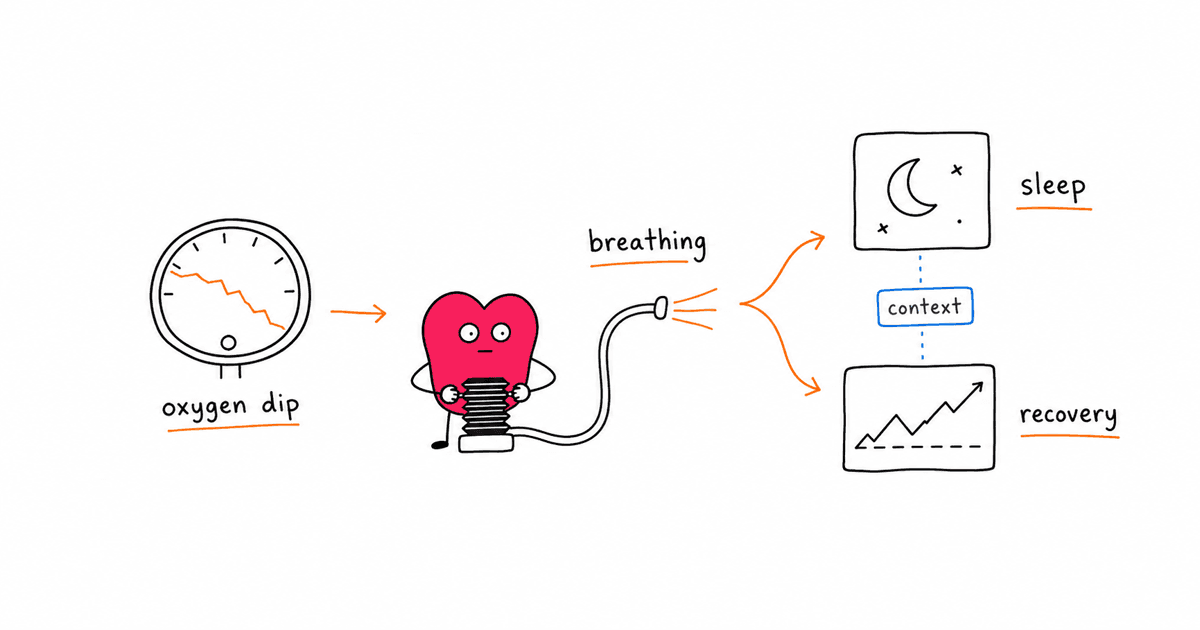
When your body detects a drop in blood oxygen, it triggers a cascade of autonomic responses. Your sympathetic nervous system activates, increasing heart rate and breathing rate to compensate. This sympathetic shift simultaneously suppresses HRV. The result: low SpO2 and low HRV tend to appear together.
The Autonomic Regulation Loop
Here is how the cycle works in practice:
- Normal conditions: Parasympathetic activity dominates at rest, breathing is slow and rhythmic, SpO2 stays above 95%, and HRV remains elevated
- Oxygen drops: When SpO2 falls (due to altitude, breathing disruption, or illness), chemoreceptors in the carotid body detect the change
- Sympathetic activation: The brain increases sympathetic output, raising heart rate and respiratory drive
- HRV decreases: The shift toward sympathetic dominance reduces the natural beat-to-beat variability in your heart rate
- Recovery: Once oxygen levels normalize, parasympathetic tone returns and HRV recovers
This feedback loop is why researchers use HRV and SpO2 together as complementary markers of autonomic and respiratory health.
What the Research Shows
SpO2 and HRV at High Altitude
One of the clearest demonstrations of the SpO2-HRV relationship comes from altitude research. A study published in Clinical Autonomic Research measured SpO2 and HRV in subjects at 3,456 meters (about 11,340 feet) elevation. Average SpO2 dropped to 80%, and researchers found a significant positive correlation between oxygen saturation and HRV: as SpO2 fell, HRV fell with it (r = 0.455 for low-frequency variability, r = 0.518 for percentile entropy).
A separate study on normobaric hypoxia (simulated altitude at sea level) confirmed that HRV decreases proportionally to the degree of oxygen desaturation, particularly in the first five minutes of exposure. This suggests the autonomic response to low oxygen is rapid and directly tied to your HRV reading.
SpO2, HRV, and Sleep Apnea Detection
The clinical application where SpO2 and HRV intersect most powerfully is in sleep apnea detection. Obstructive sleep apnea (OSA) causes repeated drops in blood oxygen during sleep as the airway collapses. Each desaturation event triggers the sympathetic response described above, fragmenting sleep and suppressing HRV.
A 2025 study in Frontiers in Cardiovascular Medicine found that combining HRV data with SpO2 measurements significantly improved the accuracy of machine learning models for detecting sleep apnea severity compared to using either metric alone. The combined model achieved higher accuracy for identifying both normal and severe OSA cases.
This is one reason wearable manufacturers increasingly track both metrics during sleep. If your overnight SpO2 shows frequent dips and your morning HRV is consistently suppressed, it could be worth discussing with a healthcare provider.
Exercise and the SpO2-HRV Relationship
During intense exercise, SpO2 can temporarily dip in some individuals, particularly during high-altitude training or extreme endurance efforts. Research on hypoxic training shows that this temporary desaturation triggers autonomic adaptations that can actually improve HRV over time, as the body becomes more efficient at managing oxygen delivery.
This is similar to the principle behind altitude training camps used by elite athletes: controlled oxygen stress forces cardiovascular and autonomic adaptations that enhance performance and recovery.
What Normal SpO2 Looks Like on a Wearable
Understanding typical SpO2 ranges helps you interpret your data correctly:
| SpO2 Range | What It Means |
|---|---|
| 96-100% | Normal, healthy range at sea level |
| 93-95% | Slightly below normal, may occur during deep sleep or at mild altitude |
| 90-92% | Low, worth monitoring and potentially discussing with a doctor |
| Below 90% | Clinically low (hypoxemia), seek medical evaluation |
Keep in mind that wearable SpO2 readings are estimates, not medical-grade measurements. Wrist-based and finger-based optical sensors can be affected by motion, skin tone, ambient light, and fit. A single low reading is not necessarily cause for concern, but consistent patterns deserve attention.
How to Read SpO2 and HRV Together
The most valuable insights come from looking at SpO2 and HRV trends side by side rather than in isolation. Here are the common patterns and what they suggest:
Pattern 1: Normal SpO2, Normal HRV
This is the baseline you are aiming for. Your autonomic system is balanced, oxygen delivery is efficient, and your body is recovering well. No action needed.
Pattern 2: Low SpO2, Low HRV
This combination suggests your body is under respiratory or autonomic stress. Possible causes include:
- Sleep-disordered breathing (snoring, sleep apnea)
- Respiratory illness (cold, flu, COVID-19, pneumonia)
- Altitude exposure
- Severe dehydration
If this pattern persists for more than a few nights, consult a healthcare provider.
Pattern 3: Normal SpO2, Low HRV
When your oxygen levels are fine but HRV is suppressed, the issue is likely not respiratory. Consider other factors:
- Stress or anxiety
- Poor sleep quality (even without apnea)
- Alcohol consumption
- Overtraining
- Inflammation or illness onset
Pattern 4: Low SpO2, Normal HRV
This is less common but can occur with minor respiratory issues that have not yet triggered a significant autonomic response. It may also indicate a sensor accuracy issue, so check fit and try a reread.
SpO2 Tracking During Sleep: Why It Matters Most
Nighttime is when SpO2 tracking provides the most useful health information. During waking hours, you are naturally adjusting your breathing and posture to maintain oxygen levels. But during sleep, conditions like obstructive sleep apnea can cause SpO2 to drop without you knowing.
Your wearable typically measures SpO2 at intervals throughout the night. Here is what to look for:
- Average overnight SpO2: Should be 95% or higher for most people
- SpO2 variability: Large fluctuations (drops below 90% followed by recovery) may indicate breathing disruptions
- Correlation with HRV: If your overnight SpO2 dips coincide with low morning HRV, both metrics are telling the same story
Sleep apnea affects an estimated 936 million adults worldwide, and up to 80% of moderate-to-severe cases remain undiagnosed. Wearable SpO2 and HRV tracking cannot replace a clinical sleep study, but it can provide early warning signs that prompt you to seek professional evaluation.
Factors That Affect Both SpO2 and HRV
Several lifestyle and environmental factors influence both metrics simultaneously:
Altitude
Even moderate altitude (5,000-8,000 feet) can lower SpO2 by 3-5% and reduce HRV. If you are traveling to higher elevations, expect temporary changes in both readings. Acclimatization typically takes 1-3 days for mild altitudes.
Respiratory Illness
Conditions affecting the lungs, from the common cold to COVID-19, can suppress both SpO2 and HRV. Research during the COVID-19 pandemic showed that wearable SpO2 and HRV data could detect illness onset before symptoms appeared in some cases. For those dealing with prolonged symptoms, see our guide on long COVID and HRV.
Smoking
Smoking reduces blood oxygen levels (by binding hemoglobin to carbon monoxide instead of oxygen) and independently suppresses HRV by damaging autonomic function. These effects are compounding: the body is less able to deliver oxygen and less able to regulate the cardiovascular response.
Sleep Position
Your sleeping position can affect both metrics. Sleeping on your back increases the likelihood of airway obstruction (and SpO2 dips) in people prone to sleep apnea. Side sleeping generally results in more stable SpO2 and better HRV readings.
Physical Fitness
Higher cardiovascular fitness is associated with both higher resting SpO2 and higher HRV. Regular aerobic exercise, zone 2 training, and breathing exercises improve both oxygen delivery efficiency and autonomic balance.
Which Wearables Track SpO2 and HRV Together?
Most modern HRV-capable wearables now include SpO2 sensors. Here is how the major devices handle both metrics:
- Oura Ring 4: Tracks overnight SpO2 continuously. Pairs SpO2 data with HRV in its Readiness Score. Excellent for identifying sleep-disordered breathing patterns.
- Apple Watch Series 11: Measures SpO2 periodically during sleep. FDA-cleared sleep apnea detection feature uses breathing disturbance data alongside blood oxygen trends.
- Whoop 5.0: Continuous SpO2 monitoring during sleep. Integrates oxygen data into its recovery and sleep performance metrics.
- Garmin Forerunner 265: Pulse Ox feature tracks SpO2 during sleep or all day (with significant battery impact). Pairs with HRV status tracking.
- Samsung Galaxy Ring: Overnight SpO2 tracking with HRV-based sleep insights.
For the best combined SpO2 and HRV analysis, look for devices that measure both metrics continuously during sleep rather than at intervals.
How to Improve Both SpO2 and HRV
Because these metrics share underlying physiological drivers, many of the same interventions improve both:
Breathing Practices
Slow, controlled breathing at 5-6 breaths per minute stimulates the vagus nerve (raising HRV) and improves oxygen exchange efficiency in the lungs (supporting SpO2). Nasal breathing during sleep may also help maintain more stable overnight oxygen levels.
Aerobic Exercise
Regular cardiovascular exercise improves both lung capacity and autonomic function. Even daily walking and zone 2 training can produce measurable improvements in resting SpO2 and HRV within weeks.
Sleep Optimization
Prioritizing sleep quality supports both metrics. Sleep in a cool, dark room. Maintain a consistent schedule. Avoid alcohol and heavy meals close to bedtime, both of which can suppress overnight HRV and contribute to breathing disruptions that lower SpO2.
Address Breathing Issues
If your wearable consistently shows overnight SpO2 dips, consider:
- Elevating your head slightly during sleep
- Using nasal strips or dilators if you experience congestion
- Side sleeping instead of back sleeping
- Consulting a sleep specialist for a formal sleep study
When to See a Doctor
Wearable SpO2 and HRV data are wellness tools, not diagnostic devices. However, certain patterns should prompt a conversation with a healthcare provider:
- Consistent overnight SpO2 below 93% across multiple nights
- Frequent SpO2 dips below 90% during sleep
- Persistently low morning HRV combined with SpO2 variability
- Daytime symptoms like excessive fatigue, morning headaches, or loud snoring alongside low SpO2 readings
- Sudden and sustained drop in either metric without an obvious cause (like altitude, illness, or recent blood donation)
Early detection of conditions like sleep apnea can significantly improve cardiovascular health, cognitive function, and overall quality of life.
Frequently Asked Questions
Does a low SpO2 reading always mean low HRV?
Not always. Brief or mild SpO2 dips (such as during a momentary position change in sleep) may not trigger a strong enough sympathetic response to significantly suppress HRV. The correlation is strongest during sustained oxygen desaturation, such as repeated sleep apnea events or prolonged altitude exposure.
Can I improve my SpO2 readings with breathing exercises?
Yes. Breathing exercises that focus on slow, deep diaphragmatic breathing improve oxygen exchange efficiency and can raise both SpO2 and HRV. The benefits are most noticeable during sleep if you practice nasal breathing and breathing exercises regularly.
How accurate is SpO2 measurement on a smartwatch compared to a pulse oximeter?
Wrist-based SpO2 sensors are generally less accurate than dedicated fingertip pulse oximeters, which are in turn less accurate than arterial blood gas measurements (the clinical gold standard). A 2025 study comparing smartwatch SpO2 to pulse oximetry found variability of 2-4% in healthy individuals. Wearable SpO2 is useful for trend tracking but should not be used for medical diagnosis.
Should I worry if my SpO2 drops to 93% during sleep?
Occasional dips to 93% during deep sleep can occur in healthy individuals and are generally not concerning on their own. However, if your wearable shows frequent or prolonged drops below 93%, especially if accompanied by low morning HRV, it is worth discussing with a doctor to rule out sleep-disordered breathing.
Which is more important to track: SpO2 or HRV?
Both provide different but complementary information. HRV gives you a broader view of autonomic nervous system balance and overall recovery. SpO2 specifically reflects respiratory and circulatory efficiency. Tracking both together, especially during sleep, gives you the most complete picture of your overnight health and recovery.
Need a quick read on your HRV number first?
Enter your HRV value, age range, device, and recovery context for a plain-English interpretation before you decide what to do next.
Interpret Your HRV NumberBuild the 30-day plan