Weight Loss and HRV: How Losing Weight Improves Heart Rate Variability
Trying to decode today's HRV number? Use the free interpreter first, then build a practical recovery plan. Interpret your HRV
If you track your heart rate variability, you may have noticed that your readings tend to be lower than what age-based averages suggest. While many factors influence HRV, one of the most overlooked is body composition. Research consistently shows that excess body fat, particularly visceral fat around the organs, suppresses HRV by driving chronic sympathetic nervous system activation.
The good news: weight loss reverses this. Studies demonstrate that losing even 5 to 10 percent of body weight produces measurable improvements in HRV, restoring the autonomic balance that excess weight disrupts. Your HRV tracker can even serve as a real-time feedback tool during your weight loss journey.
Does Body Weight Affect Heart Rate Variability?
Yes, excess body weight significantly reduces heart rate variability by shifting the autonomic nervous system toward sympathetic dominance. Research published in Clinical Autonomic Research found that obese individuals show lower SDNN, RMSSD, and HF power compared to lean controls, indicating reduced parasympathetic (vagal) tone. These changes normalize with weight loss, confirming a direct relationship between body composition and autonomic function.
Why Excess Body Fat Lowers HRV
The connection between weight and HRV is not simply about carrying extra pounds. Several overlapping mechanisms explain how excess body fat disrupts autonomic balance.
Chronic Low-Grade Inflammation
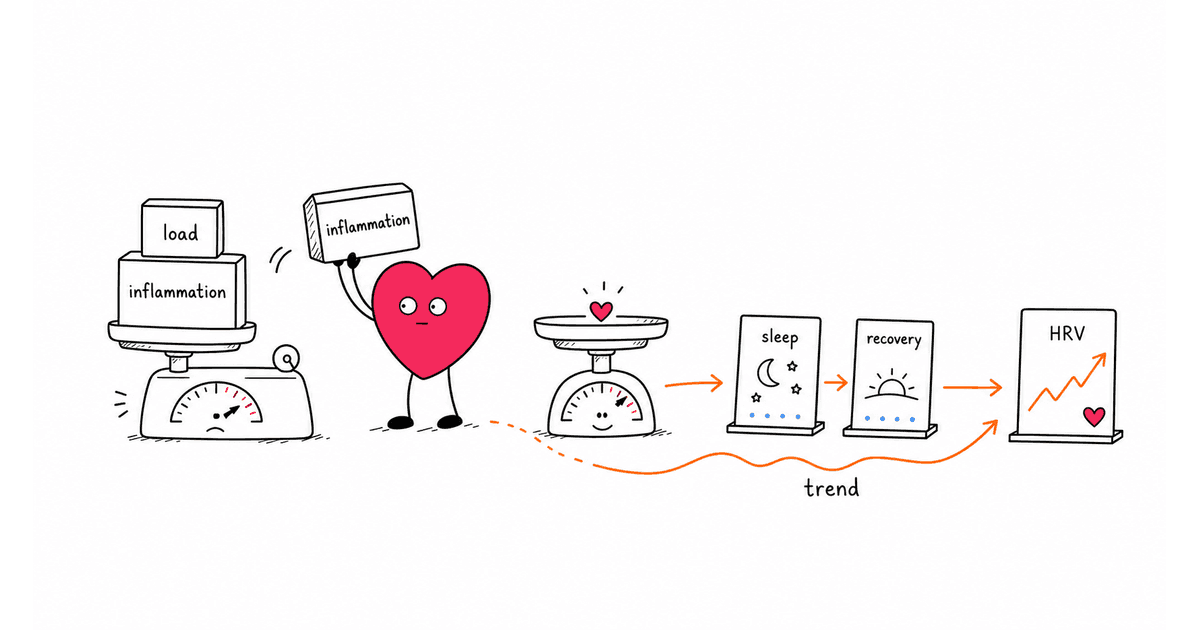
Adipose tissue, especially visceral fat, is metabolically active. It releases pro-inflammatory cytokines like TNF-alpha, IL-6, and C-reactive protein. This chronic inflammatory state activates the sympathetic nervous system and suppresses vagal tone, directly lowering HRV.
Insulin Resistance and Metabolic Dysfunction
Excess body fat promotes insulin resistance, which research has linked to autonomic dysfunction. A study published in Obesity Research found a strong positive correlation between visceral abdominal fat and the sympathetic-to-parasympathetic ratio measured by HRV, with insulin sensitivity declining in tandem. This creates a feedback loop: insulin resistance promotes more fat storage, which further suppresses HRV. If you are dealing with weight loss in the context of PCOS, our guide to PCOS and HRV covers that overlap in more detail.
Leptin Resistance
Leptin, a hormone produced by fat cells, plays a role in appetite regulation. In obesity, leptin levels are chronically elevated, leading to leptin resistance. Research shows that elevated leptin directly activates sympathetic nervous system pathways, contributing to the sustained sympathetic dominance and reduced HRV seen in overweight individuals.
Sleep-Disordered Breathing
Excess weight, particularly around the neck and upper airway, increases the risk of sleep apnea. Obstructive sleep apnea causes repeated oxygen desaturation events during sleep, triggering sympathetic surges that suppress overnight HRV recovery. This compounds the direct effects of adiposity on autonomic function.
Visceral Fat vs. Subcutaneous Fat
Not all body fat affects HRV equally. Research published in PLOS ONE found that visceral adipose tissue (the deep fat surrounding organs) has a significantly stronger association with HRV reduction than subcutaneous fat (the fat beneath the skin).
A 2017 study in Frontiers in Physiology confirmed that waist-to-hip ratio, a proxy for visceral fat, was more strongly associated with reduced parasympathetic activity and increased sympathetic activity than BMI alone. This means two people at the same weight can have very different HRV profiles depending on where they carry their fat.
| Fat Type | Location | HRV Impact | Metabolic Activity |
|---|---|---|---|
| Visceral | Around organs | Strong reduction | High (inflammatory) |
| Subcutaneous | Under skin | Mild reduction | Low to moderate |
This distinction matters for weight loss strategy. Interventions that preferentially reduce visceral fat, like aerobic exercise and dietary changes, tend to produce the most significant HRV improvements.
How Weight Loss Improves HRV
A 2022 systematic review published in Clinical Nutrition examined the effects of weight loss through lifestyle changes on HRV in overweight and obese patients. The findings were clear: weight loss restores sympathovagal balance across multiple HRV metrics.
What the Research Shows
- Weight loss of 5 to 10 percent of body weight produced significant improvements in time-domain HRV measures (SDNN, RMSSD)
- Weight loss greater than 10 percent showed additional improvements in frequency-domain measures (increased HF power, decreased LF/HF ratio)
- Improvements appeared within weeks of beginning a weight loss program
- Both dietary and exercise-based approaches improved HRV, with combined interventions showing the strongest effects
A separate study in the Journal of the American College of Cardiology found that moderate weight loss in overweight adults with type 2 diabetes improved HRV independently of changes in blood pressure, cholesterol, or blood sugar, suggesting that reduced adiposity directly benefits autonomic function.
The Recovery Timeline
HRV improvements from weight loss do not require reaching a goal weight. Research suggests a general timeline:
| Weight Loss Phase | Typical HRV Response |
|---|---|
| First 2 to 4 weeks | Reduced resting heart rate, early RMSSD improvements |
| 5 to 10% body weight lost | Significant SDNN and RMSSD gains, improved HF power |
| Sustained loss (3 to 6 months) | Normalized LF/HF ratio, restored sympathovagal balance |
| Long-term maintenance | HRV values approach lean population averages |
Using HRV to Guide Your Weight Loss Journey
Your HRV tracker is more than a health metric. It can function as a real-time feedback tool for weight management decisions.
Track Your Baseline Trend
Before changing anything, establish a baseline HRV trend over 2 to 4 weeks. This gives you a reference point to measure progress against. Focus on your 7-day rolling average rather than daily fluctuations.
Monitor Exercise Recovery
One of the most valuable applications of HRV during weight loss is preventing overtraining. When your HRV drops below your normal range, it signals that your body needs recovery. This is especially important when combining caloric restriction with exercise, as underfueling increases the risk of overtraining.
Watch for Signs of Excessive Restriction
Extreme caloric restriction can paradoxically lower HRV by increasing cortisol and activating the sympathetic nervous system. If your HRV trends downward despite weight loss, it may signal that your deficit is too aggressive. A moderate deficit of 300 to 500 calories per day tends to support both weight loss and autonomic health.
If fat loss is happening with a GLP-1 medication rather than diet alone, our guide to semaglutide and HRV explains why recovery metrics can look worse before the longer-term metabolic benefits show up.
Use HRV-Guided Training
Research published in Sports Medicine shows that HRV-guided training, where workout intensity is adjusted based on daily HRV readings, produces equal or better fitness outcomes compared to fixed training plans, with less risk of burnout. During weight loss, this approach helps you train hard when your body is ready and pull back when recovery is needed.
Best Exercises for Weight Loss and HRV
Not all exercise improves HRV equally. The research points to several modalities with dual benefits for body composition and autonomic function.
Zone 2 Aerobic Training
Sustained aerobic exercise at moderate intensity is the single best intervention for both fat loss and HRV improvement. Zone 2 training targets the intensity where fat oxidation is highest while directly strengthening vagal tone. Aim for 150 to 200 minutes per week.
Strength Training
Resistance training builds lean mass, which increases resting metabolic rate and improves insulin sensitivity. Both of these changes support higher HRV. Two to three sessions per week complement aerobic training.
Walking
Often underrated, regular walking is one of the most sustainable fat-loss activities. It burns calories without generating significant sympathetic stress, meaning it supports rather than suppresses HRV. A daily 30 to 60 minute walk can meaningfully contribute to both weight loss and autonomic balance.
Yoga and Breathwork
Yoga and breathing exercises directly activate the parasympathetic nervous system. During weight loss, these practices offset the stress of caloric restriction and exercise, helping maintain or improve HRV even when the body is under metabolic stress.
Nutrition Strategies That Support Both Weight Loss and HRV
Diet quality matters as much as caloric deficit when it comes to HRV during weight loss.
Anti-Inflammatory Foods
Since inflammation is a key driver of low HRV in overweight individuals, prioritizing anti-inflammatory foods accelerates autonomic recovery. Focus on fatty fish (omega-3s), colorful vegetables, berries, nuts, and olive oil.
Adequate Protein
Sufficient protein (1.6 to 2.2 grams per kilogram of body weight) preserves lean mass during caloric restriction. This matters for HRV because muscle loss can offset the autonomic benefits of fat loss.
Hydration and Electrolytes
Dehydration suppresses HRV, and caloric restriction can increase fluid and electrolyte losses. Maintaining proper hydration is a simple way to support HRV during weight loss.
Meal Timing
Intermittent fasting shows mixed effects on HRV. While some research suggests time-restricted eating improves autonomic function, extended fasts can increase cortisol. If you practice fasting, monitor your HRV to find an eating window that works for your body.
Common Mistakes That Hurt HRV During Weight Loss
Crash Dieting
Severe caloric restriction (below 1,200 calories per day for most adults) activates the stress response, spiking cortisol and suppressing HRV. Research shows that moderate, sustainable deficits produce better HRV outcomes than aggressive cuts.
Too Much Cardio, Not Enough Recovery
Excessive endurance training combined with caloric restriction is a recipe for overtraining. If your HRV consistently drops after training days and fails to recover, reduce volume or intensity.
Ignoring Sleep
Sleep deprivation independently lowers HRV and increases appetite hormones (ghrelin) while decreasing satiety hormones (leptin). Prioritizing 7 to 9 hours of quality sleep supports both weight loss and HRV recovery.
Relying Only on the Scale
Body composition changes matter more than total weight for HRV. Someone who loses fat while gaining muscle may see significant HRV improvements with minimal scale movement. Track your HRV trend alongside body weight for a more complete picture.
Tracking Your Progress
The best way to confirm that weight loss is improving your autonomic health is to track HRV consistently over time. Use a wearable that measures HRV during sleep or upon waking for the most reliable readings.
Devices like the Oura Ring, Whoop, or Apple Watch provide daily HRV measurements that make it easy to correlate body composition changes with autonomic improvements. The key is consistency: measure at the same time, in the same conditions, and focus on long-term trends rather than individual readings.
The Bottom Line
Excess body fat is one of the most modifiable factors affecting heart rate variability. Visceral fat in particular drives chronic inflammation, insulin resistance, and sympathetic overactivation that collectively suppress HRV. The research is clear: even moderate weight loss of 5 to 10 percent of body weight produces significant, measurable improvements in autonomic function.
Your HRV tracker can serve as both a motivator and a guide during weight loss, providing real-time feedback on whether your approach is supporting or stressing your nervous system. Combine a moderate caloric deficit with regular exercise, anti-inflammatory nutrition, quality sleep, and stress management for the best results.
Frequently Asked Questions
How much weight do you need to lose to see HRV improvements?
Research suggests that losing as little as 5 percent of body weight can produce measurable HRV improvements. Greater losses typically yield greater improvements, but even small, sustained changes make a difference.
Will my HRV drop when I start dieting?
It can, especially if the caloric deficit is aggressive. A moderate deficit of 300 to 500 calories per day is less likely to suppress HRV. If you notice a sustained downward trend, consider reducing your deficit or increasing recovery activities.
Does where you carry weight matter for HRV?
Yes. Visceral fat (around the organs) has a stronger negative impact on HRV than subcutaneous fat (under the skin). Waist circumference and waist-to-hip ratio are better predictors of HRV than BMI alone.
Can exercise improve HRV without weight loss?
Absolutely. Regular aerobic exercise improves HRV independently of weight changes. However, the combination of exercise and fat loss produces the strongest autonomic improvements.
How long does it take for HRV to improve after losing weight?
Early improvements in resting heart rate and RMSSD can appear within 2 to 4 weeks. More comprehensive changes in frequency-domain HRV metrics typically emerge after 3 to 6 months of sustained weight loss.
Need a quick read on your HRV number first?
Enter your HRV value, age range, device, and recovery context for a plain-English interpretation before you decide what to do next.
Interpret Your HRV NumberBuild the 30-day plan