Electrolytes and HRV: How Sodium, Potassium, and Magnesium Affect Your Heart Rate Variability
Trying to decode today's HRV number? Use the free interpreter first, then build a practical recovery plan. Interpret your HRV
You track your HRV religiously, optimize your sleep, manage stress, and dial in your nutrition. But there is one factor that often flies under the radar: electrolytes.
These charged minerals are essential for every heartbeat. They govern the electrical impulses that control your heart rhythm, and when they are out of balance, your HRV can take a noticeable hit. Here is what the research says and how to keep your levels in check.
What Are Electrolytes and Why Do They Matter for Your Heart?
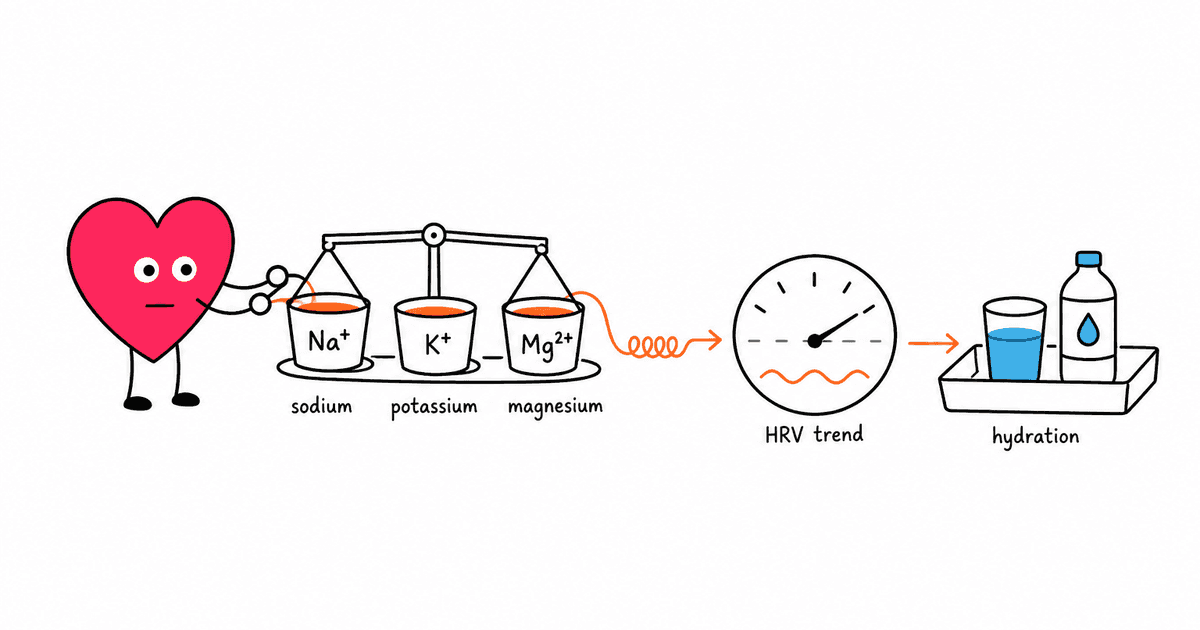
Electrolytes are minerals that carry an electrical charge in your body, including sodium, potassium, magnesium, and calcium. They regulate fluid balance, nerve signaling, and muscle contraction, making them essential for normal heart rhythm and autonomic nervous system function.
Your heart is fundamentally an electrical organ. Each beat begins with an electrical impulse generated by the sinoatrial (SA) node, and that impulse depends on the movement of electrolyte ions (primarily sodium, potassium, and calcium) across cell membranes. When electrolyte concentrations shift even slightly, the timing and strength of these impulses can change, directly affecting your heart rate and HRV.
How Each Electrolyte Affects HRV
Potassium
Potassium is the most abundant intracellular electrolyte and plays a central role in cardiac repolarization, the process by which your heart muscle resets after each contraction. Research on hemodialysis patients has shown that potassium levels are significantly correlated with HRV parameters, with imbalances leading to reduced autonomic function (Khosoosi Niaki et al., 2007).
Both low potassium (hypokalemia) and high potassium (hyperkalemia) can disrupt heart rhythm:
- Low potassium increases the risk of arrhythmias and can shift your autonomic nervous system toward sympathetic dominance, lowering HRV
- High potassium can slow cardiac conduction and, in extreme cases, cause dangerous bradycardia
Good sources: Bananas, avocados, sweet potatoes, spinach, beans, and coconut water.
Magnesium
If you have read our guide on magnesium and HRV, you know this mineral is a powerhouse for autonomic balance. Magnesium acts as a natural calcium channel blocker, helping to relax blood vessels and support parasympathetic (rest and digest) activity.
Research consistently shows that magnesium supplementation can improve HRV metrics, particularly the high-frequency (HF) component associated with vagal tone. A 2025 narrative review in Frontiers in Neuroscience confirmed that magnesium, along with other key nutrients like omega-3 fatty acids and vitamin D, can favorably modulate HRV and support cardiovascular aging (Frontiers in Neuroscience, 2025).
Good sources: Dark leafy greens, nuts, seeds, dark chocolate, and whole grains.
Sodium
Sodium gets a bad reputation, but it is essential for nerve impulse transmission and fluid balance. The key is balance:
- Too little sodium (hyponatremia) can cause fatigue, confusion, and autonomic dysfunction. Athletes who drink excessive water without replacing sodium during endurance events are particularly at risk.
- Too much sodium contributes to high blood pressure and increased sympathetic nervous system activity, which lowers HRV over time.
Research on non-dipping blood pressure patterns (where blood pressure does not fall normally during sleep) has linked sodium-potassium imbalances to reduced HRV (Journal of Hypertension, 2010). For more on how HRV relates to cardiovascular health, see our article on HRV and blood pressure.
Good sources: Table salt, broth, pickles, and olives. Most people get plenty of sodium from their diet, but endurance athletes may need to supplement during long training sessions.
Calcium
Calcium triggers muscle contraction in the heart through a process called excitation-contraction coupling. It works in opposition to magnesium: calcium promotes contraction while magnesium promotes relaxation.
When calcium levels are too high, the heart can become overly excitable, potentially leading to arrhythmias and reduced HRV. When too low, cardiac contractility suffers.
Good sources: Dairy products, fortified plant milks, sardines, and leafy greens.
The Dehydration Connection
Electrolytes and hydration are inseparable. When you are dehydrated, your blood volume drops, forcing your heart to work harder to circulate blood. This shifts your autonomic balance toward sympathetic dominance and lowers HRV.
A study published in the Journal of Thermal Biology found that dehydration after exercise heat stress significantly reduced HRV recovery compared to properly hydrated conditions. The effect was not just about water volume but about maintaining the electrolyte concentrations that support normal cardiac function.
This is why plain water is not always enough. During heavy sweating, you lose sodium, potassium, and smaller amounts of magnesium and calcium. Replacing these minerals is critical for maintaining both hydration and healthy HRV.
Signs Your Electrolytes May Be Off
Watch for these symptoms, especially if you notice a sudden drop in your HRV readings:
- Muscle cramps or twitching
- Fatigue or brain fog
- Heart palpitations or irregular heartbeat
- Dizziness or lightheadedness
- Excessive thirst or very dark urine
- Headaches after exercise
If you see your overnight HRV drop without an obvious explanation (like alcohol, caffeine, poor sleep, or illness), an electrolyte imbalance could be the hidden cause.
How to Optimize Your Electrolytes for Better HRV
1. Eat a Mineral-Rich Diet
The foundation is whole foods. A diet rich in fruits, vegetables, nuts, seeds, and lean proteins provides a broad spectrum of electrolytes naturally. Focus on:
- Potassium-rich foods: Aim for 3,500 to 4,700 mg per day from foods like bananas, potatoes, beans, and leafy greens
- Magnesium-rich foods: Target 400 to 420 mg per day (men) or 310 to 320 mg (women) from nuts, seeds, and whole grains
- Balanced sodium: 1,500 to 2,300 mg per day for most adults, adjusted upward for heavy sweaters
2. Hydrate Strategically
Do not just chug plain water. During and after exercise, consider adding electrolytes to your water. Look for options with sodium, potassium, and magnesium without excessive sugar.
3. Time Your Intake Around Exercise
Electrolyte losses accelerate during exercise, especially in hot conditions. Pre-loading with electrolytes before a workout and replenishing afterward can help maintain HRV during recovery.
4. Consider Targeted Supplementation
If your diet falls short, supplementation can help:
- Magnesium glycinate or citrate: Well-absorbed forms that support sleep and parasympathetic activity
- Potassium citrate: Useful if you do not eat enough fruits and vegetables
- Sodium: A pinch of salt in your morning water can help, especially if you eat a low-sodium diet or practice intermittent fasting. Monitoring your blood sugar alongside electrolyte intake can give you a more complete picture of your metabolic health
Always consult a healthcare provider before starting electrolyte supplements, especially if you have kidney disease or take medications that affect electrolyte levels.
5. Monitor and Correlate
Track your HRV alongside your hydration and nutrition habits. Many people notice patterns: HRV drops after heavy sweating without electrolyte replacement, or HRV improves after adding magnesium supplementation. Your wearable can serve as a biofeedback tool to identify what works for you.
Who Needs to Pay Extra Attention?
Some groups are more vulnerable to electrolyte imbalances that affect HRV:
- Endurance athletes: Heavy sweating from running, cycling, and other cardio depletes sodium and potassium rapidly
- People on low-carb or keto diets: These diets increase sodium and potassium excretion through the kidneys
- Older adults: Aging reduces the body's ability to regulate electrolytes, and many medications (diuretics, blood pressure drugs) can deplete them further
- Anyone practicing cold exposure or sauna: Both increase fluid and electrolyte losses through sweating or metabolic shifts
The Bottom Line
Electrolytes are not just about sports drinks and cramp prevention. They are fundamental to the electrical activity of your heart and directly influence your autonomic nervous system balance. Keeping sodium, potassium, magnesium, and calcium in their optimal ranges supports higher HRV, better recovery, and improved cardiovascular health.
If your HRV has been lower than expected, before blaming stress or sleep, take a look at your electrolyte intake. Sometimes the simplest interventions, like adding a pinch of salt to your water or eating an extra serving of leafy greens, can make a measurable difference. For a broader look at lifestyle changes that boost HRV, see our complete guide on how to improve your HRV.
Frequently Asked Questions
Can drinking electrolyte water improve my HRV?
Yes, staying properly hydrated with electrolytes can help maintain or improve HRV, especially during and after exercise. Dehydration and electrolyte depletion both shift your nervous system toward sympathetic dominance, lowering HRV. Replenishing lost minerals helps restore autonomic balance.
Which electrolyte has the biggest impact on HRV?
Magnesium likely has the most direct positive effect on HRV because it supports parasympathetic nervous system activity and acts as a natural relaxant. However, all four major electrolytes (sodium, potassium, magnesium, and calcium) work together, so balance across all of them matters most.
How quickly do electrolyte changes affect HRV?
Acute dehydration can lower HRV within hours, and rehydrating with electrolytes can improve readings within the same day. Chronic deficiencies (like low magnesium over weeks or months) may take longer to correct, with HRV improvements appearing over days to weeks of consistent supplementation.
Should I take electrolytes before bed to improve overnight HRV?
Taking magnesium before bed is a well-supported strategy for improving both sleep quality and overnight HRV. However, avoid large amounts of sodium before sleep, as it can cause water retention and discomfort. A small dose of magnesium glycinate 30 to 60 minutes before bed is a good starting point.
Can too many electrolytes hurt my HRV?
Yes. Excess sodium can raise blood pressure and increase sympathetic activity, while very high potassium (hyperkalemia) can cause dangerous heart rhythm disturbances. More is not always better. Stick to recommended ranges and get blood work done if you are supplementing heavily.
Need a quick read on your HRV number first?
Enter your HRV value, age range, device, and recovery context for a plain-English interpretation before you decide what to do next.
Interpret Your HRV NumberBuild the 30-day plan