HRV and Menopause: How Perimenopause and Postmenopause Affect Heart Rate Variability
Trying to decode today's HRV number? Use the free interpreter first, then build a practical recovery plan. Interpret your HRV
If you've been tracking your HRV through your 40s or 50s, you may have noticed a gradual, persistent decline that goes beyond normal aging. This isn't just getting older. Menopause fundamentally reshapes your autonomic nervous system, and your HRV data tells that story clearly.
How Does Menopause Affect HRV?
Menopause significantly lowers HRV by shifting the autonomic nervous system toward sympathetic dominance. As estrogen and progesterone decline during perimenopause and postmenopause, vagal tone decreases, reducing the parasympathetic activity that drives higher HRV. Research shows postmenopausal women have measurably lower HRV compared to premenopausal women of similar age.
This decline isn't just a number on your wearable. Lower HRV during menopause is associated with increased cardiovascular risk, more intense vasomotor symptoms (hot flashes, night sweats), and greater vulnerability to stress.
The Estrogen Connection: Why Hormones Matter for HRV
Estrogen plays a protective role in cardiovascular health, partly through its influence on the autonomic nervous system. Here's what happens when estrogen declines:
- Reduced vagal tone: Estrogen supports parasympathetic activity. As levels drop, vagal input to the heart weakens.
- Increased sympathetic activity: The LF/HF ratio (a marker of sympathetic-parasympathetic balance) shifts toward sympathetic dominance in postmenopausal women.
- Decreased RMSSD and HF power: These key HRV metrics, which reflect parasympathetic function, decline during the menopausal transition.
A study published in Psychoneuroendocrinology found that compared to premenopausal women, postmenopausal women showed significant reductions in HF-HRV (high frequency power), even after adjusting for age and BMI. This suggests menopause itself, not just aging, drives HRV changes.
Perimenopause: When the Decline Begins
The HRV decline doesn't start suddenly at menopause. It begins during perimenopause, the transitional phase that can last 4 to 10 years before your final period.
During perimenopause, hormone levels fluctuate unpredictably. You may notice:
- Day-to-day HRV volatility that doesn't correlate with your usual patterns
- Disrupted sleep patterns that further suppress overnight HRV
- Increased baseline heart rate, which inversely correlates with HRV
- Greater sensitivity to alcohol, caffeine, and poor sleep
If you previously tracked your menstrual cycle and HRV, you may notice the familiar luteal-phase dip becoming longer and more pronounced before cycle patterns disappear entirely.
HRV and Hot Flashes: The Autonomic Link
Research published in Clinical Autonomic Research examined 282 perimenopausal and postmenopausal women and found a direct relationship between autonomic dysfunction and vasomotor symptoms. Women with more frequent and intense hot flashes showed lower HRV, particularly in parasympathetic markers.
This makes physiological sense. Hot flashes involve a sudden sympathetic surge: blood vessels dilate, heart rate spikes, and sweating begins. This repeated sympathetic activation may contribute to the chronic HRV suppression seen in symptomatic menopausal women.
A study in PLOS ONE confirmed that HRV was able to distinguish between women with mild versus intense menopausal symptoms, suggesting HRV tracking could serve as an objective biomarker for symptom severity.
HRV, Menopause, and Cardiovascular Risk
The menopausal HRV decline matters beyond wearable metrics. Low HRV is an independent risk factor for cardiovascular disease, and cardiovascular risk rises significantly after menopause.
Before menopause, women have lower rates of heart disease compared to men of the same age. After menopause, this gap narrows quickly. The autonomic shift reflected in lower HRV is one mechanism driving this change.
Monitoring your HRV during and after menopause provides an early window into your cardiovascular health. A sustained downward trend in HRV, combined with other risk factors like high blood pressure, elevated inflammation, or poor sleep, may warrant a conversation with your healthcare provider.
Menopause and Sleep: A Double Hit to HRV
Sleep disruption is one of the most common menopausal complaints, and it compounds the HRV problem. Research on overnight HRV in peri- and postmenopausal women found that sleep disturbances caused additional HRV suppression beyond what hormonal changes alone produce.
Night sweats fragment sleep architecture, reducing the deep sleep stages where HRV naturally rises. This creates a cycle: poor sleep lowers HRV, low HRV reflects poor autonomic recovery, and both contribute to next-day fatigue and stress reactivity.
For strategies to break this cycle, see our guide on HRV and sleep and sleep deprivation and HRV.
Evidence-Based Strategies to Support HRV During Menopause
While you can't prevent the hormonal changes of menopause, research supports several approaches to protect your HRV during this transition.
1. Regular Aerobic Exercise
Exercise is one of the most consistent HRV boosters across all populations. For menopausal women specifically, moderate aerobic exercise (walking, cycling, swimming) has been shown to improve vagal tone and HRV metrics. Zone 2 training is particularly effective and sustainable.
2. Breathing Exercises and Meditation
Slow breathing techniques directly stimulate the vagus nerve. A daily practice of 5-10 minutes of resonance frequency breathing (around 6 breaths per minute) can measurably improve HRV within weeks. Meditation offers complementary benefits for autonomic balance.
3. Strength Training
Resistance exercise helps maintain muscle mass and metabolic health during menopause, both of which indirectly support autonomic function. Aim for 2-3 sessions per week.
4. Prioritize Sleep Hygiene
Given the outsized impact of sleep on menopausal HRV, optimizing sleep hygiene is essential. Keep your bedroom cool (this also helps with night sweats), maintain consistent sleep and wake times, and limit screen time before bed.
5. Mind-Body Practices
Yoga and tai chi combine movement, breathwork, and mindfulness. Multiple studies show these practices improve HRV in older women, making them particularly well-suited for the menopausal transition.
6. Nutritional Support
Magnesium supports parasympathetic function and sleep quality. Omega-3 fatty acids have anti-inflammatory effects that may benefit autonomic health. Staying well hydrated also supports HRV.
Hormone Replacement Therapy and HRV
Research on menopausal hormone therapy (MHT) and HRV shows mixed but promising results. A study examining overnight HRV found that six months of MHT improved sleep-related autonomic measures compared to placebo in both perimenopausal and postmenopausal women.
However, the decision to use HRT involves many factors beyond HRV. If you're considering hormone therapy, discuss the full risk-benefit profile with your healthcare provider. HRV data from your wearable can be a useful data point in that conversation.
Tracking Your HRV Through Menopause
Consistent HRV tracking becomes especially valuable during the menopausal transition. Here's how to make the most of your data:
- Track daily morning HRV using a wearable like the Oura Ring 4, WHOOP 5, or Apple Watch
- Focus on trends over weeks and months, not day-to-day fluctuations
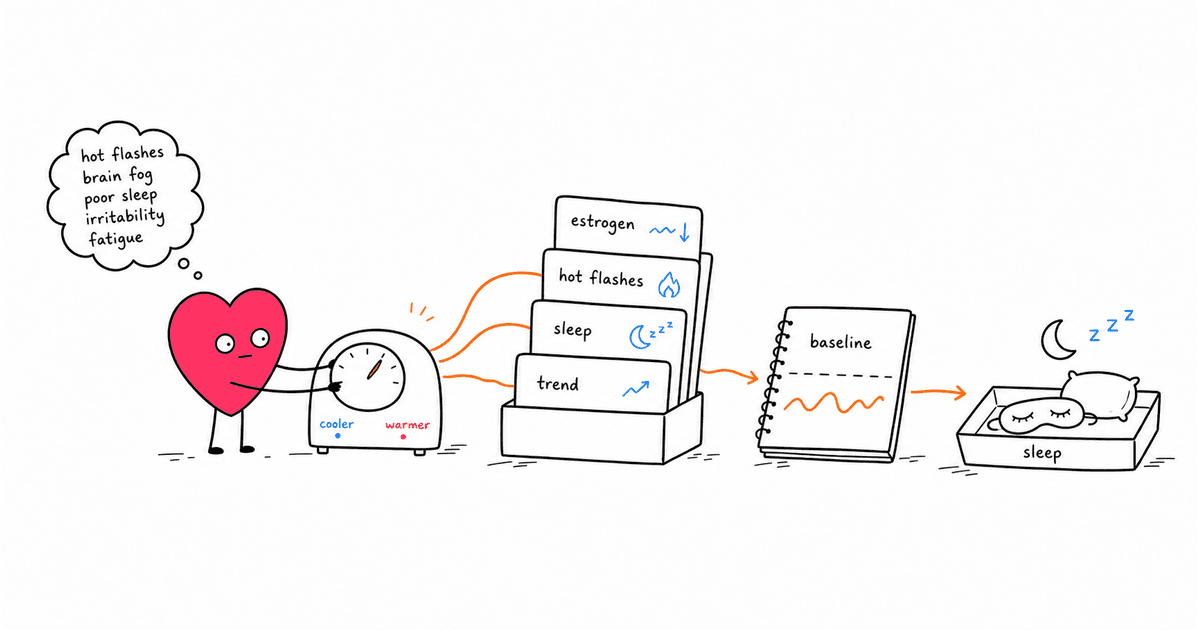
- Log symptoms alongside HRV (hot flashes, sleep quality, mood) to identify correlations
- Compare your data to age-matched norms using our HRV by age guide
- Don't panic about absolute numbers declining. The goal is to slow the decline and maintain the best autonomic function possible
When to Talk to Your Doctor
While HRV decline during menopause is expected, certain patterns warrant medical attention:
- A sudden, sharp HRV drop that doesn't recover over several weeks
- Resting heart rate consistently above your personal baseline
- HRV decline accompanied by chest discomfort, shortness of breath, or dizziness
- Menopausal symptoms severe enough to disrupt daily functioning
Your HRV data provides a valuable longitudinal record to share with your healthcare provider.
The Bottom Line
Menopause brings inevitable changes to your autonomic nervous system, reflected in lower HRV. But this decline is not entirely out of your control. Regular exercise, breathing practices, good sleep hygiene, stress management, and proper nutrition can all help preserve vagal tone during and after the menopausal transition.
By tracking your HRV consistently and understanding what your data means in the context of menopause, you can take a proactive approach to protecting your cardiovascular and overall health during this significant life stage.
Frequently Asked Questions
How much does HRV typically drop during menopause?
The degree of decline varies by individual, but studies show postmenopausal women have HF-HRV values roughly 20-40% lower than premenopausal women, even after adjusting for age. Your personal baseline, fitness level, and lifestyle habits all influence the magnitude of change.
Can HRV predict when menopause will occur?
HRV alone cannot predict menopause timing. However, tracking HRV alongside other biomarkers may reveal autonomic changes associated with perimenopause. If you notice a persistent downward trend in HRV along with cycle irregularity, it may reflect the hormonal shifts of perimenopause.
Does HRV improve after menopause stabilizes?
Once hormones stabilize in postmenopause, the rapid decline typically levels off. While HRV is unlikely to return to premenopausal levels, consistent exercise and healthy lifestyle practices can help maintain and even slightly improve your baseline from its postmenopausal starting point.
Is low HRV during menopause dangerous?
Low HRV itself isn't immediately dangerous, but it reflects autonomic imbalance associated with higher cardiovascular risk. It's a signal worth paying attention to, especially when combined with other risk factors like high blood pressure, sedentary behavior, or chronic stress.
Need a quick read on your HRV number first?
Enter your HRV value, age range, device, and recovery context for a plain-English interpretation before you decide what to do next.
Interpret Your HRV NumberBuild the 30-day plan