HRV and Blood Pressure: What Your Heart Rate Variability Reveals About Hypertension Risk
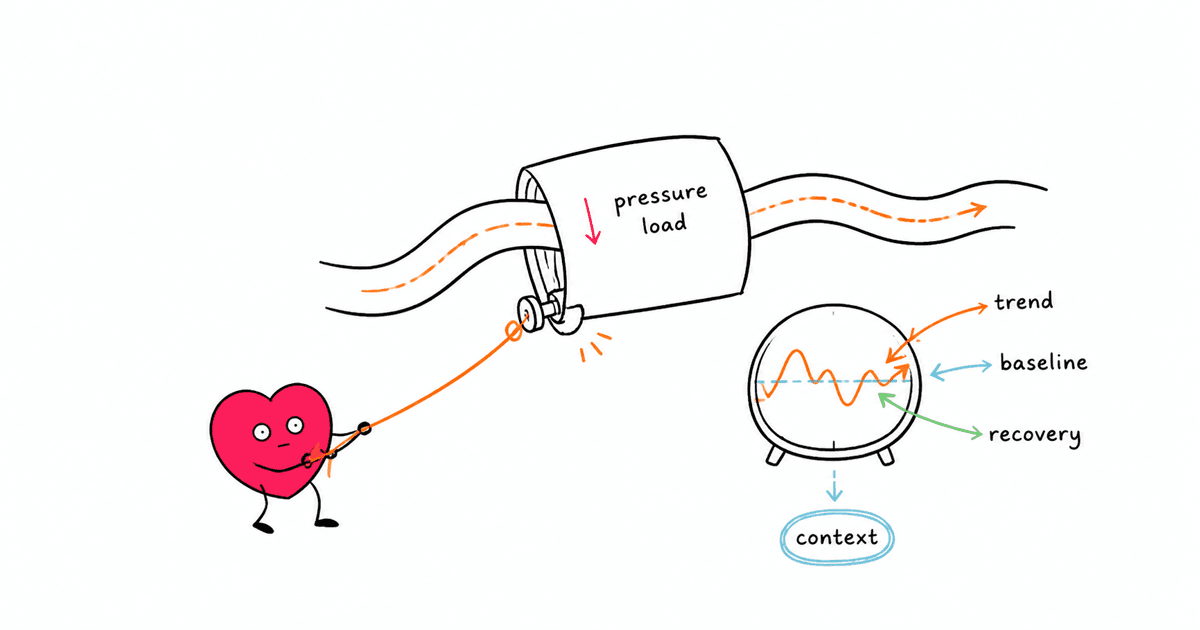
Trying to decode today's HRV number? Use the free interpreter first, then build a practical recovery plan. Interpret your HRV
Hypertension affects nearly half of all adults in the United States and remains one of the leading risk factors for heart disease, stroke, and kidney failure. After a stroke, blood pressure control and autonomic recovery become even more intertwined, which is why the guide to stroke recovery and HRV treats HRV as context rather than a standalone decision tool. While blood pressure readings capture a snapshot of cardiovascular function, heart rate variability (HRV) offers a deeper window into the autonomic nervous system (ANS) activity that regulates blood pressure in the first place.
A growing body of research shows that low HRV is closely linked to high blood pressure, and may even predict who will develop hypertension in the future. Understanding this connection can help you take a more proactive approach to cardiovascular health.
In this article, we will explore the science behind HRV and blood pressure, review the key research, and share evidence-based strategies for improving both.
How the Autonomic Nervous System Controls Blood Pressure
Your blood pressure is not a fixed number. It fluctuates throughout the day in response to activity, stress, posture, and many other factors. The autonomic nervous system orchestrates these adjustments through two branches:
- Sympathetic nervous system (SNS): The "fight or flight" branch. It increases heart rate, constricts blood vessels, and raises blood pressure when you need to respond to a challenge.
- Parasympathetic nervous system (PNS): The "rest and digest" branch. It slows heart rate, relaxes blood vessels, and lowers blood pressure during recovery and relaxation.
In a healthy cardiovascular system, these two branches work in balance, responding dynamically to the demands of each moment. When the sympathetic branch dominates chronically (due to stress, poor sleep, sedentary habits, or other factors), blood pressure tends to stay elevated. Over time, this sustained elevation can lead to hypertension.
Long-term pressure load can also make arteries less elastic, which changes how the heart and nervous system manage each beat. For that vascular side of the story, see arterial stiffness and HRV. Hypertension can also overlap with erectile dysfunction and HRV, since blood vessel function and autonomic balance matter for both.
If you want to learn more about how the autonomic nervous system responds to stress and how HRV captures that response, our article on HRV and stress covers this in detail.
HRV: A Window into Autonomic Balance
Heart rate variability measures the variation in time between consecutive heartbeats. Contrary to what you might expect, a healthy heart does not beat like a metronome. Instead, the intervals between beats vary from moment to moment, reflecting the dynamic interplay between the sympathetic and parasympathetic branches of the ANS.
High HRV generally indicates strong parasympathetic tone, good autonomic flexibility, and a cardiovascular system that adapts efficiently to changing demands. Low HRV suggests sympathetic dominance, reduced autonomic flexibility, and a system that may struggle to regulate blood pressure effectively.
This is why researchers have increasingly turned to HRV as a non-invasive biomarker for cardiovascular health, including blood pressure regulation.
Research Linking Low HRV to Hypertension
The connection between HRV and blood pressure has been studied extensively over the past several decades. The evidence consistently points in the same direction: people with hypertension tend to have significantly lower HRV than those with normal blood pressure.
Large-Scale Population Studies
Some of the most compelling evidence comes from major longitudinal studies. Data from the Framingham Heart Study cohort and the Atherosclerosis Risk in Communities (ARIC) study have both demonstrated clear HRV differences between hypertensive and normotensive subjects. These large, well-designed studies provide strong epidemiological support for the HRV-blood pressure link.
Research published in the American Heart Association's Hypertension journal has further confirmed that decreased HRV is consistently observed among people with hypertension, and importantly, this relationship is present across a wide range of blood pressures, not just at the extreme end. This suggests that autonomic imbalance may be relevant even in the early stages of blood pressure elevation, before a formal hypertension diagnosis.
Autonomic Dysfunction as an Underlying Cause
A 2023 article published in PubMed Central (PMC) concluded that "impaired autonomic nervous function and decreased HRV may be underlying causes of hypertension." This framing is significant because it positions autonomic dysfunction not merely as a consequence of high blood pressure, but as a potential driver of it.
When the autonomic nervous system loses its ability to regulate cardiovascular function dynamically (reflected by low HRV), blood vessels may remain constricted, the heart may beat faster than necessary at rest, and blood pressure stays elevated. Over time, this creates a self-reinforcing cycle where sustained hypertension further damages autonomic function.
The Inflammation Connection
A 2024 study published by Taylor & Francis investigated the relationship between hypertension, ANS dysregulation, HRV, and chronic inflammation in 50 hypertensive patients. The findings highlighted that autonomic imbalance does not exist in isolation. Chronic low-grade inflammation, which is common in people with hypertension, appears to interact with autonomic dysfunction in ways that compound cardiovascular risk.
Inflammation can impair the vagus nerve (the primary parasympathetic pathway), reducing parasympathetic tone and lowering HRV. At the same time, sympathetic overactivity can promote inflammatory processes. This bidirectional relationship means that addressing one factor (autonomic balance or inflammation) may help improve the other.
For a broader look at how HRV relates to cardiovascular risk beyond blood pressure, see our guide on HRV and heart disease.
HRV as a Predictor of New-Onset Hypertension
Perhaps the most striking finding in this area of research is that reduced HRV can predict who will develop hypertension in the future, even among people whose blood pressure is currently normal.
Research published by the American Heart Association has shown that individuals with lower HRV at baseline are significantly more likely to develop hypertension over follow-up periods of several years. This suggests that autonomic imbalance precedes and contributes to the development of high blood pressure, rather than simply being a consequence of it.
This predictive power makes HRV a valuable early warning signal. If your HRV is trending downward or is consistently low for your age and fitness level, it may be worth paying closer attention to your blood pressure and the lifestyle factors that influence both metrics.
HRV Biofeedback: A Promising Intervention for Blood Pressure
One of the most exciting areas of research involves using HRV biofeedback training to actively improve autonomic function and lower blood pressure. HRV biofeedback is a technique where you use real-time HRV data to guide slow, paced breathing exercises that strengthen the baroreflex (the body's blood pressure regulation mechanism) and increase parasympathetic tone.
A study published in PubMed (PMID: 22339103) demonstrated remarkable results: participants who completed an HRV biofeedback program saw their blood pressure drop from an average of 131.7/79.3 mmHg to 118.9/71.9 mmHg (p<0.01). The intervention also increased baroreflex sensitivity (BRS) and HRV, confirming that the blood pressure improvements were driven by genuine improvements in autonomic function.
To put those numbers in perspective, the systolic reduction of nearly 13 mmHg is comparable to what some first-line antihypertensive medications achieve. While biofeedback is not a replacement for medication when it is needed, these results suggest it can be a powerful complementary tool.
Medication can also change the HRV signal itself. If your recovery trend shifted after starting metoprolol, propranolol, or a similar drug, see our guide to beta blockers and HRV before reading the change as a pure fitness signal.
If you are interested in getting started with this approach, our comprehensive guide on HRV biofeedback training walks you through the process step by step.
Practical Strategies to Improve HRV and Support Healthy Blood Pressure
The research is clear: improving your HRV can support healthier blood pressure. Here are evidence-based strategies that target both.
1. Breathing Exercises
Slow, deep breathing (typically at a rate of about 6 breaths per minute) is one of the fastest and most reliable ways to increase HRV and activate the parasympathetic nervous system. This breathing rate resonates with the baroreflex, amplifying HRV and improving blood pressure regulation.
Even 5 to 10 minutes of paced breathing per day has been shown to produce meaningful improvements. Our guide on breathing exercises for HRV covers the best techniques and how to incorporate them into your routine.
2. Regular Aerobic Exercise
Consistent aerobic exercise is one of the most well-established ways to improve both HRV and blood pressure. Exercise strengthens the heart, improves vascular function, enhances parasympathetic tone, and reduces chronic inflammation.
Zone 2 training (moderate-intensity exercise where you can hold a conversation) is particularly effective for building aerobic fitness without overstressing the body. Learn more about how this approach benefits HRV in our article on zone 2 training and HRV.
Aim for at least 150 minutes of moderate aerobic activity per week, as recommended by major health organizations.
3. Isometric Exercise
A 2023 meta-analysis of 270 randomized controlled trials found that isometric exercises like wall sits and handgrip training were nearly twice as effective as standard aerobic exercise guidelines for lowering blood pressure. The recommended protocol is simple: four sets of two-minute wall sits with two minutes of rest, three times per week.
Beyond blood pressure reduction, isometric training also improves baroreflex sensitivity and shifts autonomic balance toward parasympathetic dominance, directly benefiting HRV. Our complete guide on isometric exercise and HRV covers the research and practical protocols in detail.
4. Stress Management and Meditation
Chronic psychological stress is a major driver of sympathetic overactivity, low HRV, and elevated blood pressure. Practices that activate the relaxation response can help restore autonomic balance:
- Mindfulness meditation: Even 10 to 15 minutes daily has been shown to increase HRV and reduce stress hormones. See our guide on meditation and HRV for techniques that work.
- Yoga: Combines movement, breathing, and mindfulness for a comprehensive autonomic reset.
- Progressive muscle relaxation: Helps release physical tension that contributes to sympathetic activation.
5. Prioritize Sleep Quality
Poor sleep is strongly associated with both low HRV and high blood pressure. During deep sleep, the parasympathetic nervous system is most active, and blood pressure naturally dips. When sleep is disrupted or insufficient, this restorative process is compromised.
Key strategies for better sleep include maintaining a consistent sleep schedule, keeping your bedroom cool and dark, limiting caffeine after noon, and avoiding screens in the hour before bed. If your blood pressure is elevated despite good sleep habits, consider screening for sleep apnea, which is one of the most common identifiable causes of resistant hypertension and directly suppresses HRV.
6. Nutrition and Hydration
Several dietary factors can influence both HRV and blood pressure:
- Reduce sodium intake: Excess sodium is one of the most direct dietary contributors to elevated blood pressure.
- Increase potassium-rich foods: Bananas, sweet potatoes, spinach, and avocados help balance sodium's effects.
- Omega-3 fatty acids: Found in fatty fish, flaxseeds, and walnuts, omega-3s have been shown to improve HRV and reduce inflammation.
- Limit alcohol: Even moderate alcohol consumption can reduce HRV and raise blood pressure.
- Stay hydrated: Dehydration activates the sympathetic nervous system and can temporarily increase blood pressure.
7. Maintain a Healthy Weight
Excess body weight, particularly visceral fat around the abdomen, is associated with chronic inflammation, sympathetic overactivity, reduced HRV, and elevated blood pressure. Even modest weight loss (5 to 10% of body weight) can produce significant improvements in all of these markers.
For a comprehensive overview of lifestyle strategies that boost HRV, check out our guide on how to improve your HRV.
Monitoring HRV and Blood Pressure with Wearables
One of the practical advantages of tracking HRV is that it gives you a daily, objective measure of your autonomic health. When paired with regular blood pressure measurements, HRV tracking can help you see how lifestyle changes are affecting your cardiovascular system in real time.
Modern wearables have made HRV tracking accessible and convenient. Some of the best options for daily HRV monitoring include:
- Oura Ring: Tracks HRV overnight with research-grade accuracy. Its comfortable ring form factor makes it easy to wear consistently, which is key for spotting trends.
- WHOOP: Provides detailed HRV analysis along with recovery scores and strain tracking. Particularly useful if you are also optimizing your exercise routine.
- Apple Watch Ultra: Combines HRV tracking with a broad health ecosystem, including the ability to log blood pressure readings from a connected cuff.
- Garmin: Offers HRV status tracking with excellent battery life, making it a great option for athletes and active individuals.
For a detailed comparison of the top devices, see our best HRV monitors for 2026 roundup.
When tracking your HRV alongside blood pressure, look for patterns over weeks and months rather than focusing on individual readings. Consistent improvements in HRV often precede measurable improvements in blood pressure, giving you an early signal that your efforts are working.
Key Takeaways
The relationship between HRV and blood pressure is well established and increasingly well understood:
- The autonomic nervous system directly controls blood pressure, and HRV is the best non-invasive measure of autonomic function.
- Low HRV is consistently associated with hypertension across large population studies, including the Framingham and ARIC cohorts.
- Reduced HRV predicts future hypertension, making it a valuable early warning signal even when blood pressure is currently normal.
- Chronic inflammation and autonomic dysfunction interact, creating a cycle that worsens both HRV and blood pressure.
- HRV biofeedback can meaningfully reduce blood pressure (one study showed a drop from 131.7/79.3 to 118.9/71.9 mmHg) by improving autonomic regulation.
- Lifestyle strategies that improve HRV also support healthy blood pressure, including breathing exercises, aerobic exercise, stress management, quality sleep, and good nutrition.
By tracking your HRV and taking steps to improve it, you are not just optimizing a number on your wearable. You are investing in the foundational autonomic health that keeps your blood pressure, and your entire cardiovascular system, functioning well.
Need a quick read on your HRV number first?
Enter your HRV value, age range, device, and recovery context for a plain-English interpretation before you decide what to do next.
Interpret Your HRV NumberBuild the 30-day plan