HRV and Chronic Pain: What Your Heart Rate Variability Reveals About Pain
Trying to decode today's HRV number? Use the free interpreter first, then build a practical recovery plan. Interpret your HRV
How Does Chronic Pain Affect HRV?
Chronic pain significantly lowers HRV by shifting the autonomic nervous system toward sustained sympathetic dominance. Research consistently shows that people with chronic pain conditions have reduced RMSSD, lower high-frequency HRV power, and elevated sympathetic markers compared to pain-free controls. This autonomic imbalance both results from and contributes to the persistence of pain.
If you live with chronic pain, whether from a back injury, fibromyalgia, migraines, cancer treatment, or another condition, you already know that pain affects far more than just the area that hurts. It disrupts your sleep, increases your stress, and drains your energy. What you may not realize is that these effects have a measurable signature in your heart rate variability, and tracking that signature can help you manage your condition more effectively.
The Pain-Autonomic Connection
Your autonomic nervous system and pain processing are deeply intertwined. When you experience acute pain, your sympathetic nervous system activates as part of the fight-or-flight response: heart rate increases, blood pressure rises, and HRV drops. This is a normal, protective response.
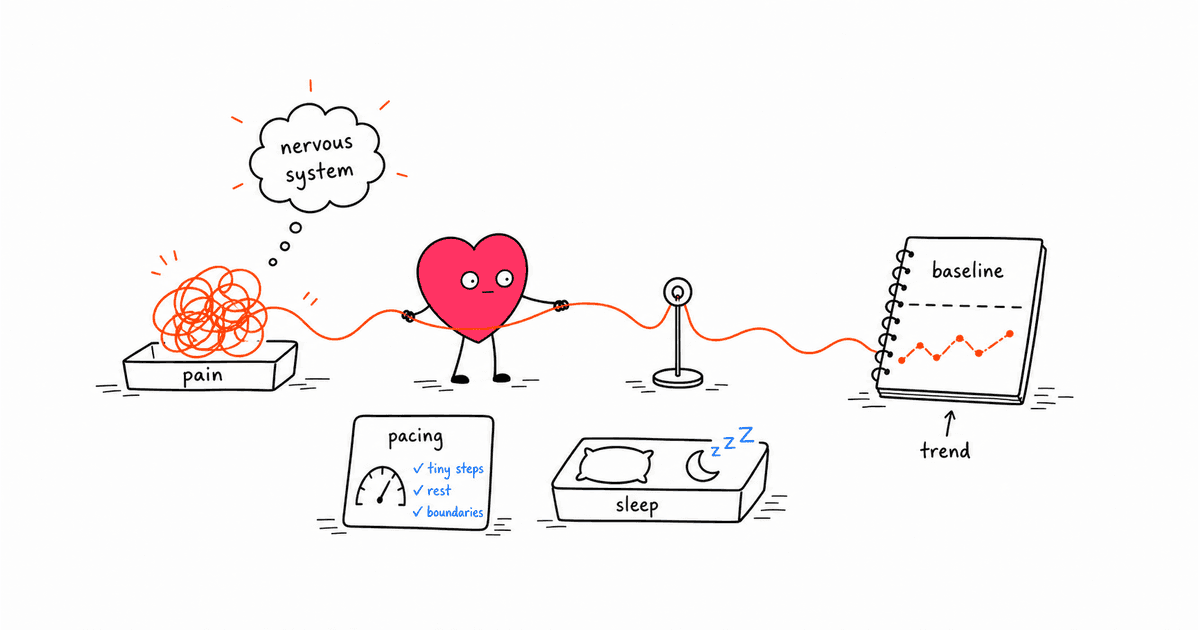
With chronic pain, this sympathetic activation never fully resolves. Your nervous system stays in a heightened state of alert, which creates a feedback loop:
- Persistent pain drives ongoing sympathetic activation
- Sympathetic dominance increases muscle tension, inflammation, and pain sensitivity
- Increased pain sensitivity amplifies the original pain signal
- The cycle continues, with HRV progressively declining
This is why people with chronic pain often experience fatigue, poor sleep, anxiety, and depression alongside their primary pain condition. These are not separate problems; they are symptoms of the same autonomic dysregulation.
What the Research Shows
Chronic Low Back Pain
A 2025 study published in Healthcare compared HRV between adults with chronic low back pain (CLBP) and healthy controls. The CLBP group showed significantly lower autonomic balance, with reduced parasympathetic markers and slower cardiovascular recovery after physical exertion. A related 2026 study in Sport Sciences for Health confirmed that chronic low back pain patients demonstrate dysfunctional autonomic regulation and impaired heart rate recovery after maximal exercise.
Fibromyalgia
Fibromyalgia is one of the most studied chronic pain conditions in relation to HRV. Multiple studies have found that fibromyalgia patients have significantly lower HRV at rest, reduced vagal tone, and exaggerated sympathetic responses to stressors. A 2025 systematic review found that both HRV biofeedback and non-invasive vagus nerve stimulation improved pain intensity, physical function, and depression scores in fibromyalgia patients.
Chronic Neck Pain
A 2024 randomized clinical trial published in the Journal of Clinical Medicine examined how autonomic nervous system modulation affects chronic neck pain outcomes. Transcutaneous vagus nerve stimulation improved HRV parameters while simultaneously reducing pain perception and neck disability, demonstrating the direct link between autonomic function and pain experience.
Migraines and Headaches
People with chronic migraines typically show reduced HRV between attacks, suggesting a persistent state of autonomic imbalance even during pain-free periods. This baseline autonomic dysfunction may lower the threshold for triggering new episodes, making HRV monitoring a potentially useful tool for predicting and preventing migraine attacks. Our dedicated guide to migraine and HRV covers attack-specific tracking patterns in more detail.
Why HRV Matters for Pain Management
Objective Pain Assessment
Pain is subjective and difficult to communicate to healthcare providers. HRV offers an objective biomarker that reflects how your nervous system is handling pain. A consistently low HRV can validate what you are experiencing and support conversations about treatment adjustments.
Treatment Response Tracking
When you start a new treatment, whether medication, physical therapy, or a complementary approach, HRV can help you evaluate whether it is actually working. Improvements in HRV often precede subjective improvements in pain, giving you an early signal that a treatment is shifting your autonomic balance in the right direction.
Flare Prediction
Many chronic pain patients notice that HRV drops before a flare-up becomes noticeable. By tracking your HRV daily with a wearable like the Oura Ring 4 or Whoop 5, you can learn to recognize these early warning signs and take proactive steps, such as reducing activity, prioritizing rest, or using breathing techniques, before the flare fully develops.
Pacing and Activity Management
One of the biggest challenges with chronic pain is finding the right balance between activity and rest. Too much activity triggers flares, while too little leads to deconditioning. HRV provides a daily readiness score that can help you make smarter decisions about how much to push on any given day.
Strategies to Improve HRV with Chronic Pain
HRV Biofeedback
HRV biofeedback training is one of the most evidence-based approaches for chronic pain. A 2025 systematic review in Heliyon confirmed that biofeedback is a promising adjunctive therapy across multiple chronic pain conditions, including low back pain, fibromyalgia, headaches, and pelvic pain. The practice involves breathing at your resonance frequency (typically around 6 breaths per minute) while monitoring your HRV in real time. For a condition-specific example of how pelvic pain and autonomic strain overlap, see our guide to endometriosis and HRV.
Breathing Exercises
Slow, diaphragmatic breathing is the most accessible way to activate your parasympathetic nervous system and improve HRV. For chronic pain, try:
- Resonance frequency breathing: 5.5-6 breaths per minute for 10-20 minutes daily
- 4-7-8 breathing: Inhale for 4 counts, hold for 7, exhale for 8
- Box breathing: Equal counts for inhale, hold, exhale, hold (start with 4 counts each)
These techniques activate the vagus nerve, reduce sympathetic tone, and can provide immediate, measurable improvements in HRV.
Gentle Movement
While intense exercise may worsen pain, gentle movement is crucial for maintaining autonomic health. Research supports:
- Walking: 20-30 minutes of low-intensity walking improves HRV without triggering pain flares in most people
- Yoga: Combines movement, breathing, and mindfulness, all of which support parasympathetic activation
- Tai chi: Studies specifically show HRV improvements in chronic pain populations
- Zone 2 cardio: Low-intensity aerobic exercise that builds cardiovascular fitness without overloading the nervous system
Sleep Optimization
Poor sleep and chronic pain create another vicious cycle. Pain disrupts sleep, and poor sleep increases pain sensitivity. Prioritizing sleep hygiene directly supports both HRV and pain management:
- Maintain a consistent sleep schedule aligned with your circadian rhythm
- Keep your bedroom cool and dark
- Avoid screens for 1-2 hours before bed
- Consider magnesium supplementation, which supports both sleep quality and muscle relaxation
Meditation and Mindfulness
Meditation has strong evidence for both HRV improvement and chronic pain management. Mindfulness-based stress reduction (MBSR) programs specifically designed for chronic pain have shown significant improvements in HRV, pain intensity, and quality of life. Even 10-15 minutes of daily practice can shift autonomic balance toward parasympathetic dominance over time.
Anti-Inflammatory Nutrition
Chronic pain often involves systemic inflammation, which further suppresses HRV. Supporting your recovery through nutrition can help address both:
- Increase omega-3 fatty acids from fish, flaxseed, or supplementation
- Eat a variety of colorful fruits and vegetables for antioxidants
- Stay well hydrated and maintain electrolyte balance
- Consider reducing processed foods, sugar, and alcohol, which promote inflammation
How to Track HRV for Pain Management
Choose the Right Wearable
For chronic pain tracking, you want a device that measures HRV continuously, especially during sleep when pain interference is minimal. The best HRV monitors for 2026 include options at every price point. Look for devices that provide RMSSD or rMSSD-based metrics, as these are the most relevant for autonomic assessment.
Establish Your Baseline
Before making changes, track your HRV for at least 2-3 weeks to establish your personal baseline. Note:
- Your average morning HRV
- Day-to-day variability
- Patterns around pain flares
- How your HRV responds to different activities and treatments
Use a Pain and HRV Journal
Combine your HRV data with daily pain ratings (0-10 scale) and notes about sleep, activity, and stress. Over time, patterns will emerge that help you understand your personal triggers and identify which interventions are most effective.
Focus on Trends, Not Single Readings
Individual HRV readings fluctuate naturally. What matters for chronic pain management is the direction of your 7-day and 30-day averages. A gradually rising trend suggests improving autonomic function, even if individual days show dips. Review your HRV numbers in context.
The Bottom Line
Chronic pain and HRV are intimately connected. Pain drives sympathetic dominance, which lowers HRV, increases pain sensitivity, and creates a self-reinforcing cycle of autonomic dysfunction. The good news is that this cycle can be interrupted. HRV biofeedback, breathing exercises, gentle movement, sleep optimization, and mindfulness practices all have evidence supporting their ability to improve autonomic balance and reduce pain.
Tracking your HRV gives you a window into how your nervous system is handling pain on any given day. It transforms pain management from guesswork into data-driven decision making, helping you pace activities, evaluate treatments, and catch flares before they escalate. If you live with chronic pain, your HRV data may be one of the most valuable tools in your self-management toolkit.
Frequently Asked Questions
What HRV level is normal for someone with chronic pain?
There is no universal "normal" HRV for chronic pain, as values vary by age, fitness level, and condition severity. However, research consistently shows that chronic pain patients have lower HRV than age-matched controls. Focus on improving your personal baseline rather than comparing to population averages.
Can improving HRV actually reduce pain?
Yes, interventions that improve HRV, such as biofeedback, breathing exercises, acupuncture, and vagus nerve stimulation, have been shown to reduce pain intensity in clinical studies. Improving autonomic balance appears to reduce pain sensitivity and break the sympathetic-pain feedback loop.
How long does it take to see HRV improvements with chronic pain?
Most people begin to see measurable HRV improvements within 4-6 weeks of consistent practice with techniques like HRV biofeedback or daily breathing exercises. However, autonomic retraining is a gradual process, and meaningful, sustained improvements may take 3-6 months.
Should I exercise if my HRV is low and I have chronic pain?
On very low HRV days, opt for gentle movement like a short walk or light stretching rather than pushing through a workout. Using HRV as a daily readiness indicator helps prevent the boom-bust cycle that many chronic pain patients experience.
Need a quick read on your HRV number first?
Enter your HRV value, age range, device, and recovery context for a plain-English interpretation before you decide what to do next.
Interpret Your HRV NumberBuild the 30-day plan