HRV and the Immune System: How Your Vagus Nerve Controls Inflammation
Trying to decode today's HRV number? Use the free interpreter first, then build a practical recovery plan. Interpret your HRV
Most people think of heart rate variability (HRV) as a fitness or recovery metric. But HRV reflects something far more fundamental: the activity of your autonomic nervous system, which plays a direct role in regulating your immune response. Research over the past two decades has revealed a fascinating biological pathway that connects vagal tone, inflammation, and immune function, and your HRV sits right at the center of it.
The Vagus Nerve and Immune Regulation
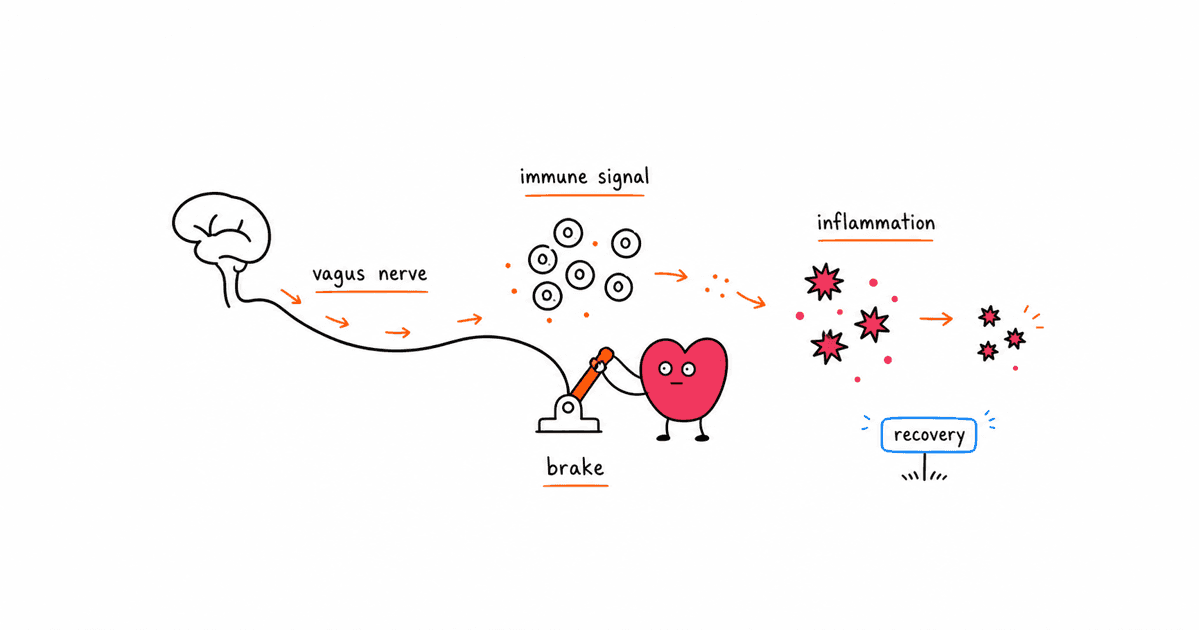
The vagus nerve is the primary communication highway between your brain and immune system, and its activity, reflected by HRV, directly influences your body's inflammatory response. Higher vagal tone (higher HRV) is associated with better immune regulation, while reduced vagal activity is linked to chronic inflammation and impaired immune function.
This connection was first described by neuroscientist Kevin Tracey, who identified the "cholinergic anti-inflammatory pathway" in the early 2000s. His research demonstrated that the efferent (outgoing) vagus nerve releases acetylcholine, which binds to receptors on immune cells and suppresses the production of pro-inflammatory cytokines like TNF-alpha, IL-1, and IL-6.
How the Inflammatory Reflex Works
Your body has a built-in feedback loop for controlling inflammation:
- Detection: Immune cells in your tissues detect pathogens or damage and release inflammatory cytokines
- Afferent signaling: The vagus nerve senses these inflammatory molecules and sends signals to the brain
- Central processing: The brainstem evaluates the immune signal and determines the appropriate response
- Efferent response: The vagus nerve sends signals back to immune cells, releasing acetylcholine
- Immune modulation: Acetylcholine acts on alpha-7 nicotinic receptors on macrophages, reducing cytokine production
This entire loop, called the "inflammatory reflex," operates in real time. When your vagal tone is strong (reflected by higher HRV), this reflex works efficiently. When vagal tone is weak, the brake on inflammation is less effective.
What the Research Shows
The connection between HRV and immune function has been documented across multiple study types:
HRV and Inflammatory Markers
A landmark meta-analysis of over 51 studies encompassing 2,238 patients demonstrated an inverse relationship between HRV and inflammation. People with higher HRV consistently showed lower levels of C-reactive protein (CRP), interleukin-6 (IL-6), and other inflammatory markers.
A 2019 meta-analysis in Brain, Behavior, and Immunity confirmed this pattern across human studies, finding that vagally-mediated HRV metrics (RMSSD and high-frequency power) showed the strongest inverse correlations with inflammation.
HRV and Infection Susceptibility
Research has shown that people with lower resting HRV are more susceptible to infections. A study published in Military Medicine found that HRV could serve as a predictive marker for acute inflammatory responses in COVID-19 patients. Those with lower pre-infection HRV experienced more severe inflammatory responses. Vaccination can create a smaller, intentional immune challenge too, which is why some people see a temporary HRV drop after a vaccine. Tick-borne illness can create a more complicated recovery picture, especially when symptoms overlap with autonomic strain, as covered in our guide to HRV during Lyme recovery. For many patients, this autonomic disruption persists long after the acute infection resolves. See long COVID and HRV for details on post-viral recovery.
HRV and Sepsis Prediction
In clinical settings, declining HRV has proven to be an early warning sign for sepsis and nosocomial infections. A 2023 systematic review in Autonomic Neuroscience found that reduced HRV precedes clinical signs of infection, sometimes by hours, making it a potential early detection tool.
HRV and Cancer Outcomes
Emerging research suggests that the vagal-immune connection may matter in cancer and HRV research, especially around prognosis, fatigue, and treatment burden. Higher vagal activity, measured through HRV, has been associated with better immune surveillance against tumor growth. While this research is still in its early stages, it highlights the far-reaching implications of autonomic function for overall health.
Why Low HRV Means Increased Inflammation
When HRV is chronically low, the vagal brake on inflammation weakens. This creates a cascade of problems:
- Elevated baseline inflammation: Without effective vagal suppression, pro-inflammatory cytokines remain elevated
- Slower immune resolution: Acute inflammatory episodes take longer to resolve
- Increased autoimmune risk: Poor immune regulation can lead to the immune system attacking healthy tissue, a pattern explored in our guide to autoimmune disease and HRV
- Accelerated aging: Chronic low-grade inflammation (sometimes called "inflammaging") is a key driver of age-related decline
This is why HRV isn't just a performance metric. It's a window into your immune system's regulatory capacity.
Factors That Suppress Both HRV and Immune Function
Many of the same lifestyle factors that lower HRV also impair immunity:
| Factor | Effect on HRV | Effect on Immunity |
|---|---|---|
| Chronic stress | Significant reduction | Suppresses lymphocyte function |
| Sleep deprivation | 15-30% reduction | Reduces natural killer cell activity |
| Alcohol consumption | Acute suppression lasting 24-72h | Impairs mucosal immunity |
| Sedentary lifestyle | Gradual decline | Reduces immune surveillance |
| Poor nutrition | Varies by deficiency | Multiple immune pathways affected |
| Social isolation | Measurable reduction | Increased inflammatory gene expression |
The overlap is not coincidental. The autonomic nervous system is the shared mechanism connecting these lifestyle factors to both HRV and immune outcomes.
How to Support Both HRV and Immune Function
Since the vagus nerve links HRV and immunity, improving vagal tone strengthens both. Here are evidence-based strategies:
Breathing Exercises
Slow, diaphragmatic breathing directly stimulates the vagus nerve. Breathing at a rate of about 6 breaths per minute (inhale for 5 seconds, exhale for 5 seconds) has been shown to increase vagal tone and reduce inflammatory markers. Even 10 minutes daily can make a measurable difference.
Regular Exercise
Both aerobic exercise and walking improve vagal tone over time. Zone 2 training is particularly effective for building parasympathetic capacity without overstressing the system. Aim for 150 minutes of moderate activity per week.
Quality Sleep
Sleep is when your body performs most of its immune maintenance. During deep sleep, parasympathetic activity peaks and immune cells are released into circulation. Prioritize 7-9 hours of consistent sleep.
Cold Exposure
Cold exposure activates the dive reflex, a powerful vagal stimulus. Cold showers, cold plunges, or even cold water face immersion can acutely boost vagal tone and have been shown to increase circulating immune cells.
Meditation and Mindfulness
Regular meditation practice improves vagal tone and has been associated with reduced inflammatory markers and improved immune cell function. Loving-kindness meditation, in particular, shows strong effects on vagal tone.
Anti-Inflammatory Nutrition
Certain nutrients directly support both vagal function and immune health:
- Omega-3 fatty acids: Reduce inflammation and improve HRV
- Magnesium: Supports parasympathetic function and immune cell activity
- Vitamin D: Critical for immune regulation
- Polyphenol-rich foods: Support gut-vagus nerve communication
- Probiotics and fermented foods: The gut-vagus connection influences systemic immunity
HRV as an Early Warning System for Illness
One of the most practical applications of HRV monitoring is detecting illness before symptoms appear. Many wearable users report seeing their HRV drop 1-3 days before they develop cold or flu symptoms. This happens because:
- The immune system activates in response to early infection
- Inflammatory cytokines increase
- The autonomic nervous system shifts toward sympathetic dominance
- HRV decreases as parasympathetic activity drops
If you notice an unexplained HRV dip (not related to training, alcohol, or poor sleep), consider it a signal to prioritize rest, hydration, and immune-supporting behaviors.
Tracking Your Immune-HRV Connection
To use HRV as an immune health indicator, you need consistent daily measurements. The best approach:
- Measure at the same time daily, ideally first thing in the morning
- Track your 7-day rolling average rather than reacting to single readings
- Note illness episodes alongside your HRV data to learn your personal patterns
- Watch for sustained dips lasting more than 3 days without an obvious training or lifestyle explanation
Wearables like the Oura Ring 4 and Whoop 5 track overnight HRV automatically and provide readiness or recovery scores that factor in immune-relevant signals. The Apple Watch also records nightly HRV and can alert you to significant changes through its health notifications.
The Bigger Picture: HRV as a Health Biomarker
The immune connection reinforces something the research has been showing for years: HRV is not just a fitness metric. It's one of the most accessible biomarkers for overall health. Your HRV reflects the state of your autonomic nervous system, which regulates not only your heart but also your immune response, digestion, hormonal balance, and mental health.
When you improve your HRV through lifestyle changes, you're not just boosting a number on your watch. You're strengthening the neural infrastructure that keeps inflammation in check, fights off infections, and supports long-term health.
The Bottom Line
Your HRV and immune system are connected through the vagus nerve's cholinergic anti-inflammatory pathway. Higher HRV reflects stronger vagal tone, which translates to better immune regulation and lower chronic inflammation. By tracking HRV and supporting vagal health through breathing, exercise, sleep, and nutrition, you gain both a performance advantage and a deeper insight into your body's immune resilience.
Need a quick read on your HRV number first?
Enter your HRV value, age range, device, and recovery context for a plain-English interpretation before you decide what to do next.
Interpret Your HRV NumberBuild the 30-day plan