Gut Health and HRV: How Your Microbiome Affects Heart Rate Variability
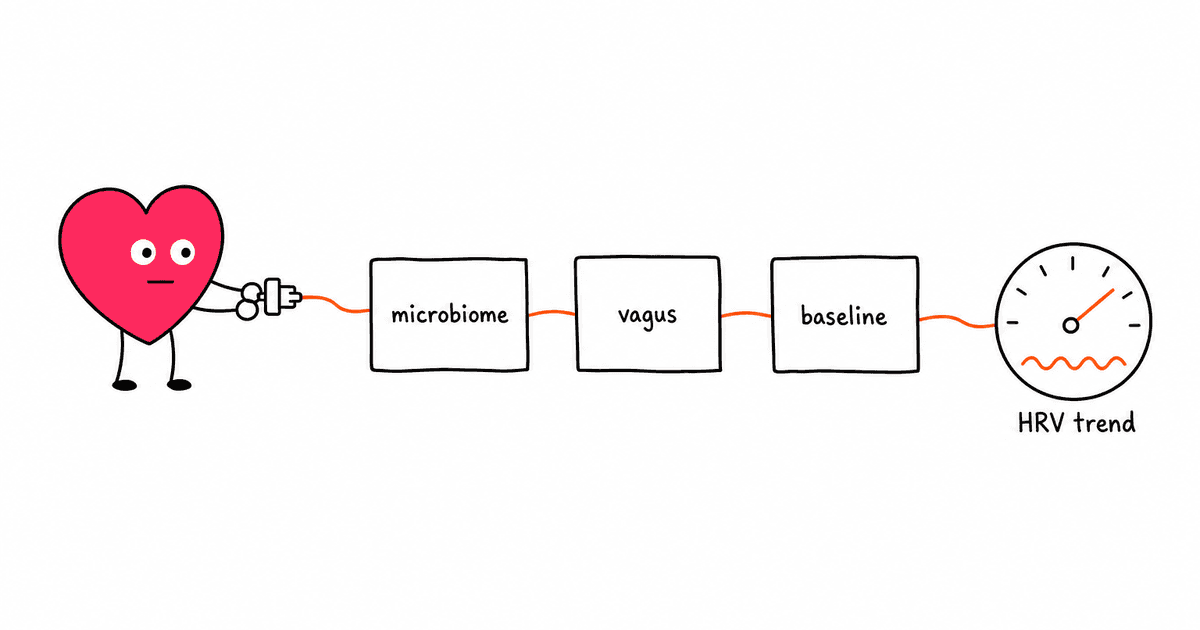
You probably track your HRV to understand recovery, stress, and fitness. But there's a factor influencing your numbers that most people overlook entirely: your gut.
The trillions of bacteria living in your digestive tract communicate directly with your brain and heart through the vagus nerve, the same nerve that drives the parasympathetic activity your HRV measures. Emerging research shows this connection is far more significant than previously thought. And it starts even before food reaches your stomach: your oral microbiome is the gateway to your digestive system, and periodontal disease can introduce inflammatory bacteria that affect both gut health and HRV.
What Is the Gut-Brain-Heart Connection?
The microbiota-gut-brain axis is a bidirectional communication system where your gut bacteria influence autonomic nervous system function through the vagus nerve, directly affecting heart rate variability. Research shows that greater gut microbial diversity is associated with higher HRV, suggesting your digestive health may be a key factor in cardiovascular and nervous system regulation.
If you're new to HRV, our beginner's guide covers the fundamentals. What matters here is that HRV primarily reflects vagal tone, the activity of your vagus nerve. And your vagus nerve is deeply embedded in your gut.
The Vagus Nerve: Your Gut-Heart Highway
The vagus nerve is the longest cranial nerve in your body. It runs from your brainstem down through your chest and into your abdomen, innervating most of your gastrointestinal tract along the way. About 80% of its fibers are afferent (sensory), constantly sending information from your gut to your brain.
This means your gut is talking to your brain far more than your brain is talking to your gut.
The vagus nerve senses:
- Gut microbiota composition and their metabolic byproducts
- Inflammatory signals from the intestinal immune system
- Nutrient availability via enteroendocrine cells
- Gut barrier integrity, detecting when the intestinal lining is compromised
All of these signals influence how your brain modulates autonomic function, which directly shows up in your HRV readings.
What the Research Shows
Gut Diversity Correlates With Higher HRV
A cross-sectional study of 950 participants in the Iwaki Health Promotion Project (Japan) found that higher gut microbial diversity was significantly associated with higher SDNN, one of the most common measures of overall HRV. Specifically, the abundance of Lachnospiraceae incertae sedis was associated with higher SDNN, CVRR (coefficient of variation of RR intervals), and LF (low-frequency) power.
These Lachnospiraceae bacteria are known producers of short-chain fatty acids (SCFAs), particularly butyrate, which plays a key role in maintaining gut barrier integrity and reducing inflammation.
Vagal Activity Tracks With Beneficial Bacteria
A 2022 study published in Gut Microbes measured 24-hour cardiac vagal activity (CVA) in 73 women and analyzed their gut microbiome composition. The results were revealing:
- Daytime vagal activity correlated significantly with gut microbiota diversity (r = 0.254, p = 0.030)
- Women with higher vagal activity had more abundant populations of beneficial bacteria, including Faecalibacterium, Lachnospira, and Ruminococcaceae
- Higher vagal activity was also associated with lower inflammatory markers (CRP and IL-6)
These findings suggest a functional loop: a diverse, healthy microbiome signals through the vagus nerve to enhance parasympathetic tone, which in turn promotes anti-inflammatory conditions that support gut health.
Probiotics Can Improve Vagal Function
Perhaps the most actionable finding comes from a 2025 randomized controlled trial at the Medical University of Graz. Researchers gave a multi-species probiotic (containing multiple bacterial strains) to patients with major depression and healthy controls. After three months:
- Participants receiving probiotics showed significantly improved morning vagal nerve function compared to placebo
- The probiotic group had increased abundance of Akkermansia muciniphila, a bacterium known for strengthening gut barrier function
- Probiotic users also reported improved sleep quality, including shorter sleep latency and reduced need for sleep medication
This is one of the first human studies to demonstrate that targeted probiotic supplementation can measurably enhance vagus nerve function as assessed by HRV.
The Inflammation Connection
A 2025 narrative review in Frontiers in Neuroscience brought together the evidence on how gut health, inflammation, and HRV are interconnected:
- Gut dysbiosis (microbial imbalance) increases intestinal permeability ("leaky gut")
- This allows bacterial endotoxins like lipopolysaccharides (LPS) to enter the bloodstream
- Systemic inflammation triggers sympathetic nervous system activation
- Chronic sympathetic overdrive suppresses vagal tone, lowering HRV
The vagus nerve also operates a "cholinergic anti-inflammatory pathway" that helps keep inflammation in check. When gut health is poor and vagal tone drops, this protective mechanism weakens, creating a vicious cycle.
How Gut Health Affects Your Daily HRV
If you're tracking HRV daily, you may have noticed unexplained fluctuations that don't match your training load or sleep quality. Your gut could be the hidden variable.
Factors That Disrupt Gut Health and Lower HRV
| Factor | Gut Impact | HRV Impact |
|---|---|---|
| Processed foods | Reduces microbial diversity | Shifts toward sympathetic dominance |
| Antibiotics | Kills beneficial bacteria | Can temporarily lower HRV |
| Chronic stress | Increases gut permeability | Suppresses vagal tone |
| Poor sleep | Disrupts microbial rhythms | Reduces overnight HRV recovery |
| Excessive alcohol | Damages gut lining | Drops HRV for 24-72 hours |
| Low fiber diet | Starves beneficial bacteria | Associated with lower baseline HRV |
Many of these factors overlap with what we already know affects HRV from other angles. Our articles on stress and HRV, alcohol and HRV, and sleep and HRV cover these individual connections in depth.
7 Ways to Improve Your Gut Health (and Your HRV)
1. Eat More Fiber-Rich Whole Foods
Dietary fiber is the primary fuel for beneficial gut bacteria. When fiber-fermenting bacteria thrive, they produce short-chain fatty acids (SCFAs) like butyrate, propionate, and acetate, which strengthen the gut barrier and signal the vagus nerve.
Aim for 25 to 35 grams of fiber daily from diverse sources:
- Vegetables (broccoli, artichokes, Brussels sprouts)
- Legumes (lentils, chickpeas, black beans)
- Whole grains (oats, barley, quinoa)
- Fruits (berries, apples, bananas)
For more on how diet affects HRV, see our guide on nutrition and HRV.
2. Include Fermented Foods
Fermented foods introduce beneficial bacteria directly into your gut and have been shown to increase microbial diversity. A Stanford study found that a diet high in fermented foods for 10 weeks significantly increased microbiome diversity and decreased inflammatory markers.
Good options include:
- Yogurt (with live active cultures)
- Kefir
- Sauerkraut and kimchi
- Kombucha
- Miso
3. Consider Targeted Probiotics
Based on the research, multi-species probiotic supplements may support vagal function. Strains that have shown promise in studies include:
- Lactobacillus species (multiple strains)
- Bifidobacterium species
- Akkermansia muciniphila (emerging research)
Look for products with multiple strains and at least 10 billion CFU. Note that probiotic benefits often take 4 to 12 weeks to become apparent in HRV measurements.
4. Get Enough Omega-3 Fatty Acids
Omega-3s reduce gut inflammation and support the growth of beneficial bacteria. They also have direct positive effects on HRV, as detailed in our article on omega-3 fatty acids and HRV. Good sources include fatty fish (salmon, sardines, mackerel), walnuts, and flaxseeds.
5. Manage Stress Through Vagal Activation
Stress directly harms gut health by increasing permeability and disrupting microbial balance. Practices that stimulate the vagus nerve help both sides of the equation:
- Slow breathing exercises: 6 breaths per minute stimulates vagal tone and promotes healthy gut motility
- Meditation: Regular practice has been linked to both improved vagal tone and healthier gut microbiome composition
- Cold exposure: Brief cold exposure activates the vagal response (see cold exposure and HRV)
6. Prioritize Sleep Quality
Your gut microbiome follows circadian rhythms, and disrupted sleep patterns alter microbial composition. Poor sleep quality also independently lowers HRV. Prioritizing consistent sleep timing and 7 to 9 hours per night supports both your microbiome and your autonomic nervous system.
Learn more in our guide on HRV and sleep.
7. Limit Gut Disruptors
Minimize factors that damage gut health:
- Reduce processed food: Emulsifiers, artificial sweeteners, and ultra-processed ingredients harm gut bacteria
- Moderate alcohol: Even moderate drinking damages the gut lining and drops HRV (alcohol and HRV)
- Use antibiotics judiciously: When prescribed, consider probiotic supplementation during and after treatment
- Limit NSAIDs: Regular use of non-steroidal anti-inflammatory drugs can increase gut permeability
Track the Connection
If you want to see how gut health changes affect your HRV, consistent daily tracking is key. Modern wearables make this straightforward:
- Oura Ring 4: Captures overnight HRV trends that can reveal gut health improvements over weeks
- Whoop 5: Continuous monitoring helps identify how dietary changes affect daily recovery scores
- Apple Watch Series 11: Regular HRV snapshots throughout the day
For more options, see our best HRV monitors for 2026.
Experiment and Observe
Try this 30-day approach:
- Week 1: Establish your baseline HRV trend with consistent daily tracking
- Weeks 2-4: Introduce one gut health intervention (increased fiber, fermented foods, or a probiotic)
- Week 4+: Compare your HRV trend to your baseline
Keep a simple food journal alongside your HRV data. The connection between what you eat and how your nervous system performs can become remarkably clear over time.
The Bigger Picture
The gut-brain-heart axis represents one of the most exciting frontiers in health research. What we're learning is that the systems in your body don't operate in isolation. Your digestive health, nervous system function, inflammatory status, and cardiovascular health are all deeply interconnected.
For HRV enthusiasts, this means that optimizing your numbers isn't just about training load and sleep hygiene. The food you eat, the diversity of your gut bacteria, and the health of your intestinal lining all influence the vagal tone that drives your HRV.
It also means that if you've hit a plateau in your HRV despite doing everything right with exercise, sleep, and stress management, your gut might be the missing piece of the puzzle.
For a comprehensive overview of all the factors that influence HRV and how to optimize them, check out our guide on how to improve your HRV.
Frequently Asked Questions
Can probiotics directly increase HRV?
Early evidence is promising. A 2025 randomized controlled trial found that a multi-species probiotic significantly improved morning vagal nerve function after three months of supplementation. However, research in this area is still emerging, and results may vary depending on the specific strains used and individual gut composition.
How long does it take for gut health changes to show up in HRV?
Most people need 4 to 12 weeks of consistent dietary changes before seeing reliable shifts in baseline HRV. The gut microbiome can begin changing within days of a dietary shift, but the downstream effects on vagal tone and autonomic balance take longer to stabilize.
Does a food sensitivity affect HRV?
Yes, it can. Foods that trigger an inflammatory response in your gut can temporarily lower HRV. If you notice consistent HRV dips after eating certain foods, it may be worth investigating with an elimination diet or consulting a healthcare provider.
Which gut bacteria are most associated with higher HRV?
Research has identified several genera associated with better vagal function, including Faecalibacterium, Lachnospira, Ruminococcaceae, and Akkermansia muciniphila. These are generally butyrate-producing or gut-barrier-strengthening species that thrive on a fiber-rich, diverse diet.
Is the gut-HRV connection relevant for athletes?
Absolutely. Athletes often experience gut issues during training (especially endurance athletes), and gut health directly affects recovery, which HRV measures. Maintaining a diverse microbiome through proper nutrition may support better autonomic recovery between training sessions. See our guide on HRV for athletes for more on optimizing recovery.
Need a quick read on your HRV number first?
Enter your HRV value, age range, device, and recovery context for a plain-English interpretation before you decide what to do next.
Interpret Your HRV NumberBuild the 30-day plan