Phthalates and HRV: How Plasticizers May Affect Heart Rate Variability
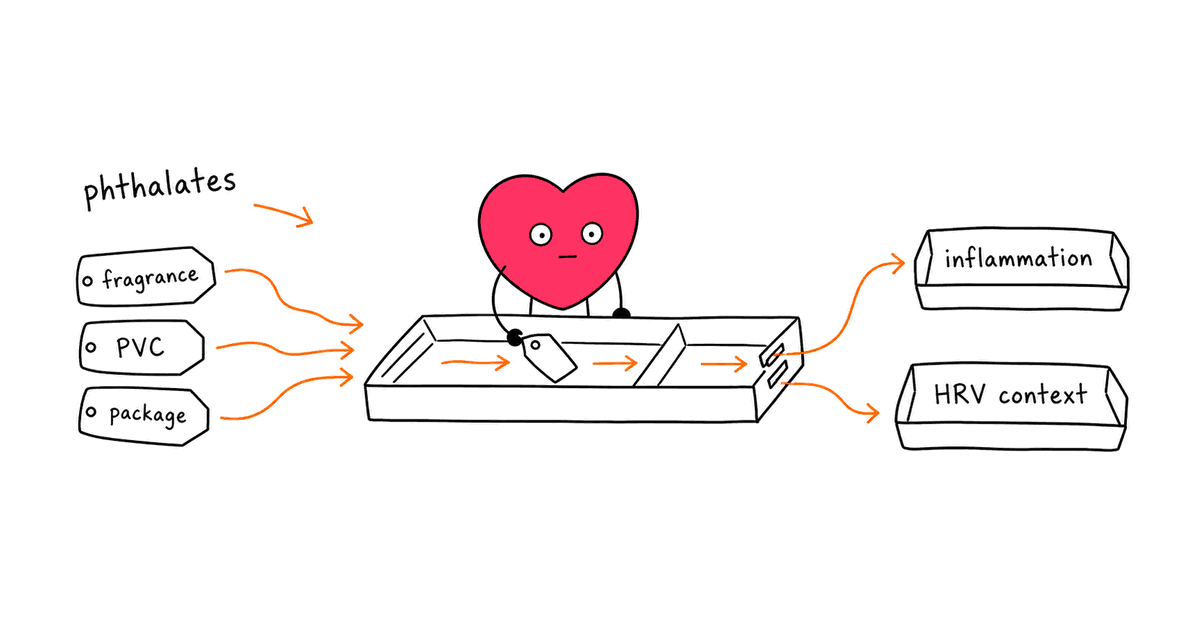
Phthalates are the kind of health topic that sounds niche until you realize how often you touch them. They are used to make plastics flexible, help fragrances last longer, and improve the texture of some personal care products. They can show up around food packaging, vinyl flooring, medical tubing, cleaning products, cosmetics, and household dust.
For anyone tracking heart rate variability, the obvious question is whether these everyday plasticizers can affect recovery data. The answer is not as simple as "plastic lowers HRV," but the signal is strong enough to take seriously.
Direct human evidence is still early. But phthalates have been linked with lower HRV in a panel study, altered autonomic regulation in animal research, and broader cardiovascular risks in environmental health studies. That makes them different from a vague wellness scare. This is a plausible long-term autonomic stressor, not a magic explanation for every bad recovery score.
Do Phthalates Affect HRV?
Phthalate exposure may be associated with lower HRV, especially when exposure is measured through urinary metabolites, but the evidence is still developing. The best current interpretation is cautious: phthalates may contribute to autonomic strain through oxidative stress, vascular dysfunction, endocrine disruption, inflammation, and blood pressure reactivity.
That does not mean one takeout container or one scented lotion will tank your HRV overnight. Acute HRV drops are still more likely to come from sleep deprivation, alcohol, illness, hard training, heat, dehydration, stress, or medication changes.
Phthalates are better understood as a background exposure. They may not create a clear same-day HRV pattern, but they can add friction to the systems that regulate heart rhythm, blood pressure, metabolism, and recovery.
What Are Phthalates?
Phthalates are chemical plasticizers used to make plastics more flexible and to dissolve or carry other ingredients, including fragrance compounds. The CDC's NHANES documentation describes them as chemicals used in products such as vinyl flooring, adhesives, detergents, lubricating oils, automotive plastics, raincoats, personal care products, plastic packaging, garden hoses, inflatable toys, blood-storage containers, and medical tubing.
Common phthalates and metabolites you may see in research include:
- DEHP: di-2-ethylhexyl phthalate, historically used in PVC plastics and some medical materials
- MEHP, MEHHP, MEOHP, MECPP: metabolites related to DEHP exposure
- DEP: diethyl phthalate, often associated with fragrance and personal care products
- MEP: a urinary metabolite of DEP
- DBP and DiBP: phthalates used in some plastics, coatings, adhesives, and personal care products
- MBP and MiBP: urinary metabolites often used as exposure markers
Once phthalates enter the body, they are broken down into metabolites and excreted in urine relatively quickly. That matters because a urine test usually reflects recent exposure, not a permanent body burden.
It also means daily habits matter. With short-lived chemicals, repeated exposure is the issue. You are not dealing with one dramatic event. You are dealing with the background rhythm of food packaging, scented products, dust, and plastic contact.
The Human HRV Evidence
A 2023 panel study in Environmental Pollution looked at 127 Chinese adults across three repeated visits. Researchers measured 10 urinary phthalate metabolites and six HRV indices using Holter monitors.
After adjustment for multiple variables, higher levels of several metabolites were associated with lower HRV measures. Urinary MEP, MiBP, and MBP were inversely associated with low-frequency power or total power on the same day. In mixture analysis, the overall phthalate mixture was negatively associated with low-frequency power or total power, with MiBP appearing to be a major contributor. The associations were more pronounced in participants older than 50.
A few details matter here.
First, this was a modest-size observational study. It can show association, not prove that phthalates directly caused lower HRV.
Second, HRV metrics are not interchangeable. Total power reflects overall variability across frequency bands. Low-frequency power is physiologically mixed and should not be lazily labeled as "sympathetic activity" on its own.
Third, the same-day association fits phthalate biology. These chemicals are metabolized and excreted quickly, so urinary markers can capture recent exposure windows.
The takeaway: this study does not prove that phthalates are a major HRV driver for everyone, but it does give the topic real evidence. That is more than we can say for many wellness claims.
What Animal Research Adds
A 2017 study in the American Journal of Physiology: Heart and Circulatory Physiology exposed adult mice to DEHP and monitored cardiovascular and autonomic function.
The DEHP-treated animals showed lower HRV, including a 17% reduction in SDNN and a 36% reduction in high-frequency power. They also had signs of higher sympathetic tone, stronger blood pressure reactivity during a stress protocol, and slower blood pressure recovery afterward.
This matters because high-frequency HRV is often used as a marker of parasympathetic, or vagal, modulation. A drop in HF power suggests reduced vagal flexibility in that model.
But it is still an animal study. Dose, route, species, and context all matter. You should not read it as proof that every human exposed to DEHP will see the same HRV drop.
The useful part is mechanistic: phthalates can interact with cardiovascular regulation, not just reproductive hormones or abstract "toxins." That makes the human HRV findings more biologically plausible.
Why This Is Also a Heart Health Topic
Phthalates are often discussed as endocrine disruptors. That is valid, but too narrow.
A 2025 EBioMedicine analysis estimated the global cardiovascular burden associated with DEHP exposure. Using cardiovascular mortality data and regional exposure estimates, the researchers estimated that DEHP exposure was associated with 356,238 cardiovascular deaths globally in 2018 among adults aged 55 to 64, representing about 13.5% of cardiovascular deaths in that age band.
That number should be handled carefully. It is a modeling estimate based on exposure and risk assumptions, not a randomized trial and not proof that phthalates caused each death. Still, it highlights why environmental chemicals are increasingly part of cardiovascular prevention discussions. For related environmental-chemical lenses, see PFAS and HRV, which covers persistent forever chemicals, and pesticides and HRV, which covers a different exposure profile with more direct nervous-system relevance.
For HRV readers, the heart health connection matters because HRV is not just a recovery score. It reflects autonomic flexibility, and autonomic flexibility is deeply connected to vascular tone, inflammation, blood pressure regulation, and cardiac resilience.
If you want the broader cardiovascular frame, see HRV and heart disease and HRV and blood pressure.
How Phthalates Might Lower HRV
The exact pathway is not settled, and it may differ by compound. But several mechanisms line up with what we already know about autonomic function.
1. Oxidative Stress
Phthalate exposure has been linked in research to oxidative stress, which means the body's antioxidant and repair systems are dealing with more reactive molecules than they can comfortably neutralize.
Oxidative stress can affect blood vessels, mitochondria, inflammation, and cardiac signaling. Those systems are all relevant to HRV because the heart is constantly responding to metabolic and neural inputs.
2. Vascular Dysfunction
Healthy blood vessels dilate and constrict smoothly. That flexibility helps stabilize blood pressure and deliver oxygen where it is needed.
Phthalates may interfere with vascular signaling, including pathways related to nitric oxide, endothelin, and blood pressure regulation. If blood vessels become more reactive or less flexible, the autonomic nervous system has to work harder to maintain stability.
That can show up as lower HRV, higher resting heart rate, more blood pressure variability, or slower recovery after stress.
3. Endocrine Disruption
Phthalates can interact with hormone signaling. That is one reason they are studied in reproductive health, puberty, fertility, and metabolic disease.
Hormones and HRV are tightly connected. Thyroid hormones, cortisol, insulin, sex hormones, and growth hormone all affect autonomic balance. If an exposure nudges endocrine function in the wrong direction, HRV may shift indirectly. For more context, see hormones and HRV.
4. Inflammation
Inflammation and HRV have a two-way relationship. Lower vagal activity can weaken inflammatory regulation, while systemic inflammation can suppress HRV.
Phthalates are not the only exposure that may matter here. Air pollution, poor sleep, chronic stress, excess alcohol, infections, and metabolic dysfunction can all push the same system. That is why HRV often reflects total load rather than one clean cause.
The deeper mechanism is covered in inflammation and HRV.
5. Stress Reactivity
The 2017 DEHP animal study is especially interesting because it did not only show lower resting HRV. It also showed exaggerated cardiovascular reactivity and delayed blood pressure recovery after stress.
That pattern matters. A resilient autonomic system does not avoid stress. It responds, then returns to baseline. If a chemical exposure makes the system more reactive and slower to recover, it could affect both HRV trends and real-world stress tolerance.
Phthalates vs. Microplastics
Phthalates and microplastics are related, but they are not the same thing.
Microplastics are tiny plastic particles. Phthalates are chemical additives that can leach from plastics or appear in non-plastic products such as fragrance, cosmetics, and coatings.
They can overlap in real life. A plastic package may shed particles and also contain chemical additives. But from a health standpoint, they are different exposure categories.
That difference matters for action. Reducing microplastics often means changing bottled water, heating habits, dust, textiles, and food storage. Reducing phthalates also means paying attention to fragrance, vinyl, flexible PVC, some personal care products, and repeated contact with packaged foods.
Biggest Everyday Sources to Watch
You do not need to live like a monk in a glass house. Focus on repeated, high-contact exposures.
Food Packaging and Processing
Diet is often a major route of phthalate exposure because these chemicals can migrate from food contact materials, processing equipment, gloves, tubing, packaging, and containers.
Higher-fat foods can be more relevant because some phthalates are lipophilic, meaning they mix more readily with fats. Ultra-processed and heavily packaged foods may also create more contact points.
This does not mean you need a perfect unpackaged diet. It means more meals built from minimally processed foods can reduce exposure while also supporting nutrition and HRV.
Heating Food in Plastic
Heat can increase chemical migration from some plastics. Microwaving in plastic, pouring hot liquids into plastic cups, or storing hot leftovers in flexible plastic containers are low-value habits.
Use glass, ceramic, or stainless steel for heat whenever possible. This is simple, cheap, and probably the cleanest first move.
Fragrance and Personal Care Products
Some phthalates are used to help fragrances last longer. The tricky part is that "fragrance" can be a broad ingredient label, and the exact chemicals are not always obvious to consumers.
If you use multiple scented products every day, such as lotion, perfume, hair spray, body wash, detergent, and air freshener, that exposure can stack.
A practical approach is not to panic. Start by switching the products that cover the most skin or run all day: lotion, body oil, detergent, and air fresheners.
Vinyl and Flexible PVC
Vinyl flooring, shower curtains, flexible hoses, some inflatable products, and older soft plastic items can contain phthalates or related plasticizers.
You do not need to renovate your house because of one article. But if you are already replacing flooring, buying a shower curtain, or choosing items for children, phthalate-free options are worth considering.
Household Dust
Phthalates can accumulate in indoor dust after migrating out of products. Dust is not glamorous, but it is a constant exposure route because we inhale and ingest small amounts all day.
Wet dusting, vacuuming with a good filter, ventilating when outdoor air is clean, and washing hands before meals are boring habits that actually make sense.
Medical Exposure
DEHP has been used in some PVC medical devices, including tubing and blood-storage materials. For most people, medical exposure is occasional and not something to avoid at the expense of needed care.
If you receive frequent dialysis, transfusions, neonatal care, or long-term tube-based treatment, this is a topic to discuss with clinicians, not manage through HRV guesses. Medical care comes first.
How to Reduce Phthalate Exposure Without Turning It Into a Personality
The goal is not purity. The goal is reducing easy, repeated exposures while preserving a normal life.
1. Stop Heating Plastic
This is the best first move. Heat food in glass or ceramic. Use stainless steel or glass for hot drinks. Let leftovers cool before storing them in plastic if plastic is all you have.
2. Choose Fragrance-Free for High-Use Products
Start with products that touch your skin daily or fill your indoor air: lotion, detergent, deodorant, body wash, shampoo, air fresheners, and cleaning sprays.
"Unscented" and "fragrance-free" are not always identical, but fragrance-free is usually the cleaner target.
3. Eat More Minimally Packaged Meals
Fresh or frozen produce, beans, lentils, oats, rice, eggs, fish, olive oil, nuts, and basic staples tend to have fewer packaging and processing contact points than highly packaged meals.
Conveniently, that same shift supports blood sugar, blood pressure, and long-term cardiovascular health.
4. Store Fatty Foods in Glass When Practical
Oil-rich foods, sauces, cheese, meat, and leftovers may deserve better storage because phthalates can migrate into fatty matrices more easily.
You do not need to throw out every container. Replace the most used ones first.
5. Reduce Indoor Dust
Vacuum, wet mop, wet dust, wash bedding, and keep shoes near the door. If you have toddlers crawling on the floor, this matters even more.
6. Be Selective With Vinyl
When buying new shower curtains, flooring, mattress protectors, toys, or flexible plastic goods, look for phthalate-free materials when available.
7. Ignore Detox Claims
There is no proven phthalate cleanse. Since many phthalates are metabolized quickly, the practical strategy is reducing incoming exposure, not buying a supplement that promises to "flush plastics."
Your liver and kidneys already handle the metabolism. Give them fewer incoming chemicals to process.
Can HRV Track a Phthalate-Reduction Experiment?
You can try, but expectations need to be sane.
Phthalates are not like alcohol, where a large exposure may show up clearly the next morning. They are more like air pollution, diet quality, or chronic stress: the effect may be subtle, delayed, and mixed with other variables.
If you want to test it, keep it simple:
- Pick three changes: no heating plastic, fragrance-free daily products, and more minimally packaged meals.
- Keep sleep, training, caffeine, alcohol, and meal timing as stable as possible.
- Track HRV, resting heart rate, sleep, blood pressure if relevant, and subjective energy for four to six weeks.
- Compare trends, not single days.
- Keep the habits that are easy, cheap, and aligned with broader health.
If HRV improves, useful. If HRV does not move, the changes may still be worthwhile for exposure reduction and heart health.
What HRV Cannot Tell You
HRV is a helpful signal, not a chemical exposure monitor.
It cannot tell you:
- how much phthalate exposure you had yesterday
- which product caused a low HRV score
- whether your urine metabolites are high
- whether you have cardiovascular disease
- whether a detox product is working
- whether a single lifestyle swap reduced your risk
If your HRV is chronically low, start with the bigger and better-proven levers: sleep, training load, alcohol, stress, nutrition, blood pressure, glucose control, illness, and medications.
Phthalates belong in the second layer: worth reducing, but not worth obsessing over.
Who Should Pay More Attention?
A few groups have stronger reasons to be thoughtful about phthalate exposure:
- people with high blood pressure or elevated cardiovascular risk
- people with metabolic syndrome, insulin resistance, or diabetes risk
- people who eat heavily packaged or processed foods most days
- people using many scented personal care products daily
- people with frequent medical exposure to plastic tubing or devices
- pregnant people and young children, where precaution is especially reasonable
- adults over 50, since the 2023 HRV study found stronger associations in this age group
This is not medical advice. If you have heart disease, unexplained symptoms, fertility concerns, endocrine issues, or major exposure questions, talk with a clinician.
FAQ
Can phthalates lower HRV overnight?
Possibly in theory, but it is not a reliable interpretation. One low HRV score is more likely to reflect sleep, illness, alcohol, training, heat, dehydration, or psychological stress. Phthalates are better treated as a background exposure that may affect longer-term autonomic and cardiovascular health.
Are phthalates the same as BPA?
No. Phthalates and BPA are both chemical additives associated with plastics, but they are different compounds with different uses and exposure patterns. BPA is often discussed in relation to polycarbonate plastics and epoxy linings. Phthalates are commonly associated with flexible PVC, fragrance, coatings, and plasticized materials.
Are phthalates the same as microplastics?
No. Microplastics are particles. Phthalates are chemicals. They can coexist in plastic products, but they are not the same exposure.
Should I get tested for phthalates?
Most people do not need routine phthalate testing. Urinary metabolites reflect recent exposure and can vary from day to day. Testing may be useful in research or specific occupational and medical contexts, but lifestyle reduction is usually more practical than chasing one lab value.
What is the easiest first step?
Stop heating food and drinks in plastic. Then switch daily high-use scented products to fragrance-free versions. Those two changes are simple, low-cost, and more realistic than trying to remove every plastic item from your life.
The Bottom Line
Phthalates are not a magic explanation for low HRV, and HRV is not a phthalate detector. But the evidence is credible enough to pay attention.
Human data link certain urinary phthalate metabolites with lower HRV measures. Animal research suggests DEHP can reduce HRV, increase sympathetic tone, and worsen cardiovascular stress recovery. Broader studies connect phthalate exposure with cardiovascular risk through oxidative stress, metabolic dysfunction, vascular strain, and endocrine disruption.
The smart response is not panic. It is boring exposure reduction: stop heating plastic, use more fragrance-free products, eat more minimally packaged meals, manage dust, and choose phthalate-free materials when replacing flexible plastic or vinyl items.
Your HRV will still be driven most strongly by sleep, training, stress, illness, alcohol, and cardiovascular fitness. Phthalate reduction is a supporting habit, not the main event. But as supporting habits go, this one is sensible.
Need a quick read on your HRV number first?
Enter your HRV value, age range, device, and recovery context for a plain-English interpretation before you decide what to do next.
Interpret Your HRV NumberBuild the 30-day plan