Air Quality and HRV: How Pollution Affects Your Heart Rate Variability
Trying to decode today's HRV number? Use the free interpreter first, then build a practical recovery plan. Interpret your HRV
Most people think of air pollution as a lung problem. But a growing body of research shows that poor air quality directly impacts your cardiovascular system, and one of the earliest measurable effects is reduced heart rate variability. Whether you live in a high-pollution city or spend time near traffic, the air you breathe is quietly shaping your HRV numbers.
If you already deal with asthma or seasonal allergies, poor air quality can make the same recovery signal even noisier.
If you want a more tactical breakdown for wildfire smoke, traffic exposure, and outdoor training decisions, see our companion guide on air pollution and HRV.
How Does Air Pollution Affect HRV?
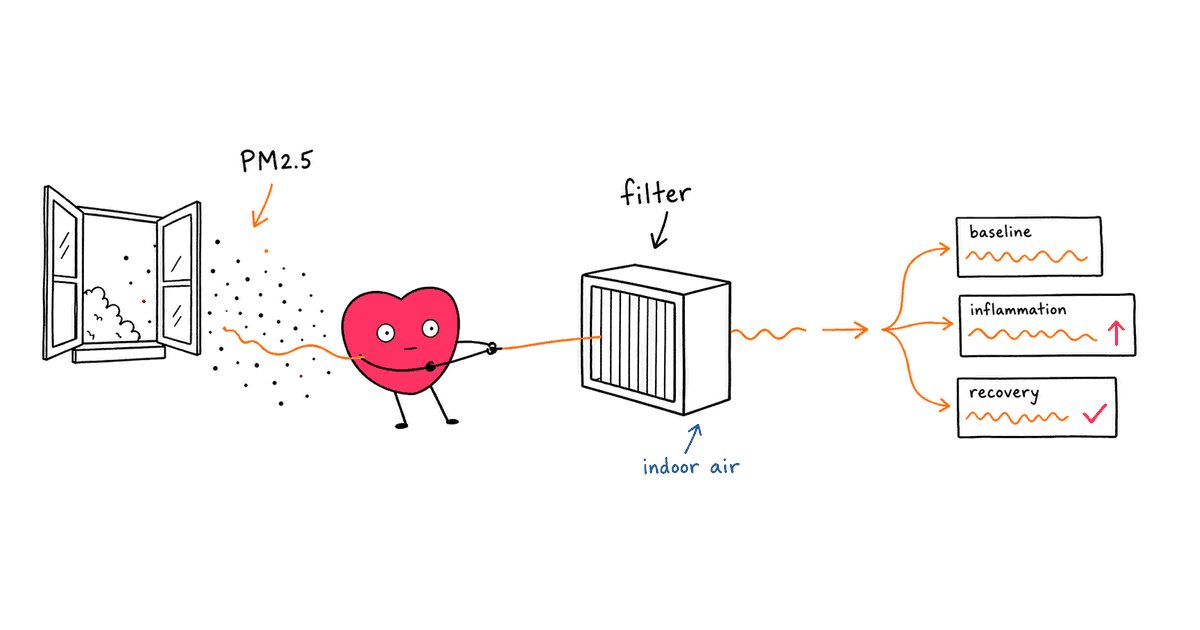
Air pollution, particularly fine particulate matter (PM2.5), reduces heart rate variability by triggering sympathetic nervous system activation and suppressing parasympathetic function. This autonomic imbalance increases cardiovascular risk and mirrors the effects of chronic stress on the heart.
The mechanism works through two primary pathways. First, inhaled particles activate sensory receptors in the lungs that signal the brain to shift toward sympathetic dominance. Second, ultrafine particles can cross from the lungs into the bloodstream, triggering systemic inflammation that directly suppresses vagal tone. Both pathways converge on the same outcome: lower HRV.
What the Research Shows
The evidence linking air pollution to HRV reduction is extensive and consistent across populations.
A study in Environmental Health Perspectives from the VA Normative Aging Study found that fine particulate matter was significantly associated with reduced HRV in elderly men. Each increase in PM2.5 exposure corresponded to measurable decreases in SDNN and RMSSD, two key HRV metrics.
Research published in Environmental Health Perspectives found that a 100 microgram per cubic meter increase in PM2.5 was associated with approximately a 35-millisecond decline in SDNN and a 42-millisecond decline in RMSSD. To put that in context, those are substantial drops that reflect meaningful shifts in autonomic function.
A 2017 study in Science of the Total Environment identified specific PM2.5 components that were most harmful. Elemental carbon, sulfate, ammonium, and lead were all associated with increased blood pressure, higher resting heart rate, and decreased HRV.
PM2.5: The Most Dangerous Pollutant for HRV
Not all air pollutants affect HRV equally. PM2.5 (particles smaller than 2.5 micrometers) is the primary concern because these particles are small enough to penetrate deep into the lungs and even cross into the bloodstream.
Common Sources of PM2.5
- Vehicle exhaust, especially diesel
- Wildfire smoke
- Industrial emissions
- Cooking (especially frying and grilling)
- Candles and incense
- Wood-burning stoves and fireplaces
- Cigarette and vape smoke
PM2.5 Levels and What They Mean
| AQI Range | PM2.5 (μg/m³) | Health Impact | Expected HRV Effect |
|---|---|---|---|
| 0-50 (Good) | 0-12 | Minimal risk | Negligible |
| 51-100 (Moderate) | 12.1-35.4 | Sensitive groups affected | Mild reduction possible |
| 101-150 (Unhealthy for sensitive groups) | 35.5-55.4 | Broader health effects | Measurable HRV decrease |
| 151-200 (Unhealthy) | 55.5-150.4 | Everyone affected | Significant HRV reduction |
| 200+ (Very unhealthy) | 150.5+ | Emergency conditions | Severe autonomic disruption |
Indoor Air Quality Matters Too
Many people assume air pollution is an outdoor problem, but indoor air quality can be worse than outdoor levels. The EPA estimates that indoor air can be 2-5 times more polluted than outdoor air, and since most people spend 90% of their time indoors, this is a critical factor for HRV.
Common Indoor Pollutants That Affect HRV
- Cooking emissions: Gas stoves produce nitrogen dioxide and PM2.5. Frying and high-heat cooking generate significant particulate matter.
- Cleaning products: Many household cleaners release volatile organic compounds (VOCs) that trigger autonomic stress responses.
- Pest-control products: Indoor sprays, foggers, and residues can add pesticide exposure, especially in poorly ventilated rooms or repeated treatments.
- Mold and dampness: Mold spores drive inflammatory responses that suppress HRV.
- Off-gassing: New furniture, paint, and flooring release formaldehyde and other VOCs.
- Household dust and synthetic fibers: Dust can carry particles shed from textiles, packaging, and outdoor pollution that gets tracked inside. The evidence is still early, but it overlaps with the broader microplastics and HRV question.
- Combustion byproducts: Candles, incense, and fireplaces produce PM2.5 indoors.
- Tobacco and e-cigarette smoke: Secondhand smoke is one of the most harmful indoor pollutants, containing both PM2.5 and nicotine. Even passive exposure reduces HRV in non-smokers. See our guide on smoking, nicotine, and HRV for more detail.
The Inflammation Connection
Air pollution's effect on HRV is closely tied to inflammation. When particulate matter enters the bloodstream, it triggers the release of inflammatory cytokines like C-reactive protein (CRP) and interleukin-6 (IL-6). This systemic inflammation suppresses vagal tone and shifts autonomic balance toward sympathetic dominance.
The inflammatory response can persist for 24-48 hours after a pollution exposure event, meaning a single day of poor air quality can affect your HRV for multiple days afterward. This pattern is similar to how alcohol affects HRV, with delayed recovery lasting well beyond the initial exposure.
Who Is Most Vulnerable?
Certain populations experience more pronounced HRV reductions from air pollution:
- Older adults: Age-related decline in autonomic function makes seniors more susceptible to pollution-related HRV changes.
- People with asthma, COPD, or allergies: Existing airway irritation or chronic lung disease can make polluted air feel worse and show up faster in recovery data. See our guides on asthma and HRV, COPD and HRV, and allergies and HRV.
- People with heart conditions: Those with existing heart disease or high blood pressure face amplified risks.
- Athletes: Heavy breathing during outdoor exercise increases particulate intake. This is especially relevant for those tracking HRV for training optimization.
- Children: Developing cardiovascular systems in children are particularly sensitive to pollution effects.
How to Protect Your HRV From Air Pollution
Monitor Air Quality
Check air quality before outdoor activities using apps like AirNow, IQAir, or your local monitoring service. Most HRV-tracking wearables do not account for air quality, so you need to make this connection yourself.
Improve Indoor Air
- Use a HEPA air purifier in bedrooms and main living areas
- Keep windows closed during high-pollution days
- Use exhaust fans when cooking, especially with gas stoves
- Avoid burning candles and incense indoors
- Maintain HVAC filters (replace every 1-3 months)
- Add houseplants (though their filtering effect is modest)
Time Your Outdoor Exercise
- Exercise outdoors in the early morning when pollution levels are typically lowest
- Avoid exercising near major roads during rush hour
- Move workouts indoors when AQI exceeds 100
- If you must exercise in moderate pollution, reduce intensity to lower your breathing rate
Support Your Body's Defenses
Several practices can help counteract pollution's effects on HRV:
- Anti-inflammatory nutrition: Omega-3 fatty acids have been shown to partially protect HRV from pollution exposure. A study found that omega-3 supplementation blunted the HRV-reducing effects of PM2.5.
- Antioxidant-rich foods: Vitamin D and antioxidants from fruits and vegetables support the body's ability to neutralize pollution-related oxidative stress.
- Breathing techniques: Nasal breathing filters more particles than mouth breathing. The nose filters out a significant portion of larger particulate matter before it reaches the lungs.
- Hydration: Staying well hydrated supports mucociliary clearance, your body's mechanism for removing inhaled particles.
Tracking Air Quality's Impact on Your HRV
If you live in an area with variable air quality, correlating your HRV data with pollution levels can reveal patterns:
- Track daily AQI readings for your area
- Log them alongside your morning HRV from your Whoop, Oura Ring, or Apple Watch
- After 4-6 weeks, look for correlations between high-AQI days and HRV dips
- Note how long it takes your HRV to recover after pollution spikes
Many people are surprised to find that wildfire smoke events or high-traffic days produce visible HRV drops, even when they feel physically fine. This makes HRV a useful early warning system for pollution exposure.
Wildfire Smoke: A Growing HRV Concern
Wildfire smoke has become an increasingly significant air quality issue. Wildfire PM2.5 may be more harmful than urban pollution because it contains a different mix of organic compounds and can reach extremely high concentrations. During major wildfire events, AQI levels can exceed 300-500, exposing millions of people to severe autonomic stress.
If you live in a wildfire-prone area:
- Keep a HEPA air purifier ready for smoke events
- Create a "clean room" in your home with sealed windows and air filtration
- Wear an N95 mask if you must go outdoors during heavy smoke
- Move all exercise indoors during smoke events
- Expect HRV to remain suppressed for 2-3 days after smoke clears
The Long-Term Picture
Chronic air pollution exposure does not just cause temporary HRV dips. Long-term studies show that people living in high-pollution areas have persistently lower baseline HRV compared to those in cleaner environments. This chronic autonomic suppression is one mechanism through which air pollution contributes to cardiovascular disease, the leading cause of death worldwide.
The good news is that HRV improvements are measurable when pollution exposure decreases. Studies of people who moved from high-pollution to low-pollution areas showed significant HRV recovery within months, suggesting the autonomic effects are at least partially reversible.
The Bottom Line
Air quality is an underappreciated factor in HRV optimization. Fine particulate matter directly suppresses parasympathetic function through lung receptor activation and systemic inflammation. While you cannot control outdoor air quality, you can take meaningful steps to reduce exposure: monitor AQI, filter indoor air, time outdoor activities wisely, and support your body with anti-inflammatory nutrition.
If your HRV numbers seem inexplicably low, check the air quality before blaming sleep or stress. The air you breathe may be the hidden variable affecting your data.
Frequently Asked Questions
How quickly does air pollution affect HRV?
HRV changes can occur within hours of pollution exposure. Studies show measurable SDNN and RMSSD reductions within 2-6 hours of elevated PM2.5 exposure, with effects persisting for 24-48 hours after the exposure ends.
Can air purifiers improve HRV?
Yes. Studies have shown that using HEPA air purifiers in the home can reduce indoor PM2.5 levels by 50-70%, which correlates with improved HRV metrics. Bedroom purifiers are especially valuable since sleep is a critical recovery period.
Is exercising outdoors in moderate pollution safe?
At AQI levels of 50-100, most healthy adults can exercise outdoors safely, though sensitive individuals may want to reduce intensity. Above 100, consider moving workouts indoors. The increased breathing rate during exercise significantly amplifies particulate intake.
Does wearing a mask help protect HRV?
N95 and KN95 masks filter approximately 95% of PM2.5 particles and can meaningfully reduce pollution's impact on HRV. Standard cloth and surgical masks provide much less protection against fine particulate matter.
Which HRV metric is most affected by air pollution?
Research consistently shows that RMSSD (a measure of parasympathetic activity) and SDNN (overall HRV) are both significantly reduced by PM2.5 exposure. RMSSD tends to be slightly more sensitive to acute pollution changes.
Need a quick read on your HRV number first?
Enter your HRV value, age range, device, and recovery context for a plain-English interpretation before you decide what to do next.
Interpret Your HRV NumberBuild the 30-day plan