Blood Sugar and HRV: How Glucose Levels Affect Heart Rate Variability
Trying to decode today's HRV number? Use the free interpreter first, then build a practical recovery plan. Interpret your HRV
Does Blood Sugar Affect Heart Rate Variability?
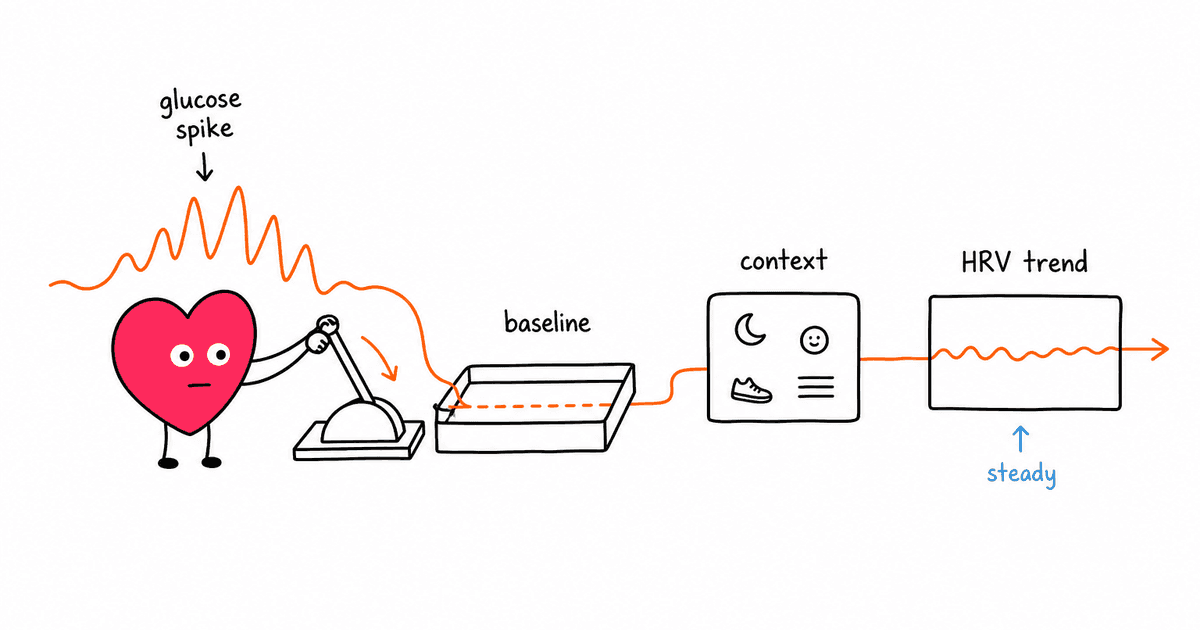
Yes, blood sugar levels directly affect heart rate variability by shifting autonomic nervous system balance. Research shows that glucose spikes activate the sympathetic nervous system, reduce parasympathetic tone, and lower HRV metrics like RMSSD and HF power. Poorly controlled blood sugar is independently associated with reduced HRV, while stable glucose levels support better autonomic function and cardiovascular health.
This connection matters whether you have diabetes or not. Even in healthy individuals, the post-meal glucose rollercoaster can temporarily suppress heart rate variability. Understanding how blood sugar affects your HRV opens up a powerful lever for optimization that many people overlook.
How Blood Sugar Regulation Works
When you eat carbohydrates, your body breaks them down into glucose, which enters the bloodstream. Your pancreas releases insulin to shuttle glucose into cells for energy. In a healthy system, blood sugar rises modestly after meals and returns to baseline within 1 to 2 hours.
Problems arise when this system is disrupted:
- Blood sugar spikes: Consuming refined carbohydrates or large meals causes rapid, exaggerated glucose surges
- Reactive hypoglycemia: After a spike, blood sugar can crash below baseline, triggering stress hormones
- Insulin resistance: Over time, cells become less responsive to insulin, leading to chronically elevated blood sugar and higher baseline insulin levels. It also commonly travels with visceral fat and fatty liver, which can compound the HRV signal.
- Type 2 diabetes: Advanced insulin resistance where blood sugar regulation is significantly impaired. For a deeper look at how diabetes damages the autonomic nervous system, see our guide on diabetes and HRV.
Each of these states creates autonomic stress that your HRV tracker picks up.
The Glucose and Autonomic Nervous System Connection
Your autonomic nervous system responds to blood sugar changes in real time. Here's what happens during a glucose spike:
-
Sympathetic activation: Rising blood sugar triggers sympathetic nervous system activity to manage the metabolic demand. A study published in the Journal of Psychosomatic Research found that glucose intake resulted in increased sympathetic nervous system activity, measured by a drop in pre-ejection period (PEP).
-
Parasympathetic withdrawal: As the sympathetic system ramps up, parasympathetic (vagal) tone decreases. This reduces HRV, particularly the high-frequency component that reflects vagal activity.
-
Inflammatory signaling: Blood sugar spikes trigger oxidative stress and inflammatory cytokines, which further suppress parasympathetic function and promote sympathetic dominance.
-
Hormonal cascade: Large glucose swings trigger cortisol and adrenaline release, compounding the stress response and keeping HRV suppressed.
This isn't just a theoretical framework. Researchers have demonstrated real-time correlations between glucose fluctuations and HRV changes, suggesting your heart's rhythm is remarkably sensitive to what's happening in your bloodstream.
What the Research Shows
Glucose Fluctuations and HRV in Real Time
A 2023 study published in Frontiers in Cardiovascular Medicine used continuous glucose monitoring alongside real-time HRV tracking in diabetic patients. The findings were clear: poorly controlled glucose levels were independently associated with lower HRV. The researchers found a continuous association between hyperglycemia and reduced HRV, meaning the higher blood sugar went, the lower HRV dropped.
Sleep, Glucose, and HRV
Research published in Sleep Medicine (2023) examined the correlation between glucose fluctuations and HRV during sleep. The study found significant correlations between overnight glucose levels and HRV parameters, indicating that glucose instability disrupts the autonomic recovery that normally happens during sleep. This may explain why people with blood sugar issues often report poor sleep quality and wake feeling unrefreshed.
Blood Sugar as a Predictor of Autonomic Function
The DESIR study, a large population-based investigation, evaluated relationships between dysglycemia, insulin resistance, and HRV in a general (non-diabetic) population. The results showed that even mild blood sugar dysregulation was associated with reduced heart rate variability, suggesting this isn't just a concern for people with diabetes.
HRV as a Glucose Biomarker
A study published in Human Physiology (2021) explored whether HRV could serve as a non-invasive marker of blood glucose levels. Researchers found significant correlations between frequency-domain HRV measures and blood glucose during fasting, postprandial (after eating), and postabsorptive periods. This bidirectional relationship suggests that HRV tracking could complement blood sugar monitoring for metabolic health insights.
How Blood Sugar Problems Progressively Damage HRV
The relationship between glucose control and HRV follows a dose-response pattern:
| Stage | Blood Sugar Status | HRV Impact |
|---|---|---|
| Healthy | Normal fasting glucose, moderate post-meal rises | Minimal, temporary post-meal HRV dip |
| Pre-diabetic | Elevated fasting glucose, larger spikes | Noticeably lower baseline HRV, slower recovery |
| Insulin resistant | Chronically elevated insulin and glucose | Significantly reduced HRV, sympathetic dominance |
| Type 2 diabetes | Dysregulated glucose metabolism | Substantially impaired HRV, risk of autonomic neuropathy |
The good news: improving glucose control at any stage can improve HRV. The autonomic nervous system is remarkably responsive to metabolic improvements. If you are improving glucose control with a GLP-1 medication, our guide to semaglutide and HRV explains why resting heart rate and recovery scores can behave oddly at first.
Practical Strategies to Stabilize Blood Sugar for Better HRV
1. Prioritize Protein and Fiber at Every Meal
Protein and fiber slow glucose absorption, flattening the post-meal blood sugar curve. Aim for 25 to 30 grams of protein and at least 8 grams of fiber per meal. Good combinations include:
- Salmon with roasted vegetables and quinoa
- Chicken with a large mixed salad and avocado
- Lentil soup with whole grain bread
- Greek yogurt with berries and nuts
A nutrient-dense diet that emphasizes whole foods naturally supports both stable blood sugar and higher HRV.
2. Eat Carbohydrates Last
Research shows that eating vegetables and protein before carbohydrates at the same meal can reduce the post-meal glucose spike by up to 73%. This simple meal-sequencing strategy requires no dietary restriction, just a change in eating order.
3. Walk After Meals
A 10 to 15 minute walk after eating is one of the most effective strategies for blunting blood sugar spikes. Muscle contractions during walking pull glucose from the bloodstream independent of insulin, reducing the peak glucose level and the resulting autonomic stress. This also explains why regular walking improves baseline HRV.
4. Time Your Carbohydrates Around Exercise
Your muscles are most insulin-sensitive during and after exercise. Consuming carbohydrates during your post-workout window results in smaller glucose spikes compared to eating the same foods at rest. Zone 2 training is particularly effective at improving insulin sensitivity over time.
5. Don't Skip Sleep
Sleep deprivation impairs insulin sensitivity by up to 25% after just one night of poor sleep. This creates larger blood sugar swings the following day, which further reduces HRV, creating a vicious cycle. Prioritizing consistent, quality sleep is essential for both glucose control and HRV.
6. Manage Stress
Cortisol directly raises blood sugar by stimulating gluconeogenesis (glucose production in the liver). Chronic stress keeps blood sugar elevated through this pathway, independent of diet. Stress management through breathing exercises, meditation, and yoga addresses both the glucose and HRV sides of this equation simultaneously.
7. Consider Intermittent Fasting (Carefully)
Intermittent fasting can improve insulin sensitivity and reduce glucose variability in some people. However, extended fasts can also cause reactive hypoglycemia and cortisol spikes in others. Monitor your HRV response carefully and find the fasting window that works for your physiology.
8. Limit Refined Carbohydrates and Added Sugars
This is straightforward but worth emphasizing. Refined carbohydrates (white bread, pastries, sugary drinks, candy) cause the sharpest glucose spikes and the largest HRV disruptions. Replacing them with whole grains, legumes, and vegetables creates a smoother glucose curve throughout the day.
Tracking the Connection
To see the blood sugar and HRV relationship in your own data, use an HRV tracker like the Oura Ring 4 or WHOOP 5 alongside mindful eating practices. Pay attention to:
- Overnight HRV on days with stable eating vs. days with large carbohydrate-heavy meals
- Morning readiness scores after late-night eating vs. earlier dinner cutoffs
- Weekly HRV trends as you implement dietary changes
You don't need a continuous glucose monitor to see the pattern, though pairing one with HRV data provides the clearest picture.
Frequently Asked Questions
How quickly do blood sugar spikes affect HRV?
HRV changes begin within 15 to 30 minutes of a blood sugar spike and can persist for 2 to 4 hours as glucose levels return to baseline. The larger the spike, the more pronounced and prolonged the HRV suppression. This is why post-meal walks are so effective: they blunt the spike before the autonomic response fully develops.
Can improving blood sugar control raise HRV in non-diabetics?
Yes. Even in healthy individuals, reducing glucose variability through dietary changes, meal timing, and exercise improves HRV metrics. The DESIR study showed that mild dysglycemia affects autonomic function in the general population, suggesting that tighter glucose control benefits everyone, not just those with diagnosed metabolic conditions.
Does caffeine affect both blood sugar and HRV?
Caffeine can transiently increase blood sugar by stimulating cortisol and adrenaline release. It also independently affects HRV through sympathetic activation. The combined effect means that caffeine on an empty stomach may cause a larger HRV dip than caffeine consumed with a balanced meal.
Is there a best diet for both blood sugar and HRV?
A Mediterranean-style diet consistently performs well in research for both glucose control and cardiovascular health. It emphasizes vegetables, fruits, whole grains, legumes, fish, olive oil, and nuts while limiting processed foods and added sugars. This pattern provides fiber for glucose stability, omega-3s for inflammation control, and magnesium for autonomic function.
Can I use HRV to detect blood sugar problems?
While HRV alone isn't diagnostic, consistently low or declining HRV, especially after meals, can be an early signal of insulin resistance or glucose dysregulation. If you notice persistent post-meal HRV dips or declining overnight HRV trends, it may be worth getting your fasting glucose, HbA1c, and insulin levels checked by a healthcare provider.
Need a quick read on your HRV number first?
Enter your HRV value, age range, device, and recovery context for a plain-English interpretation before you decide what to do next.
Interpret Your HRV NumberBuild the 30-day plan