Gardening and HRV: How Growing Plants Can Improve Heart Rate Variability
Trying to decode today's HRV number? Use the free interpreter first, then build a practical recovery plan. Interpret your HRV
Most people think of gardening as a pleasant hobby, not a health intervention. But a growing body of research suggests that working with soil and plants activates multiple pathways that directly benefit heart rate variability, from stress hormone reduction to vagus nerve stimulation and moderate-intensity exercise.
Whether you have a backyard vegetable garden, a few containers on a balcony, or access to a community plot, the act of gardening creates a unique combination of physical, psychological, and biological effects that few other activities can match.
What the Research Says About Gardening and Stress
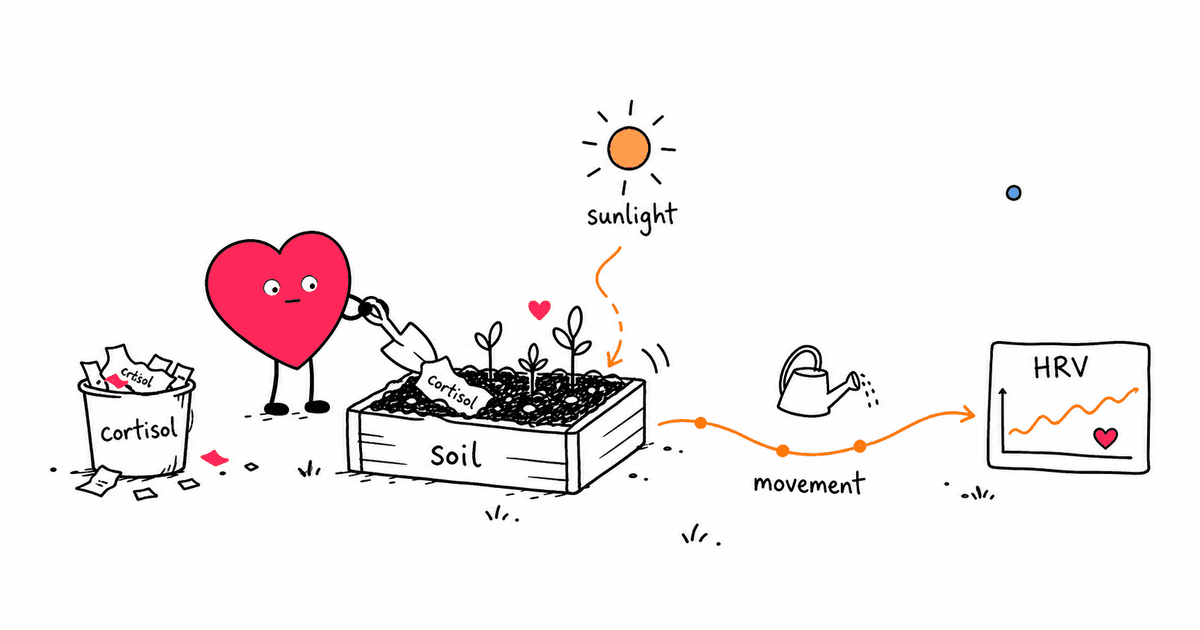
Gardening significantly reduces cortisol levels and activates the parasympathetic nervous system, creating conditions that directly support higher HRV. A landmark study published in the Journal of Health Psychology found that 30 minutes of gardening lowered salivary cortisol levels more effectively than 30 minutes of indoor reading, with participants also reporting more positive mood states afterward.
This matters for HRV because cortisol and chronic stress are among the strongest suppressors of heart rate variability. When cortisol drops, the parasympathetic branch of the autonomic nervous system gains more influence, and HRV rises.
A 2024 meta-analysis in Frontiers in Psychiatry confirmed that horticultural therapy significantly reduces symptoms of depression and anxiety, supported by physiological data showing reductions in cortisol secretion and inflammation following gardening-based interventions.
Gardening as Moderate-Intensity Exercise
One of the most underappreciated aspects of gardening is its physical intensity. Research shows that common gardening tasks fall squarely in the moderate-intensity exercise range:
| Activity | MET Value | Intensity Level |
|---|---|---|
| Watering | 2.5 | Light |
| Weeding | 3.5 | Moderate |
| Raking | 3.8 | Moderate |
| Planting | 4.0 | Moderate |
| Digging | 5.0 | Moderate-Vigorous |
| Pushing a wheelbarrow | 5.5 | Moderate-Vigorous |
| Shoveling soil | 6.0 | Vigorous |
A study analyzing direct measurements of gardeners found that overall gardening physical activity averaged a MET of 3.8, placing it firmly in the moderate-intensity zone. This is significant because moderate exercise is one of the most reliable ways to improve HRV over time.
The CDC and AHA recommend 150 minutes of moderate-intensity aerobic activity per week for cardiovascular health. Three 50-minute gardening sessions or five 30-minute sessions would meet that threshold, providing the cardiovascular stimulus needed to strengthen vagal tone.
The Soil Microbiome Connection
Perhaps the most fascinating pathway between gardening and HRV involves what lives in the dirt. A soil bacterium called Mycobacterium vaccae has been shown to trigger serotonin production in the brain when inhaled or absorbed through skin contact.
Research from the University of Colorado Boulder found that exposure to M. vaccae activates serotonergic neurons and produces anti-inflammatory effects, reducing stress-related behaviors in animal models. While human research is still developing, the implications for HRV are compelling.
Serotonin plays a role in regulating the autonomic nervous system, and the anti-inflammatory effects of soil microbe exposure connect directly to vagal anti-inflammatory pathways. The gut-brain-heart axis may also benefit from microbial diversity gained through regular soil contact.
How Gardening Activates the Vagus Nerve
Gardening engages multiple vagus nerve stimulation pathways simultaneously:
Deep, Rhythmic Breathing
The physical effort of digging, raking, and bending naturally deepens breathing patterns. Slow, diaphragmatic breathing is one of the most direct ways to activate the vagus nerve and improve parasympathetic tone.
Focused Attention and Flow States
Gardening tasks require sustained, gentle focus: pruning, planting seeds, checking for pests. This focused but non-stressful attention mirrors the cognitive state achieved during meditation, which has well-documented effects on vagal tone.
Sensory Engagement
Handling soil, smelling herbs, feeling textures, and hearing birdsong creates rich sensory input that grounds attention in the present moment. This multi-sensory engagement reduces rumination and mental stress, both of which suppress HRV.
Social Bonding in Community Gardens
Community gardening adds social connection, which independently boosts HRV. Shared purpose, casual conversation, and cooperative work activate the ventral vagal complex, the branch of the vagus nerve associated with safety and connection.
Sunlight and Vitamin D Benefits
Gardening is inherently an outdoor activity, which means exposure to natural sunlight. This provides:
- Vitamin D synthesis, which supports cardiovascular function and autonomic regulation
- Circadian rhythm reinforcement through morning and afternoon light exposure
- Blue light exposure from the sky, which helps regulate cortisol rhythms
A 2024 study found that even a small patch of plants in front of homes was associated with healthier daytime cortisol patterns among residents, suggesting that simply being around growing things outdoors shifts stress physiology in a favorable direction.
Gardening vs. Other Outdoor Activities for HRV
How does gardening compare to other activities known to benefit heart rate variability?
| Activity | Cortisol Reduction | Physical Intensity | Nature Exposure | Social Component | Soil Microbe Contact |
|---|---|---|---|---|---|
| Gardening | Strong | Moderate | High | Optional | Yes |
| Walking | Moderate | Light-Moderate | Variable | Optional | No |
| Forest Bathing | Strong | Light | Very High | No | Minimal |
| Yoga | Strong | Light-Moderate | Usually None | Optional | No |
| Community Sports | Moderate | High | Variable | Strong | No |
Gardening is unique in combining all five pathways simultaneously. No other common activity scores well across every category.
Grounding Effects Through Soil Contact
When your hands are in the soil, you are literally grounding yourself to the earth's surface charge. While the research on earthing and HRV is still evolving, preliminary studies suggest that direct skin-to-earth contact may influence autonomic nervous system function.
Gardening provides extended, natural grounding contact without any special equipment. Gardening barefoot or without gloves maximizes this potential benefit.
Getting Started: A Gardening Plan for HRV
You do not need a large yard or extensive experience to benefit. Here is a practical plan based on the research:
Frequency and Duration
- Aim for 3-5 sessions per week, 30-60 minutes each
- This provides enough moderate exercise to influence cardiovascular fitness and HRV
- Even 20 minutes of active gardening lowers cortisol
Best Practices for HRV Benefits
- Garden without gloves occasionally to maximize soil microbe exposure and grounding contact
- Practice nasal breathing while working to enhance parasympathetic activation
- Mix light and moderate tasks (watering plus digging) for varied cardiovascular stimulus
- Garden in the morning when sunlight exposure has the strongest circadian benefits
- Join a community garden if possible, adding social connection benefits
- Leave your phone inside to deepen the attentional and stress-relief benefits
- Grow herbs and vegetables you will eat, connecting gardening to nutritional benefits
Start Small
Container gardening on a patio or windowsill herb garden still provides soil contact, focused attention, and care-giving engagement. Scale up as the habit builds.
Spring as the Optimal Starting Season
March and April offer ideal conditions for starting a gardening practice. Soil preparation, seed starting, and early planting provide plenty of active gardening tasks while day length is increasing and temperatures are warming.
The combination of increasing daylight and outdoor physical activity creates a natural boost to circadian rhythm function, which independently supports healthy HRV patterns.
Tracking Your HRV Response to Gardening
To see how gardening affects your own HRV, track your numbers with a wearable device like the Oura Ring, Whoop, or Apple Watch.
What to Watch For
- Morning resting HRV trend over 4-8 weeks of regular gardening
- Same-day evening HRV on gardening days vs. non-gardening days
- Sleep HRV the night after gardening sessions
- HRV recovery patterns after stressful events on weeks with regular gardening
Most people notice improvements in resting HRV within 4-6 weeks of establishing a consistent gardening routine, particularly if they were previously sedentary or had limited outdoor time.
Who Benefits Most
While gardening benefits HRV across all age groups, certain populations may see especially strong effects:
- Older adults: Gardening is accessible, low-impact, and addresses multiple risk factors for cardiovascular decline. A 2023 BRFSS analysis found gardening was associated with better cardiovascular health status among older adults.
- People with high stress or anxiety: The cortisol-lowering and anxiety-reducing effects of gardening are particularly valuable for those with chronically low HRV from stress.
- Sedentary office workers: Gardening provides moderate physical activity, sunlight, and nature exposure that directly counteract the effects of prolonged sitting and screen time.
- People recovering from depression: Horticultural therapy shows significant effects on depressive symptoms, and the serotonin boost from soil microbes may provide additional support.
Limitations and Considerations
Gardening is not a magic solution, and there are practical factors to consider:
- Seasonal limitations: In colder climates, outdoor gardening may be limited to spring through fall. Indoor growing, seed starting, and winter planning can partially bridge this gap.
- Physical strain: Repetitive motions and awkward postures can cause injury. Proper body mechanics, frequent position changes, and ergonomic tools help prevent issues.
- Allergen exposure: Pollen and mold can trigger allergic reactions in sensitive individuals, which may temporarily suppress HRV through inflammatory pathways.
- Soil and pesticide exposure: Urban soils may contain lead or other heavy metals, and frequent chemical pest-control use can add pesticide exposure. Test soil before growing food, use raised beds with clean soil mixes, and follow labels carefully if you use garden products.
The Bottom Line
Gardening is a uniquely effective activity for improving HRV because it simultaneously engages five distinct pathways: moderate physical exercise, stress hormone reduction, soil microbiome exposure, vagus nerve activation, and outdoor nature contact. The research supports meaningful cortisol reductions within a single session and cardiovascular benefits from regular practice.
For anyone looking to improve their heart rate variability through lifestyle changes, adding 30-60 minutes of gardening several times a week is one of the most accessible and enjoyable interventions available, especially as spring begins.
Frequently Asked Questions
How long does it take for gardening to improve HRV?
Most people notice improvements in resting HRV within 4-6 weeks of gardening 3-5 times per week for 30+ minutes. Acute cortisol reductions happen within a single session, but the cardiovascular fitness adaptations that raise baseline HRV take consistent practice over several weeks.
Does indoor gardening provide the same HRV benefits?
Indoor gardening offers soil microbe exposure and the focused attention benefits, but misses sunlight, vitamin D synthesis, grounding, and the full cardiovascular intensity of outdoor gardening. It is better than no gardening, but outdoor gardening provides a more complete set of HRV-boosting pathways.
Is gardening better than walking for HRV?
They target different pathways. Gardening provides more intense soil microbe exposure, upper body activity, and focused attention. Walking provides more consistent cardiovascular stimulus and is easier to do daily. Combining both is ideal: walk to the garden, work for 30-45 minutes, walk home.
Can gardening replace formal exercise for heart health?
Active gardening (digging, raking, shoveling) can count toward the recommended 150 minutes of weekly moderate-intensity exercise. However, it does not replace the need for cardiovascular endurance training or resistance exercises. Think of gardening as a valuable complement to a broader exercise routine.
Need a quick read on your HRV number first?
Enter your HRV value, age range, device, and recovery context for a plain-English interpretation before you decide what to do next.
Interpret Your HRV NumberBuild the 30-day plan