Grounding (Earthing) and HRV: Can Walking Barefoot Improve Heart Rate Variability?
Trying to decode today's HRV number? Use the free interpreter first, then build a practical recovery plan. Interpret your HRV
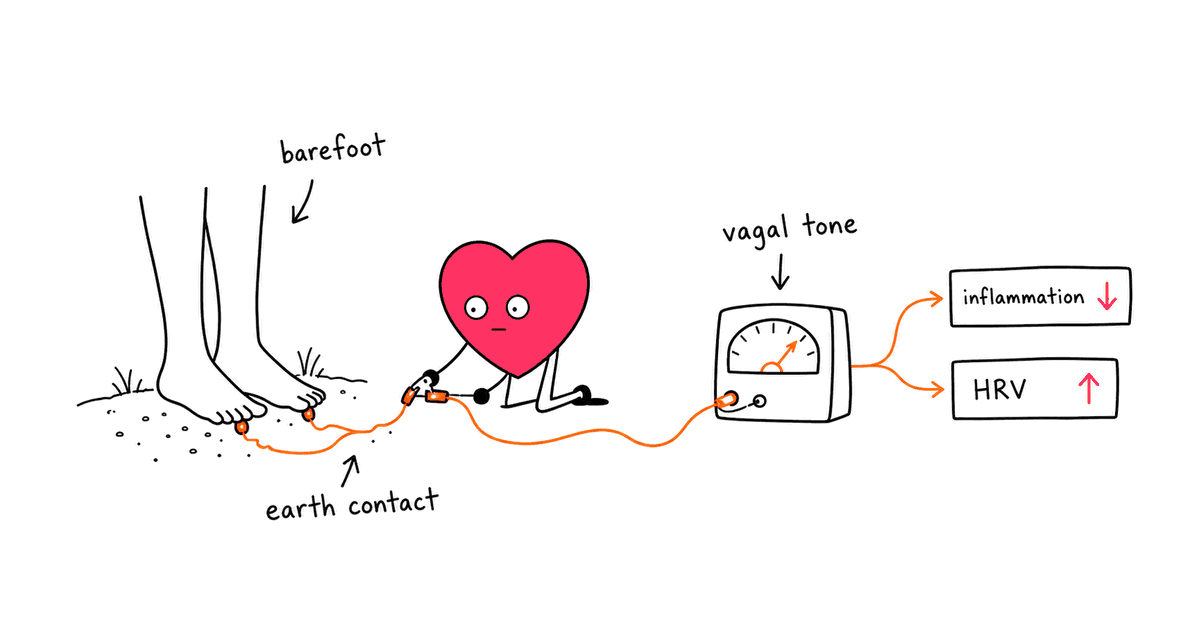
The wellness world has embraced grounding, also known as earthing, as a practice that reconnects the body with the earth's natural electrical charge. But beyond the trend, a growing body of research suggests grounding may have measurable effects on the autonomic nervous system, including heart rate variability.
What Is Grounding (Earthing)?
Grounding, or earthing, is the practice of making direct physical contact with the earth's surface, either by walking barefoot on grass, soil, or sand, or by using conductive devices that transfer the earth's electrons to the body. The theory is that this contact allows free electrons from the earth to neutralize reactive oxygen species and influence autonomic nervous system function.
The concept is rooted in the observation that modern life has largely disconnected humans from the earth's surface. Rubber-soled shoes, insulated flooring, and elevated living spaces mean most people rarely make direct skin-to-ground contact.
How Grounding Affects the Autonomic Nervous System
The autonomic nervous system (ANS) controls involuntary functions like heart rate, digestion, and breathing. It has two branches: the sympathetic (fight-or-flight) and parasympathetic (rest-and-digest) systems. HRV reflects the balance between these two branches.
Research from Chevalier and Sinatra (2011), published in Integrative Medicine: A Clinician's Journal, found that grounding shifted participants' ANS activity from sympathetic toward parasympathetic dominance. This shift was reflected in improved HRV metrics, particularly increased high-frequency (HF) power, which is a marker of vagal tone.
The mechanism appears to involve the transfer of free electrons from the earth, which may reduce inflammation, lower cortisol, and modulate the stress response, all of which influence autonomic balance.
What the Research Shows
Improved HRV and Vagal Tone
The Chevalier and Sinatra study measured HRV in 28 participants during grounded versus ungrounded sessions. Grounded participants showed significant improvements in HRV parameters, suggesting enhanced parasympathetic activity. The changes occurred within minutes of grounding, indicating a rapid physiological response.
Reduced Blood Viscosity
A 2013 study published in The Journal of Alternative and Complementary Medicine found that grounding reduced blood viscosity, a major factor in cardiovascular disease. Thinner blood flows more easily, reducing strain on the heart and potentially contributing to the HRV improvements observed in other studies.
Cortisol Normalization
Research has demonstrated that grounding helps normalize the circadian cortisol rhythm. Elevated nighttime cortisol suppresses parasympathetic activity and lowers HRV. By bringing cortisol levels into a healthier pattern, grounding creates conditions favorable for improved HRV, especially during sleep.
Reduced Inflammation
A comprehensive review published in the Journal of Inflammation Research (2015) found that grounding reduces markers of chronic inflammation. Since systemic inflammation is associated with reduced HRV and increased cardiovascular risk, this anti-inflammatory effect may be one pathway through which grounding improves autonomic function.
Effects in Premature Infants
One particularly notable study examined grounding in a neonatal intensive care unit. Premature infants who were grounded showed immediate improvements in HRV and vagal tone. This finding is significant because it suggests the physiological effects of grounding are not dependent on belief or placebo.
How Long Do You Need to Ground?
Studies have observed physiological changes within different timeframes:
- Within 2 seconds: Changes in skin conductance, indicating immediate ANS response
- Within 30-40 minutes: Measurable improvements in HRV parameters
- After several weeks of daily practice: Normalized cortisol rhythms and improved sleep quality
- Ongoing practice: Cumulative benefits for inflammation and cardiovascular markers
Most researchers recommend at least 20 to 30 minutes of grounding per session for meaningful HRV benefits.
Practical Ways to Practice Grounding
Direct Earth Contact
The simplest approach is walking barefoot on natural surfaces. Grass, soil, sand, and even concrete (which is conductive) all allow electron transfer. Asphalt and wood do not conduct well.
- Walk barefoot in your yard, a park, or on the beach
- Sit or lie on the ground with bare skin touching the surface
- Garden without gloves for hand-to-earth contact
Water-Based Grounding
Water is an excellent conductor. Swimming in natural bodies of water, wading in a stream, or even standing in wet grass provides strong grounding contact.
Indoor Grounding Products
For those who cannot ground outdoors regularly, conductive grounding mats, sheets, and patches are available. These connect to the ground port of an electrical outlet and provide electron transfer while you sleep or work.
Seasonal Considerations
Grounding is easiest in warm months when going barefoot is comfortable. During winter, focus on:
- Indoor grounding products
- Brief barefoot sessions on days above freezing
- Touching trees or rock surfaces with bare hands
Tracking Grounding's Effect on Your HRV
To determine whether grounding is working for you, consistent HRV tracking is essential. Wearables like the Oura Ring 4 or Whoop 5 provide nightly HRV measurements that can reveal trends over time. For help choosing a device, see our best HRV monitors of 2026 guide.
Here is a suggested tracking protocol:
- Baseline week: Track your normal HRV for 7 days without grounding
- Intervention phase: Add 20 to 30 minutes of daily grounding for 2 to 4 weeks
- Compare trends: Look for increases in average HRV, particularly overnight readings
- Control variables: Keep sleep schedule, exercise, and diet consistent during the experiment
Because HRV is influenced by many factors, tracking over weeks rather than days provides more reliable data.
Limitations and Caveats
While the research on grounding and HRV is promising, some important limitations exist:
- Small sample sizes: Most grounding studies involve fewer than 50 participants
- Blinding challenges: It is difficult to create a true placebo for barefoot earth contact
- Publication bias: Positive results are more likely to be published
- Mechanistic questions: The exact pathways through which electron transfer affects the ANS are not fully understood
- Industry funding: Some research has been funded by companies selling grounding products
Grounding should be viewed as a complementary practice rather than a primary intervention. It works best alongside established HRV-boosting strategies like quality sleep, regular exercise, and stress management.
Combining Grounding with Other HRV Practices
Grounding pairs naturally with several other evidence-based HRV practices:
- Breathing exercises: Practice slow breathing while grounding outdoors for a combined parasympathetic boost
- Meditation: Meditate barefoot in nature for enhanced vagal activation
- Walking: Swap your usual walking route for a barefoot session on grass
- Yoga: Practice outdoor yoga barefoot on grass for grounding combined with gentle movement
- Nature exposure: Grounding adds a physical dimension to the well-documented benefits of time in nature
- Cold exposure: Walking barefoot on cool morning grass combines mild cold stimulus with grounding
The Bottom Line
Yes, grounding appears to improve HRV by shifting the autonomic nervous system toward parasympathetic dominance, reducing blood viscosity, normalizing cortisol rhythms, and lowering inflammation. While the research base is still growing and study sizes are small, the consistency of findings across multiple investigations is encouraging.
Grounding is free, accessible, and carries virtually no risk. Whether or not the electron transfer theory proves to be the full explanation, spending 20 to 30 minutes barefoot outdoors combines grounding with nature exposure, light physical activity, and stress reduction, all of which independently benefit HRV. For a comprehensive overview of all the ways to boost your readings, see our guide on how to improve HRV.
Frequently Asked Questions
Does grounding work through shoes?
Standard rubber-soled shoes block the earth's electrical connection. Leather-soled shoes, special grounding shoes with conductive plugs, or going barefoot are the only ways to maintain contact. Thin, wet socks on grass can also work.
How quickly can grounding improve HRV?
Studies have detected ANS changes within seconds and measurable HRV improvements within 30 to 40 minutes of grounding. However, lasting improvements in baseline HRV typically require consistent daily practice over several weeks.
Is indoor grounding as effective as outdoor grounding?
Indoor grounding products (mats, sheets) have been used in several studies and do show physiological effects. However, outdoor grounding adds the benefits of nature exposure, sunlight (which supports vitamin D production), and fresh air, which may provide additional HRV benefits beyond electron transfer alone.
Can grounding help with sleep-related HRV?
Research suggests grounding helps normalize cortisol rhythms, which can improve sleep quality. Since much of your HRV recovery happens during deep sleep, better sleep architecture from grounding may lead to higher overnight HRV readings.
Is grounding safe for everyone?
Grounding is generally safe for healthy individuals. People with implanted electrical devices (like pacemakers) should consult their doctor before using indoor grounding products, as the electrical connection, though minimal, is a theoretical concern. Outdoor barefoot grounding poses no known risks beyond normal caution about terrain.
Need a quick read on your HRV number first?
Enter your HRV value, age range, device, and recovery context for a plain-English interpretation before you decide what to do next.
Interpret Your HRV NumberBuild the 30-day plan