Allergies and HRV: How Seasonal Allergies Affect Your Heart Rate Variability
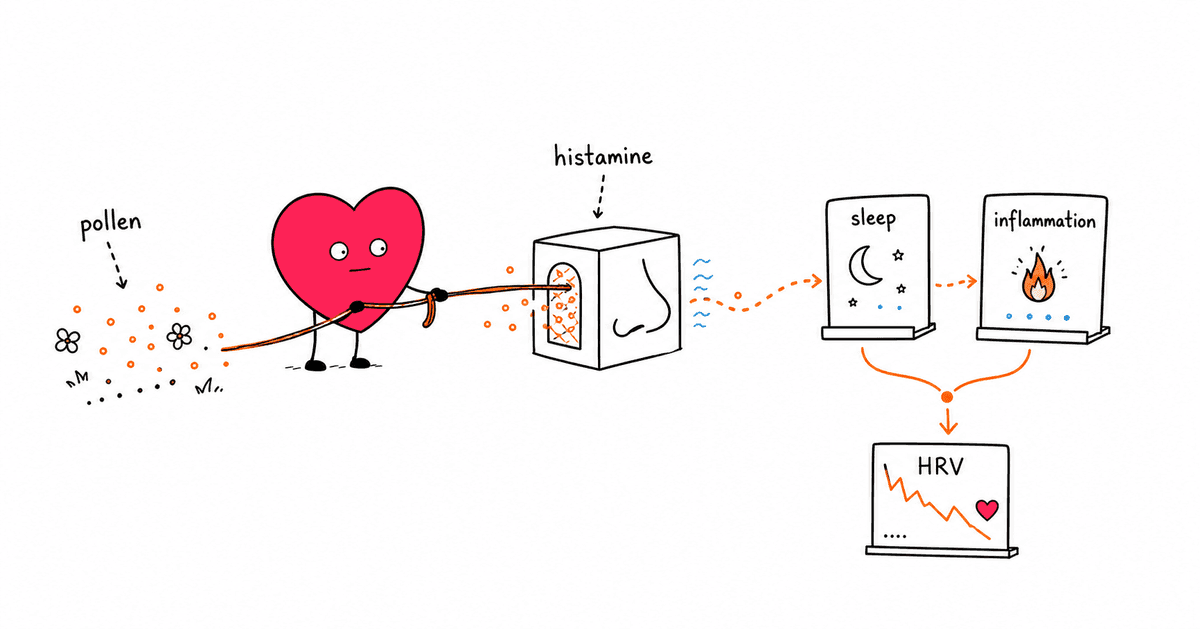
If you track your HRV consistently, you may have noticed a frustrating pattern: every spring (or fall), your numbers take an unexplained dip. You are sleeping the same hours, training the same way, and eating well, but your HRV tells a different story. The culprit could be something most people overlook when reviewing their health data: seasonal allergies.
Allergic rhinitis affects roughly 10 to 30 percent of the global population, and research shows it does far more than cause sneezing and itchy eyes. Allergies trigger a cascade of autonomic nervous system changes that directly impact your heart rate variability, sometimes for weeks at a time.
If pollen season overlaps with smoke, ozone, or traffic exposure where you live, poor air quality and broader air pollution can deepen the same HRV dip.
How Allergies Affect the Autonomic Nervous System
Allergic reactions shift your autonomic nervous system toward parasympathetic dominance in the nasal passages while simultaneously triggering systemic inflammation that disrupts overall autonomic balance. This two-pronged effect makes allergies uniquely disruptive to HRV.
When your immune system encounters an allergen like pollen, it activates mast cells that release histamine and other inflammatory mediators. This triggers what researchers call a "parasympathetic reflex" in the upper airways: the vagus nerve drives increased mucus production, nasal congestion, and sneezing.
A 2007 study in Military Medicine found that patients with allergic rhinitis showed significantly increased parasympathetic HRV markers (RMSSD and pNN50) compared to healthy controls. A 2023 study in the Journal of Korean Medical Science confirmed these findings, showing that allergic rhinitis was associated with "sympathetic withdrawal," particularly in women.
This might sound like good news, since higher parasympathetic activity often correlates with better HRV. But the relationship is more complex than that.
The Histamine Connection
Histamine is the primary chemical mediator behind allergy symptoms, and its effects reach far beyond your sinuses. When mast cells release histamine throughout your body, it influences your cardiovascular system in several ways:
- Increased heart rate: Histamine stimulates H2 receptors in the heart, which can elevate resting heart rate
- Blood vessel dilation: Histamine causes vasodilation, which can lower blood pressure and trigger compensatory sympathetic responses
- Inflammatory signaling: Histamine activates pro-inflammatory pathways that contribute to systemic inflammation
- Disrupted autonomic balance: The combined cardiovascular effects create conflicting autonomic signals that reduce coherent HRV patterns
Research published in Allergy and Asthma Proceedings has shown that autonomic dysfunction in allergic rhinitis patients correlates with both disease severity and duration. The longer and more severe your allergies, the greater the impact on autonomic regulation.
Why Your HRV Drops During Allergy Season
Understanding the specific mechanisms helps explain why your HRV numbers may decline during peak pollen season:
Sleep Disruption
Allergies are one of the most common causes of poor sleep quality, and sleep quality is one of the strongest predictors of overnight HRV. Nasal congestion forces mouth breathing during sleep, which reduces the parasympathetic activity that drives healthy nocturnal HRV recovery. A congested nose can also contribute to sleep apnea or worsen existing apnea, further suppressing HRV. If your allergies also come with wheezing or chest tightness, our guide to asthma and HRV covers that overlap in more detail.
Chronic Low-Grade Inflammation
Allergies trigger the release of cytokines, prostaglandins, and leukotrienes beyond just histamine. This systemic inflammatory response activates the same pathways that lower HRV during illness or infection. Your body's vagal anti-inflammatory pathway works overtime to manage the immune response, and the added burden shows up as reduced HRV.
Breathing Pattern Changes
Nasal congestion alters your breathing patterns, and breathing has a direct effect on HRV. Restricted nasal airflow reduces the respiratory sinus arrhythmia (the natural variation in heart rate linked to breathing cycles) that accounts for a significant portion of your HRV signal. Mouth breathing, which is common during allergy season, bypasses the nasal-vagal reflex that helps maintain parasympathetic tone.
Medication Effects
Many common allergy medications can influence HRV, though the research is mixed. First-generation antihistamines (such as diphenhydramine) have anticholinergic properties that may blunt parasympathetic activity. Second-generation antihistamines (such as cetirizine and loratadine) appear to have minimal direct effects on HRV, though one study in International Journal of Clinical Practice found no significant correlation between antihistamine use and HRV parameters. If your allergy product has a "D" on the label, it may include an oral decongestant. Our guide to decongestants and HRV explains why pseudoephedrine and similar products can raise heart rate or disrupt sleep in some people.
Stress and Fatigue
The cumulative burden of poor sleep, constant symptoms, and reduced physical performance creates psychological stress that compounds the physiological effects. Allergy sufferers report higher levels of fatigue, irritability, and reduced concentration, all of which are associated with sympathetic dominance and lower HRV.
Using HRV to Track Your Allergy Burden
Your HRV data can serve as an objective measure of how much allergies are affecting your body, even when symptoms feel manageable. Here is how to use your wearable data effectively:
Establish a Pre-Season Baseline
Start tracking your HRV trends several weeks before your typical allergy season begins. Most HRV monitors provide rolling averages that smooth out daily fluctuations. Knowing your baseline makes it easier to quantify how much pollen season affects your recovery.
Watch for the Drop
A sustained decline of 5 to 15 percent in your HRV baseline during allergy season is common among allergy sufferers. If you see a larger decline, your allergy management strategy may need adjustment. Compare your HRV trends year over year to identify patterns.
Correlate with Pollen Counts
Many weather apps now include local pollen forecasts. Comparing your daily HRV with pollen counts can help you identify which types of pollen affect you most and plan accordingly.
Adjust Training Load
When your HRV shows a sustained decline during allergy season, consider reducing your training intensity. Overtraining combined with allergy-driven inflammation creates a double burden on your recovery systems. Using your HRV to guide training intensity during allergy season can prevent the compounding effects of exercise stress and allergic inflammation.
How to Protect Your HRV During Allergy Season
While you cannot eliminate allergies entirely, several strategies can minimize their impact on your autonomic nervous system and HRV:
Optimize Nasal Breathing
Nasal saline irrigation (using a neti pot or saline spray) helps clear allergens from your nasal passages and maintain nasal breathing. Keeping nasal passages open is critical for sleep quality and the nasal-vagal reflex that supports healthy HRV. Consider using nasal strips at night if congestion is disrupting your sleep.
Time Your Outdoor Activities
Pollen counts are typically highest in the early morning and on warm, windy days. Scheduling outdoor exercise for late afternoon or evening can reduce allergen exposure during training. Checking local pollen forecasts before planning outdoor workouts helps you make informed decisions.
Manage Indoor Air Quality
Using a HEPA air purifier in your bedroom can significantly reduce nighttime allergen exposure, helping protect your overnight HRV recovery. Keeping windows closed during high pollen days, showering before bed, and changing clothes after outdoor activities all reduce the allergen load your immune system has to process.
Support Your Vagal Tone
Since allergies create autonomic stress, actively supporting vagal tone can help counterbalance the effects. Breathing exercises like slow diaphragmatic breathing (aim for 6 breaths per minute) stimulate the vagus nerve and can reduce the inflammatory response. Regular meditation practice has also been shown to improve vagal tone and may help moderate allergy-related autonomic disruption.
Address Sleep Quality
Because allergy-related sleep disruption is one of the primary drivers of HRV decline, addressing it directly yields significant benefits. Elevating your head slightly during sleep can reduce nasal congestion. Using a HEPA filter in the bedroom reduces overnight allergen exposure. If congestion is severe, a second-generation antihistamine taken before bed can improve sleep quality without significantly affecting HRV.
Consider Anti-Inflammatory Nutrition
Certain dietary approaches may help manage the inflammatory component of allergies. Omega-3 fatty acids have anti-inflammatory properties that can moderate the immune response. Quercetin, a flavonoid found in onions, apples, and berries, acts as a natural mast cell stabilizer and may reduce histamine release. Maintaining good gut health also supports balanced immune function, since roughly 70 percent of your immune system resides in the gut.
Stay Hydrated
Adequate hydration is essential during allergy season. Dehydration thickens mucus and worsens congestion, while proper hydration helps thin secretions and supports cardiovascular function that underpins healthy HRV.
The Vagus Nerve's Role in Allergy Regulation
The connection between HRV and allergies runs deeper than symptoms and sleep disruption. The vagus nerve, which is the primary driver of HRV through its parasympathetic influence on heart rate, also plays a direct role in regulating immune responses through the cholinergic anti-inflammatory pathway.
When vagal tone is strong (reflected by higher HRV), the vagus nerve releases acetylcholine that helps suppress excessive immune activation. This means that maintaining healthy HRV may actually help moderate your allergy symptoms, creating a positive feedback loop: better vagal tone leads to less inflammatory overreaction, which leads to fewer symptoms, better sleep, and sustained HRV.
Conversely, when chronic allergies suppress your HRV and weaken vagal tone, the resulting reduction in immune regulation can make allergies worse over time. This negative spiral underscores the importance of actively managing both your allergies and your HRV-supporting habits during peak season.
When to See a Doctor
While mild HRV fluctuations during allergy season are normal, certain patterns warrant medical attention:
- Your HRV drops by more than 20 percent and does not recover for several weeks
- You develop new cardiovascular symptoms alongside allergy flares (palpitations, dizziness, exercise intolerance)
- Over-the-counter allergy management is not providing relief
- Your wearable data shows significant increases in resting heart rate or changes in heart rate recovery patterns
Allergies can occasionally trigger more serious autonomic responses, and an allergist or immunologist can help develop a targeted treatment plan that addresses both symptoms and underlying autonomic dysfunction.
The Bottom Line
Seasonal allergies are a hidden driver of HRV decline that affects millions of people every year. Through histamine release, autonomic nervous system disruption, sleep impairment, breathing pattern changes, and systemic inflammation, allergies create a multi-layered assault on the physiological systems that determine your heart rate variability.
The good news is that HRV tracking provides an objective window into how much allergies are affecting your body, and the strategies for protecting your HRV during allergy season, from nasal breathing optimization to anti-inflammatory nutrition, benefit both your autonomic health and your allergy symptoms.
If your HRV takes a predictable dip every spring, now you know why and what to do about it.
Need a quick read on your HRV number first?
Enter your HRV value, age range, device, and recovery context for a plain-English interpretation before you decide what to do next.
Interpret Your HRV NumberBuild the 30-day plan