Asthma and HRV: How Asthma Affects Heart Rate Variability
Trying to decode today's HRV number? Use the free interpreter first, then build a practical recovery plan. Interpret your HRV
Asthma is usually framed as a lung problem. That is true, but it is not the whole picture.
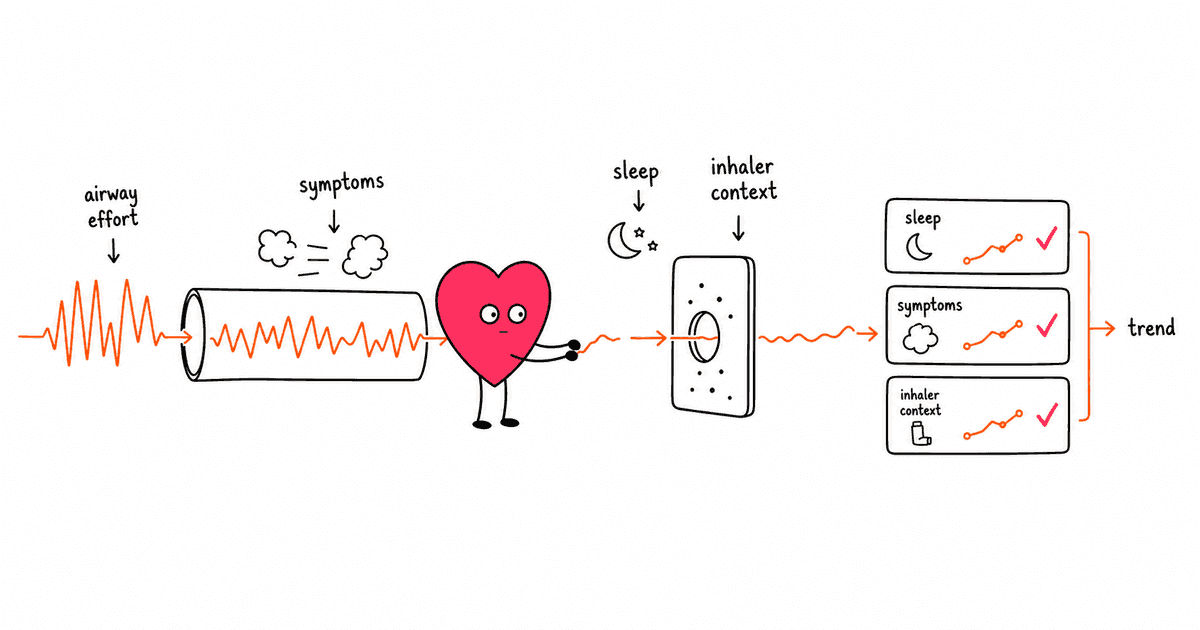
Asthma also involves the autonomic nervous system, inflammation, sleep quality, and exercise tolerance, all things that can move your heart rate variability. If you track HRV with a wearable and notice your recovery scores getting worse during symptom flares, allergy season, smoky days, or rough nights of sleep, your lungs may be part of the story. Asthma is different from chronic obstructive pulmonary disease, but both show how breathing effort can alter recovery data; see COPD and HRV for that separate context.
That makes this worth paying attention to. CDC data show that 26.8 million people in the United States had current asthma in 2022, and 42.4% had at least one asthma attack in the prior 12 months.
This guide explains how asthma can affect HRV, why the research sometimes looks contradictory, and how to use your data without turning every low score into a mini crisis.
Does Asthma Affect HRV?
Yes, asthma can affect HRV, but the pattern is not as simple as "asthma always lowers HRV." Asthma is associated with altered autonomic regulation, and HRV often worsens during symptom flare-ups, poor sleep, uncontrolled disease, or periods of higher medication use. At the same time, studies do not show one perfectly consistent pattern across every age group and every asthma phenotype.
A 2023 systematic review and meta-analysis in Pediatric Pulmonology looked at 15 studies in children and adolescents and found that asthma was associated with lower HRV and less favorable autonomic modulation overall. In adults, some studies find worse HRV in uncontrolled asthma than in controlled asthma, while others show that once you account for heart rate and medication use, the gap versus healthy controls gets smaller.
That may sound messy, but it is actually useful. The practical takeaway is that asthma control, sleep, symptoms, and treatment context matter more than the label alone.
Why Asthma Can Change HRV
Asthma and HRV overlap because the same nervous system helps regulate both airway tone and heart rhythm.
1. Airway inflammation raises physiological stress
When your airways are inflamed, your body has to work harder to breathe. That increases overall physiological strain, especially during flares or poorly controlled periods. Inflammation also interacts with the immune system, and chronic inflammatory signaling tends to push HRV in the wrong direction.
This is one reason asthma can look similar to other recovery disruptors. Your wearable is not measuring your lungs directly. It is picking up the downstream effect of a body under more stress.
2. Breathing mechanics influence HRV directly
Breathing speed and HRV are tightly linked. Respiratory sinus arrhythmia, the natural rise and fall in heart rate with each breath, is one of the core contributors to short-term HRV.
If asthma changes how you breathe, with faster breathing, shallow breathing, chest tightness, coughing, or more time mouth breathing, your HRV signal can change too. This is also why breathing exercises for HRV can help some people, though they are not a substitute for proper asthma treatment.
3. Nocturnal symptoms can quietly wreck overnight recovery
Asthma is often worse at night. If coughing, wheezing, or chest tightness wakes you up, your overnight HRV may drop even if you technically stayed in bed long enough.
That matters because most consumer wearables rely heavily on overnight data. Poor sleep, more awakenings, and harder breathing can all distort your recovery picture. If you want the sleep side of the equation, read HRV and sleep and sleep deprivation and HRV.
4. Asthma control changes the signal
One of the more interesting adult studies, published in BMC Pulmonary Medicine, found that people with controlled asthma had higher HRV than those with uncontrolled asthma. But after adjusting for heart rate and anti-asthma treatment, differences versus healthy controls were no longer significant.
That is a good reminder not to oversimplify the physiology. A low HRV reading is not a diagnosis of uncontrolled asthma. It is one clue, and it becomes more useful when it lines up with symptoms, sleep disruption, or more frequent rescue inhaler use.
The Vagal Tone Confusion
Asthma creates a weird but important HRV nuance.
You will sometimes see research describing increased parasympathetic or vagal activity in asthma. That can sound contradictory because higher vagal tone is often framed as a good thing for HRV.
The catch is that airway vagal activity and heart-based HRV metrics are not interchangeable.
In asthma, parasympathetic signaling in the airways can contribute to bronchoconstriction and mucus production. That does not automatically mean your overall autonomic state is calm, resilient, or well recovered. You can have asthma-related airway vagal effects while still dealing with inflammation, poor sleep, elevated heart rate, and a weaker-looking HRV trend.
So if your wearable says recovery is poor, do not talk yourself out of it just because you read that asthma can involve more vagal activity. Different systems, different measurement context.
How Asthma Medications Can Affect HRV and Heart Rate
Medication is one of the biggest reasons asthma-related HRV data needs context.
A 2024 sensor-based observational study in JMIR Cardio found that long-acting beta-2 agonists did not have a clinically relevant sustained effect on daily heart rate, with an average difference of about 0.8 beats per minute. Short-acting beta-2 agonists, however, were different: heart rate increased sharply around rescue inhaler use and took about 138 minutes to return to normal range.
That does not mean rescue medication is bad. It means your wearable data around inhaler use can look noisier than usual.
Practical rule: do not change prescribed asthma medications because of an HRV score. Use the score as context, not as a reason to freelance your treatment plan.
What a Low HRV Might Mean If You Have Asthma
If you have asthma, a lower than usual HRV can reflect several things:
- worsening asthma control
- a recent flare or attack
- nighttime symptoms and worse sleep
- increased rescue inhaler use
- seasonal allergies
- poor air quality or air pollution
- an upper respiratory infection
- hard training on top of an already stressed system
That is why single-day HRV readings are easy to overread. The better move is to look for a cluster of signals:
- lower HRV
- higher resting heart rate
- worse sleep
- more symptoms
- more frequent inhaler use
- reduced exercise tolerance
When those line up, the data is telling a much clearer story.
How to Use HRV More Intelligently With Asthma
Track trends, not drama
A one-night HRV dip is rarely interesting by itself. Look at your rolling baseline over one to two weeks. If HRV is down for several days and symptoms are up, that is more actionable than a single ugly score after a bad night.
Compare HRV with symptoms and inhaler use
Your wearable becomes much more useful if you compare it against real-world markers:
- nighttime awakenings
- chest tightness or wheezing
- need for rescue inhaler
- exercise tolerance
- exposure to pollen, smoke, or cold dry air
That turns HRV into a decision-support tool instead of a vague stress number.
Be careful with training during flare-prone periods
If HRV is falling and your asthma symptoms are getting louder, it may be a good week to back off intensity. That does not mean stop moving. It means avoid pretending your body is fresh when it clearly is not.
Easy walking, light zone 2 training, or mobility work often make more sense than stacking HIIT on top of bad sleep and irritated airways.
Pay extra attention at night
Because so much HRV data is overnight, asthma symptoms that seem "minor" can still show up clearly in your recovery metrics. If you keep seeing low HRV with poor sleep, it is worth asking whether nighttime asthma, snoring, or sleep apnea is part of the picture.
Practical Ways to Support Both Asthma Control and HRV
1. Treat asthma control as the main lever
This is the big one.
If your asthma is poorly controlled, your HRV strategy is not going to out-breathe or out-supplement it. Work with your clinician, follow your asthma plan, and take symptom patterns seriously. Better control usually gives you a cleaner recovery signal.
2. Reduce trigger load
Common asthma triggers, smoke, poor air quality, allergens, cold air, and respiratory infections, also tend to be bad for HRV. That overlap is useful.
If smoke or pollution is high, indoor training may be the smarter call. If pollen is crushing you, allergy management can help your lungs and your HRV at the same time.
3. Protect sleep aggressively
For many people with asthma, sleep is where the hidden damage happens.
Prioritize a cool, clean bedroom, consistent sleep timing, and better trigger control at night. If you wake up coughing or wheezing, that is not just a comfort issue. It is a recovery issue.
4. Use breathing work carefully
Gentle breathing drills can help some people settle breathing patterns and nervous system arousal. They are most useful when you are stable, not when you are actively tight and symptomatic.
Slow nasal breathing and relaxed exhalation may be helpful. Long breath holds or aggressive protocols are a bad idea if they trigger symptoms. Keep the ego out of it.
5. Build fitness consistently, not heroically
Regular exercise tends to help both asthma control and HRV over time, especially when it improves aerobic fitness, body composition, and stress tolerance. The mistake is turning every low-HRV week into a punishment cycle.
Consistency beats random brutality.
Best Wearables for Tracking HRV With Asthma
If you want to spot patterns between symptoms, sleep, and recovery, these are solid options:
- Oura Ring: Great for overnight HRV and sleep trends.
- WHOOP: Useful if you want HRV, sleep, strain, and recovery in one place.
- Apple Watch Ultra: Strong option if you already live in the Apple ecosystem.
- Garmin: Good fit if you also care about training load, exercise volume, and multi-day battery life.
For a fuller breakdown, see our guide to the best HRV monitors for 2026.
When to Talk With a Clinician
HRV can be a helpful signal, but it is not a substitute for asthma care.
Check in with a clinician if you notice:
- a sustained HRV drop plus worsening symptoms
- more frequent rescue inhaler use
- repeated nighttime awakenings from coughing or wheezing
- falling exercise tolerance
- rising resting heart rate without an obvious reason
If you are having significant breathing difficulty, chest tightness that is not resolving, or any acute severe symptoms, treat that as an urgent medical issue, not a wearable interpretation problem.
Key Takeaways
- Asthma can affect HRV, especially during flare-ups, poor sleep, higher symptom burden, and heavier rescue inhaler use.
- The research is real but not perfectly uniform. In children and adolescents, asthma is generally associated with lower HRV. In adults, asthma control and medication context matter a lot.
- Airway vagal activity is not the same thing as "good HRV." That is where a lot of the confusion comes from.
- Rescue inhalers can temporarily raise heart rate, which can make HRV and recovery data look noisier for a few hours.
- The smartest way to use HRV with asthma is as a trendline, alongside symptoms, sleep, resting heart rate, and trigger exposure.
- Do not change asthma treatment because of a wearable score. Use HRV as context, not as a replacement for medical care.
If your HRV keeps dipping during weeks when your breathing, sleep, and symptoms are worse, that is not your wearable being dramatic. It is often your nervous system telling you the same story your lungs already know.
Need a quick read on your HRV number first?
Enter your HRV value, age range, device, and recovery context for a plain-English interpretation before you decide what to do next.
Interpret Your HRV NumberBuild the 30-day plan