Shift Work and HRV: How Night Shifts Affect Heart Rate Variability (and What to Do About It)
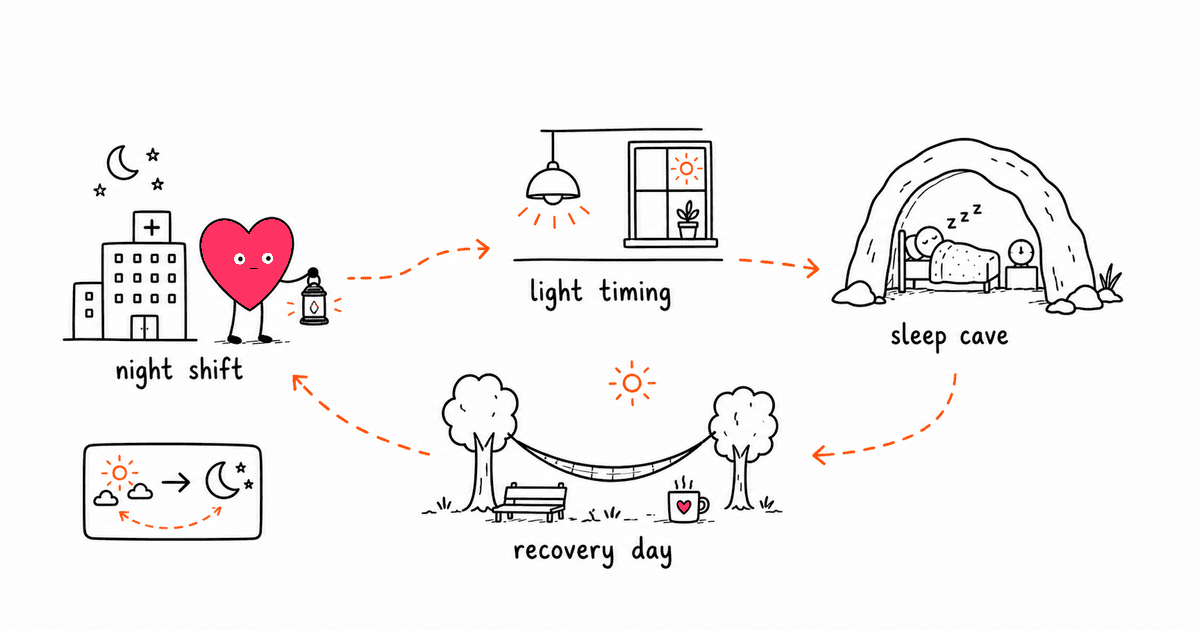
Roughly 20% of the global workforce performs some form of shift work, including nurses, first responders, factory workers, and tech professionals on overnight rotations. If you're one of them, you may have noticed your HRV numbers tell a different story than your day-shift counterparts.
Research consistently shows that night shift work reduces HRV, shifts autonomic balance toward sympathetic dominance, and increases cardiovascular risk by up to 40%. The good news: understanding why this happens gives you concrete tools to fight back.
How Does Shift Work Affect HRV?
Shift work, particularly night shifts and rotating schedules, lowers HRV by disrupting your circadian rhythm and pushing the autonomic nervous system toward chronic sympathetic activation. A 2020 systematic review of 34 studies confirmed that night shift work increases sympathetic influence on heart rate variability while suppressing parasympathetic (vagal) activity.
Your circadian rhythm is a 24-hour internal clock that regulates nearly every physiological process, including autonomic nervous system balance. During the day, your body naturally favors sympathetic ("fight or flight") activity for alertness. At night, parasympathetic ("rest and digest") activity takes over, raising HRV and promoting recovery.
Night shifts flip this pattern. You're asking your body to be alert and active when every internal signal says it's time to rest. The result is a mismatch between your circadian clock and your actual schedule, a condition researchers call "circadian misalignment."
The Science Behind the HRV Drop
Several mechanisms explain why shift work lowers HRV:
Circadian Misalignment
Your suprachiasmatic nucleus (SCN), the brain's master clock, continues running on a day-night cycle even when you work overnight. This creates a persistent conflict between your internal clock and external demands. If you want a deeper look at the mechanism, see our guide to circadian rhythm and HRV. A 2022 study in the International Journal of Environmental Research and Public Health found that parasympathetic HRV indices were significantly lower during sleep after night shifts compared to recovery days.
Disrupted Melatonin Production
Melatonin does more than help you fall asleep. It also supports parasympathetic nervous system activity and has antioxidant effects on the cardiovascular system. Light exposure during night shifts suppresses melatonin at exactly the wrong time, reducing one of the body's key drivers of high HRV.
Chronic Sleep Debt
Shift workers average 1 to 4 fewer hours of sleep per 24-hour cycle compared to day workers. This sleep deprivation directly suppresses vagal tone. Even after recovery days, many shift workers never fully restore their baseline HRV.
Elevated Cortisol and Inflammation
Night shift work disrupts the normal cortisol rhythm, leading to elevated cortisol at inappropriate times. This promotes chronic low-grade inflammation, which further suppresses HRV. A study in Scientific Reports found that night shift workers had elevated inflammatory markers including monocytes and leukocytes.
What the Research Says: Key Findings
Here's a summary of the most significant research on shift work and HRV:
| Study | Key Finding |
|---|---|
| Systematic review, 2020 (34 studies) | Night shift work increases sympathetic influence on HRV across multiple metrics |
| Journal of Cardiovascular Development and Disease, 2024 | Night shift nurses showed reduced HRV compared to age- and gender-matched day workers |
| Chronobiology International, 2022 | Parasympathetic HRV indices dropped during sleep after night shifts vs. recovery days |
| BMC Nursing, 2024 | Nurses post-night shift showed impaired cardiac autonomic regulation during exercise testing |
| UK Biobank study (238,661 participants) | Night shift workers had 11% higher cardiovascular event risk and 25% higher mortality risk |
The pattern is clear: night shift work consistently lowers HRV indices associated with parasympathetic activity, and the effect scales with the number of consecutive night shifts.
How Many Night Shifts Does It Take to Impact HRV?
Research from Chronobiology International compared HRV after two, four, and seven consecutive night shifts. The findings were sobering:
- HRV dropped measurably after just two consecutive night shifts
- The decline deepened with four and seven consecutive shifts
- Recovery day sleep showed partial, but not full, restoration of parasympathetic activity
- The timing of the lowest heart rate shifted, indicating disrupted circadian regulation
This suggests that even short stretches of night shifts impact autonomic function, and longer stretches make it progressively worse.
Rotating Shifts vs. Permanent Night Shifts
Not all shift work affects HRV equally. There are important differences:
Rotating Shifts
Workers who cycle between day, evening, and night shifts face the most disruption. The body never fully adapts because the schedule keeps changing. Studies suggest rotating shift workers have the worst HRV profiles and the highest cardiovascular risk.
Permanent Night Shifts
Permanent night shift workers may partially adapt their circadian rhythm over time, though only about 25% ever achieve full adaptation. Those who do adapt show better HRV outcomes than rotating shift workers. However, days off often disrupt this adaptation when workers revert to a daytime schedule.
12-Hour vs. 8-Hour Shifts
Longer shifts (12 hours) compress the work week into fewer days, allowing more recovery time. But the extended hours create more acute fatigue and sympathetic activation per shift. Research is mixed on which format produces better HRV outcomes overall.
10 Strategies to Protect Your HRV as a Shift Worker
1. Manage Light Exposure Strategically
Light is the most powerful circadian signal. Use bright light during the first half of your night shift to promote alertness and begin circadian shifting. The CDC recommends intermittent bright light exposure during night shifts to support adaptation.
After your shift, wear blue-light-blocking sunglasses on the commute home. This prevents morning sunlight from resetting your clock before you sleep. Even this simple step can improve daytime sleep quality and support HRV recovery.
2. Prioritize Sleep Environment
Create a completely dark, cool bedroom for daytime sleeping. Blackout curtains are essential, not optional. Target a room temperature of 65 to 68 degrees Fahrenheit (18 to 20 degrees Celsius).
Use white noise or earplugs to block daytime sounds. Consistency matters: try to sleep at the same time after each shift, even on days off when possible. These basics matter because sleep quality and HRV are tightly connected, even when your sleep window happens during the day.
3. Use Strategic Napping
A 20 to 30 minute nap before your shift (sometimes called a "prophylactic nap") can boost parasympathetic activity heading into work. If allowed, a short nap during breaks can also help. Research shows that napping supports vagal tone and improves alertness.
Avoid napping longer than 30 minutes, which can cause sleep inertia and interfere with your main sleep period.
4. Time Your Exercise Carefully
Regular exercise improves HRV, but timing matters for shift workers. Exercise during the first half of your waking period, whether that's the afternoon before a night shift or the morning before a day shift.
Avoid intense exercise within 3 to 4 hours of planned sleep. Moderate activities like walking, yoga, or stretching can support recovery without overstimulating the sympathetic nervous system.
5. Consider Melatonin Timing
Low-dose melatonin (0.5 to 3 mg) taken 30 minutes before your planned sleep time can help shift your circadian rhythm. A study on shift work recovery found that strategic melatonin use, combined with timed light exposure, improved sleep quality and reduced circadian disruption.
Consult your doctor before starting melatonin, especially if you take other medications.
6. Practice Breathing Exercises Before Sleep
Breathing exercises are one of the fastest ways to activate the parasympathetic nervous system. Spend 5 to 10 minutes with slow, diaphragmatic breathing before bed. Techniques like 4-7-8 breathing or resonance frequency breathing (around 6 breaths per minute) can measurably increase HRV within minutes.
This is particularly valuable after high-stress night shifts when your sympathetic system is still running hot.
7. Watch Your Caffeine Window
Caffeine is a shift worker's best friend and worst enemy. Use it strategically: consume caffeine only during the first half of your shift. Avoid it entirely during the 6 hours before planned sleep.
Caffeine's half-life is 5 to 6 hours, meaning a coffee at 3 AM could still be active at 8 AM when you're trying to sleep.
8. Protect Recovery Days
Your days off are when HRV recovers. Resist the urge to immediately flip back to a daytime schedule on the first recovery day. Instead, gradually shift your sleep window over 2 to 3 days. Research shows that abrupt schedule changes create a "social jet lag" effect that may be worse than the night shifts themselves. If you're seeing a lingering recovery deficit, our breakdown of sleep deprivation and HRV explains why that rebound can take longer than expected.
9. Support Your Gut Health
Shift work disrupts the gut microbiome, which communicates with the heart through the vagus nerve. Eating regular meals on a consistent schedule, even if that schedule is shifted, helps maintain gut health and supports vagal tone.
Avoid heavy meals during the last 2 to 3 hours before sleep. If you eat during your shift, choose lighter, nutrient-dense options over processed convenience food.
10. Track Your HRV Trends
Use a wearable to monitor your HRV across different shift patterns. Look for trends rather than daily numbers. Over weeks, you'll identify which strategies improve your recovery and which shift configurations hit you hardest.
This data can also inform conversations with your employer about schedule optimization. Some forward-thinking organizations are using HRV data to design healthier shift rotations.
Who Is Most at Risk?
Not everyone responds to shift work the same way. Research identifies several factors that increase vulnerability:
- Age over 40: Age-related decline in HRV compounds the effects of shift work
- Women in perimenopause or menopause: Hormonal changes already stress the autonomic nervous system, and shift work adds further burden
- People with existing sleep disorders: Conditions like insomnia or sleep apnea worsen with irregular schedules
- Workers with limited schedule control: Those who can't influence their rotation pattern have fewer tools for adaptation
- People with poor baseline fitness: Regular exercise provides a buffer against HRV decline from shift work
About 15% of otherwise healthy individuals never adequately adapt to shift work, regardless of the strategies they use. If your HRV remains chronically suppressed despite optimization efforts, that information is worth sharing with your healthcare provider.
When to Talk to Your Doctor
Monitoring your HRV as a shift worker gives you an early warning system. Consider seeking medical guidance if:
- Your resting HRV consistently trends downward over several weeks
- You experience persistent fatigue that doesn't improve with recovery days
- You notice irregular heartbeat patterns on your wearable
- Sleep deprivation symptoms persist despite good sleep hygiene
- You develop signs of burnout such as emotional exhaustion and reduced performance
Early intervention can prevent the long-term cardiovascular consequences that research associates with sustained low HRV in shift workers.
The Bottom Line
Shift work is a significant challenge to autonomic nervous system health, but it doesn't have to be a sentence to chronically low HRV. The research is clear about both the risks and the solutions.
Strategic light management, consistent sleep hygiene, timed exercise, breathing practices, and careful tracking can meaningfully protect your HRV even on the toughest schedules. The key is treating your circadian health as seriously as any other aspect of your fitness.
If you work nights or rotating shifts, your HRV data isn't just interesting. It's a vital health metric that deserves active management.
Frequently Asked Questions
How much does night shift work lower HRV?
Studies show variable reductions depending on the metric used, but parasympathetic HRV indices (RMSSD, HF power) typically decrease by 15 to 30% during and after night shifts compared to day shifts or recovery days. The effect is more pronounced with consecutive night shifts.
Can you fully recover your HRV between shift rotations?
Partial recovery is typical, but full recovery depends on how many consecutive nights you work and how effectively you manage sleep and light exposure. Research shows that recovery days help, but many shift workers don't fully restore baseline HRV before the next rotation begins.
Is permanent night shift better or worse for HRV than rotating shifts?
Permanent night shift generally allows better circadian adaptation than rotating shifts, which can improve HRV outcomes. However, this advantage disappears if you revert to a daytime schedule on days off, which most permanent night workers do.
Do wearables accurately measure HRV during unusual sleep schedules?
Most modern wearables measure HRV during your longest sleep period, regardless of timing. However, algorithms trained primarily on nighttime sleep data may produce slightly different results for daytime sleepers. Track trends over time rather than focusing on individual readings.
What supplements help shift workers maintain HRV?
Low-dose melatonin (timed correctly) has the strongest evidence. Magnesium may support sleep quality and parasympathetic activity. Omega-3 fatty acids have anti-inflammatory effects that could offset some shift work impacts. Always consult your healthcare provider before starting supplements.
Need a quick read on your HRV number first?
Enter your HRV value, age range, device, and recovery context for a plain-English interpretation before you decide what to do next.
Interpret Your HRV NumberBuild the 30-day plan