HRV and Burnout: How Heart Rate Variability Can Detect and Prevent Chronic Exhaustion
Trying to decode today's HRV number? Use the free interpreter first, then build a practical recovery plan. Interpret your HRV
Burnout has become one of the defining health challenges of modern work culture. The World Health Organization officially classified it as an occupational phenomenon in 2019, and rates have only climbed since. What most people don't realize is that burnout leaves a measurable physiological fingerprint, and heart rate variability is one of the best tools for detecting it early.
What Is Burnout?
Burnout is a state of chronic physical and emotional exhaustion caused by prolonged, unmanaged workplace or life stress. It is characterized by three core dimensions: overwhelming fatigue, feelings of cynicism or detachment, and a reduced sense of professional accomplishment. Unlike acute stress, burnout develops gradually over weeks or months of sustained demand without adequate recovery.
Burnout is not simply "being tired." It represents a fundamental dysregulation of the body's stress response system, with measurable changes in cortisol patterns, immune function, and autonomic nervous system balance.
How Burnout Affects the Autonomic Nervous System
The autonomic nervous system (ANS) has two branches that should work in dynamic balance. The sympathetic branch handles alertness and stress responses, while the parasympathetic branch drives rest, recovery, and repair.
During healthy stress, the sympathetic system activates temporarily, then the parasympathetic system restores balance. In burnout, this cycle breaks down:
- The sympathetic system stays chronically elevated
- The parasympathetic system loses its ability to counterbalance
- The body gets stuck in a low-grade fight-or-flight state
- Recovery during sleep becomes impaired
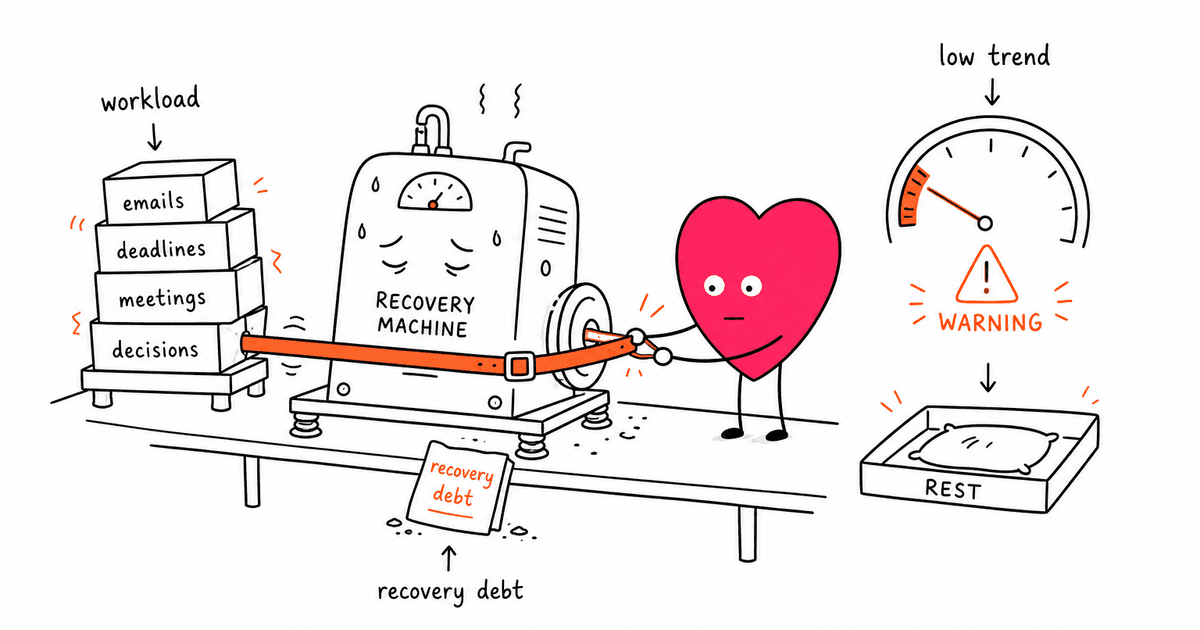
This autonomic imbalance shows up clearly in HRV data as a sustained decline in variability.
What Research Says About HRV and Burnout
HRV as a Biomarker of Burnout
A 2025 study published on medRxiv examined HRV as a biomarker of burnout in healthcare workers. The researchers found that HRV parameters were significantly associated with self-reported stress and burnout indicators, supporting HRV's role as an objective, physiological measure of occupational exhaustion.
Reduced HRV in Clinical Burnout
Research published in the International Journal of Psychophysiology (2017) measured HRV in patients diagnosed with clinical burnout compared to healthy controls. The burnout group showed significantly reduced HRV, particularly in the high-frequency (HF) domain, indicating suppressed vagal tone and weakened parasympathetic function.
Chronic Stress and Cardiovascular Recovery
A 2024 study in Frontiers in Public Health followed employees after acute coronary events and found that those reporting high effort-reward imbalance at work showed significantly slower recovery of HRV frequency measures over a one-year follow-up. This suggests chronic workplace stress doesn't just lower HRV temporarily; it can impair the body's ability to recover autonomic balance.
The Persistence of Stress Effects
Research using the Trier Social Stress Test has shown that HRV reductions don't immediately bounce back when a stressor is removed. The suppression of variability persists during recovery periods, which mirrors the real-world experience of burnout: even when you take a day off, you don't feel recharged.
Recognizing Burnout Through HRV Patterns
HRV data can reveal burnout progression through several characteristic patterns:
Declining Baseline Trend
The most reliable signal is a gradual decline in your average resting or overnight HRV over weeks. A single low reading means little, but a consistent downward trend of 10% or more over 2 to 4 weeks, without an obvious cause like illness or heavy training, may indicate building burnout.
Compressed Daily Range
Healthy HRV shows natural variation from day to day. As burnout develops, daily readings begin to cluster in a narrower, lower range. Your "good days" start looking like your previous "bad days."
Poor Overnight Recovery
Overnight HRV should be higher than daytime readings, reflecting parasympathetic recovery during sleep. When this overnight boost diminishes or disappears, it suggests the body is losing its ability to recover, a hallmark of burnout.
Slow Recovery After Acute Stress
Track how quickly your HRV returns to baseline after stressful events or demanding workdays. A healthy system bounces back within hours. An approaching burnout state shows delayed recovery that stretches into the next day or beyond.
The Five Stages of Burnout Through an HRV Lens
Understanding how burnout progresses can help you intervene early:
Stage 1: Honeymoon Phase
HRV is normal or even slightly elevated due to excitement about new challenges. Energy is high, and the stress feels productive.
Stage 2: Onset of Stress
HRV begins showing more frequent dips. Recovery after demanding days takes longer. Sleep quality may start declining, and overnight HRV readings lose consistency.
Stage 3: Chronic Stress
HRV shows a clear downward trend. The baseline drops noticeably compared to a few months prior. Physical symptoms like headaches, muscle tension, and digestive issues may appear alongside the autonomic changes.
Stage 4: Burnout
HRV is consistently suppressed. The parasympathetic system is functioning poorly, and overnight recovery is minimal. Emotional exhaustion, detachment, and reduced performance are now apparent.
Stage 5: Habitual Burnout
HRV remains chronically low even during vacations or time off. The autonomic nervous system has adapted to a new, dysfunctional baseline. Recovery at this stage requires significant lifestyle changes and potentially professional support.
Strategies to Recover HRV and Prevent Burnout
Set Non-Negotiable Recovery Time
Schedule recovery as seriously as work obligations. Block time for activities that activate the parasympathetic nervous system:
- Breathing exercises (even 5 minutes of slow breathing shifts autonomic balance)
- Meditation or mindfulness practice
- Light walking outdoors, preferably in nature
Protect Your Sleep
Sleep is when most HRV recovery occurs. Burnout disrupts this cycle, making intentional sleep hygiene critical:
- Maintain consistent bed and wake times
- Avoid screens for 60 minutes before bed
- Keep the bedroom cool, dark, and quiet
- Review the connection between sleep and HRV for deeper strategies
Establish Boundaries with Work
Autonomic recovery requires genuine disconnection from stressors:
- Set a firm end time for work each day
- Turn off work notifications outside business hours
- Take actual lunch breaks away from your desk and break up long sitting bouts
- Use vacation days without checking email
Move Your Body Strategically
Exercise is one of the most powerful HRV boosters, but intensity matters during burnout recovery. High-intensity training can further tax an already depleted system.
- Focus on zone 2 training and low-intensity movement
- Yoga and tai chi combine movement with parasympathetic activation
- Avoid pushing through exhaustion with intense workouts
- Let your HRV guide training intensity: train harder on high-HRV days, rest on low ones
Support Your Nervous System Nutritionally
Certain nutrients play key roles in autonomic function:
- Magnesium supports parasympathetic activity and sleep quality
- Omega-3 fatty acids have been shown to improve HRV
- Adequate hydration maintains blood volume and cardiovascular efficiency
- Reduce alcohol and caffeine, both of which suppress HRV
Using a Wearable to Track Burnout Risk
Consistent HRV monitoring turns burnout prevention from guesswork into data-driven self-management. Devices like the Oura Ring 4, Whoop 5, or Garmin Forerunner 265 track overnight HRV automatically.
To use HRV data for burnout prevention:
- Establish your healthy baseline during a low-stress period (ideally 2 to 4 weeks)
- Set personal thresholds: A sustained drop of 10% or more below baseline warrants attention
- Review weekly trends rather than daily readings to filter out normal variation
- Correlate HRV dips with workload, sleep changes, and emotional state
- Take action early when you see a declining trend, rather than waiting for full burnout symptoms
When to Seek Professional Help
HRV data is a valuable self-monitoring tool, but it is not a diagnostic instrument. Consider professional support if:
- Your HRV has been consistently declining for more than 4 weeks despite lifestyle changes
- You experience persistent physical symptoms (chest tightness, chronic fatigue, insomnia)
- Emotional exhaustion or detachment is affecting relationships and daily function
- You feel unable to implement recovery strategies on your own
A healthcare provider can assess whether your symptoms reflect burnout, depression, anxiety, or an underlying medical condition. HRV data can be useful context to bring to these conversations.
The Bottom Line
HRV is one of the most objective, accessible tools for detecting burnout before it becomes debilitating. The research consistently shows that chronic workplace stress suppresses heart rate variability by disrupting autonomic nervous system balance. The key advantage of HRV monitoring is timing: it can reveal the physiological progression of burnout weeks before traditional symptoms like emotional exhaustion and depersonalization reach their peak.
By tracking your HRV trends, setting personal baselines, and responding to early warning signals with targeted recovery strategies, you can interrupt the burnout cycle before it reaches its most damaging stages.
Frequently Asked Questions
How low does HRV drop during burnout?
The degree of HRV decline varies by individual, but research on clinical burnout patients shows reductions of 15% to 30% in key metrics compared to healthy controls. More important than the absolute number is the trend: a sustained decline from your personal baseline is the most meaningful signal.
Can HRV recover after burnout?
Yes, HRV can recover, but the timeline depends on burnout severity. Early-stage burnout may show HRV improvement within 2 to 4 weeks of lifestyle changes. Severe, prolonged burnout can take 3 to 6 months or longer for full autonomic recovery, and some individuals may need professional support to break the cycle.
Is a single low HRV reading a sign of burnout?
No. HRV naturally fluctuates day to day based on sleep, exercise, diet, and countless other factors. A single low reading is not concerning. Burnout is indicated by a sustained pattern of declining HRV over multiple weeks, not isolated dips.
What is the best HRV metric for tracking burnout?
RMSSD (root mean square of successive differences) is the most commonly used metric for daily monitoring and is what most consumer wearables report. It primarily reflects parasympathetic activity, making it well-suited for detecting the vagal withdrawal that characterizes burnout. Weekly averages of overnight RMSSD provide the most stable trend data.
Can exercise worsen burnout-related HRV decline?
Yes, if intensity is too high. Vigorous exercise adds physiological stress, which an already depleted nervous system may not recover from properly. During burnout recovery, prioritize low-intensity movement like walking, yoga, and zone 2 cardio. Let your HRV readings guide when to increase intensity.
Need a quick read on your HRV number first?
Enter your HRV value, age range, device, and recovery context for a plain-English interpretation before you decide what to do next.
Interpret Your HRV NumberBuild the 30-day plan