Pilates and HRV: Can Pilates Improve Your Heart Rate Variability?
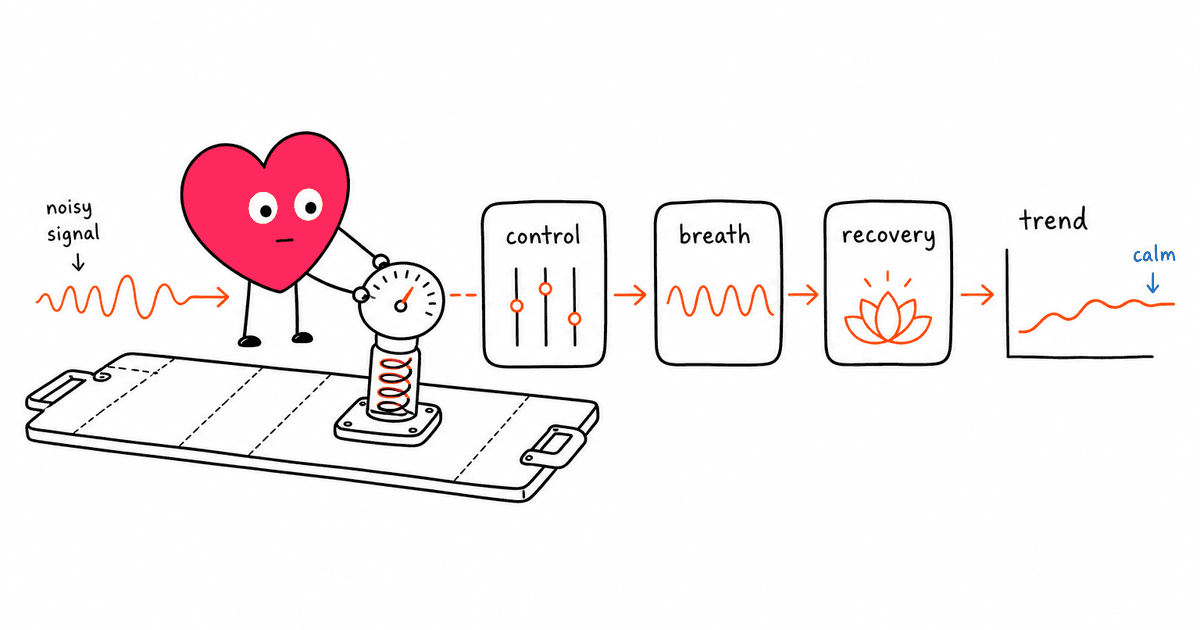
Does Pilates Improve HRV?
Yes, Pilates improves HRV by enhancing parasympathetic nervous system activity and improving overall autonomic balance. A randomized controlled trial published in the Journal of Bodywork and Movement Therapies found that a 12-week Pilates program produced significant increases in SDNN (a key measure of overall HRV), low-frequency power, and SD2, indicating improved global cardiac autonomic modulation compared to a control group.
If you have been looking for a low-impact exercise that benefits both your body and your heart rate variability, Pilates is one of the strongest options backed by research. Unlike high-intensity training, which temporarily suppresses HRV through sympathetic activation, Pilates combines controlled movement with focused breathing in a way that actively supports your parasympathetic nervous system.
The result is a practice that builds core strength, improves flexibility, and enhances the very autonomic function that HRV measures.
How Pilates Affects Your Autonomic Nervous System
Pilates influences HRV through several distinct but overlapping mechanisms. Understanding these pathways explains why it is uniquely positioned to improve autonomic health.
Controlled Breathing Patterns
Every Pilates exercise is coordinated with specific breathing patterns. Joseph Pilates himself considered breath control one of the foundational principles of his method. This deliberate, rhythmic breathing activates the vagus nerve and stimulates respiratory sinus arrhythmia, the natural increase in heart rate during inhalation and decrease during exhalation.
A 2023 study in BMC Sports Science, Medicine and Rehabilitation compared equipment-based Pilates to diaphragmatic breathing exercises over 10 weeks and found that both approaches improved HRV. However, the Pilates group saw additional benefits in SDNN, total power, and both high-frequency and low-frequency HRV components, suggesting that the combination of movement and breath offers more than breathing alone.
Slow, Controlled Movement
Unlike explosive or high-intensity exercise, Pilates movements are deliberate and controlled. This keeps heart rate in a moderate range and avoids the sharp sympathetic spikes that temporarily suppress HRV during intense workouts. The controlled pace allows the parasympathetic nervous system to remain active during the session itself, not just during recovery.
Research on vagal modulation during Pilates at different intensity levels (published in Complementary Therapies in Clinical Practice, 2025) showed that even as exercise difficulty increased, trained Pilates practitioners maintained stronger vagal recovery compared to untrained individuals. This suggests that consistent practice builds lasting autonomic resilience.
Mind-Body Focus and Stress Reduction
Pilates requires concentration on form, alignment, and breath coordination. This mindful attention activates similar neural pathways as meditation, shifting the brain away from stress-driven sympathetic activity and toward parasympathetic calm.
For people dealing with chronic stress or anxiety, this combination of physical movement and mental focus can be particularly effective at breaking the cycle of sympathetic dominance that keeps HRV suppressed.
What the Research Says
The 12-Week RCT
The most robust study on Pilates and HRV is a randomized controlled clinical trial (Barbosa et al., 2021) that assigned sedentary adults to either a Pilates training group (three sessions per week for 12 weeks) or a control group. Key findings:
- SDNN increased significantly in the Pilates group, indicating improved overall HRV
- Low-frequency power (LF) increased, reflecting improved baroreflex and autonomic modulation
- SD2 (Poincare plot) improved, showing greater long-term variability in heart rhythm
- The control group showed no significant changes
These improvements appeared gradually over the 12-week period, consistent with how other forms of exercise influence autonomic function.
Pilates and Blood Pressure
A study on middle-aged adults with hypertension found that even a single Pilates session produced acute reductions in blood pressure and favorable changes in HRV, including a shift toward greater parasympathetic activity. The researchers noted that these acute effects, when repeated through regular practice, contribute to long-term cardiovascular benefits.
This is particularly relevant because high blood pressure is strongly associated with lower HRV, and interventions that address both simultaneously offer compounding health benefits.
Pilates for Diabetes Patients
Research on type 2 diabetes patients practicing Pilates showed significant changes in HRV during and after exercise sessions. While the improvements were most pronounced acutely (during and immediately after practice), the findings suggest that Pilates safely modulates autonomic function even in populations with compromised cardiovascular health.
Pilates vs. Yoga for HRV: How Do They Compare?
Since both Pilates and yoga are popular mind-body practices, the comparison is natural. Both improve HRV, but through slightly different emphases:
| Factor | Pilates | Yoga |
|---|---|---|
| Primary focus | Core strength, alignment, controlled movement | Flexibility, balance, breath, meditation |
| Breathing approach | Lateral thoracic breathing coordinated with movement | Pranayama, slow nasal breathing, breath holds |
| HRV mechanism | Controlled movement + breath coordination | Slow breathing + meditation + postures |
| Intensity range | Low to moderate | Very low to moderate |
| Research on HRV | Growing, multiple RCTs showing SDNN/LF improvements | Extensive, 59+ studies showing HF/RMSSD improvements |
| Best for | People who want physical conditioning + autonomic benefit | People who prioritize stress reduction + flexibility |
A 2025 systematic review on vascular function found that Pilates may offer more consistent cardiovascular benefits than yoga for sedentary adults, particularly in terms of arterial flexibility and blood flow. For HRV specifically, both practices are effective, but they may work best for different people depending on preferences and goals.
The good news: you do not have to choose. Many people practice both, and the autonomic benefits are likely complementary.
How to Start a Pilates Practice for HRV Benefits
Frequency and Duration
Based on the research, aim for:
- 2-3 sessions per week (the 12-week RCT used 3 sessions)
- 45-60 minutes per session
- Minimum 8-12 weeks for measurable HRV improvements
- Consistency matters more than intensity
Mat Pilates vs. Reformer Pilates
Both styles can improve HRV, though they differ in approach:
Mat Pilates uses body weight and is accessible at home or in a studio. It tends to be slightly lower intensity and may be better for beginners. The 2023 BMC study used equipment-based Pilates, but the breathing and movement principles that drive HRV improvement are present in mat work as well.
Reformer Pilates uses a sliding carriage with adjustable spring resistance. It allows for more varied resistance levels and can provide a more challenging workout. The 2025 vagal modulation study suggests that trained individuals maintain parasympathetic benefits even at higher Pilates intensities, meaning reformer work is not inherently worse for HRV.
For HRV improvement specifically, the breathing coordination and controlled movement are more important than the equipment. Start with whichever format feels sustainable.
Key Principles for HRV-Focused Practice
- Prioritize breath: Never hold your breath during exercises. Inhale to prepare, exhale during exertion. This is the primary driver of vagal stimulation.
- Control the tempo: Move slowly and deliberately. Rushing through exercises shifts the autonomic balance toward sympathetic activation.
- Focus on form: The concentration required for proper alignment engages the mind-body connection that supports parasympathetic activity.
- Include cooldown: End each session with 5-10 minutes of gentle stretching and slow breathing to maximize the parasympathetic recovery window.
- Track your progress: Use your HRV monitor to track trends over weeks and months rather than expecting day-to-day changes.
Tracking HRV Around Pilates Sessions
Your HRV data can help you understand how Pilates is affecting your autonomic health:
What to Expect Short-Term
- During practice: HRV may decrease slightly as heart rate rises, even with moderate-intensity Pilates
- Immediately after: A temporary HRV dip is normal as your body recovers
- 1-2 hours post-session: HRV should return to baseline or slightly above, indicating a healthy parasympathetic rebound
- Next morning: Your overnight and morning HRV should be unaffected or slightly improved if the session was appropriate intensity
What to Expect Long-Term
Over 8-12 weeks of consistent practice, look for:
- Higher baseline RMSSD (the key parasympathetic HRV metric)
- Faster HRV recovery after all types of exercise, not just Pilates
- More stable overnight HRV with fewer dips
- Improved HRV trend on your wearable's weekly or monthly view
If your HRV consistently drops the morning after Pilates sessions, you may be pushing intensity too hard. Scale back and focus on the breath-movement connection.
Who Benefits Most from Pilates for HRV?
While anyone can benefit, certain groups may see the most significant improvements:
Sedentary Adults
People who are currently inactive tend to see the largest HRV gains from starting any regular exercise program, and Pilates is an excellent entry point because it is low-impact and joint-friendly.
People with Chronic Stress
The mind-body component of Pilates makes it particularly effective for individuals whose low HRV is driven by chronic stress or burnout rather than physical deconditioning.
Older Adults
Seniors often experience age-related HRV decline. Pilates is one of the safest exercise modalities for older adults, with low injury risk and proven benefits for balance, bone density, and now autonomic function.
Athletes in Recovery
For athletes using HRV-guided training, Pilates can serve as an active recovery tool on rest days. It provides physical maintenance without the sympathetic load of traditional training, supporting faster HRV recovery between hard sessions.
People with Hypertension
Given the research showing Pilates reduces blood pressure and improves HRV in hypertensive adults, it is a strong complementary practice for anyone managing high blood pressure.
Combining Pilates with Other HRV-Boosting Practices
Pilates works well alongside other evidence-based strategies for improving HRV:
- Breathing exercises: Practice resonance frequency breathing (5-6 breaths per minute) on non-Pilates days
- Walking: Light daily walking complements Pilates without adding excessive sympathetic load
- Sleep optimization: Quality sleep is the single biggest factor in morning HRV, so pair your Pilates practice with good sleep habits
- Meditation: Adding a brief meditation after Pilates extends the parasympathetic activation window
- Isometric exercise: Wall sits and handgrip training complement Pilates with strong evidence for blood pressure reduction and HRV improvement
- Nutrition: Support recovery with anti-inflammatory foods, adequate hydration, and magnesium-rich meals
Frequently Asked Questions
How long does it take for Pilates to improve HRV?
Most research shows measurable HRV improvements after 8-12 weeks of consistent practice (2-3 sessions per week). Some studies have detected early autonomic changes after just 2 weeks, though these initial shifts are smaller and less stable.
Is mat Pilates or reformer Pilates better for HRV?
Both can improve HRV. The key factors for autonomic benefit are breath coordination, controlled tempo, and consistent practice rather than the specific equipment. Choose the format you enjoy most and will stick with long-term.
Can Pilates replace cardio for HRV improvement?
Pilates improves HRV through different mechanisms than aerobic exercise. While it enhances parasympathetic tone through breath and controlled movement, cardiovascular exercise builds aerobic capacity, which independently supports higher HRV. Ideally, include both in your weekly routine.
Should I do Pilates on days when my HRV is low?
Yes, in most cases. Pilates is gentle enough that it should not further suppress an already low HRV. In fact, the breathing and mindful movement components may help activate your parasympathetic system and support recovery. Only skip if you are feeling genuinely ill or severely fatigued.
How does Pilates compare to strength training for HRV?
Strength training tends to acutely suppress HRV more than Pilates due to higher sympathetic activation, though both improve long-term autonomic function. Pilates offers a gentler autonomic profile during and after sessions, making it easier to incorporate without affecting next-day HRV.
Need a quick read on your HRV number first?
Enter your HRV value, age range, device, and recovery context for a plain-English interpretation before you decide what to do next.
Interpret Your HRV NumberBuild the 30-day plan