Cholesterol and HRV: What Heart Rate Variability Reveals About Lipid Health
Trying to decode today's HRV number? Use the free interpreter first, then build a practical recovery plan. Interpret your HRV
High cholesterol and low heart rate variability (HRV) are both linked to higher cardiovascular risk, but they are not the same thing. Cholesterol is a blood marker tied to plaque formation and long-term artery health. HRV is a nervous system marker that reflects how flexibly your body regulates stress, recovery, and heart function.
What makes this topic useful is the overlap. Many of the same habits that worsen cholesterol, such as low activity, poor diet quality, chronic stress, short sleep, and excess visceral fat, also tend to push HRV in the wrong direction. That means your wearable and your lipid panel can tell a more complete story together than either one can alone.
This matters to a lot of people. According to the CDC, about 86 million U.S. adults have total cholesterol above 200 mg/dL, and nearly 25 million are above 240 mg/dL. High cholesterol also has no symptoms, so it often goes unnoticed until routine lab work catches it.
In this guide, we will break down what cholesterol and HRV each measure, what the research says about the relationship, and how to improve both without turning a recovery metric into fake certainty.
What Cholesterol and HRV Actually Measure
Cholesterol is a waxy substance your body needs for hormones, cell membranes, and other basic functions. The problem is not cholesterol itself. The problem is when the balance of blood lipids shifts in an unhealthy direction over time.
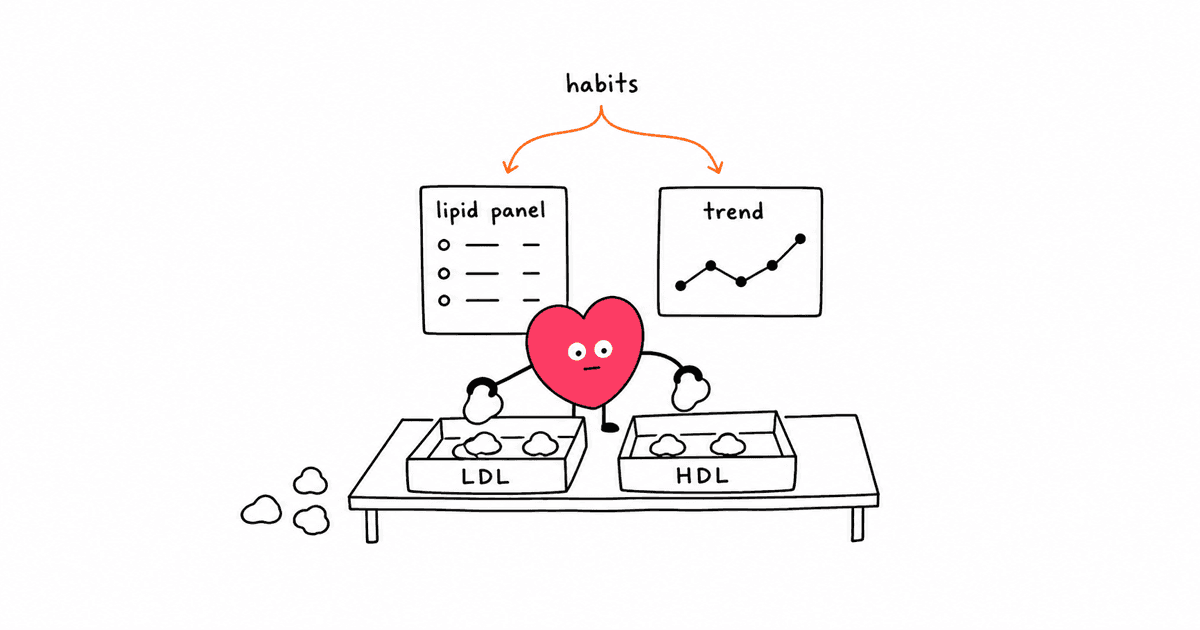
A standard lipid panel usually looks at:
- LDL cholesterol: Often called "bad" cholesterol because higher levels are associated with plaque buildup in arteries.
- HDL cholesterol: Often called "good" cholesterol because it helps transport cholesterol away from arteries.
- Triglycerides: Another blood fat that often rises with insulin resistance, excess calories, and low activity.
- Total cholesterol and ratios: Broader summary measures that can help frame overall risk.
HRV measures the variation in time between heartbeats. In most consumer wearables, higher HRV generally reflects stronger parasympathetic activity, better recovery, and more adaptable autonomic function. Lower HRV often points to greater physiological strain, sympathetic dominance, poor recovery, or illness.
If you want a deeper primer first, start with what HRV is and how to interpret your own normal range in understanding HRV numbers.
Why HRV and Cholesterol May Be Connected
The bridge between HRV and cholesterol is the autonomic nervous system.
Your autonomic nervous system helps regulate heart rate, blood vessel tone, inflammation, glucose handling, and metabolic activity. When parasympathetic activity is stronger and the system stays flexible, HRV tends to be higher. When sympathetic drive stays elevated for long periods, HRV often drops.
That matters for cholesterol because the same chronic stress physiology that lowers HRV can also contribute to:
- worse insulin sensitivity
- more inflammation
- poorer sleep quality
- higher blood pressure
- worse dietary choices and appetite regulation
- reduced exercise capacity and recovery
In plain English, low HRV does not magically create high LDL on its own. But a body that is under-recovered, inflamed, sedentary, and stressed is more likely to show both low HRV and an unfavorable lipid profile.
This is also one reason HRV overlaps so much with broader cardiovascular risk. If you have not read it yet, our article on HRV and heart disease covers the bigger picture. For the artery-elasticity angle, read arterial stiffness and HRV. For a men's health angle on the same vascular-autonomic overlap, see erectile dysfunction and HRV.
What the Research Says About Cholesterol and HRV
The evidence here is interesting, but it needs adult supervision.
Researchers have repeatedly found that worse lipid profiles tend to show up alongside lower vagally mediated HRV. That does not prove cholesterol directly controls HRV, but it does suggest a meaningful relationship between lipid health and autonomic function.
Observational Studies Show an Inverse Relationship
One of the clearest findings comes from a 2011 study of 611 apparently healthy working adults. Researchers found an inverse association between vagally mediated HRV and total cholesterol, LDL cholesterol, and the LDL:HDL ratio, even after adjusting for relevant covariates. In other words, people with worse cholesterol markers tended to have lower HRV.
Older studies have reported a similar pattern. Researchers have found reduced 24 hour HRV in people with hypercholesterolemia, including in men with and without ischemic heart disease. Across studies, the signal is pretty consistent: a more atherogenic lipid profile often travels with poorer autonomic regulation.
Treatment Studies Suggest the Relationship May Be Modifiable
A small two year study published in Atherosclerosis followed 40 patients with hypercholesterolemia who were treated with atorvastatin. As lipid markers improved, HRV measures improved too. That is encouraging, but it is still a small study, and it does not tell us whether the HRV change came from lower LDL itself, reduced vascular stress, lower inflammation, medication effects, or some combination of the above.
The right takeaway is not, "Fix cholesterol and HRV automatically normalizes." The right takeaway is that improving cardiovascular health often improves several related systems at once.
Can High Cholesterol Directly Lower HRV?
Sometimes maybe, but the cleaner answer is: often indirectly, and not in a way you should oversimplify.
Here is the practical version:
- Low HRV is not a diagnosis of high cholesterol. You can have excellent lipids and still show low HRV from stress, poor sleep, illness, overtraining, or alcohol.
- High cholesterol does not guarantee low HRV. Some people with elevated LDL still show decent HRV, especially if they are fit and well recovered.
- Shared upstream factors matter a lot. Visceral fat, low aerobic fitness, chronic stress, insulin resistance, smoking, and poor sleep can worsen both.
- Blood tests still matter. Wearables cannot tell you your LDL, ApoB, or triglycerides. If you are worried about cholesterol, you need actual labs.
That nuance matters because people love turning a wearable metric into a universal truth machine. HRV is useful. It is not a substitute for a lipid panel.
Shared Drivers That Can Worsen Both Cholesterol and HRV
If your goal is better cardiovascular health, focus less on whether HRV causes cholesterol problems or vice versa, and more on the habits that push both in the wrong direction.
1. Low Aerobic Fitness
Poor cardiorespiratory fitness is strongly linked to worse metabolic health, higher cardiovascular risk, and lower HRV. On the flip side, improving aerobic fitness tends to help autonomic balance, triglycerides, insulin sensitivity, and HDL.
This is one reason zone 2 training, walking, and other sustainable aerobic work are so valuable.
2. Diet Quality
The NHLBI's Therapeutic Lifestyle Changes guidance emphasizes three big levers for lowering LDL cholesterol: less saturated fat, more soluble fiber, and more plant sterols and stanols. That pattern also overlaps well with the kind of diet that supports recovery, lower inflammation, and steadier HRV.
Practical examples include oats, beans, lentils, fruit, nuts, olive oil, and more meals built around minimally processed foods instead of ultra-processed defaults. Our broader guide on nutrition and HRV and the Mediterranean diet and HRV article go deeper here.
3. Insulin Resistance and Visceral Fat
High triglycerides, low HDL, elevated blood sugar, and reduced HRV often cluster together. Excess visceral fat increases inflammatory signaling and worsens metabolic control, which can drag both lipids and autonomic function down. This same metabolic cluster is also common in fatty liver disease, especially when triglycerides, insulin resistance, and waist circumference are moving in the wrong direction. Our guide to fatty liver and HRV covers that overlap in more detail.
If this sounds familiar, our guide on blood sugar and HRV is worth reading next.
4. Chronic Stress and Poor Sleep
Chronically elevated stress load tends to reduce HRV. It also makes cholesterol management harder by disrupting appetite regulation, training recovery, and glucose control. Add poor sleep, and the system gets even uglier.
A good place to start is HRV and stress plus HRV and sleep. If snoring, daytime sleepiness, or morning headaches are in the mix, sleep apnea and HRV may also be relevant.
5. Smoking, Heavy Alcohol Use, and Low Recovery Capacity
Smoking and nicotine can impair vascular function and autonomic balance. Alcohol can also suppress HRV, especially overnight. Neither one helps your lipid profile. If recovery is bad and your habits are messy, HRV will usually tell on you before your lab work improves.
How to Improve HRV and Cholesterol at the Same Time
If you want the highest return on effort, work the overlap.
1. Build an Aerobic Base
Aim for regular moderate intensity aerobic training most weeks. That can mean brisk walking, cycling, rowing, or easy running, depending on your joints, fitness level, and patience.
A good baseline target is 150 minutes per week of moderate activity. If that sounds like a lot, start smaller and be boringly consistent. Consistency beats the heroic plan you abandon in nine days.
2. Lower LDL With Smarter Food Swaps
You do not need a perfect diet. You need a repeatable one.
Useful swaps include:
- oatmeal or Greek yogurt instead of pastries at breakfast
- beans or lentils added to lunch a few times per week
- olive oil, nuts, and seeds instead of more processed snack foods
- fish more often, processed meat less often
- more fruit and vegetables, fewer high saturated fat convenience meals
Specific nutrients with overlap potential include omega 3 fatty acids, soluble fiber, and polyphenol-rich foods. Just do not expect one supplement to outwork a chaotic lifestyle.
3. Treat Weight Loss as a Cardiometabolic Project, Not a Vanity Project
If you are carrying excess body fat, especially around the waist, losing even a modest amount can improve lipids, blood pressure, glucose control, and HRV together. The goal is not getting lighter at any cost. The goal is improving metabolic health while protecting muscle, sleep, and recovery.
Our article on weight loss and HRV covers that balance.
4. Improve Sleep Before You Chase Fancy Recovery Hacks
If you are sleeping six fragmented hours and buying more gadgets, you are probably solving the wrong problem.
Better sleep supports autonomic recovery, appetite regulation, insulin sensitivity, and better day to day choices. Keep a consistent sleep schedule, reduce late alcohol, cut back on late caffeine, and make your bedroom darker and cooler.
5. Use Stress Reduction That You Will Actually Do
High stress tends to lower HRV quickly, which makes it one of the clearest metrics for whether your nervous system is coping well.
Simple tools that help:
- 5 to 10 minutes of slow breathing
- short walks after meals
- mindfulness or meditation
- strength or aerobic training that improves mood without crushing recovery
If your wearable shows low HRV after a hard week, that is useful feedback. If it makes you spiral, it is now a hobby, not a health tool.
6. Follow Through on Medical Treatment When Needed
If your clinician recommends a lipid panel, ApoB test, CAC scoring, or medication, that deserves more respect than a single low readiness score from your wearable.
HRV can be a useful supporting metric while you improve exercise, sleep, stress, and nutrition. It should not be used to self-manage high cholesterol without actual medical evaluation.
Tracking Progress: Labs Tell You Risk, HRV Tells You Recovery
One of the best ways to use HRV in this context is to pair it with objective health markers.
Track trends in:
- HRV
- resting heart rate
- lipid labs
- blood pressure
- waist circumference
- exercise consistency
- sleep duration and quality
Labs change slowly. HRV often changes faster. That makes HRV useful for seeing whether your daily habits are moving in the right direction, even before your next cholesterol test.
Just keep the roles straight: HRV is a supporting signal, not a replacement for blood work.
Best Wearables for Tracking HRV While You Improve Lipid Health
If you want to keep an eye on autonomic recovery while working on cholesterol, these are solid options:
- Oura Ring: Strong overnight HRV tracking in a form factor many people will actually wear consistently.
- WHOOP: Useful if you want HRV, recovery, and training load in one place.
- Apple Watch Ultra: Good all around option if you already live in the Apple ecosystem.
- Garmin: A strong choice for people who want HRV trends alongside training metrics and long battery life.
If you want a deeper comparison, see our guide to the best HRV monitors for 2026.
Key Takeaways
- High cholesterol and low HRV often overlap, but they are different markers that measure different parts of cardiovascular health.
- Research suggests an inverse relationship between worse lipid markers, especially LDL and total cholesterol, and vagally mediated HRV.
- The relationship is not perfectly causal or one to one. Shared drivers like low fitness, stress, poor sleep, insulin resistance, and excess visceral fat matter a lot.
- HRV is useful for tracking recovery and autonomic balance, but it cannot replace cholesterol testing.
- Lifestyle habits that improve cholesterol often improve HRV too, especially aerobic exercise, better diet quality, sleep, and stress management.
- Use HRV as context, not proof. Pair your wearable data with labs, blood pressure, and actual medical guidance.
If you improve the habits that drive both recovery and cardiometabolic health, you usually do not just get a prettier dashboard. You get a healthier human.
Need a quick read on your HRV number first?
Enter your HRV value, age range, device, and recovery context for a plain-English interpretation before you decide what to do next.
Interpret Your HRV NumberBuild the 30-day plan