Fatty Liver and HRV: What Your Recovery Data Can Tell You
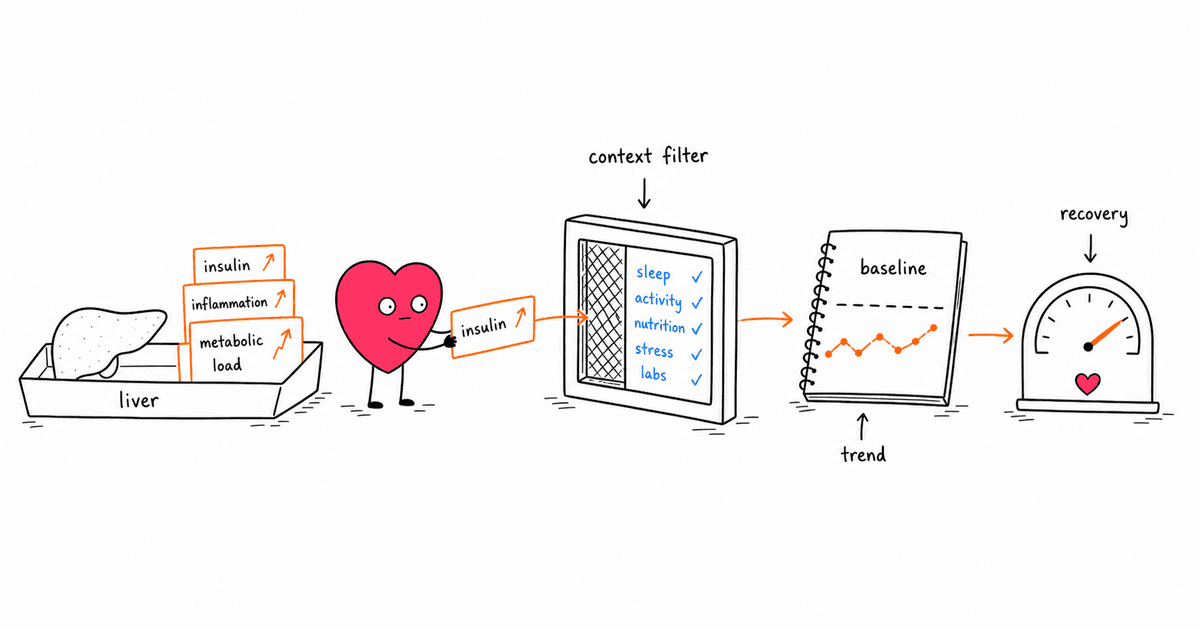
Trying to decode today's HRV number? Use the free interpreter first, then build a practical recovery plan. Interpret your HRV
Fatty liver disease is usually framed as a liver problem, but it is also a metabolic and cardiovascular problem. That makes it relevant to heart rate variability, because HRV is sensitive to the same systems that drive fatty liver risk: insulin resistance, inflammation, blood pressure, sleep quality, fitness, and autonomic nervous system balance.
The short version: fatty liver does not give your wearable a clean diagnostic fingerprint. But a chronically suppressed HRV baseline can reflect the broader physiological stress load that often travels with fatty liver disease.
What Is the Link Between Fatty Liver and HRV?
Fatty liver disease and HRV are connected through autonomic dysfunction, insulin resistance, inflammation, and cardiovascular strain. People with fatty liver disease often show lower HRV, especially lower vagal activity, but HRV cannot diagnose liver fat or liver fibrosis on its own.
Fatty liver disease means excess fat has accumulated in the liver. The older term, non-alcoholic fatty liver disease (NAFLD), is still common in research. The newer term, metabolic dysfunction-associated steatotic liver disease (MASLD), better reflects the metabolic roots of the condition.
That naming change matters because most fatty liver risk is not isolated to the liver. It often overlaps with blood sugar dysregulation, type 2 diabetes, central obesity, high triglycerides, blood pressure, cholesterol, and low cardiorespiratory fitness.
AASLD's 2023 practice guidance estimates that NAFLD affects roughly 25% to 30% of adults in the general population. Many people do not know they have it because early fatty liver is often silent.
Quick Answer: Does Fatty Liver Lower HRV?
Yes, fatty liver disease is often associated with lower HRV, but the relationship is not simple enough for diagnosis. Research links NAFLD and MASLD with reduced parasympathetic activity, higher resting heart rate, and greater autonomic imbalance. Those patterns can show up as lower RMSSD, lower SDNN, lower high-frequency HRV, or a flatter recovery baseline.
The practical takeaway is not to panic over one low morning reading. Instead, look for persistent patterns: low HRV plus rising resting heart rate, poor sleep, worse blood sugar control, weight gain around the waist, high blood pressure, low exercise tolerance, or abnormal liver enzymes.
Why Fatty Liver Can Affect Heart Rate Variability
HRV changes when the body has less flexibility to shift between stress and recovery. Fatty liver can contribute to that loss of flexibility through several overlapping pathways.
Insulin Resistance
Insulin resistance is one of the core drivers of fatty liver disease. When cells become less responsive to insulin, the liver receives more fatty acids, produces more glucose, and stores more triglyceride.
That metabolic strain can also lower HRV. Blood sugar swings, elevated insulin, and higher sympathetic activity all make it harder for the nervous system to settle into recovery mode. This is one reason fatty liver often travels with diabetes and blood sugar-related HRV changes.
Chronic Inflammation
Fat accumulation in the liver can trigger oxidative stress and inflammatory signaling. In some people, simple steatosis progresses toward steatohepatitis, where inflammation and liver cell injury become more prominent.
Inflammation is consistently associated with lower HRV because the vagus nerve helps regulate immune activity. When inflammatory load rises, HRV often falls. The same mechanism is covered in more detail in the guide to inflammation and HRV.
Sympathetic Overdrive
Fatty liver is associated with autonomic imbalance, especially a shift toward higher sympathetic tone and lower parasympathetic tone. In plain English, the body may spend more time in a higher-alert state and less time in a restorative state.
That can appear as:
- Lower morning HRV
- Higher resting heart rate
- Slower recovery after workouts
- More HRV volatility after poor sleep or heavy meals
- A weaker response to recovery practices that used to help
Cardiovascular Strain
Fatty liver is linked with higher cardiovascular risk, partly because it overlaps with metabolic syndrome. The liver, heart, blood vessels, pancreas, skeletal muscle, and autonomic nervous system are part of the same metabolic network.
That is why fatty liver should not be treated as a niche liver-only issue. If HRV is persistently low, the more useful question is often: what is raising the whole-body load?
Sleep Apnea and Poor Sleep
Fatty liver is more common in people with obesity and metabolic dysfunction, which also raises the odds of sleep apnea. Sleep apnea can sharply suppress HRV by causing repeated oxygen drops, arousals, and nighttime sympathetic activation.
If your HRV is low, your resting heart rate is high, and you snore, wake unrefreshed, or feel sleepy during the day, sleep quality deserves serious attention.
What the Research Shows
The evidence is not perfect, but the pattern is consistent: lower HRV is associated with existing fatty liver and may help identify higher future risk.
Existing NAFLD Is Linked With Lower HRV
A 2013 study in PLOS One evaluated 497 adults undergoing health checkups and found that the 176 participants with NAFLD had significantly lower HRV measures, including SDNN, RMSSD, low-frequency power, and high-frequency power. After adjustment for age, sex, hypertension, dyslipidemia, metabolic syndrome, BMI, smoking, kidney function, insulin resistance, and leptin, lower SDNN remained independently associated with NAFLD.
That does not prove fatty liver directly caused the lower HRV. It does show that fatty liver status tracked with autonomic changes even after accounting for several obvious metabolic confounders.
Lower HRV May Predict Future NAFLD
A 2021 Frontiers in Endocrinology cohort study followed 33,899 adults without NAFLD at baseline. Over a median follow-up of 5.7 years, 6,466 participants developed NAFLD. Higher tertiles of SDNN, RMSSD, total power, low-frequency power, and high-frequency power were associated with lower NAFLD risk after adjustment for potential confounders.
The strongest practical signal was parasympathetic activity. Higher RMSSD, a common marker of vagal tone, was associated with lower future NAFLD risk.
Even Short ECG HRV Was Associated With Risk
A 2022 Scientific Reports study followed 154,286 Korean adults without baseline NAFLD. Researchers used 10-second ECGs to estimate SDNN and RMSSD, then tracked incident hepatic steatosis and fibrosis risk.
During about 4.2 years of follow-up, the study identified 27,279 new cases of hepatic steatosis and 1,250 cases of hepatic steatosis plus elevated FIB-4, a noninvasive fibrosis risk score. Compared with the highest RMSSD quintile, the lowest RMSSD quintile had a 43% higher adjusted risk of incident hepatic steatosis and a 70% higher adjusted risk of steatosis plus intermediate or high FIB-4.
A 10-second ECG is not the same as a full wearable trend or a 24-hour Holter monitor. Still, the finding supports the broader idea that autonomic imbalance may precede fatty liver development rather than merely follow it.
What the Research Does Not Prove
The research does not prove that low HRV causes fatty liver. It also does not prove that raising HRV directly clears liver fat.
More likely, HRV is a useful proxy for the underlying systems that matter: metabolic flexibility, inflammation, fitness, sleep quality, recovery capacity, and cardiovascular resilience.
How to Interpret HRV if You Have Fatty Liver Risk
HRV is most useful when it is treated as a trend signal, not a liver test.
| HRV pattern | What it might suggest | What to check next |
|---|---|---|
| Persistently low HRV | Higher metabolic or inflammatory load | Sleep, activity, labs, blood pressure |
| Low HRV plus high resting heart rate | Sympathetic activation or poor recovery | Training load, illness, alcohol, stress |
| HRV drops after large evening meals | Poor glucose control or digestive stress | Meal timing, glucose patterns, sleep |
| HRV improves with consistent exercise | Better autonomic fitness | Keep building gradually |
| HRV stays low despite good habits | Possible hidden driver | Discuss labs and symptoms with a clinician |
Watch Your Baseline, Not One Reading
A single low HRV morning is noise. A four-week downward trend is information.
If you are monitoring fatty liver risk, compare HRV against your own baseline and pair it with:
- Resting heart rate
- Blood pressure
- Waist circumference
- Fasting glucose or A1c
- Triglycerides and HDL cholesterol
- ALT, AST, and other liver-related labs
- Sleep duration and sleep apnea symptoms
- Training consistency and recovery quality
Do Not Use HRV to Diagnose Fatty Liver
Fatty liver is diagnosed through clinical evaluation, imaging, blood tests, risk scores, and sometimes specialist assessment. HRV cannot tell you whether you have liver fat, inflammation, or fibrosis.
If liver enzymes are elevated, metabolic risk factors are present, or imaging has already shown fatty liver, HRV can add context. It should not replace medical testing.
Lifestyle Changes That Help Both Liver Health and HRV
The good news is that the same basics that improve fatty liver risk often improve HRV too. The bad news is that the basics have to be done consistently. No wearable shortcut gets around that.
1. Build Aerobic Fitness
Regular physical activity is one of the strongest tools for fatty liver and autonomic health. A 2023 American College of Sports Medicine roundtable statement concluded that physical activity can reduce liver fat and improve body composition, cardiorespiratory fitness, vascular biology, and quality of life, even without major weight loss.
The practical target is at least 150 minutes of moderate activity or 75 minutes of vigorous activity per week. For many people, zone 2 training is the cleanest entry point because it builds aerobic capacity without burying recovery.
2. Add Resistance Training
Resistance training improves insulin sensitivity, muscle mass, glucose storage, and metabolic health. It can also support HRV over time by making the body more resilient to daily stressors.
The best plan is not complicated: two to four weekly sessions that train the major movement patterns, progressed gradually. If your HRV drops hard after lifting, reduce volume before you abandon the habit. The goal is adaptation, not constant nervous system punishment.
3. Lose Weight if You Have Excess Liver Fat and Excess Weight
Weight loss is not the only path to better liver health, but it is a powerful one when excess body fat is part of the picture. Clinical guidance often uses roughly 5% body weight loss as a meaningful threshold for reducing liver fat, with larger losses needed to improve inflammation and fibrosis risk.
HRV can help here by showing whether the method is sustainable. Crash dieting, under-sleeping, and overtraining may lower weight while suppressing HRV. A slower plan that preserves sleep, protein intake, and training quality is usually smarter.
4. Use a Mediterranean-Style Pattern
A Mediterranean-style diet is commonly recommended for metabolic health because it emphasizes vegetables, legumes, fruit, whole grains, fish, olive oil, nuts, and minimally processed foods.
For fatty liver risk, the big wins are usually boring but effective:
- Reduce sugary drinks
- Limit highly refined carbohydrates
- Prioritize protein and fiber at meals
- Replace saturated fats with unsaturated fats when practical
- Avoid turning every night into a high-calorie late meal
This is not about chasing a perfect liver cleanse. The liver does not need wellness theater. It needs a lower metabolic burden.
5. Be Honest About Alcohol
Alcohol can worsen liver stress and reliably lowers HRV for many people. If you already have fatty liver or elevated liver enzymes, alcohol deserves a more conservative threshold than general wellness advice might suggest.
The HRV pattern is often blunt: lower overnight HRV, higher resting heart rate, worse sleep architecture, and slower recovery the next day. The guide to alcohol and HRV covers this in more detail.
6. Treat Sleep as Metabolic Medicine
Poor sleep makes insulin resistance worse, increases appetite signaling, raises sympathetic tone, and suppresses HRV. If sleep apnea is present, the effect can be much stronger.
If your HRV is chronically low and your sleep is poor, do not skip this layer. Better sleep is not cosmetic. It is one of the levers that connects liver health, nervous system recovery, and cardiovascular risk.
When to Talk With a Clinician
Talk with a clinician if you have any of the following:
- Elevated ALT or AST on bloodwork
- Imaging that shows fatty liver
- Type 2 diabetes or prediabetes
- High triglycerides or low HDL cholesterol
- High blood pressure
- Unexplained fatigue, abdominal swelling, jaundice, or easy bruising
- Persistent low HRV with worsening resting heart rate and symptoms
The right next step may include repeat labs, metabolic screening, liver ultrasound, fibrosis risk scoring such as FIB-4, elastography, medication review, or referral to a liver specialist.
Bottom Line
Fatty liver and HRV are connected because both reflect metabolic and autonomic health. Lower HRV is common in people with fatty liver risk, and large cohort studies suggest autonomic imbalance may appear before fatty liver develops.
But HRV is not a liver scan. Use it as a recovery and stress-load signal. If your HRV baseline is persistently low, especially alongside blood sugar issues, high blood pressure, poor sleep, or abnormal liver labs, treat it as a reason to tighten the fundamentals and get proper medical context.
FAQ
Can HRV tell me if I have fatty liver?
No. HRV cannot diagnose fatty liver, liver inflammation, or fibrosis. Diagnosis requires clinical evaluation, labs, imaging, and sometimes specialist testing.
Is low HRV common with NAFLD or MASLD?
Yes. Studies have found lower HRV in people with NAFLD, and cohort research suggests lower HRV may be associated with higher future risk of hepatic steatosis.
Which HRV metric matters most for fatty liver?
RMSSD and high-frequency HRV are especially useful because they reflect parasympathetic activity. SDNN can also matter, particularly in clinical ECG research. For wearables, your personal trend is more important than comparing your number to someone else's.
Can improving HRV reverse fatty liver?
Not by itself. Improving HRV usually means improving the systems that also help liver health: fitness, sleep, nutrition, blood sugar control, recovery, and lower inflammation. Those changes can reduce liver fat risk, but HRV is the signal, not the treatment.
Should I train if my HRV is low and I have fatty liver?
Usually yes, but adjust the intensity. Consistent moderate exercise is helpful for fatty liver and HRV. If HRV is unusually low, choose easier aerobic work or mobility instead of a maximal session, then look at the trend over the next few days.
Need a quick read on your HRV number first?
Enter your HRV value, age range, device, and recovery context for a plain-English interpretation before you decide what to do next.
Interpret Your HRV NumberBuild the 30-day plan