Erectile Dysfunction and HRV: What Autonomic Health Reveals About Men's Heart Health
Does Erectile Dysfunction Affect HRV?
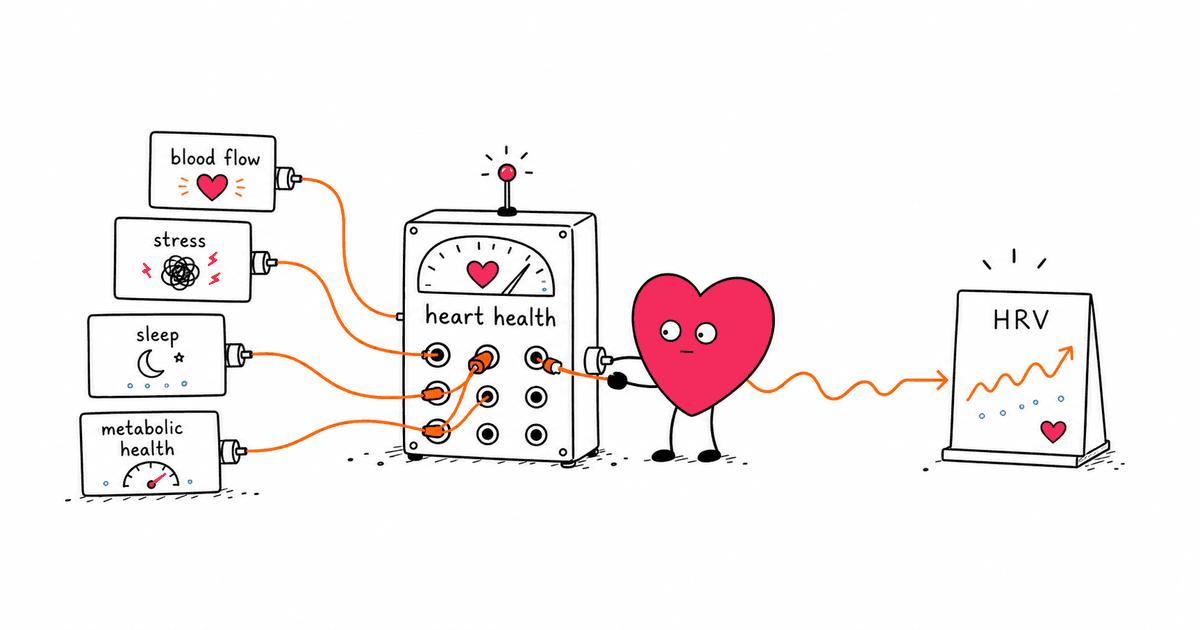
Yes, erectile dysfunction is associated with measurable changes in HRV, especially lower parasympathetic activity and a higher sympathetic-to-parasympathetic ratio in some studies. HRV does not diagnose erectile dysfunction, but it can reflect the same autonomic, vascular, metabolic, and stress-related systems that influence erectile function.
That matters because erectile dysfunction is often treated as a bedroom problem. In reality, it can be an early clue about blood vessel health, nervous system regulation, and cardiovascular risk.
If you are new to the metric, start with what HRV is. This guide focuses on the specific connection between HRV, erectile function, and men's heart health.
Why ED and HRV Belong in the Same Conversation
Erections depend on three systems working together:
- Blood flow: Arteries need to dilate enough to fill erectile tissue.
- Autonomic regulation: The nervous system needs to shift into the right balance of parasympathetic and sympathetic activity.
- Hormonal and metabolic health: Testosterone, insulin sensitivity, inflammation, and vascular function all matter.
HRV sits inside the second system, but it also responds to the other two. Lower HRV can show up when your body is under cardiovascular strain, metabolically stressed, sleep deprived, inflamed, or chronically activated by stress.
That does not mean low HRV causes ED by itself. It means ED and low HRV can share upstream drivers.
The Autonomic Nervous System Behind Erections
Erectile function is not controlled by willpower. It is controlled by blood vessels, smooth muscle, hormones, and autonomic signaling.
Parasympathetic activity helps initiate and maintain an erection by supporting vasodilation and nitric oxide signaling. Sympathetic activity is not "bad," but too much sympathetic tone at the wrong time can interfere with arousal, blood flow, and relaxation of penile smooth muscle.
This is why acute stress, performance anxiety, poor sleep, heavy alcohol, and overtraining can all affect sexual function. They push the body toward a more activated state, the same state that often shows up as lower RMSSD, SDNN, or high-frequency HRV.
What the Research Shows
The evidence is not huge, but it is consistent enough to take seriously.
A 2011 study in International Neurourology Journal compared 40 men with erectile dysfunction to 180 healthy controls. Men with ED had a significantly higher LF/HF ratio, which the researchers interpreted as a sign of autonomic imbalance. RMSSD and high-frequency power, both more closely related to parasympathetic activity, were lower in the ED group, although those differences did not reach statistical significance.
A 2008 study in Asian Journal of Andrology looked at men with hyperlipidemia, some with ED and some without. The ED group showed higher sympathetic activity. The study also found that well-being tended to correlate negatively with sympathetic activity and positively with parasympathetic activity.
A 2021 pilot study in Applied Psychophysiology and Biofeedback examined 105 younger men between 18 and 39. Men reporting ED had lower values for several resting HRV measures, including low-frequency power, high-frequency power, and standard deviation measures. The authors were careful about interpretation, but the pattern supports the idea that autonomic function matters even in younger men.
The practical takeaway: ED is not only about hormones or psychology. Autonomic balance appears to be part of the picture.
ED Can Be a Cardiovascular Warning Sign
The cardiovascular link is stronger than the HRV-specific link.
The Massachusetts Male Aging Study, published in The Journal of Urology, found that 52% of men aged 40 to 70 reported some degree of erectile dysfunction. The same study found higher odds of ED with heart disease, hypertension, diabetes, smoking, medications, anger, and depression.
A 2011 meta-analysis in Journal of the American College of Cardiology pooled 12 prospective cohort studies with 36,744 participants. Men with ED had higher relative risk of cardiovascular disease, coronary heart disease, stroke, and all-cause mortality compared with men without ED. The association remained after sensitivity analyses adjusted for conventional cardiovascular risk factors.
This does not mean ED predicts a heart attack in any individual person. It means ED should not be dismissed, especially when it is new, worsening, or paired with other risk factors.
Why Blood Vessel Health Matters So Much
Penile arteries are smaller than coronary arteries. That makes them vulnerable to early changes in endothelial function, arterial stiffness, inflammation, and plaque burden.
If blood vessels cannot dilate well, erections become harder to achieve or maintain. The same vascular problems can also increase resting heart rate, raise blood pressure, and reduce baroreflex efficiency, all of which can show up in HRV trends.
This is why ED often travels with high blood pressure, cholesterol problems, diabetes, and heart disease risk.
What HRV Can Tell You About ED
HRV can help you notice patterns. It cannot tell you the exact cause of erectile dysfunction.
Useful HRV clues include:
- A sustained drop below your normal baseline
- Lower HRV paired with higher resting heart rate
- Poor recovery after alcohol, poor sleep, or intense training
- Repeated low HRV during stressful work periods
- A new low-HRV pattern that appears alongside reduced libido, ED, fatigue, or mood changes
The most useful comparison is not your HRV against someone else's. It is your current trend against your own baseline.
What HRV Cannot Tell You
HRV cannot diagnose low testosterone, vascular disease, diabetes, depression, medication side effects, prostate issues, or relationship stress.
It also cannot prove that a supplement, workout, or breathing routine fixed ED. HRV is noisy. It moves with sleep, illness, alcohol, temperature, hydration, stress, and measurement timing.
Use HRV as a dashboard light, not as a diagnosis.
Common Drivers of Both Low HRV and ED
Poor Cardiometabolic Health
Insulin resistance, high blood pressure, high triglycerides, low HDL cholesterol, and excess visceral fat all affect vascular function. They can also keep the nervous system in a more sympathetic state.
That combination is bad for HRV and bad for erectile function.
Chronic Stress and Anxiety
Stress increases sympathetic activation and can lower HRV. It can also make erections harder by increasing performance pressure and making the body less able to shift into a relaxed, aroused state.
This is not "all in your head." The brain, blood vessels, and autonomic nervous system are connected. See HRV and stress and HRV and anxiety for the broader physiology.
Poor Sleep and Sleep Apnea
Sleep is when HRV usually rises and the body shifts toward recovery. Poor sleep can lower testosterone, worsen glucose control, increase blood pressure, and reduce next-day parasympathetic activity.
Obstructive sleep apnea is especially relevant because it combines oxygen drops, sympathetic surges, poor sleep architecture, and cardiovascular strain.
Smoking and Nicotine
Nicotine increases sympathetic activity, raises heart rate, and harms blood vessel function. Smoking also directly damages endothelial function, which is central to erection quality.
If HRV is low, resting heart rate is high, and ED is present, smoking or nicotine belongs on the short list of factors to address.
Alcohol
Alcohol can acutely lower HRV, disrupt sleep, reduce REM quality, and impair erectile function. The pattern is often obvious in wearable data: lower overnight HRV, higher resting heart rate, worse sleep, and worse next-day recovery.
The effect is usually more pronounced with higher doses, late drinking, or poor sleep afterward. See alcohol and HRV for the recovery side.
Low Fitness or Overtraining
Both low fitness and too much training stress can create problems.
Low aerobic fitness is linked to poorer vascular health and lower HRV. But excessive training without recovery can suppress HRV, raise fatigue, and reduce libido. The goal is not to train harder forever. It is to build capacity while recovering well.
Hormonal and Medication Factors
Testosterone, thyroid function, prolactin, antidepressants, blood pressure medications, and other prescriptions can all affect sexual function. HRV may shift alongside these issues, but it cannot identify them.
If ED is persistent, talk with a clinician before assuming it is only stress or lifestyle. The hormones and HRV connection is real, but lab testing and medical history matter.
How to Use HRV Data If You Are Dealing With ED
Do not obsess over one low morning score. Look for repeatable patterns.
A simple approach:
- Track HRV and resting heart rate at the same time each day.
- Note sleep quality, alcohol, training, stress, and sexual function in a short log.
- Look for patterns across 2 to 4 weeks, not single days.
- Pay attention when ED appears alongside a sustained HRV drop and higher resting heart rate.
- Bring the pattern to a clinician if ED is new, persistent, or paired with cardiovascular risk factors.
Wearable data is most useful when it helps you describe what changed and when.
Lifestyle Changes That Support Both HRV and Erectile Function
Build an Aerobic Base
A 2018 systematic review in Sexual Medicine concluded that about 160 minutes per week of moderate to vigorous aerobic exercise for 6 months can reduce erectile problems in men whose ED is linked to inactivity, obesity, hypertension, metabolic syndrome, or cardiovascular disease.
That lines up well with HRV-friendly training. Zone 2 training, brisk walking, cycling, rowing, or swimming can improve aerobic capacity without crushing recovery.
Lift, But Recover
Strength training supports insulin sensitivity, body composition, testosterone, and vascular health. It can temporarily lower HRV after hard sessions, which is normal.
The key is to watch the trend. If strength training leaves HRV suppressed for days, libido down, sleep worse, and fatigue high, recovery is not keeping up.
Improve Blood Pressure and Glucose Control
Blood pressure, blood sugar, and erectile function are tightly linked. They also influence HRV.
Useful levers include regular aerobic activity, resistance training, weight management if needed, higher-fiber meals, less alcohol, better sleep, and medication management with a clinician when appropriate.
Protect Sleep Quality
Sleep is one of the highest-leverage HRV and sexual health inputs. Keep wake time consistent, avoid heavy late meals and alcohol, manage light exposure, and take snoring or witnessed breathing pauses seriously.
If your wearable shows low overnight HRV, high sleeping heart rate, and poor oxygen trends, that is worth investigating.
Reduce Sympathetic Load
Breathing exercises, meditation, nature exposure, therapy, and better work boundaries can all help lower chronic sympathetic load. None of these are magic fixes for ED, but they can support the autonomic environment that healthy sexual function depends on.
For a practical starting point, see breathing exercises for HRV and how to improve HRV.
When to Talk to a Clinician
Talk with a clinician if ED is persistent, sudden, worsening, or new after starting a medication.
Get medical help promptly if ED appears with chest pain, shortness of breath, fainting, leg pain with walking, neurological symptoms, or a major change in exercise tolerance.
This is especially important if you have diabetes, high blood pressure, high cholesterol, smoking history, sleep apnea, obesity, or a family history of early heart disease.
ED is common. It is also useful information. Treat it as a health signal, not a character flaw.
The Bottom Line
Erectile dysfunction and HRV overlap through the autonomic nervous system, blood vessel function, metabolic health, sleep, stress, and cardiovascular risk.
A low HRV reading does not diagnose ED, and ED does not automatically mean heart disease. But when ED and low HRV show up together, especially with higher resting heart rate or other risk factors, it is worth paying attention.
The smart move is practical: track trends, improve the basics, and treat persistent ED as a legitimate health conversation. Your sexual health and heart health are not separate systems. They are two windows into the same body.
Need a quick read on your HRV number first?
Enter your HRV value, age range, device, and recovery context for a plain-English interpretation before you decide what to do next.
Interpret Your HRV NumberBuild the 30-day plan