Semaglutide and HRV: Do Ozempic and Wegovy Affect Heart Rate Variability?
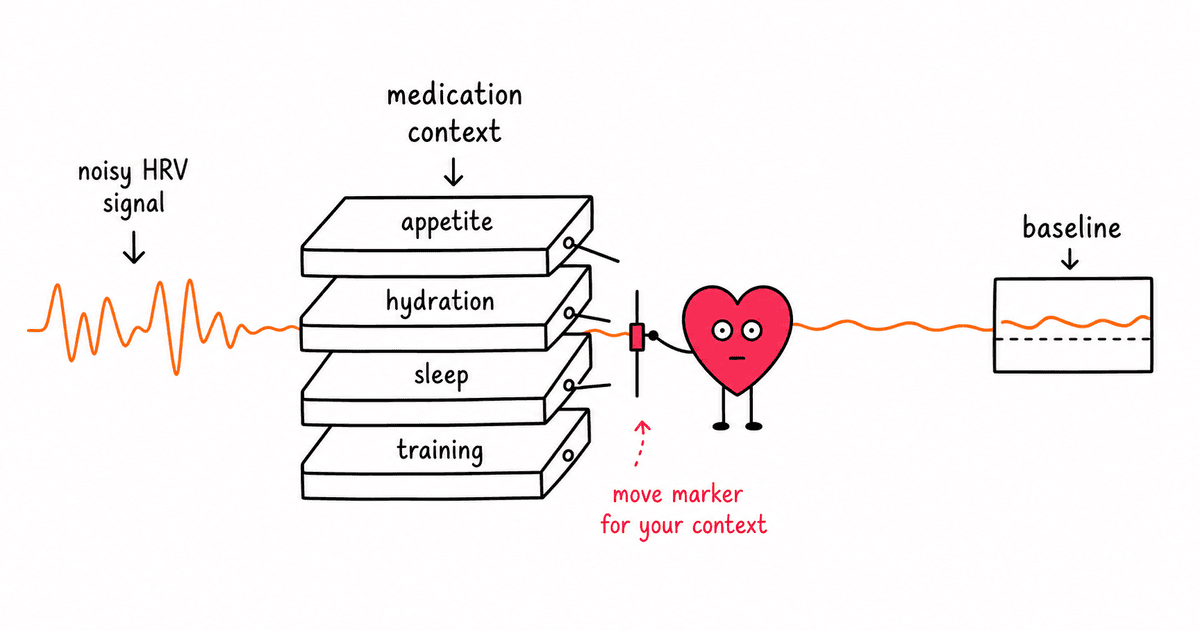
If you started semaglutide and your wearable suddenly shows a higher resting heart rate, flatter recovery, or a dip in heart rate variability, you are not imagining things. Many people taking Ozempic or Wegovy notice that their recovery metrics look different before their body weight, fitness, or daily routine has changed very much.
That can feel confusing because semaglutide is strongly linked to better cardiometabolic health, meaningful weight loss, and lower cardiovascular risk in the right patients. So why would a medication with those benefits sometimes make HRV look worse in the short term?
The honest answer is that semaglutide can push your data in both directions. The direct drug effect may raise resting heart rate slightly, while the downstream effects of weight loss, better blood sugar, lower inflammation, and improved cardiovascular health may help HRV over time. The result is a messy, real-world signal that deserves a more careful read than “good drug” or “bad drug.”
Does Semaglutide Affect HRV?
Yes, semaglutide can affect HRV, but the effect is not simple or consistently positive. The best current read is this: semaglutide and other GLP-1 receptor agonists often raise resting heart rate a little, while short-term HRV studies have found mixed or unchanged results. Over longer periods, improvements in body weight, glucose control, and cardiovascular risk may create conditions that support better HRV, but the medication itself is not a guaranteed HRV booster.
That distinction matters. HRV reflects the balance and flexibility of your autonomic nervous system, not just whether a treatment is good for you overall. A medication can improve long-term health while still nudging one wearable metric in an annoying direction.
Why Your Wearable May Look Different on Semaglutide
Several overlapping effects can change your HRV and recovery data after you start semaglutide.
1. Resting heart rate may rise slightly
This is the part people notice first. The prescribing information for Wegovy notes that semaglutide can increase resting heart rate, and FDA labeling has reported mean increases of roughly 1 to 4 beats per minute in treated adults. That does not mean something is wrong, but it does mean your resting heart rate vs. HRV pattern may shift.
Since HRV and resting heart rate often move in opposite directions, even a small rise in baseline heart rate can make your recovery metrics look worse, especially on wearables that lean heavily on overnight autonomic trends.
2. Early side effects can temporarily lower HRV
Nausea, reduced appetite, constipation, vomiting, and dehydration are common reasons people feel off during dose escalation. Those are not trivial from an HRV perspective.
If you are under-eating, sleeping poorly, or falling behind on hydration, your nervous system may read that as stress. Even if the medication is working as intended, your HRV can dip while your body adapts.
3. Rapid weight loss can be helpful, but not always comfortable
Losing excess weight often improves HRV over time, especially when visceral fat, insulin resistance, and inflammation come down. We cover that in more depth in our guide to weight loss and HRV.
But there is a catch: aggressive calorie restriction can also suppress HRV, particularly if protein intake, training quality, and recovery habits fall apart. So if semaglutide leads to better body composition but worse day-to-day fueling, your wearable may show a short-term dip before the broader metabolic benefits show up.
4. Better glucose control may help the bigger picture
People with prediabetes or type 2 diabetes often start from a lower HRV baseline because dysglycemia and autonomic dysfunction travel together. If semaglutide helps smooth glucose swings, reduce body fat, and improve insulin sensitivity, that may support better autonomic function later on.
The key word is may. HRV is influenced by a lot more than medication alone, including sleep, training load, stress, illness, and alcohol intake.
What the Research Actually Says
This is where it gets interesting, and a little unsatisfying.
There is still not much direct research on semaglutide and HRV in everyday wearable users. Most of the more specific autonomic research comes from older GLP-1 receptor agonist studies, plus broader semaglutide cardiovascular outcome trials.
GLP-1 drugs can raise heart rate without clearly improving HRV in the short term
A 2019 randomized study published in Endocrinology, Diabetes & Metabolism compared liraglutide with glimepiride in adults with type 2 diabetes. Liraglutide increased mean daytime heart rate by 5.4 beats per minute, but the study did not find significant changes in standard HRV markers such as SDNN, RMSSD, HF, or LF power.
An earlier 2016 report in Diabetes Care also examined GLP-1 receptor agonists with Holter monitoring and HRV analysis. The main concern was the same one clinicians still talk about now: a small heart-rate rise without a clean explanation from sympathetic or parasympathetic changes alone.
The practical takeaway is that a higher heart rate on a GLP-1 drug does not automatically mean your autonomic health is worsening. It does mean you should be careful about assuming every HRV dip reflects poorer overall health.
Semaglutide clearly improves important cardiovascular outcomes
This is the other side of the story, and it matters more than any single wearable trend.
In the 2023 SELECT trial published in The New England Journal of Medicine, adults with overweight or obesity and established cardiovascular disease, but without diabetes, were randomized to semaglutide 2.4 mg weekly or placebo. Over a mean follow-up of nearly 40 months, the primary cardiovascular outcome occurred in 6.5% of the semaglutide group versus 8.0% of the placebo group, a statistically significant reduction.
So if your wearable looks slightly worse during the first month of semaglutide, that does not erase the broader evidence that the drug can improve cardiometabolic risk in appropriate patients. HRV is useful, but it is not the only scoreboard.
The most honest conclusion right now
Direct semaglutide-specific HRV evidence is limited. Based on the research we do have, semaglutide seems more likely to cause a modest rise in resting heart rate than a dramatic, immediate improvement in HRV. Any longer-term HRV benefit probably depends less on the drug's direct autonomic effect and more on what happens next: weight loss, better glucose control, lower inflammation, improved sleep apnea, better fitness, and reduced cardiovascular strain.
What to Expect From Your HRV During the First Few Months
If you use an Oura Ring, Whoop, Garmin, Apple Watch, or another recovery-focused wearable, your data may follow a rough pattern.
Weeks 1 to 4
Common possibilities include:
- slightly higher resting heart rate
- lower overnight HRV
- more variability from day to day
- weaker recovery scores during dose increases
- more disruption if nausea or poor appetite affects sleep and hydration
This does not prove the medication is harming you. It often reflects the adjustment phase.
Months 2 to 6
If side effects settle down and weight loss becomes more stable, some people may see:
- lower average resting heart rate relative to peak dose-escalation weeks
- steadier overnight recovery
- better HRV compared with their pre-treatment baseline
- improved exercise tolerance as body weight and glucose control improve
But this is not guaranteed. If semaglutide leaves you chronically under-fueled, dehydrated, inactive, or sleep-deprived, HRV may stay suppressed.
How to Protect HRV While Taking Semaglutide
Semaglutide does not remove the basics. In some ways, it makes them more important.
Prioritize protein and adequate calories
Appetite suppression can quietly push you into a deficit that is too aggressive. That may help the scale, but it can hurt recovery, mood, muscle retention, and HRV. Our guide to nutrition and HRV covers why under-fueling can distort recovery data even when the scale is moving in the right direction. Aim for a sustainable intake with enough protein to preserve lean mass.
Stay on top of hydration
If nausea, vomiting, or reduced fluid intake show up, HRV often notices fast. Keep fluids steady and consider electrolyte support when appropriate, especially during exercise or warm weather.
Keep training, but do not force hero workouts
A mix of strength training and zone 2 cardio still makes the most sense. The mistake is piling hard training on top of under-eating and poor sleep. Let your HRV trend guide how hard you push on a given day.
Protect sleep during dose increases
GI discomfort, reflux, and late meals can all degrade sleep quality. Since sleep deprivation can lower HRV on its own, make your sleep setup boring and reliable when titrating the medication.
Watch trends, not isolated bad nights
This is the big one. One ugly HRV score means very little. A repeated pattern across two to four weeks means more. Compare your 7-day or 30-day average, not just last night's number.
When a Lower HRV Should Actually Concern You
A temporary HRV dip without symptoms is usually just data. A sustained HRV drop with concerning symptoms deserves attention.
Talk to your clinician if you notice:
- persistent palpitations or a racing heartbeat
- dizziness, chest discomfort, or shortness of breath
- trouble keeping fluids or food down
- a resting heart rate that stays clearly above your normal range
- worsening exercise tolerance instead of gradual improvement
HRV is not a diagnostic test, but it can be a useful early clue that recovery, hydration, dosing, or overall tolerance needs a closer look.
Is Semaglutide Good or Bad for HRV?
Neither framing is quite right.
Semaglutide may be temporarily bad for your HRV trend if it raises resting heart rate, disrupts sleep, reduces hydration, or pushes you into a calorie deficit that is too aggressive. At the same time, semaglutide may be indirectly good for your long-term autonomic health if it helps reduce excess body fat, improve glucose control, lower cardiovascular risk, and support better overall metabolic function.
That is why context matters. The medication's effect on your wearable is only one piece of the picture.
The Bottom Line
Semaglutide can change your HRV, but not in a simple, one-direction way. The short-term pattern often looks like slightly higher resting heart rate and noisier recovery data, especially during dose escalation or when side effects disrupt sleep, hydration, and nutrition. The longer-term story may be more favorable if the medication helps improve body composition, glycemic control, and cardiovascular risk.
If you take Ozempic or Wegovy and your HRV falls at first, do not panic and do not ignore it either. Treat it as context. Look at your resting heart rate, sleep, hydration, symptoms, training load, and overall trend. Your wearable is giving you useful information, but it is not the final verdict on whether the medication is helping you.
Frequently Asked Questions
Does Ozempic lower HRV?
It can, especially early on. Direct evidence is limited, but some people see lower HRV because semaglutide can raise resting heart rate and cause side effects like nausea, dehydration, and sleep disruption.
Why is my resting heart rate higher on Wegovy?
That is a known effect in semaglutide prescribing information. A small increase in resting heart rate has been reported with treatment, even when other health markers are improving.
Will HRV improve after losing weight on semaglutide?
Possibly. Weight loss, better glucose control, and lower inflammation can all support higher HRV over time. But it depends on the full picture, including nutrition, sleep, training, and how well you tolerate the medication.
Should I stop semaglutide if my HRV drops?
Not based on HRV alone. Use the trend as a signal to review hydration, food intake, sleep, and symptoms. Medication changes should be made with your prescribing clinician.
Is semaglutide bad for your heart because it raises heart rate?
Not necessarily. A small increase in resting heart rate can happen, but semaglutide has also been shown to reduce major cardiovascular events in certain higher-risk groups. That is exactly why HRV and resting heart rate need to be interpreted in context, not isolation.
Need a quick read on your HRV number first?
Enter your HRV value, age range, device, and recovery context for a plain-English interpretation before you decide what to do next.
Interpret Your HRV NumberBuild the 30-day plan