Pickleball and HRV: How to Use Heart Rate Variability to Play More and Recover Better
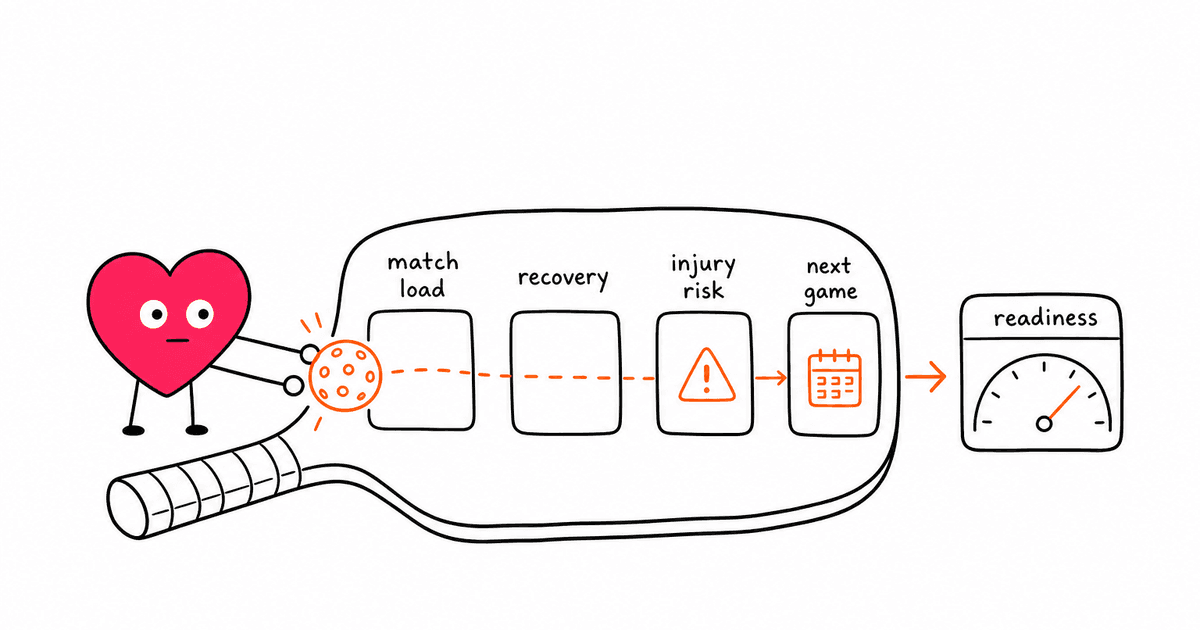
Trying to decode today's HRV number? Use the free interpreter first, then build a practical recovery plan. Interpret your HRV
Does Pickleball Affect HRV?
Yes. Pickleball can improve HRV over time when it is part of a sustainable training routine, but hard sessions, tournament weekends, and back-to-back matches can temporarily lower HRV while your body recovers.
That pattern is exactly what you would expect from an intermittent court sport. Like tennis and basketball, pickleball mixes aerobic work, quick changes of direction, acceleration, deceleration, and a strong social component. For many adults, pickleball is not just light recreation. Research in older adults found that both singles and doubles pickleball spent more than 70% of play time in moderate to vigorous heart rate zones, meaning it can provide a meaningful cardiovascular stimulus.1
That is the upside. The downside is that people often underestimate the recovery cost. Because pickleball feels fun and social, it is easy to stack several matches in a row, play on consecutive days, and ignore subtle fatigue signals until your heart rate variability drops, your soreness lingers, or your movement quality gets sloppy.
Used well, HRV helps you find the sweet spot: enough pickleball to improve fitness, mood, and heart health, but not so much that recovery starts to break down.
Why Pickleball Is a Good Fit for HRV Tracking
Pickleball is one of the most interesting sports to pair with HRV because the stress it creates is not always obvious.
Unlike a steady walking session or a clearly hard HIIT workout, pickleball often includes:
- repeated short bursts of effort
- stop-and-go movement patterns
- changes in direction and reaction speed
- heat exposure if you play outdoors
- a competitive adrenaline response
- variable match length and rest periods
That makes it easy to misjudge how taxing a session really was.
Your wearable can catch what your enthusiasm misses. If your baseline HRV is stable and your overnight resting heart rate is normal, your current pickleball volume is probably manageable. If HRV trends downward for several days, especially alongside worse sleep, heavier legs, or unusual irritability, you may be carrying more stress than you think.
What the Research Says About Pickleball and Wellness
The current research base on pickleball is still developing, but the direction is encouraging.
A 2022 study in Journal of Aging and Physical Activity found that singles and doubles pickleball in older adults qualified as moderate to vigorous physical activity and could contribute substantially toward meeting exercise guidelines.1 That matters because regular moderate exercise is one of the most reliable ways to improve autonomic function over time.
A 2025 systematic review in Frontiers in Psychology found that pickleball participation was associated with better wellbeing, higher life satisfaction, more happiness, lower depression scores, and stronger social connection, especially in older adults.2 Those benefits matter for HRV because mental strain, loneliness, and chronic psychological stress all tend to push the nervous system toward sympathetic dominance.
There is also a practical caution here. A 2025 epidemiology study in Sports Health found that pickleball-related injuries presenting to US emergency departments increased sharply from 2014 to 2023, with many injuries occurring in adults aged 60 to 79 years.3 That does not mean pickleball is unsafe or bad for your heart. It means recovery, movement quality, and load management matter.
How Pickleball Can Improve HRV Over Time
When pickleball is dosed appropriately, it can support higher long-term HRV through several pathways.
1. It Builds Aerobic Fitness
Even though pickleball includes short explosive rallies, many sessions accumulate a meaningful amount of time at moderate cardiovascular intensity. Better aerobic fitness is consistently associated with healthier autonomic balance and higher resting HRV. If you want a lower-impact complement on non-pickleball days, our guides to walking and HRV and cycling and HRV show how steady aerobic work can support the same recovery goals.
2. It Adds Enjoyable Movement
The best exercise is often the one you actually want to keep doing. Pickleball has a low barrier to entry, a strong social pull, and enough skill progression to keep people engaged. That makes it easier to stay active consistently, which is one of the biggest predictors of long-term HRV improvement.
3. It Lowers Stress for Many Players
Enjoyable sport can reduce mental fatigue and improve mood, especially when it includes social connection and outdoor time. If pickleball helps you disconnect from work stress, move your body, and laugh with other people, those benefits can indirectly support HRV and stress resilience.
4. It Encourages Healthy Aging
Pickleball also challenges coordination, balance, reaction time, and lower-body power. Those are all valuable qualities for older adults trying to stay active and independent. Regular movement that preserves physical function supports heart health well beyond HRV alone.
Why Your HRV Might Drop After Pickleball
A lower HRV after playing is not automatically a bad sign. Often it simply means your body is adapting.
Common reasons HRV drops after pickleball include:
- several hard matches in one session
- tournament stress or highly competitive games
- hot or humid playing conditions
- dehydration and electrolyte losses
- poor sleep before or after play
- inadequate fueling, especially if matches replace meals
- cumulative tendon and joint stress from frequent play
- combining pickleball with other training in the same 24 to 48 hours
If your HRV dips for one night after a demanding session, that is usually normal. The bigger concern is when it stays suppressed for multiple days, especially if your resting heart rate is elevated and you feel flat, sore, or unusually unmotivated.
How to Use HRV to Guide Your Pickleball Schedule
HRV works best as a trend, not a single score.
Green Light: HRV Near Baseline
If your morning HRV is close to your recent baseline and you feel good, you can usually proceed with normal play.
Good options on green-light days:
- singles matches
- longer rec play sessions
- drilling plus match play
- adding strength work later if that is already part of your routine
Yellow Light: HRV Mildly Below Baseline
If HRV is slightly below normal but you otherwise feel okay, keep the session but reduce the stress.
Smart adjustments:
- choose doubles instead of singles
- play fewer total games
- focus on technique and placement rather than all-out intensity
- add a longer warm-up and cool-down
- prioritize hydration and an earlier bedtime
Red Light: HRV Clearly Suppressed for More Than a Day
If HRV is well below baseline for multiple days, especially with soreness or poor sleep, treat that as a recovery signal.
Better choices:
- skip hard singles
- replace match play with easy mobility or a short walk
- do light drilling only
- take a full rest day if your body feels beat up
This does not mean HRV should control your life. It means it can help you avoid digging a deeper hole when your body is already telling you to back off.
Singles vs Doubles: Which Hits HRV Harder?
For most people, singles creates the larger recovery cost.
Singles usually means:
- more court coverage
- longer rallies under fatigue
- higher cardiovascular demand
- more sprinting and deceleration
- greater next-day soreness if you are not conditioned for it
Doubles is often easier to recover from, though that depends on match quality, heat, and competitiveness. If you are using HRV to stay on court more consistently, doubles can be a useful lever on days when recovery is not perfect.
A practical rule: use singles as a harder training stimulus and doubles as a lower-cost volume day.
The Best Wearables for Tracking Pickleball Recovery
If you want to connect pickleball with recovery trends, the most useful setup is a wearable that gives you consistent overnight HRV, resting heart rate, and sleep data.
Good options include the Oura Ring 4, Whoop 5, Apple Watch Ultra, and Garmin wearables. If you are still comparing platforms, our best HRV monitors guide and Apple Watch HRV guide can help you choose the right setup.
What to watch after pickleball sessions:
- overnight HRV versus your 7 to 30 day baseline
- resting heart rate the following morning
- total sleep time and sleep quality
- how quickly HRV rebounds after a hard session
- whether back-to-back play days produce a cumulative decline
If your wearable shows a pattern of depressed HRV after certain types of sessions, that is valuable information. It helps you answer questions like:
- Do late-evening matches hurt my recovery more than morning games?
- Can I handle two singles sessions in a row?
- Do tournaments require a lighter day afterward?
- Does better hydration reduce my next-day HRV drop?
A Simple HRV-Based Pickleball Recovery Framework
Here is a practical system you can use without overthinking it.
Easy Week
- 2 to 3 pickleball sessions
- mostly doubles or moderate rec play
- 1 to 2 strength sessions
- HRV should stay close to baseline most of the week
Build Week
- 3 to 4 pickleball sessions
- 1 harder day, such as singles or longer match play
- 1 to 2 lighter recovery-focused days between harder efforts
- expect a small short-term HRV dip after the hardest session
High-Load Week or Tournament Week
- multiple consecutive play days
- likely sleep disruption, more adrenaline, more sun exposure, and more total volume
- plan extra recovery afterward
- expect HRV suppression and do not force intense cross-training immediately after
After a high-load stretch, give yourself 24 to 72 hours of lower stress and let HRV rebound before your next hard session.
Recovery Habits That Matter Most for Pickleball Players
If you want better HRV and more durable performance on court, focus on the basics first.
Sleep
Late matches, social events, and adrenaline can all interfere with sleep. Since sleep is one of the strongest drivers of HRV, protecting it should be a priority. If evening pickleball consistently wrecks your overnight recovery, that pattern is worth respecting. For a deeper look at how overnight recovery changes your readiness scores, see HRV and sleep.
Hydration and Electrolytes
Outdoor play, especially in warm weather, can quietly drive down recovery through dehydration. Replacing fluids and electrolytes matters for cardiovascular strain, next-day readiness, and perceived fatigue. For more, see our guide to hydration and HRV.
Fueling
Pickleball players often underfuel because the sport feels casual. But long sessions can burn through more energy than expected. A mix of protein and carbohydrate after play supports recovery better than simply grabbing coffee and heading home. If you notice bigger HRV swings after long sessions or tournaments, it can also help to review the basics in nutrition and HRV.
Mobility and Tendon Care
Calves, Achilles tendons, plantar fascia, hips, and shoulders can all take a beating in frequent players. If HRV is low and your body also feels stiff, sore, or reactive, that is a sign to prioritize recovery instead of pushing through. Gentle stretching or mobility work can be a smart bridge between full rest and another hard match.
Strength Training
Basic strength work can make pickleball easier to tolerate by improving tissue capacity and movement control. Just be careful not to stack a hard lifting session on top of a hard singles day if your HRV is already down. Our guide to strength training and HRV can help you decide when lifting supports recovery and when it just adds more fatigue.
Common Mistakes Pickleball Players Make With HRV
Mistaking Every Low Reading for a Problem
A temporary HRV drop after intense play is often normal. Look for patterns, not panic.
Ignoring Heat and Hydration
A summer pickleball session can hit differently than the same session indoors or in mild weather. Context matters.
Playing Through Multi-Day Fatigue
If HRV stays depressed and your legs feel heavy, adding more volume is usually not the answer.
Forgetting That Social Sports Still Count as Training
Because pickleball is fun, people often do not treat it like real exercise. Your nervous system does not care whether the effort came from a track workout or a tournament ladder.
The Bottom Line
Pickleball can absolutely be part of an HRV-friendly lifestyle. It offers cardiovascular work, movement variety, stress relief, and social connection, all of which can support long-term heart health and better autonomic balance.
But pickleball can also create more fatigue than many players expect, especially when singles, heat, poor sleep, and frequent play stack together.
That is where HRV becomes useful. It gives you a simple way to spot when pickleball is building fitness versus when it is starting to outpace recovery.
If you track your HRV consistently, respect the trends, and adjust your schedule when needed, you can play more, recover better, and stay healthier over the long run.
FAQ
Is pickleball good for heart health?
For many adults, yes. Pickleball can provide moderate to vigorous cardiovascular activity, improve fitness, and make it easier to stay active consistently.1 As always, people with known heart disease or symptoms should follow their clinician's guidance.
Does pickleball increase or decrease HRV?
Both can happen. Regular pickleball may improve your baseline HRV over time, while hard sessions can temporarily decrease HRV during recovery.
Should I play pickleball if my HRV is low?
Usually you can still move, but it is smart to scale the session. Choose doubles, shorten the session, or take a recovery day if your HRV is suppressed for multiple days.
Is singles or doubles better for recovery?
Doubles is usually easier to recover from because it generally involves less court coverage and lower overall workload.
How long does HRV take to bounce back after a hard pickleball session?
That depends on your fitness, age, sleep, hydration, heat exposure, and session intensity. Many players recover within 24 hours, while tournaments or back-to-back hard sessions can take longer.
Need a quick read on your HRV number first?
Enter your HRV value, age range, device, and recovery context for a plain-English interpretation before you decide what to do next.
Interpret Your HRV NumberBuild the 30-day plan