Emotional Regulation and HRV: How Heart Rate Variability Shapes Your Ability to Manage Emotions
Trying to decode today's HRV number? Use the free interpreter first, then build a practical recovery plan. Interpret your HRV
What Is Emotional Regulation?
Emotional regulation is the ability to monitor, evaluate, and modify your emotional reactions to match the demands of a situation. It includes skills like calming yourself down after an argument, staying focused under pressure, and bouncing back from disappointment. Research over the past two decades has revealed that heart rate variability (HRV) is one of the strongest physiological markers of this ability.
This is not the same as suppressing emotions or "staying positive." True emotional regulation means having the flexibility to experience the full range of emotions while maintaining the capacity to respond rather than simply react. And your HRV reflects exactly how well your nervous system supports this process.
The Neurovisceral Integration Model: Why HRV Reflects Emotional Capacity
In 2000, researchers Julian Thayer and Richard Lane proposed the neurovisceral integration model, which has since become one of the most influential frameworks in psychophysiology. The core idea is straightforward: the same brain regions that regulate your heart rate also regulate your emotions.
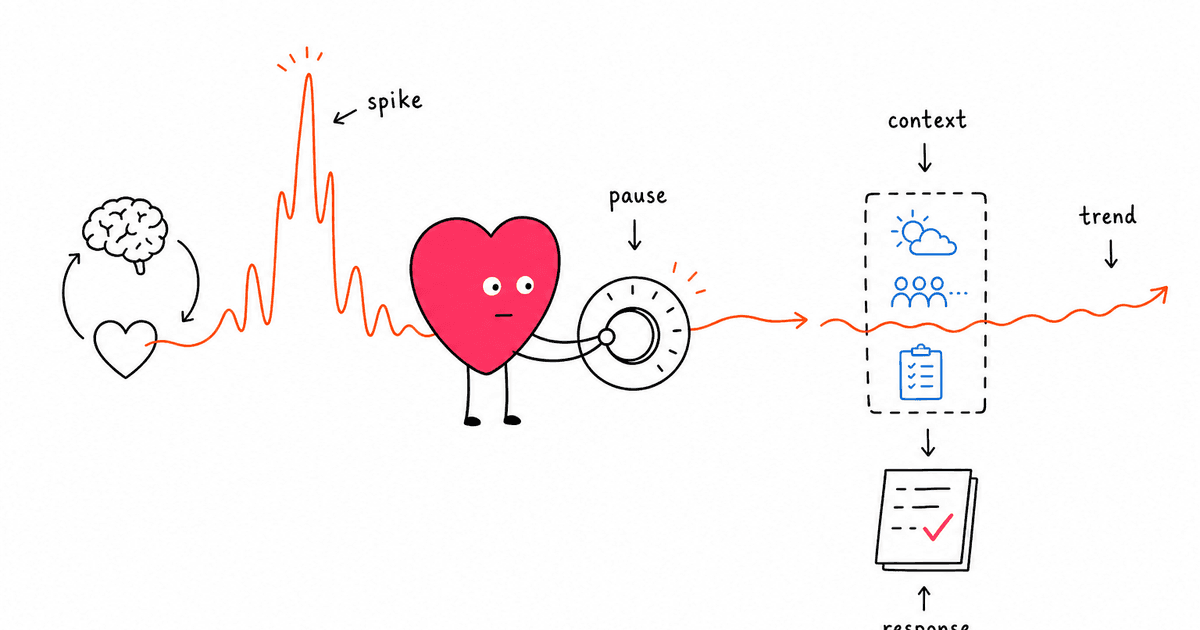
Specifically, the prefrontal cortex (PFC), the brain's executive control center, sends inhibitory signals down through the vagus nerve to the heart. When the PFC is functioning well, it provides flexible, adaptive control over heart rate, producing higher HRV. The same prefrontal regions are responsible for executive functions like impulse control, attention shifting, and cognitive reappraisal, all core components of emotional regulation. This overlap also explains why HRV correlates with cognitive performance more broadly.
In other words, HRV is not just a fitness metric. It is a real-time readout of how effectively your prefrontal cortex is modulating your autonomic nervous system, and by extension, your capacity to regulate emotional responses.
What the Research Shows
Higher Resting HRV Predicts Better Emotional Regulation
A 2017 meta-analysis published in Neuroscience & Biobehavioral Reviews examined HRV as a biomarker of self-regulatory capacity. The findings were clear: individuals with higher resting vagal-mediated HRV (measured by RMSSD or HF-HRV) consistently showed better performance on tasks requiring emotional and cognitive self-regulation.
This held true across different types of regulation:
- Cognitive reappraisal: Reframing a negative situation in a more positive light
- Attention deployment: Shifting focus away from distressing stimuli
- Response modulation: Controlling behavioral responses to emotional triggers
HRV Predicts Emotional Flexibility, Not Just Control
A 2024 study published in Psychophysiology found that higher resting HRV was associated with greater neural adaptation when repeatedly exposed to emotional stimuli. People with higher HRV did not just suppress emotional responses; they showed more flexible and efficient neural processing of emotional content over time.
This distinction matters. Emotional regulation is not about being stoic or unfeeling. It is about adaptability: the capacity to adjust emotional responses based on context, recover from emotional disruptions quickly, and maintain stable functioning in the face of changing demands.
Low HRV Is Linked to Emotional Dysregulation
The flip side is equally well-documented. Low resting HRV is associated with:
- Greater difficulty managing anger and frustration
- Increased rumination and worry
- Higher emotional reactivity to negative events
- Reduced ability to use cognitive reappraisal effectively
- Higher rates of mood disorders, anxiety, and PTSD
A 2024 study in Frontiers in Psychiatry examined emotion regulation and HRV in PTSD patients and found that low baseline HRV predicted poorer treatment outcomes, while improvements in emotional regulation during therapy were associated with HRV increases.
The Brain Circuits Behind the Connection
Understanding why HRV and emotional regulation are linked requires a closer look at brain anatomy.
The Central Autonomic Network
The central autonomic network (CAN) is a set of interconnected brain regions that regulate both autonomic function and emotional processing. Key structures include:
| Brain Region | Role in Emotion | Role in HRV |
|---|---|---|
| Prefrontal cortex | Cognitive reappraisal, impulse control | Top-down inhibition of heart rate via vagus |
| Anterior cingulate cortex | Conflict monitoring, error detection | Modulates vagal output based on context |
| Insula | Interoception (body awareness) | Integrates bodily signals with emotional states |
| Amygdala | Threat detection, emotional reactivity | Triggers sympathetic "fight or flight" responses |
When the prefrontal cortex is functioning optimally, it provides inhibitory control over the amygdala, preventing excessive threat responses and allowing measured, context-appropriate emotional reactions. This same inhibitory pathway increases vagal tone and raises HRV.
When prefrontal control weakens, whether from chronic stress, sleep deprivation, or mental health conditions, the amygdala becomes more reactive, sympathetic activation increases, vagal tone drops, and HRV decreases. The result is both heightened emotional reactivity and reduced capacity to regulate it.
The Vagal Brake
The vagus nerve functions as a brake on the heart's intrinsic pacemaker. At rest, healthy vagal tone keeps heart rate lower and more variable. When you need to respond to a challenge (physical or emotional), the vagal brake is released, allowing heart rate to increase rapidly.
The key insight from emotional regulation research is that people with stronger vagal braking capacity can both engage with emotional challenges and recover from them more efficiently. Their nervous system has greater "flexibility" to shift between states of activation and calm, which directly translates to emotional flexibility.
This concept is closely related to polyvagal theory, which describes how the vagus nerve mediates different physiological states that correspond to safety, mobilization, and shutdown.
HRV and Specific Emotional Challenges
Anger and Frustration
Studies consistently show that individuals with lower HRV exhibit greater difficulty managing anger. A study in Biological Psychology found that people with low resting HRV displayed stronger amygdala activation in response to angry faces and were less able to engage prefrontal regulatory circuits.
Worry and Rumination
Chronic worry, the hallmark of generalized anxiety disorder, is associated with persistently low HRV. The neurovisceral integration model explains this as a failure of the prefrontal cortex to inhibit default-mode network activity, leading to perseverative negative thinking and sustained autonomic arousal. For more on this connection, see HRV and anxiety.
Emotional Recovery After Setbacks
How quickly you bounce back emotionally after a negative event, your "emotional recovery time," correlates with vagal recovery. People with higher baseline HRV show faster return to calm after emotional disturbances, whether those are arguments, bad news, or stressful work situations.
Social Emotional Processing
Higher HRV is linked to better empathy, social awareness, and the ability to read emotional cues in others. This makes sense given that the same prefrontal and insular circuits that support HRV also process social-emotional information.
How to Improve Both HRV and Emotional Regulation
Because HRV and emotional regulation share the same neural infrastructure, interventions that improve one tend to improve the other. Here are the approaches with the strongest evidence.
1. HRV Biofeedback Training
HRV biofeedback is the most direct approach. By practicing resonance-frequency breathing (typically 4.5 to 6.5 breaths per minute), you train your cardiovascular and autonomic systems to produce large, coherent oscillations in heart rate. Research published in Scientific Reports (2025) found that daily biofeedback sessions increased resting HRV and produced measurable changes in brain circuits involved in emotion regulation.
A typical protocol involves 10 to 20 minutes of guided practice daily using a chest strap or wrist sensor paired with a biofeedback app. Devices like the Polar H10 or Garmin HRM-600 provide the real-time data needed for effective biofeedback.
2. Slow Breathing Exercises
Even without biofeedback technology, structured breathing exercises can strengthen vagal tone and improve emotional regulation. The key is slow, rhythmic breathing with extended exhalation.
Try this: 4-7-8 breathing
- Inhale through the nose for 4 seconds
- Hold for 7 seconds
- Exhale slowly through the mouth for 8 seconds
- Repeat 4 cycles
The extended exhale phase activates the parasympathetic nervous system and strengthens the vagal brake, building the same physiological infrastructure that supports emotional regulation.
3. Meditation and Mindfulness
Meditation trains the prefrontal circuits directly involved in emotional regulation. Research shows that even 8 weeks of mindfulness-based stress reduction (MBSR) produces measurable increases in resting HRV alongside improvements in emotional regulation capacity.
Loving-kindness meditation may be particularly effective, as it combines emotional processing with parasympathetic activation, directly training the circuits that link HRV and emotional regulation.
4. Regular Aerobic Exercise
Consistent aerobic exercise is one of the most reliable ways to increase baseline HRV. It strengthens cardiovascular fitness, improves vagal tone, and enhances prefrontal cortex function. The emotional regulation benefits of exercise are well documented, and the HRV improvements provide a physiological explanation for why exercise is so effective for mood and emotional resilience.
5. Cognitive Reappraisal Practice
A 2024 study in Scientific Reports found that actively practicing cognitive reappraisal (reframing negative situations) produced measurable increases in HRV during the regulation task, with activity in the pre-supplementary motor area mediating the relationship between reappraisal success and heart rate changes.
You can practice this by identifying a recent stressful situation and deliberately generating three alternative interpretations. Over time, this strengthens the prefrontal circuits that support both emotional regulation and HRV.
6. Sleep Optimization
Sleep deprivation is one of the fastest ways to impair both HRV and emotional regulation simultaneously. Research shows that even a single night of poor sleep reduces prefrontal cortex function, increases amygdala reactivity, and lowers HRV. Prioritizing consistent, quality sleep is foundational.
Tracking the Connection with Wearables
Modern HRV-tracking wearables provide a practical way to monitor how your emotional regulation capacity changes over time. Key metrics to watch:
- Morning RMSSD: Your baseline vagal tone, taken upon waking. Trends over weeks and months reflect changes in your overall regulatory capacity.
- HRV during stressful periods: Some devices track real-time HRV throughout the day, letting you observe how your nervous system responds to emotional challenges.
- Recovery patterns: How quickly your HRV returns to baseline after stress or intense emotion provides insight into your recovery capacity.
Devices like the Oura Ring, Whoop, Apple Watch, and Garmin all offer HRV tracking that can help you observe these patterns. For a comparison of options, see our guide to the best HRV monitors.
What Your HRV Trends Reveal About Your Emotional Health
When interpreting your HRV data through an emotional regulation lens, look for these patterns:
Gradually increasing baseline HRV suggests improving vagal tone and likely better emotional regulation capacity. If you have been practicing breathing exercises, meditation, or biofeedback, this is the trend you want to see.
Persistently low or declining HRV may indicate chronic stress, burnout, or emotional overwhelm. If this persists despite adequate sleep and recovery, it may be worth exploring whether emotional or psychological factors are contributing. See HRV and burnout for more on this pattern.
High day-to-day variability in your HRV readings can reflect emotional instability or inconsistent stress management. While some variability is normal, large swings may indicate that your regulatory capacity is being overtaxed.
Sudden HRV drops following emotional events (arguments, grief, major life changes) are normal acute responses. The key metric is recovery: how quickly does your HRV return to baseline? Faster recovery suggests stronger regulatory capacity.
The Bidirectional Relationship
One of the most important insights from this research is that the relationship between HRV and emotional regulation is bidirectional.
Higher HRV does not just reflect better emotional regulation. It appears to actively support it by providing the physiological foundation (strong vagal tone, effective prefrontal cortex function) that makes regulation possible. And practicing emotional regulation strategies, such as reappraisal, mindfulness, and breathing techniques, directly strengthens HRV.
This creates the potential for both virtuous and vicious cycles. Improving HRV through any means (exercise, sleep, biofeedback) builds capacity for emotional regulation, which in turn supports maintained or improved HRV. Conversely, chronic emotional dysregulation can drive HRV lower, making regulation progressively harder.
Understanding this bidirectional relationship offers a practical roadmap: start improving HRV through any accessible method, and the emotional regulation benefits will follow. Similarly, working directly on emotional regulation skills will produce measurable improvements in HRV.
FAQ
Can you improve emotional regulation by improving HRV?
Yes, research supports this direction of causality. HRV biofeedback training, which directly increases HRV, has been shown to improve emotional regulation outcomes in multiple clinical trials. The shared neural circuitry means strengthening vagal tone through any method (exercise, breathing, biofeedback) builds the physiological infrastructure for better emotional control.
What HRV metric best reflects emotional regulation?
Vagal-mediated HRV metrics, specifically RMSSD and HF-HRV, are the strongest indicators. These metrics reflect parasympathetic (vagal) influence on the heart and are most closely tied to the prefrontal-vagal pathway involved in emotional regulation. Most consumer wearables report RMSSD.
Is low HRV a sign of emotional problems?
Low HRV alone does not diagnose emotional disorders, but it is a consistent biomarker of reduced self-regulatory capacity. Persistently low HRV is associated with higher rates of depression, anxiety, and PTSD. It reflects reduced prefrontal control over autonomic responses, which has downstream effects on emotional processing.
How long does it take to see improvement?
Most research protocols show measurable changes in both HRV and emotional regulation within 4 to 10 weeks of consistent practice. HRV biofeedback studies typically report significant improvement after 10 sessions (about 5 weeks at twice per week). The key factor is consistency rather than intensity.
Does emotional regulation affect physical health through HRV?
Yes, this is a key pathway. Poor emotional regulation leads to chronic autonomic imbalance (low HRV), which is associated with inflammation, cardiovascular risk, and impaired immune function. Improving emotional regulation has downstream benefits for physical health, mediated in part through improvements in vagal tone and HRV.
Need a quick read on your HRV number first?
Enter your HRV value, age range, device, and recovery context for a plain-English interpretation before you decide what to do next.
Interpret Your HRV NumberBuild the 30-day plan