Dysautonomia and HRV: How Heart Rate Variability Reveals Autonomic Dysfunction
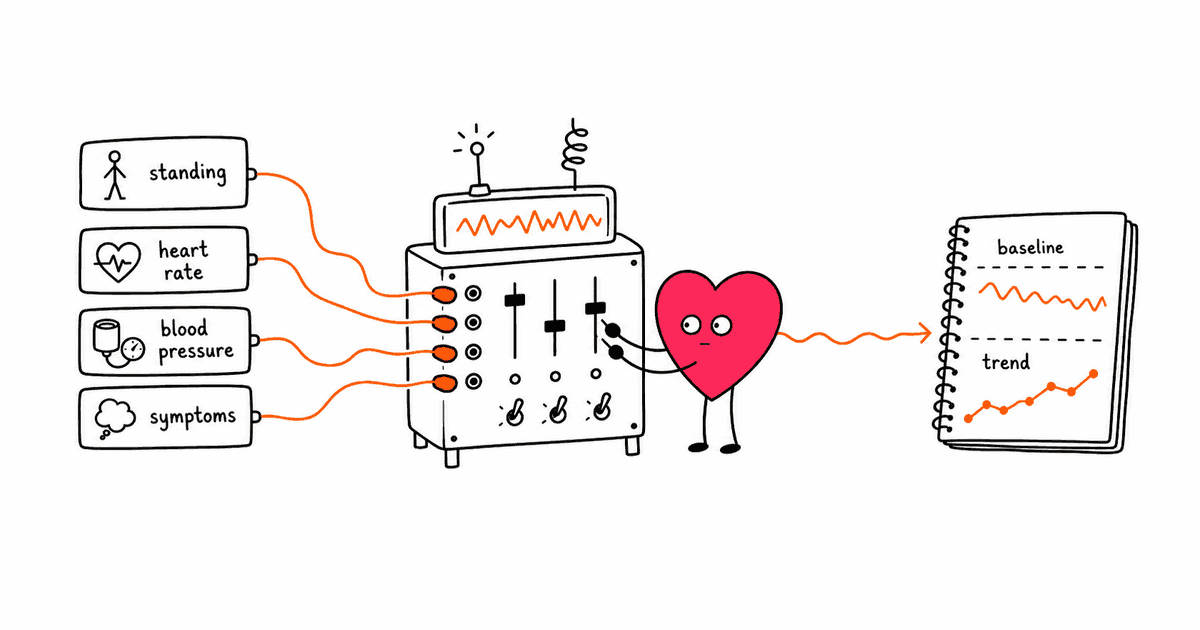
If your HRV has been persistently low, your resting heart rate swings unpredictably, or you experience dizziness when standing, the answer might not be poor sleep or overtraining. It could be dysautonomia, a group of conditions affecting the autonomic nervous system that controls involuntary functions like heart rate, blood pressure, and digestion.
Dysautonomia affects an estimated 70 million people worldwide. With post-COVID cases driving awareness to new heights, more people are discovering that their autonomic nervous system may not be functioning properly. And HRV is emerging as one of the most practical, non-invasive ways to detect, track, and manage these conditions.
What Is Dysautonomia
Dysautonomia is a broad term for conditions in which the autonomic nervous system (ANS) fails to regulate involuntary body functions properly. The ANS controls heart rate, blood pressure, temperature regulation, digestion, and bladder function. When it malfunctions, the balance between sympathetic ("fight or flight") and parasympathetic ("rest and digest") activity breaks down, often showing up as abnormally low or erratic HRV patterns.
Unlike a single disease, dysautonomia is an umbrella covering several distinct conditions:
- Postural orthostatic tachycardia syndrome (POTS): Heart rate increases by 30+ bpm upon standing, causing dizziness, fatigue, and brain fog. Affects an estimated 1 to 3 million Americans, primarily women.
- Orthostatic hypotension (OH): Blood pressure drops significantly when standing, causing lightheadedness or fainting.
- Vasovagal syncope: The vagus nerve overreacts to triggers, causing sudden drops in heart rate and blood pressure that lead to fainting.
- Pure autonomic failure: A progressive degenerative condition affecting blood pressure regulation.
- Multiple system atrophy: A rare neurodegenerative disease combining autonomic dysfunction with movement difficulties.
- Diabetic autonomic neuropathy: Nerve damage from diabetes that impairs autonomic function.
Why HRV Matters for Dysautonomia
HRV reflects the real-time balance between sympathetic and parasympathetic nervous system activity, making it one of the most sensitive non-invasive markers of autonomic dysfunction. When the autonomic nervous system is working properly, your heart rate constantly adjusts to changing demands. This healthy variation produces higher HRV. When dysautonomia disrupts this regulation, HRV typically drops and its patterns become irregular.
Clinical autonomic testing (tilt table tests, Valsalva maneuvers, and sudomotor testing) provides diagnostic confirmation, but these tests offer only a snapshot. HRV monitoring with wearable devices provides continuous data that reveals patterns clinical tests may miss, including how autonomic function fluctuates across different times of day, activity levels, and triggers.
HRV Patterns in Common Forms of Dysautonomia
POTS and HRV
People with POTS consistently show reduced HRV compared to healthy controls. Research published in the journal Clinical Autonomic Research found that resting frequency-domain HRV indices, specifically the low-frequency to high-frequency (LF/HF) ratio, differ significantly in POTS patients. The key patterns include:
- Lower RMSSD and HF-HRV at rest. These metrics reflect vagal (parasympathetic) tone, which is often suppressed in POTS.
- Exaggerated sympathetic shifts upon standing. While healthy individuals show moderate sympathetic activation when moving from lying to standing, POTS patients show an outsized response.
- Reduced HRV recovery after exertion. Heart rate recovery is often delayed, and HRV takes longer to return to baseline after physical activity.
- Greater day-to-day HRV volatility. Instead of stable trends, POTS patients may see wide daily swings without clear cause.
Orthostatic Hypotension and HRV
Orthostatic hypotension involves inadequate sympathetic vasoconstriction when standing. HRV analysis reveals:
- Blunted LF power. The low-frequency component of HRV, associated partly with baroreflex and sympathetic modulation, is often reduced.
- Loss of normal postural HRV changes. Healthy individuals show predictable HRV shifts between supine and standing positions. In OH, these shifts may be absent or reversed.
- Correlation with fall risk in older adults. For seniors, reduced HRV combined with orthostatic drops has been linked to increased fall risk in multiple studies.
Vasovagal Syncope and HRV
Vasovagal syncope involves an exaggerated vagal response. Before a fainting episode, HRV analysis often shows a distinctive pattern:
- Sudden surge in HF-HRV followed by a rapid drop in heart rate
- Increased pre-syncope HRV variability in the minutes before an episode
- Lower baseline HRV between episodes compared to people without syncope history
A 2023 study in Autonomic Neuroscience found that continuous HRV monitoring could identify pre-syncope patterns up to 5 minutes before an episode in some patients, suggesting potential for wearable-based early warning systems.
How Dysautonomia Develops
Understanding the root causes helps explain why HRV changes in specific ways.
Post-Infectious Triggers
Viral infections are one of the most common triggers for new-onset dysautonomia. Long COVID has dramatically increased the recognized prevalence of post-infectious autonomic dysfunction, but other viruses (Epstein-Barr, influenza, mononucleosis) can also trigger similar responses. In viral cases, one proposed mechanism involves autoimmune damage to autonomic nerve fibers or ganglia. Tick-borne illness can overlap with autonomic symptoms too, which is why Lyme-related HRV changes need careful medical context rather than wearable-only interpretation.
Autoimmune Mechanisms
Research has identified autoantibodies against adrenergic and muscarinic receptors in a subset of POTS patients. These antibodies can directly interfere with the signaling between the autonomic nervous system and the cardiovascular system, leading to the characteristic tachycardia and HRV disruption.
Deconditioning
Prolonged bed rest or inactivity can cause or worsen autonomic dysfunction. The cardiovascular system loses its ability to adapt to positional changes, creating a cycle where symptoms lead to reduced activity, which worsens autonomic function. This is one area where exercise-based interventions show the strongest evidence.
Neurological Conditions
Neurodegenerative diseases like Parkinson's disease and multiple system atrophy involve progressive autonomic failure. HRV monitoring can help track the progression of autonomic involvement alongside motor symptoms. Concussions and traumatic brain injuries are another significant cause of secondary dysautonomia, particularly in younger populations, where damage to brainstem autonomic centers can trigger POTS-like symptoms and persistently suppressed HRV.
Using HRV to Track Dysautonomia
What to Monitor
If you suspect or have been diagnosed with dysautonomia, specific HRV metrics are especially informative:
- RMSSD (root mean square of successive differences). This is the most widely available metric on consumer wearables and primarily reflects parasympathetic function. Persistently low RMSSD suggests reduced vagal tone.
- HRV trends over time. A single HRV reading means little. Track your 7-day and 30-day rolling averages to identify whether autonomic function is improving, declining, or stable.
- Positional changes. If your wearable allows, compare HRV during sleep (supine) versus daytime (upright). A large gap may indicate orthostatic autonomic dysfunction.
- Post-exertional response. Track how long your HRV takes to recover after activity. Delayed recovery is a hallmark of autonomic dysfunction and a signal to pace your activity.
The Orthostatic HRV Test
A simple at-home test can provide useful autonomic data:
- Lie down quietly for 5 minutes while recording HRV
- Stand up and remain standing for 5 minutes while continuing to record
- Compare the two readings
In healthy individuals, HRV decreases moderately upon standing as the sympathetic nervous system activates. In POTS, the HRV drop is typically much steeper. In vasovagal syncope, you may see an initial rise in vagal metrics followed by instability.
This is not a diagnostic replacement for a clinical tilt table test, but it can provide useful tracking data between medical appointments.
Activity Pacing with HRV
One of the most practical applications of HRV monitoring for dysautonomia is activity pacing. Many people with POTS and related conditions experience post-exertional malaise, where overdoing activity causes symptom flare-ups that can last days.
HRV-based pacing works by:
- Setting a personal baseline. Calculate your average morning HRV over 2 weeks
- Adjusting activity by deviation. When HRV is above your baseline, your autonomic system has more capacity. When below, reduce demands.
- Tracking recovery patterns. Note which activities cause the largest HRV drops and longest recovery times
- Identifying triggers. Sleep quality, hydration, electrolyte balance, and environmental factors all influence autonomic function in dysautonomia
A March 2025 preprint from the Netherlands demonstrated that wearable HRV monitoring could identify autonomic dysfunction thresholds for post-exertional malaise in long COVID patients, supporting the use of personalized HRV data for pacing decisions.
Evidence-Based Strategies to Improve Autonomic Function
Exercise Training
The most robust evidence for improving dysautonomia comes from structured exercise programs. The Levine Protocol (also called the CHOP Modified Dallas Protocol for younger patients) is the most studied:
- Weeks 1 to 4: Recumbent exercises only (swimming, rowing, recumbent cycling) to avoid upright posture
- Weeks 5 to 8: Gradual introduction of upright exercise
- Weeks 9 to 12: Progressive increase in intensity and duration
A landmark study from UT Southwestern found that 3 months of this protocol eliminated POTS criteria in 71% of participants. HRV improved alongside the clinical improvements, with significant increases in both RMSSD and total HRV power.
The key for anyone with dysautonomia: start low, progress slowly, and use HRV to guide intensity. Zone 2 training at appropriate levels is generally well-tolerated once a baseline of recumbent exercise is established.
Hydration and Electrolytes
Adequate fluid and salt intake is a frontline treatment for POTS and orthostatic hypotension. Current guidelines suggest 2 to 3 liters of fluid daily with increased sodium intake (often 3 to 10 grams depending on severity and physician guidance). Electrolyte balance directly affects blood volume, which influences how hard the autonomic system needs to work to maintain circulation.
Sleep Optimization
Poor sleep is both a symptom and an aggravating factor in dysautonomia. Many patients experience disrupted sleep architecture, reduced deep sleep, and sometimes sleep apnea. Prioritizing sleep hygiene and tracking overnight HRV can help identify whether sleep is supporting or undermining autonomic recovery.
Stress Management
Chronic stress drives sustained sympathetic activation that compounds autonomic dysfunction. Vagal-toning practices like slow breathing exercises (particularly at 6 breaths per minute), meditation, and HRV biofeedback have shown benefits in research on autonomic regulation.
Compression Garments
Abdominal and lower extremity compression helps reduce blood pooling in the legs and abdomen, a major contributor to orthostatic symptoms. While not directly studied for HRV effects, compression improves hemodynamic stability, which supports better autonomic regulation.
When to Seek Medical Evaluation
HRV tracking is valuable for monitoring, but it does not replace clinical diagnosis. Consider seeing a specialist if you experience:
- Heart rate that consistently increases by 30+ bpm when standing (or 40+ bpm in adolescents)
- Frequent dizziness, lightheadedness, or fainting
- Persistent fatigue that worsens with upright posture
- Unexplained low HRV that does not respond to typical lifestyle interventions
- Digestive issues combined with cardiovascular symptoms
- Symptoms that started after a viral illness
A dysautonomia evaluation typically includes a tilt table test, autonomic reflex testing, blood work for autoantibodies, and sometimes a 24-hour Holter monitor (which provides clinical-grade HRV data).
The Role of Wearable Devices
Consumer wearables have transformed how people with dysautonomia track and manage their condition. Devices that measure HRV, resting heart rate, and sleep patterns provide continuous data that clinicians increasingly recognize as clinically useful.
For dysautonomia tracking, the most useful wearable features include:
- Overnight HRV trending. Sleep-based HRV measurements are more reliable and comparable than daytime readings
- Heart rate alerts. Notifications when resting heart rate exceeds personalized thresholds
- Activity tracking. Correlating step counts and exertion with subsequent HRV changes
- Long-term trend analysis. Tracking autonomic recovery over weeks and months
Some patients share wearable HRV data with their physicians to supplement clinical testing. While consumer-grade HRV is not equivalent to clinical autonomic testing, the continuous nature of the data provides insights that periodic clinical visits cannot.
Living with Dysautonomia: An HRV-Informed Approach
Managing dysautonomia is a long-term process. HRV monitoring can transform it from a reactive experience (responding to symptom flares) into a proactive one (predicting and preventing them).
Practical steps for an HRV-informed management approach:
- Establish your personal baseline. Track morning HRV for at least 2 weeks before drawing conclusions
- Log symptoms alongside HRV. Note days with worse dizziness, fatigue, or brain fog and look for correlations with HRV trends
- Identify your triggers. Heat, dehydration, poor sleep, large meals, alcohol, and prolonged standing are common. Your HRV data can reveal which affect you most
- Use HRV for pacing decisions. On low-HRV days, reduce physical and cognitive demands. On higher-HRV days, you may have more capacity
- Track treatment responses. When starting new medications, supplements, or exercise programs, HRV provides objective data on whether your autonomic function is improving
- Share data with your care team. Bring HRV trends to medical appointments to supplement clinical assessments
The Bottom Line
Dysautonomia represents a fundamental disruption of the body's autonomic regulation, and HRV is uniquely positioned to detect, track, and help manage it. While clinical evaluation remains essential for diagnosis, continuous HRV monitoring through wearable devices empowers people with POTS, orthostatic hypotension, vasovagal syncope, and other forms of dysautonomia to understand their condition in real time.
The research supporting HRV as a marker of autonomic dysfunction is strong and growing. Combined with evidence-based strategies like structured exercise, hydration, stress management, and emerging interventions like transcutaneous vagus nerve stimulation, HRV tracking provides a data-driven foundation for managing a condition that can otherwise feel unpredictable and overwhelming.
Need a quick read on your HRV number first?
Enter your HRV value, age range, device, and recovery context for a plain-English interpretation before you decide what to do next.
Interpret Your HRV NumberBuild the 30-day plan