Decongestants and HRV: Why Cold Medicine Can Lower Your Recovery Score
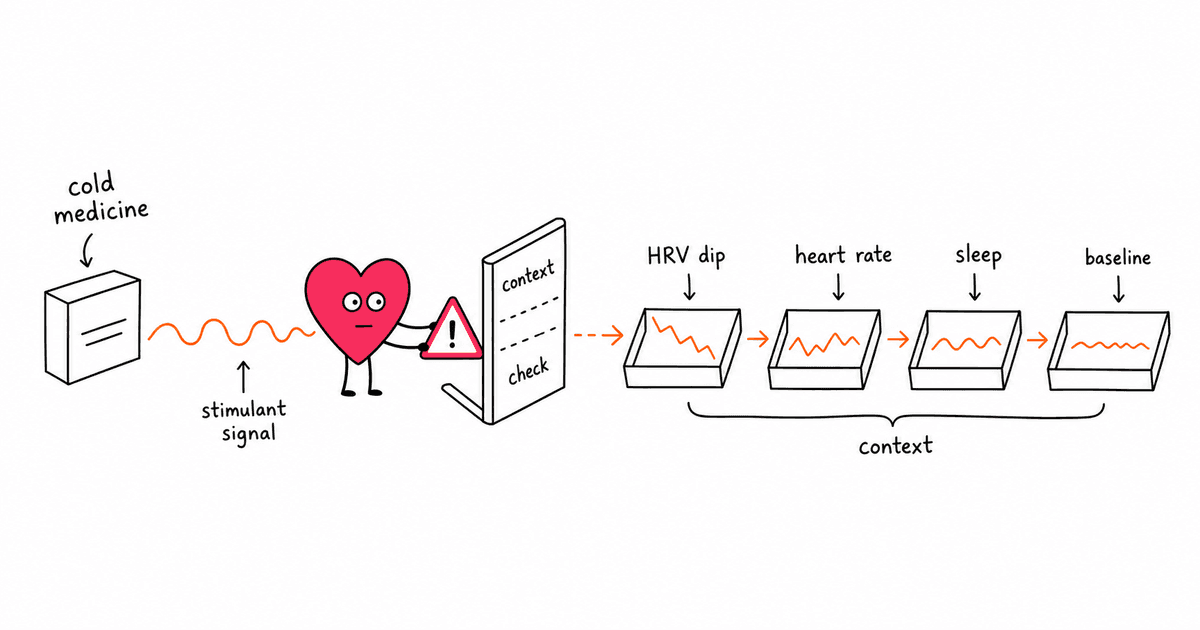
If your HRV drops during a cold or bad allergy week, the obvious explanation is that your body is fighting something. That is often true. But there is another variable many people miss: the decongestant in their medicine cabinet.
Oral decongestants like pseudoephedrine can make it easier to breathe through your nose, but they also stimulate the cardiovascular system. For some people, that shows up as a higher resting heart rate, lighter sleep, more palpitations, and a lower overnight recovery score. The tricky part is that the cold, congestion, poor sleep, and medication can all move your HRV at the same time.
Here is the clean way to think about it: decongestants do not "damage" HRV, but stimulant-style decongestants can temporarily push your body toward sympathetic activation, which can lower HRV until the medication, illness, and sleep disruption settle down.
What Counts as a Decongestant?
Not every cold or allergy medicine affects HRV the same way. The label matters.
Common decongestant categories include:
- Pseudoephedrine: Often sold behind the pharmacy counter in products labeled "D" or "sinus congestion." This is the oral decongestant most likely to affect heart rate and sleep.
- Phenylephrine: Found in many over-the-counter "PE" cold products. The FDA has proposed removing oral phenylephrine from the OTC nasal decongestant monograph because of lack of evidence that it works well as an oral decongestant.
- Topical nasal sprays: Oxymetazoline and phenylephrine sprays work locally in the nose. They can be useful short term, but overuse can cause rebound congestion.
- Combination cold products: Many formulas mix a decongestant with pain relievers, cough suppressants, antihistamines, or sleep aids, which makes your HRV response harder to interpret.
This article focuses on decongestants, not antihistamines. If your main issue is pollen, sneezing, itchy eyes, or hay fever, start with our guide to allergies and HRV.
Can Pseudoephedrine Lower HRV?
Pseudoephedrine can lower HRV in some people indirectly by increasing sympathetic nervous system activity, raising heart rate, and disrupting sleep. Direct HRV-specific trials are limited, so the best evidence comes from how pseudoephedrine affects the cardiovascular system.
Pseudoephedrine is a sympathomimetic drug. In plain English, it mimics part of the body's "go" signal. It narrows blood vessels in the nasal passages, which reduces swelling and congestion. But it is not perfectly confined to your nose. It can also affect blood vessels, heart rate, alertness, and sleep.
A meta-analysis published in Archives of Internal Medicine reviewed 24 randomized trials with 1,285 adults and found that oral pseudoephedrine caused a small but statistically significant increase in systolic blood pressure and heart rate. The average heart rate increase was about 2.8 beats per minute, with stronger effects seen in immediate-release products, higher doses, and short-term use.
That average sounds small, but HRV is sensitive. If your overnight resting heart rate rises a few beats per minute, your RMSSD or recovery score may fall, especially if you are also congested, sleeping poorly, or fighting a virus.
Why a Decongestant Can Change Your Recovery Score
Your wearable is not measuring the medication directly. It is measuring downstream signals: beat-to-beat variation, resting heart rate, respiratory rate, sleep staging, and sometimes skin temperature. Decongestants can influence several of those inputs at once.
1. Higher Resting Heart Rate
HRV tends to be lower when resting heart rate is elevated. That does not mean every heart rate increase is harmful. It means your body is usually under more load, whether from illness, stress, training, heat, alcohol, caffeine, or medication.
Pseudoephedrine can raise heart rate because it stimulates adrenergic receptors. If your wearable shows a lower HRV score and a higher resting heart rate on the same night you took a decongestant, that pattern fits the physiology.
2. More Sympathetic Tone
HRV, especially RMSSD, is heavily influenced by parasympathetic activity through the vagus nerve. Decongestants that act like stimulants can tilt the balance away from parasympathetic recovery and toward sympathetic alertness.
This is one reason a decongestant may make you feel more functional during the day but less recovered the next morning.
3. Sleep Disruption
MedlinePlus notes that pseudoephedrine can cause restlessness, nervousness, and difficulty sleeping, and it recommends taking the last dose several hours before bedtime. That matters because sleep quality is one of the biggest drivers of HRV.
Even if pseudoephedrine opens your nose, taking it too late may fragment sleep. And fragmented sleep is often worse for HRV than mild congestion.
4. Palpitations or Irregular Beats
Some people are more sensitive to stimulant medications. Pseudoephedrine can cause fast, pounding, or irregular heartbeat in susceptible people, according to MedlinePlus drug information. Palpitations can also confuse wearable HRV readings because many devices depend on clean, consistent pulse intervals.
If skipped beats or racing sensations are part of your pattern, read our guide to heart palpitations and HRV, and do not ignore new or worsening symptoms.
5. Stacking With Caffeine
Cold medicine plus coffee is a common HRV trap. Pseudoephedrine and caffeine can both increase alertness, and MedlinePlus specifically notes that foods and drinks high in caffeine can make pseudoephedrine side effects worse.
If your HRV drops after taking a decongestant, check whether you also used more coffee, energy drinks, nicotine, or pre-workout than usual. The stack may matter more than the single ingredient.
The Cold Itself Still Matters
Do not blame the medicine for everything. Colds, flu-like illness, sinus infections, and allergy flares can lower HRV on their own.
Common non-medication reasons HRV drops when you are congested include:
- Inflammation: Your immune system increases inflammatory signaling while fighting an infection or reacting to allergens, the same pathway covered in our guide to inflammation and HRV.
- Poor sleep: Congestion can force mouth breathing, snoring, and frequent waking.
- Changed breathing patterns: Nasal blockage alters airflow and can change respiratory rate, which affects HRV.
- Dehydration: Fever, sweating, reduced appetite, and lower fluid intake can worsen hydration status.
- Training mismatch: Exercising hard while sick or congested can compound the recovery burden, similar to the pattern covered in HRV and overtraining.
This is why the best interpretation is usually: "My body is under load," not "this one pill ruined my HRV."
Pseudoephedrine vs Phenylephrine vs Nasal Sprays
Different decongestants have different HRV implications.
Pseudoephedrine
Pseudoephedrine is the one most worth tracking in your HRV notes. It has the clearest evidence for raising heart rate modestly, and it is more likely to affect sleep if taken late in the day.
If you use it, mark the dose and timing in your wearable app. A same-day note is more useful than trying to remember three days later why your recovery score looked strange.
Oral Phenylephrine
Oral phenylephrine is common in OTC cold products, but its effectiveness as an oral nasal decongestant has been heavily questioned. The FDA proposed ending its use as an OTC oral nasal decongestant ingredient because the agency determined it was not effective for that purpose.
For HRV, that creates an awkward tradeoff: if a product does not meaningfully improve congestion, it may not improve the sleep and breathing problems that are hurting your HRV. You may still be taking a multi-ingredient cold product without getting the main benefit you expected.
Nasal Decongestant Sprays
Topical sprays like oxymetazoline act more locally in the nose and may have less systemic effect for many people. They can be useful when congestion is wrecking sleep, but they are not a long-term fix.
MedlinePlus advises not using oxymetazoline nasal spray for longer than 3 days because congestion can worsen or return. Rebound congestion can create a nasty HRV loop: blocked nose, worse sleep, lower recovery, more spray, then more congestion.
How to Tell Whether the Decongestant Is Affecting Your HRV
You do not need a lab test. You need a cleaner tracking method.
1. Mark the Timing
Log the exact product, dose, and time taken. "Cold medicine" is too vague. "Pseudoephedrine 60 mg at 4 p.m." is useful.
2. Watch Resting Heart Rate Alongside HRV
If HRV drops while resting heart rate rises, sympathetic activation, poor sleep, illness, or medication are all plausible. If HRV drops but heart rate stays normal, congestion, sleep fragmentation, inflammation, or measurement noise may be more likely.
3. Compare Similar Nights
A decongestant taken at 8 a.m. may have a different effect than one taken at 8 p.m. Compare days with similar symptom severity and similar dosing times before drawing conclusions.
4. Look for a Rebound
If HRV normalizes within 24 to 72 hours after stopping the decongestant and symptoms improve, the medication may have been part of the load. If HRV stays suppressed, the illness, sleep debt, or inflammation may still be active.
5. Do Not Chase the Score
The goal is not to maximize HRV while ignoring symptoms. Sometimes opening your nose helps you sleep, and better sleep may outweigh the stimulant effect. The question is whether your current product is helping more than it is hurting.
How to Protect HRV When You Are Congested
The safest strategy is to reduce the total recovery burden: less congestion, less stimulant stacking, better sleep, and fewer late-day surprises.
Use the Smallest Effective Window
If you use an oral decongestant, consider timing it earlier in the day so it is less likely to interfere with sleep. Follow the product label, and ask a pharmacist if you are unsure about dosing or interactions.
Avoid Stimulant Stacking
On decongestant days, be conservative with caffeine, nicotine, and pre-workout products. If your nervous system is already being nudged upward, adding more stimulation is rarely recovery-friendly.
Support Nasal Breathing Without More Stimulation
Saline spray, saline rinses, steam from a shower, bedroom humidity, nasal strips, and reducing bedroom allergens can help congestion without acting like stimulants. These are especially useful at night.
Prioritize Sleep Over the Perfect Score
If congestion is preventing sleep, solving the breathing problem may improve HRV even if a decongestant has a mild stimulant effect. Good sleep is not optional for recovery.
Downshift Training
When HRV is low during illness or heavy congestion, do not force a high-intensity session just because the decongestant makes you feel temporarily clearer. Keep movement easy, or take the rest day. Your cardiovascular system is already doing extra work.
Use Breathing Carefully
Slow nasal breathing can support vagal tone when your nose is open enough to breathe comfortably. If you are too congested for nasal breathing, gentle diaphragmatic breathing through the mouth is fine. See our guide to breathing exercises for HRV for practical options.
Who Should Be Extra Careful?
Some people should not treat decongestants as casual wellness tools. MedlinePlus advises talking with a doctor before pseudoephedrine if you have or have had high blood pressure, heart disease, thyroid disease, diabetes, glaucoma, difficulty urinating due to an enlarged prostate, or if you take certain medications such as MAO inhibitors.
Be especially cautious if you notice:
- New or worsening palpitations
- Chest pain, fainting, or severe dizziness
- A large resting heart rate increase that does not settle
- High blood pressure readings
- Insomnia that persists after stopping the medicine
- HRV suppression that lasts well beyond the cold or allergy flare
Wearable data can be useful, but symptoms beat scores. If your body is sending a clear warning signal, do not dismiss it because the app only says "low recovery."
The Bottom Line
Decongestants can be helpful, but they are not invisible to your recovery data. Pseudoephedrine, in particular, can modestly raise heart rate and blood pressure, stimulate the nervous system, and disrupt sleep if taken too late. Any of those can push HRV down for a night or two.
At the same time, congestion, illness, inflammation, mouth breathing, and poor sleep can lower HRV even without medication. The smart move is to track the product and timing, watch resting heart rate alongside HRV, avoid stimulant stacking, and choose the option that helps you breathe and sleep with the least downside.
If your HRV tanks every time you take a "D" cold medicine, that is not random noise. It is useful feedback from your nervous system.
Need a quick read on your HRV number first?
Enter your HRV value, age range, device, and recovery context for a plain-English interpretation before you decide what to do next.
Interpret Your HRV NumberBuild the 30-day plan