Oral Health and HRV: The Surprising Link Between Your Mouth and Heart Rate Variability
Trying to decode today's HRV number? Use the free interpreter first, then build a practical recovery plan. Interpret your HRV
Most people think of oral health as a dental concern, something that affects your smile and maybe your breath. But a growing body of research reveals that what happens in your mouth has profound effects on your cardiovascular system and autonomic nervous system, both of which directly influence heart rate variability.
How Are Oral Health and HRV Connected?
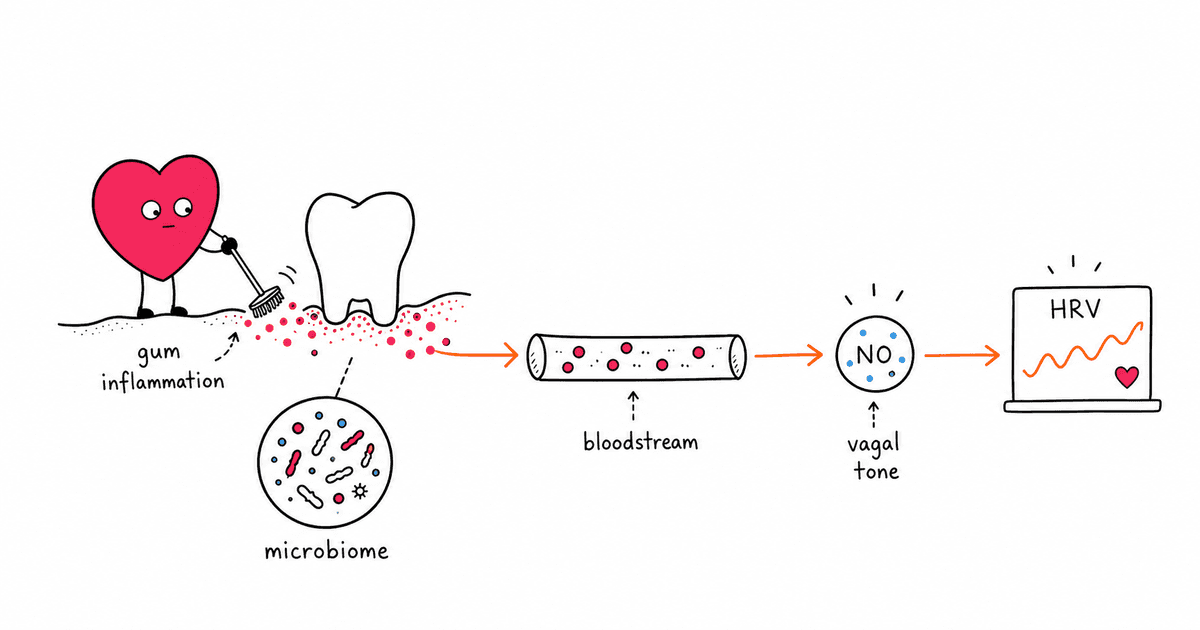
Oral health affects HRV through systemic inflammation and autonomic nervous system disruption. Periodontal disease, the chronic infection of the gums and tissues supporting the teeth, introduces bacteria and inflammatory molecules into the bloodstream. This triggers a cascade that shifts the autonomic nervous system toward sympathetic dominance, resulting in measurably lower HRV.
The connection is not minor. A 2025 study in the Professional Medical Journal found a significant association between periodontal disease severity and reduced HRV parameters. Multiple research groups have confirmed that dental variables, including gum disease, tooth loss, and temporomandibular disorders, are linked to diminished cardiac autonomic control.
The Oral Microbiome and Systemic Inflammation
Your mouth harbors over 700 species of bacteria, making it the second most diverse microbiome in the body after the gut. When this ecosystem falls out of balance, a condition called oral dysbiosis, pathogenic bacteria like Porphyromonas gingivalis and Fusobacterium nucleatum proliferate and invade gum tissue.
This leads to a series of events that extend well beyond the mouth:
- Bacteria and their byproducts enter the bloodstream through inflamed gum tissue
- The immune system responds by producing pro-inflammatory cytokines (IL-6, TNF-alpha, CRP)
- These inflammatory markers circulate systemically, reaching the heart, blood vessels, and brain
- Chronic inflammation activates the sympathetic nervous system and suppresses vagal tone
A 2024 review in PLOS ONE examining population-level data confirmed that oral health indicators, including gum bleeding, active dental caries, and tooth loss, were significantly associated with cardiovascular risk markers.
How Periodontal Disease Lowers HRV
The pathway from gum disease to reduced HRV involves several well-documented mechanisms.
Sympathetic Nervous System Activation
Chronic oral infection keeps the body in a state of low-grade alert. A 2025 study published in MDPI showed that prolonged sympathetic nervous system activation, driven by inflammatory processes like periodontitis, disrupts immune homeostasis and intensifies inflammatory cycling. This sustained sympathetic drive directly suppresses HRV.
Vagal Tone Suppression
The vagus nerve, the primary driver of parasympathetic activity and higher HRV, is particularly sensitive to systemic inflammation. Pro-inflammatory cytokines from periodontal disease can reduce vagal signaling through the cholinergic anti-inflammatory pathway. When vagal tone drops, HRV follows.
For a deeper look at this mechanism, see our guide on inflammation and HRV.
Endothelial Dysfunction
Oral bacteria that enter the bloodstream can directly damage the lining of blood vessels (the endothelium). Endothelial dysfunction reduces nitric oxide availability, increases arterial stiffness, and contributes to the autonomic imbalance that lowers HRV. Research from JACC: Advances (2024) used advanced imaging to confirm that periodontal disease contributes to vascular inflammation independent of other cardiovascular risk factors.
Oxidative Stress
Periodontal disease increases reactive oxygen species (ROS) production. This oxidative burden damages cellular structures throughout the body, including the cardiac conduction system. Elevated oxidative stress has been consistently linked to reduced HRV in multiple research contexts.
The Numbers: Oral Disease and Cardiovascular Risk
The statistical relationship between oral health and cardiovascular outcomes is striking:
| Finding | Source |
|---|---|
| 28% increased risk of heart disease in people with periodontal disease | MDPI Oral Hygiene Review, 2025 |
| Periodontal treatment improved endothelial function and reduced inflammatory markers | Frontiers in Oral Health, 2024 |
| Strong association between tooth loss and reduced HRV parameters | Professional Medical Journal, 2025 |
| Gum bleeding and dental caries linked to cardiovascular risk markers | PLOS ONE, 2024 |
These findings underscore that oral health is not just a quality-of-life concern. It is a measurable factor in cardiovascular and autonomic health.
Dental Anxiety and HRV
There is another angle to the oral health and HRV connection: dental anxiety. Research published in Frontiers in Medicine has demonstrated that HRV is suppressed during dental procedures, particularly in patients with dental phobia. The stress response triggered by dental anxiety activates the sympathetic nervous system, temporarily but significantly reducing HRV.
This creates a feedback loop. People who avoid dental care due to anxiety develop worse oral health over time, leading to chronic inflammation that further suppresses HRV. Breaking this cycle with gradual exposure, relaxation techniques, or sedation dentistry can benefit both oral and autonomic health.
For stress management strategies that may help with dental anxiety, see our post on HRV and stress management.
Temporomandibular Disorders (TMD) and HRV
TMD, which affects the jaw joint and surrounding muscles, has also been linked to altered HRV. A systematic review in the International Archives of Medicine found a significant association between TMD and low HRV, suggesting that chronic jaw tension and pain contribute to sympathetic overdrive.
TMD is often connected to:
- Chronic stress and teeth grinding (bruxism)
- Poor sleep quality due to jaw pain
- Altered breathing patterns from jaw misalignment
Each of these factors independently affects HRV, and their combination in TMD creates a compounding effect on autonomic balance.
Oral Health Habits That Support Better HRV
Improving oral health is one of the most accessible, low-cost interventions for reducing systemic inflammation. Here are evidence-based practices that protect both your mouth and your autonomic nervous system. For a broader overview of actionable strategies, see our guide on how to improve your HRV.
Brush Twice Daily (Minimum)
Consistent brushing removes plaque-forming bacteria before they can penetrate gum tissue. The American Heart Association and Mayo Clinic both emphasize that daily brushing is the front line of cardiovascular protection through oral care. Use a soft-bristled brush and fluoride toothpaste for at least two minutes per session.
Floss Daily
Flossing reaches the 35% of tooth surfaces that brushing misses. A 2024 scoping review in Frontiers in Oral Health found that regular oral hygiene practices, including flossing, significantly reduced cardiovascular event risk.
Use an Antimicrobial Mouthwash
Rinsing with an antimicrobial mouthwash can reduce bacterial load in the mouth. Look for products containing cetylpyridinium chloride (CPC) or chlorhexidine (for short-term use as directed by a dentist).
Get Regular Dental Cleanings
Professional cleanings remove tartar (calcified plaque) that cannot be removed by brushing alone. Studies show that periodontal treatment, both surgical and non-surgical, measurably reduces inflammatory markers associated with cardiovascular risk.
Address Gum Bleeding Promptly
Bleeding gums are not normal. They indicate active inflammation and a compromised barrier between oral bacteria and the bloodstream. If your gums bleed during brushing or flossing, schedule a dental evaluation.
Support Your Oral Microbiome
Just as gut health affects HRV, the oral microbiome plays a role in systemic inflammation. To support a healthy oral ecosystem:
- Limit sugar intake, which feeds pathogenic bacteria
- Eat probiotic-rich foods like yogurt and fermented vegetables
- Stay hydrated to maintain saliva production (saliva contains antimicrobial proteins)
- Avoid smoking, which dramatically shifts the oral microbiome toward disease-causing species
Tracking the Connection: Oral Health and Your HRV Data
If you track HRV with a wearable like Oura Ring, Whoop, or Apple Watch, you may notice patterns related to dental health:
- After dental procedures: Expect a temporary HRV dip due to the stress response and local inflammation. This typically recovers within 24 to 48 hours.
- During active gum disease: You may see a gradual, sustained decline in baseline HRV alongside elevated resting heart rate.
- After periodontal treatment: Improvements in HRV may emerge over weeks to months as systemic inflammation decreases.
This makes HRV a useful biomarker for tracking how oral health interventions affect your overall autonomic balance. For guidance on reading your numbers, check our post on understanding HRV numbers.
The Role of Nitric Oxide
One underappreciated mechanism linking oral health to HRV involves nitric oxide (NO). Certain beneficial bacteria in the mouth help convert dietary nitrates (found in leafy greens and beets) into nitric oxide, a molecule critical for blood vessel dilation and cardiovascular function.
Aggressive use of antiseptic mouthwashes can eliminate these beneficial nitrate-reducing bacteria, potentially impairing nitric oxide production. A 2019 study in Free Radical Biology and Medicine found that regular antiseptic mouthwash use was associated with higher blood pressure, suggesting that disrupting the oral microbiome's nitric oxide pathway has measurable cardiovascular consequences.
This means oral health is a balancing act: reducing pathogenic bacteria while preserving the beneficial species that support cardiovascular function. Mechanical cleaning (brushing and flossing) achieves this more selectively than broad-spectrum antiseptic rinses.
The Bigger Picture: Oral Health as a Cardiovascular Vital Sign
The evidence linking oral health to cardiovascular and autonomic function has grown strong enough that major health organizations now recognize the connection. The American Heart Association acknowledges the association between periodontal disease and heart disease, while the World Health Organization has identified oral diseases as a global health priority affecting nearly 3.5 billion people.
For anyone tracking HRV as a window into their overall health, oral hygiene should be considered alongside the usual suspects: sleep, exercise, nutrition, and stress management. Poor oral health introduces a hidden source of chronic inflammation that undermines all other recovery and wellness efforts.
Practical Takeaways
The research is clear: your mouth and your heart rate variability are connected through inflammation, autonomic function, and vascular health.
- Periodontal disease drives systemic inflammation that lowers HRV
- The oral microbiome influences cardiovascular and immune function
- Simple daily habits (brushing, flossing, dental visits) reduce inflammatory burden
- Dental anxiety itself can suppress HRV, creating a cycle that worsens both oral and autonomic health
- Treating gum disease has been shown to improve cardiovascular markers over time
Taking care of your teeth and gums is not just about avoiding cavities. It is a direct investment in your cardiovascular health, autonomic balance, and long-term HRV.
For a related look at how the immune system and vagus nerve interact with inflammation, see our post on HRV and the immune system.
Frequently Asked Questions
Can gum disease actually lower my HRV?
Yes. Multiple studies have found a significant association between periodontal disease severity and reduced HRV. The mechanism involves chronic inflammation triggering sympathetic nervous system activation and suppressing vagal tone, both of which lower HRV.
How long after treating gum disease will my HRV improve?
Improvements vary by individual, but research suggests that inflammatory markers begin declining within weeks of periodontal treatment. HRV improvements may follow over one to three months as systemic inflammation resolves and autonomic balance is restored.
Should I track my HRV around dental procedures?
It can be informative. Expect a short-term HRV dip around dental visits due to the stress response. If you notice your HRV does not recover within a couple of days, it may indicate ongoing inflammation or anxiety that deserves attention.
Does tooth loss affect HRV?
Research has found associations between tooth loss and reduced HRV parameters. Tooth loss is often a marker of long-term periodontal disease, meaning the underlying chronic inflammation, rather than the tooth loss itself, is likely the primary driver of HRV changes.
Is there a link between the oral microbiome and the gut microbiome?
Yes. Oral bacteria regularly enter the digestive tract through swallowing. An imbalanced oral microbiome can negatively affect gut microbiome diversity, creating a secondary pathway for inflammation. Both the oral and gut microbiomes influence HRV through their effects on systemic inflammation and immune function.
Need a quick read on your HRV number first?
Enter your HRV value, age range, device, and recovery context for a plain-English interpretation before you decide what to do next.
Interpret Your HRV NumberBuild the 30-day plan