Blood Donation and HRV: What Happens to Your Heart Rate Variability When You Give Blood
Trying to decode today's HRV number? Use the free interpreter first, then build a practical recovery plan. Interpret your HRV
If you wear an Oura Ring or WHOOP, you may have noticed something unexpected after donating blood: your HRV drops, your resting heart rate rises, and your recovery scores tank for days. You are not imagining it. Blood donation triggers a real, measurable autonomic shift that shows up clearly on modern wearables.
Understanding how blood donation affects HRV can help you plan donations around training cycles, avoid panicking over temporary dips, and recover more efficiently. Here is what the research shows.
What Happens to Your Body During Blood Donation
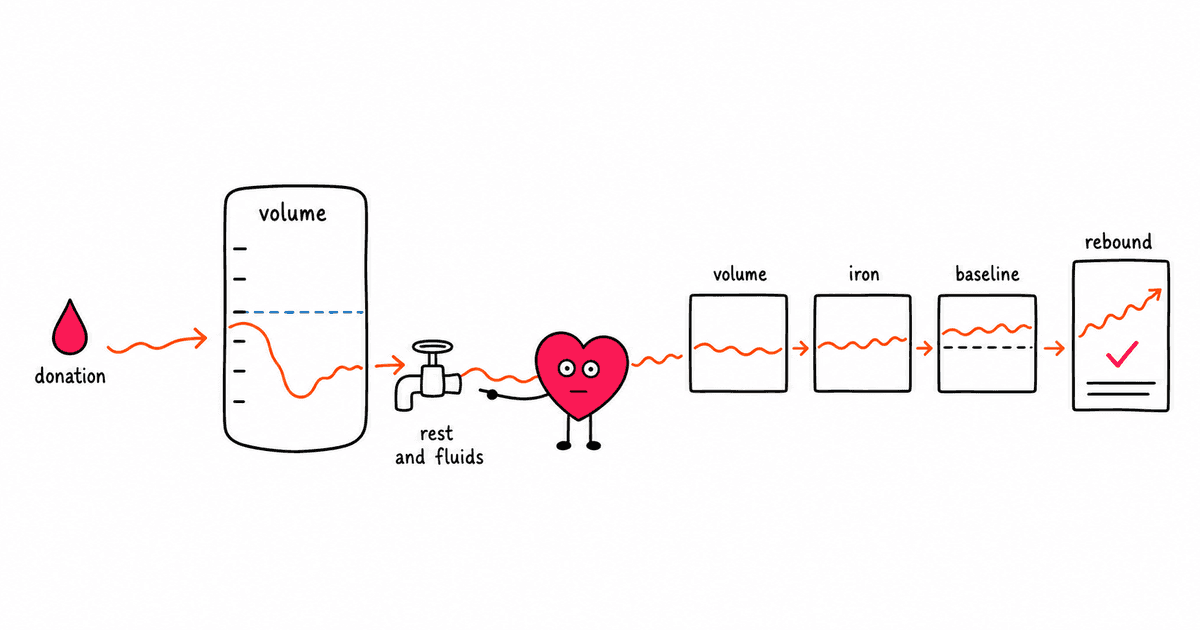
When you donate a standard unit of whole blood (roughly 450-500 mL), your body loses approximately 10% of its total blood volume in under 15 minutes. This acute volume loss triggers a cascade of cardiovascular adjustments controlled by your autonomic nervous system.
Your body responds to this sudden hypovolemia (reduced blood volume) through several mechanisms:
- Sympathetic activation: Your fight-or-flight system kicks in to maintain blood pressure
- Baroreceptor signaling: Pressure sensors in your arteries detect the volume loss and signal your brain
- Heart rate increase: Your heart beats faster to compensate for reduced stroke volume
- Vasoconstriction: Blood vessels narrow to maintain adequate perfusion to vital organs
A 2016 study published in Physiological Measurement examined 86 healthy male blood donors and found that even though blood pressure remained stable during donation (non-hypotensive hypovolemia), significant changes in cardiac autonomic tone occurred. The sympathetic nervous system ramped up while vagal (parasympathetic) activity decreased.
How Blood Donation Affects HRV Directly
The autonomic shift during and after blood donation has a clear, measurable impact on HRV metrics. Research published in 2023 analyzing HRV during blood donation found:
- RMSSD decreases significantly during and immediately after donation, indicating reduced parasympathetic activity
- LF/HF ratio shifts upward, reflecting greater sympathetic dominance
- SDNN drops, showing less overall heart rate variability
In practical terms, your HRV will likely drop 10-30% from your baseline in the 24-48 hours following a blood donation. The magnitude depends on your baseline fitness, hydration status, and how your body handles the acute volume loss.
First-time donors tend to experience larger autonomic disruptions than experienced donors. A study in Transfusion Medicine found that first-time donors showed greater cortisol elevations and heart rate changes compared to fourth-time donors, suggesting that psychological stress compounds the physiological response in newer donors.
The Recovery Timeline: When HRV Bounces Back
Recovery from blood donation happens in stages, and your HRV reflects each phase:
Days 1-3: Acute Recovery
Your body rapidly replaces plasma volume within 24-48 hours by shifting fluid from tissues into the bloodstream. During this phase, your HRV will be at its lowest. Expect to see:
- Resting heart rate elevated by 5-10 bpm
- HRV reduced by 15-30% from baseline
- Sleep scores and recovery scores noticeably lower on wearables
Days 4-14: Red Blood Cell Rebuilding
While plasma volume normalizes quickly, replacing the lost red blood cells takes longer. Your bone marrow ramps up production, but hematocrit (the percentage of blood made up of red blood cells) may still be 5% below baseline at the two-week mark. During this period:
- HRV gradually returns toward baseline
- Exercise capacity remains reduced (more on this below)
- Resting heart rate slowly normalizes
Weeks 3-6: Full Hemoglobin Restoration
Research from the Journal of Applied Physiology found that peak aerobic power (VO2peak) was still significantly decreased two weeks after donation and only fully recovered by week three. However, total hemoglobin mass can take 4-6 weeks to fully restore, depending on iron stores.
Your HRV should return to baseline well before full hemoglobin recovery, typically within 1-2 weeks, since HRV primarily reflects autonomic function rather than oxygen-carrying capacity.
Blood Donation and Exercise Performance
For athletes and fitness enthusiasts who track HRV to guide training, blood donation creates a temporary but meaningful performance dip. Here is what to expect:
| Metric | Impact | Recovery Timeline |
|---|---|---|
| VO2max | Decreased 5-7% | 3-4 weeks |
| Hemoglobin | Reduced ~10% | 4-6 weeks |
| Hematocrit | Drops ~5% | 2 weeks (partial) |
| Resting heart rate | Elevated 5-10 bpm | 3-7 days |
| HRV (RMSSD) | Decreased 15-30% | 1-2 weeks |
A systematic review in PLOS One examining the acute effects of whole blood donation on cardiorespiratory factors confirmed that VO2max and exercise capacity are significantly reduced post-donation, with most studies showing full recovery within 3-4 weeks.
How to Track Blood Donation Impact With Your Wearable
Your HRV monitor becomes a valuable tool for understanding your personal response to blood donation. Here is how to use it effectively:
Before Donation
Record your baseline metrics for the week before you donate. Pay attention to:
- Average morning HRV (RMSSD)
- Resting heart rate trend
- Sleep quality scores
- Recovery readiness indicators
During Recovery
Most wearables like the WHOOP 5 and Oura Ring 4 will flag the post-donation period as elevated strain or reduced recovery. This is expected. Use the following approach:
- Do not chase your old numbers. Accept that HRV will be lower for 1-2 weeks
- Tag the event in your wearable's journal feature so you can review the pattern later
- Reduce training intensity when your HRV is below your baseline range
- Track the trajectory, not individual readings. You should see a steady upward trend back to baseline
Return to Normal
Most people see HRV normalize within 7-14 days. If your HRV has not returned to within 10% of baseline after three weeks, consider whether other factors (poor sleep, stress, illness) may be compounding the effect.
The Cardiovascular Benefits of Regular Blood Donation
While the short-term HRV impact is a temporary dip, regular blood donation may offer long-term cardiovascular benefits that could actually support higher HRV over time.
Iron Reduction and Heart Health
Excess iron acts as a pro-oxidant, contributing to oxidative stress and inflammation that damages blood vessels. Each whole blood donation removes approximately 250 mg of iron from the body. A systematic review published in Transfusion Medicine Reviews in 2022 examined the cardiovascular benefits for blood donors and identified two key mechanisms:
- The iron pathway: Lower iron stores reduce oxidative damage to arterial walls
- The blood viscosity pathway: Reduced hematocrit temporarily lowers blood viscosity, improving flow
Research from the American Heart Association found that regular blood donors showed improved vascular function compared to non-donors. Studies have also linked regular donation to reduced blood pressure and improved blood lipid profiles.
Reduced Cardiovascular Disease Risk
A study from Columbia University Irving Medical Center noted that regular blood donation is associated with lower blood pressure and reduced risk for heart attacks. While these are observational findings (people who donate blood may be healthier overall), the iron-reduction mechanism provides biological plausibility.
For HRV, these cardiovascular improvements could translate to better baseline autonomic function over time, even if individual donations temporarily lower your readings.
Timing Blood Donation Around Training
If you use HRV-guided training, strategic timing of blood donations can minimize the impact on your fitness goals:
Best Times to Donate
- During a deload or recovery week. Your training load is already reduced, so the donation's impact overlaps with planned recovery
- Early off-season. Maximum time to recover before competitive periods
- At least 4-6 weeks before any race or event. This allows full hemoglobin recovery
Times to Avoid Donating
- Within 3 weeks of a race or competition
- During a peak training block
- When you are already in an overtrained state
- If your HRV has been trending downward for other reasons
Tips for Faster HRV Recovery After Donating
You cannot speed up red blood cell production dramatically, but you can optimize conditions for autonomic recovery:
Hydration
Drink extra fluids before and after donation. Adequate hydration helps restore plasma volume faster, which directly supports HRV recovery. Aim for at least an additional 16-24 oz of water or electrolyte-rich fluids on donation day and the following day.
Iron-Rich Nutrition
Your body needs iron to manufacture new hemoglobin. For a broader look at how diet influences autonomic function, see our guide on nutrition and HRV. Focus on:
- Red meat, poultry, and fish (heme iron, most readily absorbed)
- Spinach, lentils, and fortified cereals (non-heme iron)
- Vitamin C paired with iron sources to boost absorption
- Avoid calcium supplements and coffee near iron-rich meals (they inhibit absorption)
Sleep
Prioritize quality sleep in the days following donation. Sleep is when your parasympathetic nervous system is most active, and adequate rest accelerates autonomic recovery.
Avoid Alcohol
Alcohol suppresses HRV independently. Combining it with post-donation recovery is a double hit to your autonomic nervous system. Skip alcohol for at least 48-72 hours after donating.
Gentle Movement
Light walking and stretching on the day after donation can support circulation without taxing your reduced oxygen-carrying capacity. Avoid high-intensity exercise for at least 48 hours.
Platelet and Plasma Donation vs. Whole Blood
Not all donations affect HRV equally:
- Whole blood donation has the largest impact because you lose red blood cells, plasma, and platelets. HRV typically dips for 1-2 weeks.
- Platelet donation (apheresis) returns your red blood cells, so the impact on oxygen-carrying capacity is minimal. HRV may dip slightly for 1-3 days.
- Plasma donation also returns red blood cells. The HRV impact is generally smaller and shorter than whole blood donation, typically resolving within a few days.
If maintaining consistent HRV and training performance is a priority, platelet or plasma donation may be a better option than whole blood.
Who Should Be Extra Cautious
Some groups should pay closer attention to HRV changes around blood donation:
- Endurance athletes in peak training, as the reduced VO2max can significantly impact performance for weeks
- People with low iron stores (check ferritin levels), who may experience prolonged recovery. If this is relevant, read our guide to iron deficiency and HRV.
- Those with dysautonomia or autonomic dysfunction, who may have exaggerated responses to volume loss
- First-time donors, who tend to have larger physiological and psychological stress responses
Frequently Asked Questions
How long does HRV stay low after donating blood?
Most people see their HRV return to baseline within 7-14 days after a whole blood donation. The first 48-72 hours show the largest dip, with gradual improvement after that. Platelet and plasma donations typically recover faster, within 1-3 days.
Should I skip training after donating blood?
Avoid high-intensity exercise for at least 48 hours. After that, use your HRV readings to guide intensity. If your wearable shows recovery is still low, stick to zone 2 training or light activity until your numbers improve.
Does donating blood regularly lower your baseline HRV?
No evidence suggests that regular blood donation lowers long-term HRV. In fact, the cardiovascular benefits of iron reduction may support improved autonomic function over time. Each individual donation causes a temporary dip, but your baseline should remain stable between donations.
Can I use my wearable to know when I am fully recovered from donation?
Yes. When your morning HRV returns to within your normal range for at least 3-5 consecutive days and your resting heart rate normalizes, you can consider yourself recovered from the autonomic perspective. Full hemoglobin recovery may take longer but will not show on standard HRV metrics.
The Bottom Line
Blood donation is a generous act that saves lives, and it comes with measurable cardiovascular benefits for the donor over time. The short-term HRV dip is temporary, predictable, and manageable with proper planning. By using your wearable to track the impact and timing donations strategically, you can continue to give blood without derailing your health and fitness goals.
If you are an HRV tracker who donates regularly, consider keeping a log of your post-donation recovery patterns. Over time, you will develop a clear picture of your personal recovery timeline, making it easier to plan future donations around your training and life demands.
Need a quick read on your HRV number first?
Enter your HRV value, age range, device, and recovery context for a plain-English interpretation before you decide what to do next.
Interpret Your HRV NumberBuild the 30-day plan