Iron Deficiency and HRV: Can Low Iron Lower Heart Rate Variability?
Trying to decode today's HRV number? Use the free interpreter first, then build a practical recovery plan. Interpret your HRV
If your HRV has been sliding, your resting heart rate is creeping up, and easy workouts suddenly feel harder, low iron is one possible reason. It is not the only reason, and your wearable cannot diagnose iron deficiency, but the connection is real enough to take seriously.
Iron deficiency can reduce oxygen delivery, increase cardiovascular strain, and leave you feeling more tired, breathless, and under-recovered. Those same conditions can show up as lower HRV and higher resting heart rate, especially when deficiency progresses to anemia.
This is not a niche problem. A 2025 JAMA review estimated that absolute iron deficiency affects about 2 billion people worldwide and 14% of adults in the United States, while iron-deficiency anemia affects about 1.2 billion people worldwide, including roughly 10 million people in the U.S.
In this guide, we will break down what iron deficiency is, what the HRV research actually says, where wearables help, and where you need lab work instead of guesswork.
What Iron Deficiency and Iron-Deficiency Anemia Actually Mean
Iron deficiency means your body's iron stores are low. Iron-deficiency anemia is the next step, where low iron has progressed far enough to reduce hemoglobin and your blood's oxygen-carrying capacity.
That distinction matters because some people feel lousy before they technically become anemic. According to the 2025 JAMA review, nonanemic iron deficiency can still cause fatigue, exercise intolerance, difficulty concentrating, restless legs, lightheadedness, and reduced quality of life.
According to the NHLBI, common causes include:
- heavy menstrual bleeding
- gastrointestinal blood loss
- pregnancy
- endurance training
- poor iron absorption from conditions like celiac disease or after bariatric surgery
- chronic inflammatory conditions and kidney disease
If you have several of those risk factors, a stubborn HRV slump deserves more curiosity.
Why Low Iron Could Push HRV Down
HRV reflects autonomic regulation, not iron status directly. But iron deficiency can create the kind of physiology that often drags HRV lower.
1. Your heart may have to work harder
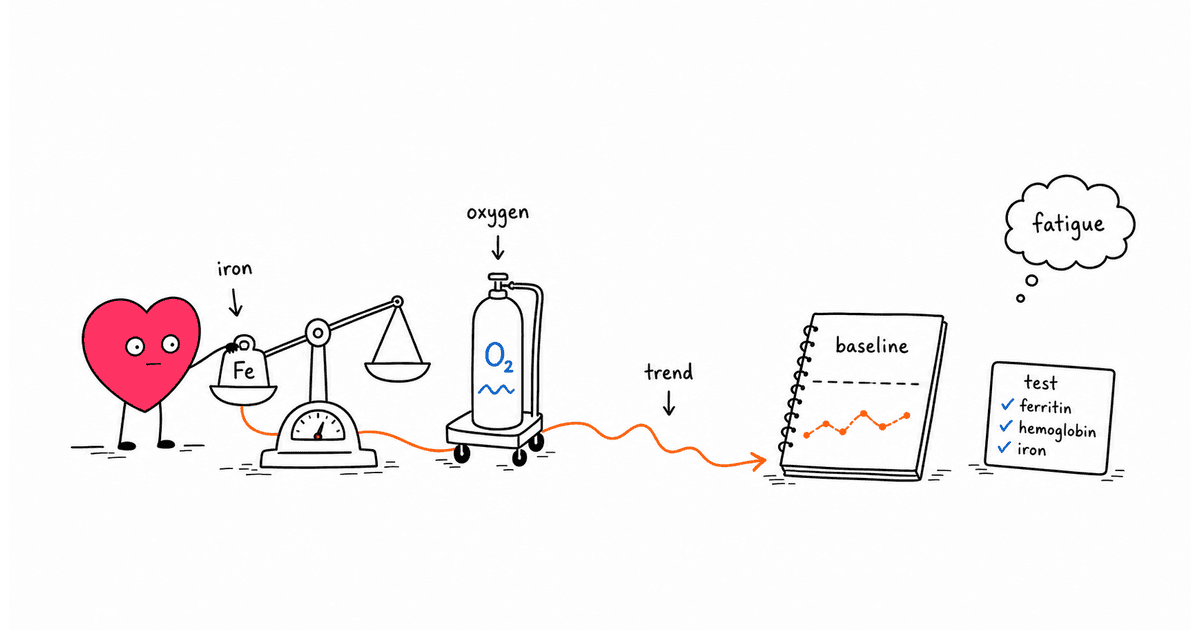
Iron is needed to make hemoglobin, which carries oxygen. When oxygen delivery drops, your body often compensates with a faster heart rate and greater cardiovascular effort. That can shift the balance away from parasympathetic recovery and toward sympathetic drive.
2. Fatigue changes the way you tolerate stress
Low iron often comes with fatigue, shortness of breath, poor exercise tolerance, irritability, and worse concentration. That combination can reduce training capacity, worsen sleep, and make daily stress feel heavier, all of which can suppress HRV for reasons that are partly direct and partly indirect.
3. Recovery gets messier
If your tissues are getting less oxygen and your workouts feel harder at the same pace, recovery can degrade quickly. You may see:
- lower overnight HRV
- higher resting heart rate
- worse readiness or recovery scores
- slower bounce-back after hard sessions
That pattern is not unique to iron deficiency, but it fits.
What the Research Says About Iron Deficiency and HRV
The evidence is interesting, but not clean enough to act like HRV is a blood test.
Evidence points to a plausible link
A 2005 study in patients with stable coronary heart disease found that anemia was associated with higher odds of low 24-hour HRV across multiple indices. Each 1 g/dL decrease in hemoglobin was linked to higher odds of low HRV, suggesting that lower oxygen-carrying capacity and autonomic strain may travel together.
But the data are mixed
A smaller 2009 study of patients with iron-deficiency anemia found a higher mean heart rate, but no significant difference in HRV parameters compared with healthy controls when activity was limited. That is an important reality check. Not every low-iron state produces a dramatic wearable signature.
Reviews still call the evidence limited
A 2020 review of human studies on micronutrients and HRV concluded that the research on micronutrients, including iron, is sparse and heterogeneous, and that definitive conclusions cannot yet be made. That is the right tone here.
The honest takeaway is this: iron deficiency may contribute to lower HRV, especially when it meaningfully affects symptoms, fitness, or hemoglobin, but HRV is not specific enough to confirm it on its own.
What Low Iron Can Look Like in Your Wearable Data
If iron deficiency is affecting your physiology, the pattern usually looks broader than one low HRV reading.
You may notice:
- HRV trending below your normal range for days or weeks
- resting heart rate trending upward
- workouts feeling harder at normal pace or power
- lower sleep or recovery scores
- more strain from ordinary training
- slower recovery after illness, travel, or hard sessions
If you are new to HRV, start with what HRV is and understanding HRV numbers. The key is trend, not one bad morning.
Just as important, many other things can create the same pattern, including poor sleep, stress, illness and inflammation, heavy training load, alcohol, and blood donation.
When to Consider Testing Instead of Staring Harder at Your Dashboard
HRV becomes more useful when it tells you to ask a better question.
Consider talking with a clinician about iron testing if you have low HRV plus any of the following:
- unusual fatigue
- shortness of breath with easy effort
- dizziness or lightheadedness
- frequent headaches
- heavy menstrual bleeding
- restless legs
- pica
- declining endurance performance
- recent blood donation
- pregnancy or postpartum recovery
- known gastrointestinal issues or a history of low ferritin
Common tests may include a CBC, ferritin, serum iron, and transferrin saturation. The 2025 JAMA review notes that ferritin and transferrin saturation are central to diagnosis, and that causes of iron deficiency should be identified, not just masked with supplements.
That part matters. Low iron can come from diet, but it can also come from bleeding, malabsorption, kidney disease, inflammatory bowel disease, or other medical issues. A low recovery score is not a license to freelance your own treatment plan.
Who Is Most Likely to See an Iron-HRV Problem
Some groups deserve a lower threshold for suspicion.
Endurance athletes
The NHLBI notes that endurance sports can contribute to iron loss. If you run, row, cycle, or do high-volume training, low ferritin can quietly erode performance before it becomes obvious in basic training metrics. If your running or zone 2 training suddenly feels harder and HRV keeps sagging, iron status is worth considering.
Women with heavy periods
This is one of the most common reasons iron stores fall. You do not need to be severely anemic to notice more fatigue, poorer recovery, or reduced training tolerance.
Frequent blood donors
If you donate regularly, you can push iron stores down over time. Our guide on blood donation and HRV covers the short-term autonomic hit after donating, but low iron can also become a longer-term issue if repletion does not keep up.
Pregnancy and postpartum
Iron demands rise during pregnancy, and deficiency is common. If this is relevant, see our article on HRV during pregnancy for the broader wearable context, but get lab guidance from your clinician, not a ring.
People with gut or absorption issues
Celiac disease, inflammatory bowel disease, bariatric surgery, and some medications can make iron harder to absorb. In those cases, perfect diet advice may not solve the actual problem.
How to Improve HRV if Low Iron Is Part of the Picture
The goal is not to game HRV. The goal is to fix the bottleneck.
1. Find the cause
If iron deficiency is confirmed, the main job is identifying why it happened. That often matters as much as the number itself.
2. Follow a treatment plan that matches the cause
The 2025 JAMA review notes that oral iron is first-line for many patients, while intravenous iron is used when oral iron is not tolerated, absorption is poor, blood loss is ongoing, or certain chronic conditions are present. This is medical territory, not wearable territory.
3. Adjust training while your body catches up
If HRV is suppressed, resting heart rate is elevated, and easy sessions feel weirdly hard, reduce intensity for a bit. Favor walking, easy aerobic work, and submaximal strength sessions over repeated high-intensity work. This is one of those cases where forcing fitness usually backfires.
4. Support iron absorption with food
The NHLBI recommends maintaining a diet that includes good iron sources and vitamin C-rich foods that improve absorption. Helpful options include:
- lean red meat, poultry, and seafood
- beans, lentils, tofu, and fortified cereals
- dark leafy greens
- citrus, berries, tomatoes, or peppers alongside iron-rich meals
If you want the broader context, our nutrition and HRV guide covers how diet affects autonomic recovery more generally.
5. Keep the boring recovery basics boring
When iron status is dragging you down, the usual recovery levers matter more, not less:
- consistent sleep
- sensible training load
- hydration
- enough total calories and protein
- less alcohol
- less unnecessary physiological noise
The faster you reduce background stressors, the easier it is to see whether iron treatment is actually helping.
Best Wearables for Tracking HRV While You Work on Iron Status
A wearable cannot diagnose iron deficiency, but it can help you track whether your recovery trend is improving as the bigger picture gets cleaned up.
- Oura Ring: Strong overnight HRV and resting heart rate tracking, which makes it useful for spotting longer trend shifts.
- WHOOP: Good if you want HRV, strain, and recovery context in one place.
- Garmin: A solid option for athletes who want HRV status alongside training load.
- Apple Watch Ultra: Useful if you already live in the Apple ecosystem and want HRV data plus broader health tracking.
If you want a deeper comparison, see the best HRV monitors for 2026.
Frequently Asked Questions
Can low iron cause low HRV?
It can, especially when iron deficiency is severe enough to affect symptoms, fitness, or hemoglobin. But the research is mixed, and low HRV has many possible causes. Think possible contributor, not certain explanation.
Can HRV detect anemia?
No. HRV can reflect physiological strain, but it cannot diagnose anemia or tell you your ferritin or hemoglobin. You need lab work for that.
Why is my resting heart rate up when my HRV is down?
That pattern often shows up when your body is under more strain. Low iron is one possible reason because your heart may have to work harder to deliver oxygen. Poor sleep, illness, stress, and heavy training can do the same thing.
Should athletes check iron if HRV keeps dropping?
It is reasonable to consider, especially if performance is slipping, easy paces feel harder, or you have risk factors like high training volume, heavy periods, or recent blood donation. Do it through proper testing, not guesswork.
Will iron treatment make HRV go up quickly?
Sometimes, but not always. HRV may improve as symptoms, sleep, and training tolerance improve, but it is not guaranteed to rebound on a neat timeline. The target is better health and function, not a prettier readiness score by next Tuesday.
Key Takeaways
- Iron deficiency can contribute to lower HRV, but HRV is not specific enough to diagnose low iron on its own.
- The evidence is mixed. Some studies link anemia to lower HRV, while others show no clear HRV difference in iron-deficient patients under limited activity.
- Look for patterns, not isolated readings. Lower HRV plus higher resting heart rate, fatigue, and worse exercise tolerance is more meaningful than one-off morning data.
- Lab testing matters. Ferritin, hemoglobin, and transferrin saturation tell you something your wearable cannot.
- Fix the cause, not the chart. If iron deficiency is real, the solution is proper evaluation, treatment, and recovery management.
The Bottom Line
If your HRV is down and your body feels off, low iron deserves a spot on the shortlist, especially if you also have fatigue, exercise intolerance, heavy periods, pregnancy, blood donation, or gastrointestinal issues. But do not let a wearable turn a possibility into certainty.
Use HRV as an early warning light. Use symptoms and lab work to figure out what the warning light actually means. That is the smarter, less chaotic way to use this data.
Need a quick read on your HRV number first?
Enter your HRV value, age range, device, and recovery context for a plain-English interpretation before you decide what to do next.
Interpret Your HRV NumberBuild the 30-day plan